Do Estate Taxes Drive Families to Obscure Inheritance with Trusts?
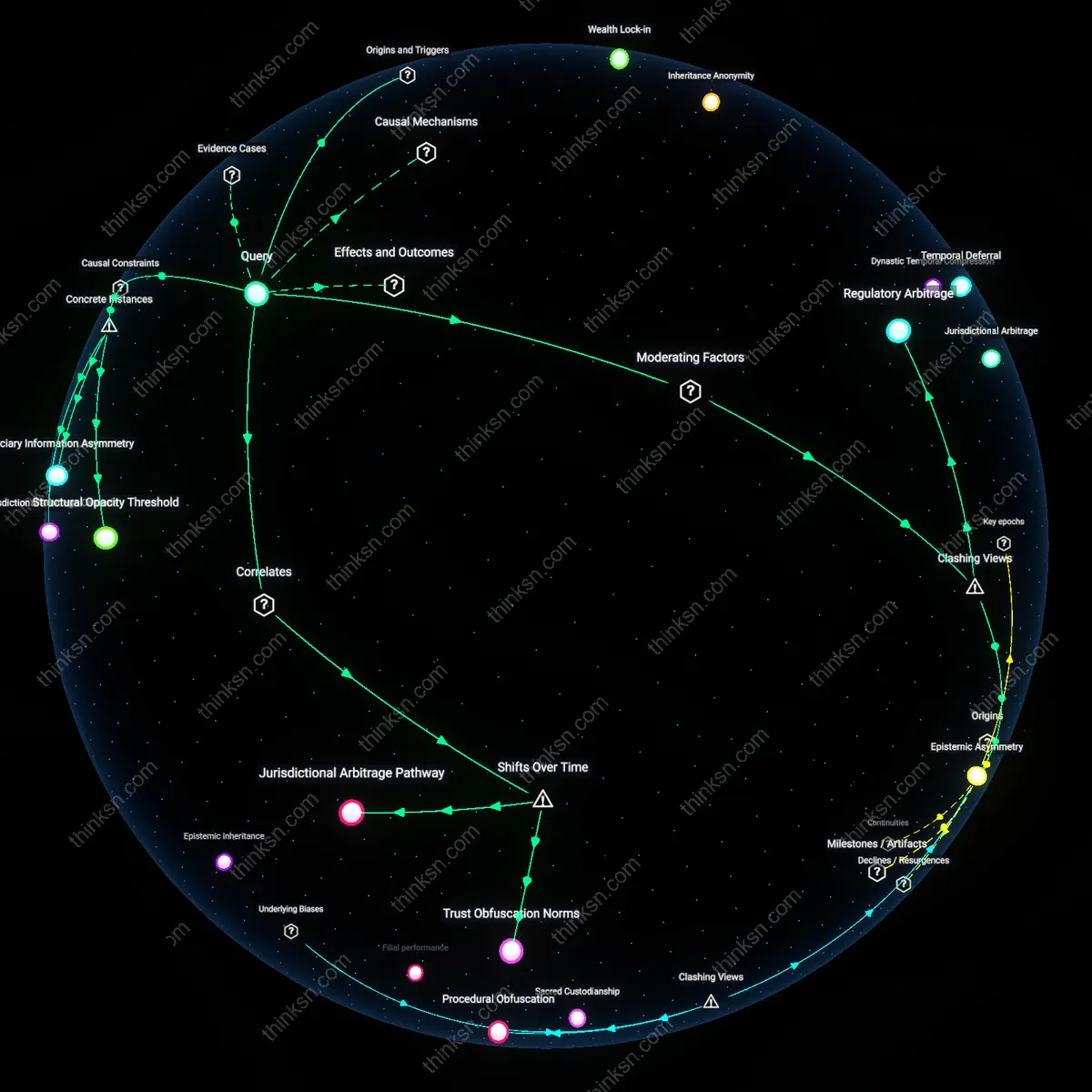
Analysis reveals 10 key thematic connections.
Key Findings
Wealth Lock-in
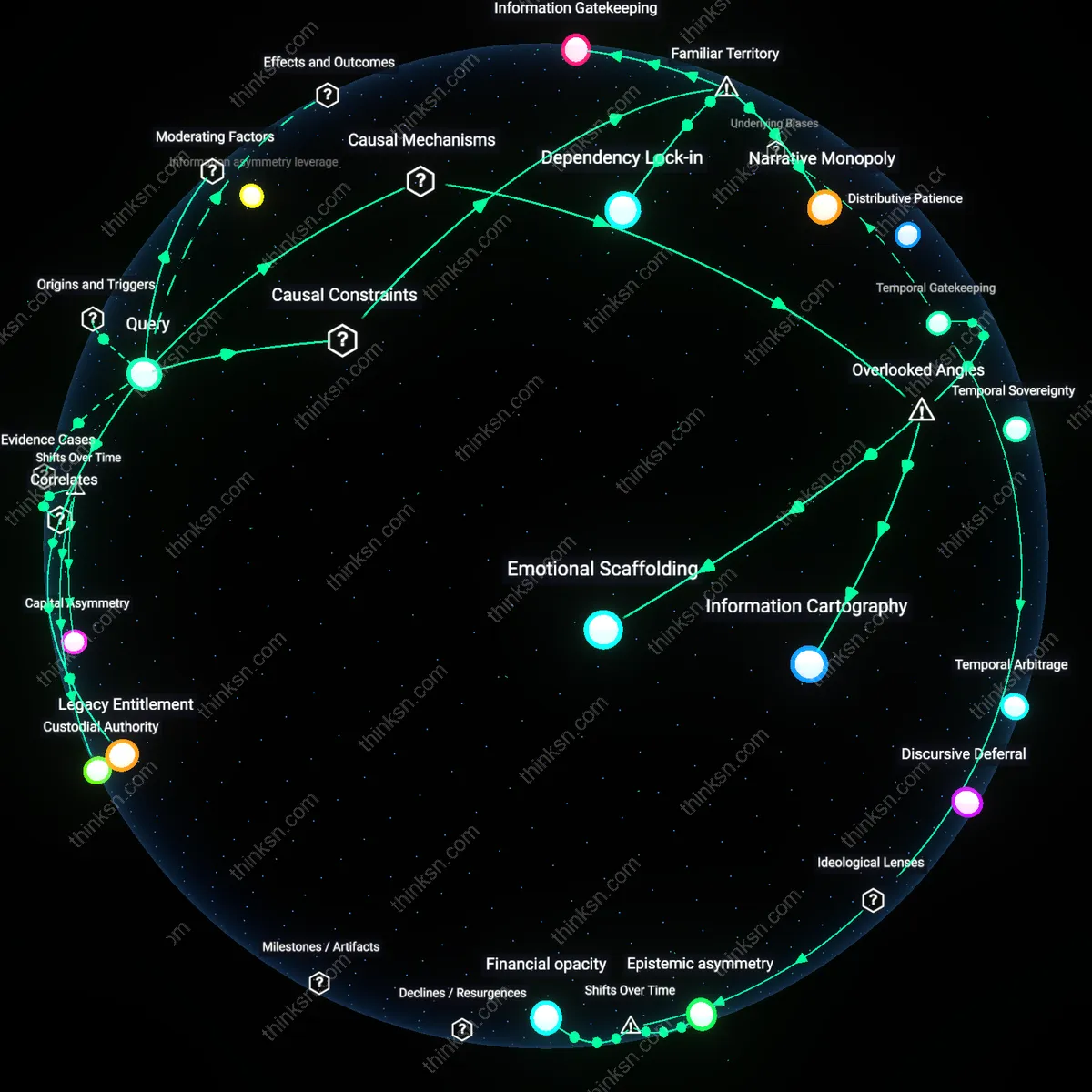
The desire to avoid estate taxes motivates the creation of irrevocable dynasty trusts that legally alienate assets from the grantor while retaining indirect control through appointed trustees, thereby minimizing taxable estates. This mechanism emerged prominently after the 1986 Tax Reform Act, which solidified high transfer tax rates and incentivized wealthy families to exploit loopholes in gift and generation-skipping transfer tax exemptions. The non-obvious consequence is not mere tax savings but the systemic locking of capital across generations, where assets grow shielded from redistribution, access, and even awareness by heirs who lack standing or information rights.
Fiduciary Opacity
Estate tax avoidance drives the delegation of asset control to third-party fiduciaries in offshore jurisdictions like the Cayman Islands or South Dakota, where trust laws deliberately obscure ownership and decision-making from beneficiaries. In these structures, the grantor grants broad discretionary powers to trustees while imposing ironclad privacy clauses, enabled by weak disclosure norms in permissive legal venues. The underappreciated dynamic is that tax-driven design intentionally severs the link between ownership and knowledge, creating legally sanctioned information asymmetries that prevent heirs from challenging distributions or even mapping the family’s wealth.
Inheritance Anonymity
Complex trusts designed for estate tax efficiency often embed sequential generational vesting conditions that delay transparency until decades after the grantor's death, decoupling wealth transfer from heir preparation. This deferral is systematized through allocating assets to multiple purpose-built trusts—such as qualified personal resident trusts or intentionally defective grantor trusts—each governed by distinct disclosure timelines and jurisdictional rules. The overlooked outcome is that tax compliance mechanisms become tools of social engineering, normalizing a culture where heirs inherit not knowledge or stewardship, but silence framed as protection.
Regulatory Arbitrage
The desire to avoid estate taxes drives the adoption of complex trust structures not because of inherent financial rationality but because jurisdictions with weak oversight actively enable opacity as a service, allowing legal professionals in states like Nevada or South Dakota to market asset protection trusts as compliant yet deliberately opaque to heirs and tax authorities. This mechanism thrives where local legislatures—responsive to legal industry lobbying—rewrite trust laws to permit indefinite duration, secrecy, and decoupling of settlor control from formal ownership, thereby weakening transparency mandates that would otherwise burden intergenerational wealth transfer. The non-obvious insight is that tax avoidance functions less through outright evasion and more through jurisdictional competition that legitimizes obscurity, challenging the dominant view that complexity arises solely from individual greed rather than systemic regulatory fragmentation.
Epistemic Asymmetry
Complex trust structures persist not because they reliably reduce tax liabilities but because they generate deliberate informational gaps that shield settlors from accountability to heirs, enabling the concealment of wealth distribution logic behind layers of legal procedure and technical jargon mastered only by specialized attorneys in elite financial centers like Wilmington or Geneva. This opacity is functionally maintained by bar associations and trust administrators who benefit from the necessity of expert mediation, ensuring heirs lack standing or comprehension to contest terms even when distributions appear inequitable or arbitrary. Against the commonsense assumption that tax savings drive complexity, the deeper mechanism is the production of ignorance as a tool—what emerges is not cost reduction but the strategic incapacitation of heirship, exposing how expert-dominated systems weaponize incomprehensibility to preserve settlor dominance beyond death.
Trust Obfuscation Norms
The shift from simple family wills to multi-generational dynasty trusts after the 1986 Tax Reform Act’s reduction of top marginal rates incentivized durable estate avoidance, causing elite legal architects to embed opacity as a default design feature to insulate wealth across time. Wealth managers, tax attorneys, and fiduciaries began prioritizing structural complexity not for immediate tax savings but as a hedge against future legislative risk, embedding layers of irrevocable trusts, grantor trust techniques, and silent partnerships that obscure lineage and control. This normalization of obfuscation was not a response to existing scrutiny but an anticipatory defense against potential transparency reforms that never fully materialized, revealing how legal innovation outpaces regulatory imagination. The non-obvious consequence is that opacity persists not because it evades current enforcement but because it preempts future democratic reversals in wealth concentration.
Jurisdictional Arbitrage Pathway
The elimination of the U.S. federal estate tax for all but the top 0.1% by 2010 redirected avoidance strategies from tax minimization to jurisdictional migration, where trusts moved from states with strong oversight like New York to those with permissive regimes like Nevada and Wyoming, accelerating a feedback loop of legal innovation and opacity. Fiduciary firms and trust companies in these states capitalized on deregulation to offer perpetual terms, zero taxation, and sealed records, transforming tax-driven structures into permanent wealth enclaves independent of tax exposure. This geographic pivot revealed that estate tax avoidance had become less about reducing liability than about escaping institutional accountability, as the mechanisms developed for tax purposes were decoupled from fiscal context and redeployed as tools of dynastic insulation. The overlooked result is that transparency decay is no longer a byproduct of tax strategy but a structuring principle of post-tax wealth governance.
Structural Opacity Threshold
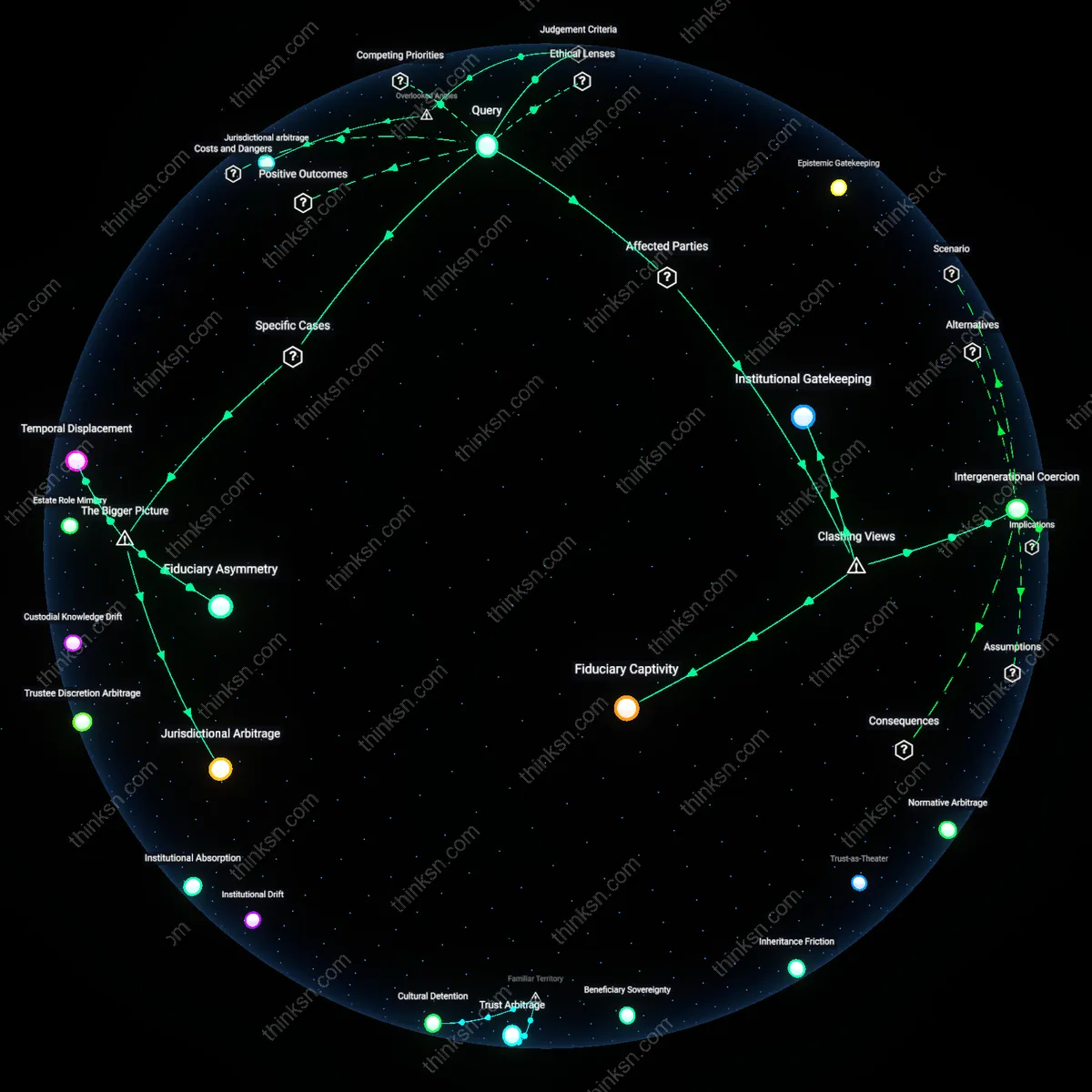
The Walton family’s use of dynasty trusts in Arkansas compels a permanent dissociation between ownership and control by legally segregating voting rights from economic benefits across generations, which functions through irrevocable trusts insulated from IRS valuation for decades under state decanting laws; this mechanism reveals that estate tax avoidance hinges not on concealment per se but on the deliberate creation of legal structures whose complexity exceeds the capacity of heirs to map asset flows, exposing a non-obvious threshold beyond which transparency becomes structurally impossible even if formally permitted.
Jurisdictional Arbitrage Cascade
The Getty family’s relocation of trust assets to the South Dakota Trust Company triggers a cascade of governance shifts by exploiting the state’s abolition of the rule against perpetuities and favorable privacy statutes, which enables trusts to operate without disclosure requirements or termination dates while being administered outside California’s regulatory reach; this case illustrates that the motive to avoid estate taxes activates a chain of jurisdictional repositioning where transparency erodes not from deception but from inter-state legal incompatibility, a dynamic rarely accounted for in discussions focused solely on federal tax policy.
Fiduciary Information Asymmetry
The Du Pont family’s reliance on trust protectors in their Delaware-based trusts delegates authority to private fiduciaries who can amend beneficiaries’ access to information without judicial oversight, thereby institutionalizing selective disclosure as a feature of tax-optimized trust design; this arrangement, codified under Delaware’s Trust Act of 1999, demonstrates that estate tax mitigation increasingly depends on legally sanctioned knowledge gating, where heirs’ inability to see assets stems not from ignorance but from a deliberate delegation of epistemic control to unelected private actors.