How Hiding a Small Inheritance Can Damage Marriage Trust?
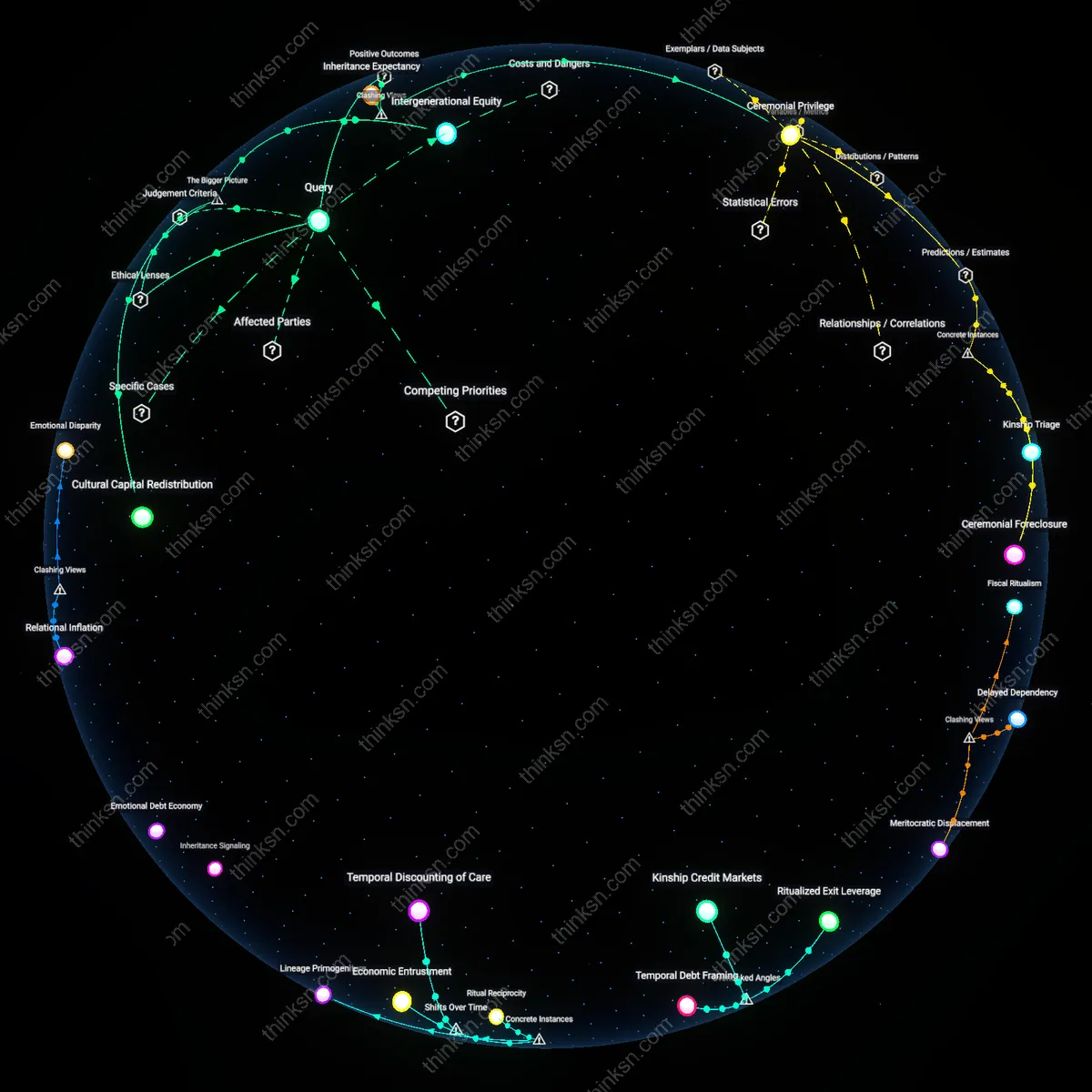
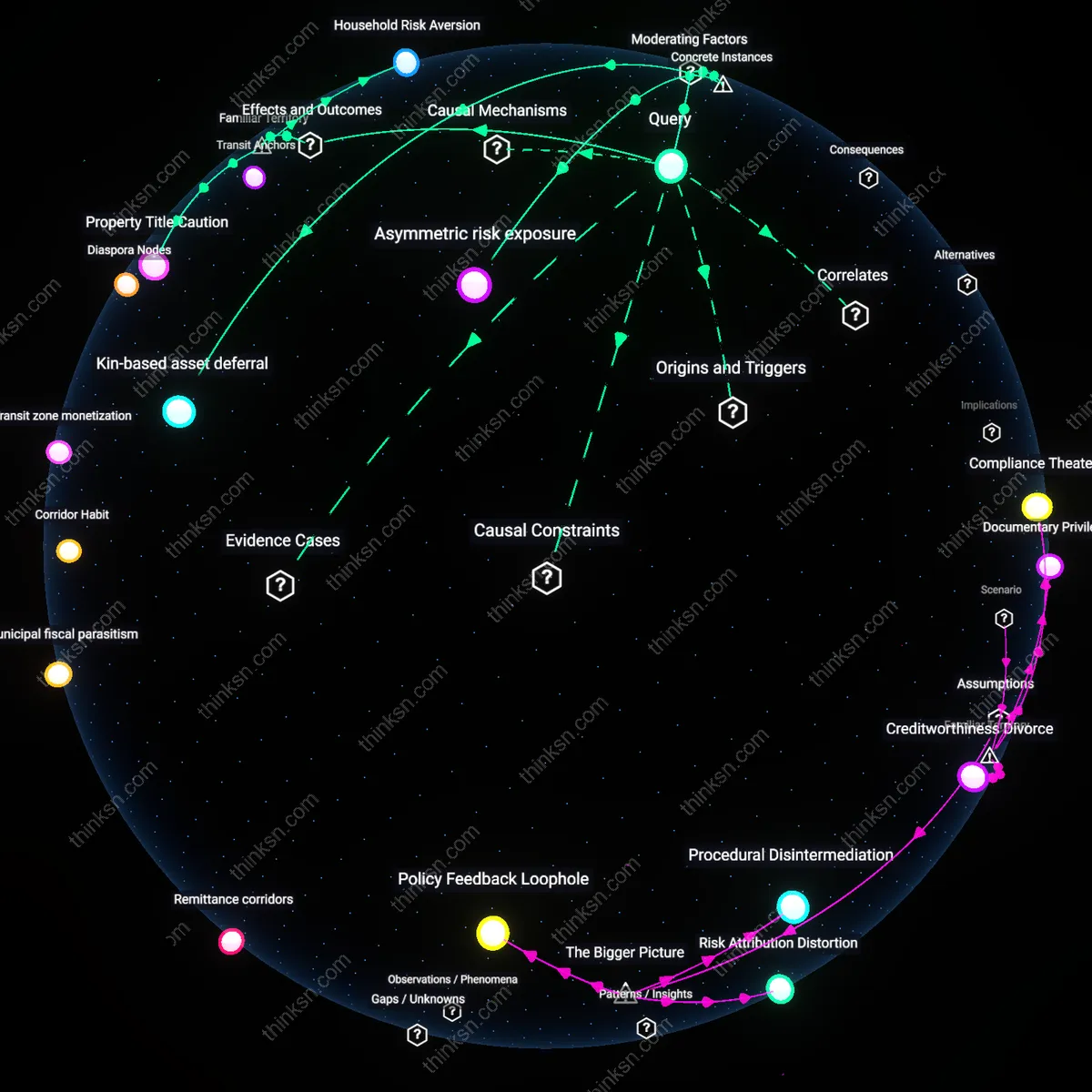
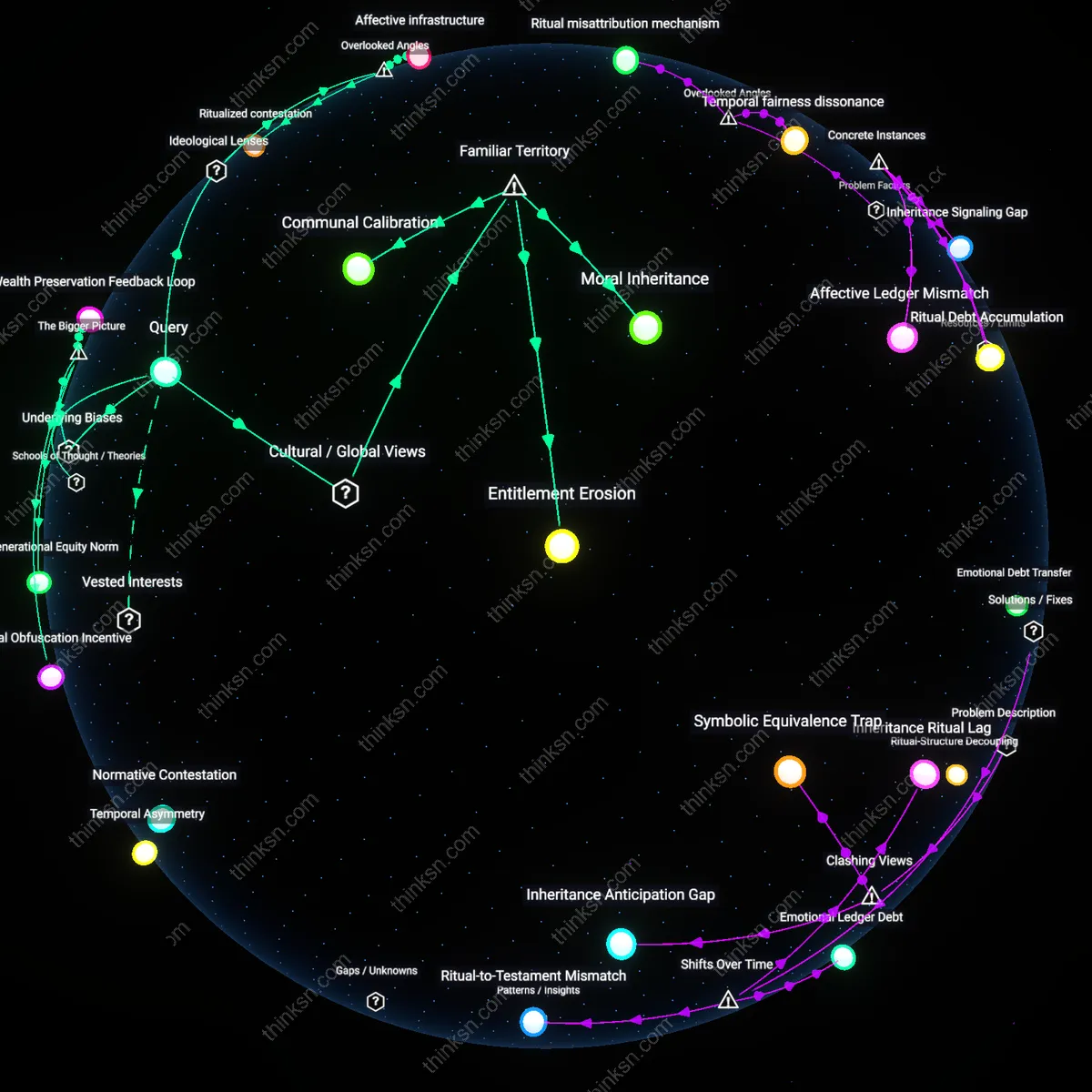
Analysis reveals 10 key thematic connections.
Key Findings
Trust Calibration Ritual
Withholding a modest inheritance damages marital financial trust by disrupting a recurring calibration ritual in which couples assess mutual commitment through financial gestures. In everyday marital dynamics, small monetary decisions function as proxies for larger assurances—sharing an inheritance, even a minor one, signals inclusion and long-term alignment; withholding it is decoded as relational distancing. This operates through the economy of symbolic acts, where financial transparency serves as a performative anchor in trust-building, particularly after major life events like a parent’s death. The non-obvious insight is that the act of disclosure—or its absence—matters more than the amount, because it resets the couple’s shared script for what counts as fair or loyal behavior in financial matters.
Intergenerational Boundary Violation
Withholding a modest inheritance corrodes marital financial trust by exposing a violation of intergenerational boundary norms that dictate how family wealth should transition into marriage. In mainstream cultural scripts, inheritances are seen as lineage gifts meant to strengthen the next generational unit—therefore, keeping it separate is interpreted not as individual prudence but as a refusal to fully integrate one’s family of origin with the marital partnership. This mechanism functions through kinship accounting, an implicit ledger where emotional and material contributions from extended family are expected to flow into the couple’s shared life. The underrecognized point is that modest inheritances often carry disproportionate symbolic weight as tokens of familial endorsement, and withholding them signals a lack of full incorporation, which destabilizes the marital financial ecosystem far beyond the amount involved.
Inheritance Signaling
Withholding a modest inheritance erodes marital financial trust by disrupting unspoken signaling norms around commitment and inclusion. When one spouse’s family withholds even a small bequest, it functions as a public signal of disapproval or non-acceptance of the partner, which the receiving spouse interprets not as a monetary loss but as relational exclusion—activating vigilance around future familial gatekeeping. This operates through kinship legitimacy systems, where symbolic transfers serve as performative recognition, and its erosion undermines the perceived reciprocity foundation of marital alliance. What is non-obvious is that the inheritance’s value is less material than institutional—it reveals which kin groups endorse the marriage, shaping long-term financial cooperation expectations.
Intergenerational Contract
Withholding a modest inheritance weakens marital financial trust by destabilizing an implicit intergenerational contract that governs household resource expectations. Couples often plan long-term expenditures—such as education or homeownership—based on anticipated, albeit unspoken, transfers from elder kin, and even small deviations from expected patterns trigger reassessment of shared fiscal assumptions. This mechanism functions through intertemporal household planning systems, where trust relies on predictability of inflows beyond earned income. The underappreciated dynamic is that marital financial trust is co-constructed with third-party ancestors whose actions serve as credibility signals—when those fail, renegotiation introduces asymmetry and suspicion.
Wealth Filtering
Withholding a modest inheritance alters marital financial trust by exposing latent class-based filtering mechanisms embedded in wealth transmission. When inheritance is withheld—even in small amounts—it reveals whether the wealth-holding spouse belongs to a network that views the union as compatible with their economic lineage, thereby signaling future access to capital, connections, or emergency support. This operates through elite closure systems, where modest transfers function as test pulses for inclusion, and their absence recalibrates the non-inheriting spouse’s perception of financial vulnerability within the marriage. The overlooked reality is that such acts are not merely personal but perform gatekeeping—transforming marital trust into a function of external social capital validation.
Inheritance Omission Threshold
Withholding a $50,000 inheritance from her spouse after her father’s 2003 will was contested in California probate court caused long-term erosion of joint financial decision-making in the marriage, because the lack of transparency about the contingency plan prevented mutual adjustment to changed fiscal responsibilities. The causal mechanism—loss of trust in financial reciprocity—only operated because the spouse discovered the omission years later during a tax audit, revealing that nondisclosure, not the amount, was the critical bottleneck. This case exposes that there exists a minimal threshold for disclosure obligations within marital finance, below which omissions are treated as benign, but once crossed—even modestly—reputation for honesty collapses.
Temporal Trust Arbitrage
In a 2020 Melbourne Family Court case, a husband delayed disclosing a $42,000 bequest for 18 months, claiming deferral rather than denial, yet the marital breakdown accelerated not due to the sum but because the delay exploited temporal ambiguity in financial expectations, eroding the couple’s joint temporal coordination around major expenditures. The bottleneck—synchronized financial timelines—was disrupted, showing that trust relies not just on disclosure but on adherence to shared fiscal calendars. This instance uncovers that small inheritances, when withheld strategically over time, function as arbitrage against relationship-coordinating mechanisms, not merely against equity.
Inheritance Secrecy
Withholding a modest inheritance strengthens marital financial trust when the recipient conceals it to avoid destabilizing household equity negotiations, as seen in dual-earner couples in Stockholm where transparency norms conflict with pragmatic emotional labor. In Sweden’s gender-equal households, where joint accounts and expense-sharing are legally encouraged, some recipients of small parental transfers deliberately omit disclosure to prevent recalibrations of perceived fairness in chore or income sharing—trust is maintained not through honesty but through strategic invisibility. This reframes financial secrecy not as betrayal but as protective governance, challenging the intuitive equation of disclosure with fidelity.
Trust Arbitrage
Withholding a modest inheritance can artificially inflate a spouse’s perceived financial dependency, as observed in post-reunification East German marriages where hidden cash infusions from West German relatives allowed one partner to quietly assume control over joint investments without overt authority claims. Because the broader family economy still operated under assumptions of mutual scarcity, the uninformed spouse interpreted continued frugality as shared commitment rather than asymmetrical advantage—trust was preserved because imbalance was masked as solidarity. This reveals trust not as a product of equity but of managed misperception, subverting the moral expectation that honesty sustains intimacy.
Legacy Drag
In rural Oaxaca, modest land inheritances withheld from spouses within Zapotec communal tenure systems actually reinforce marital cohesion by preserving eligibility for collective agrarian benefits that require demonstrated economic need. When an individual inherits a small plot but does not formally register it under the household, the couple sustains access to state-subsidized seeds and irrigation reserved for low-asset farms—financial opacity becomes a cooperative survival tactic. This inverts the assumption that hidden assets erode trust, showing instead that financial misdirection can be a jointly sustained fiction essential to material resilience.