Do Genetic Ancestry Tests Provide More Pressure Than Answers?
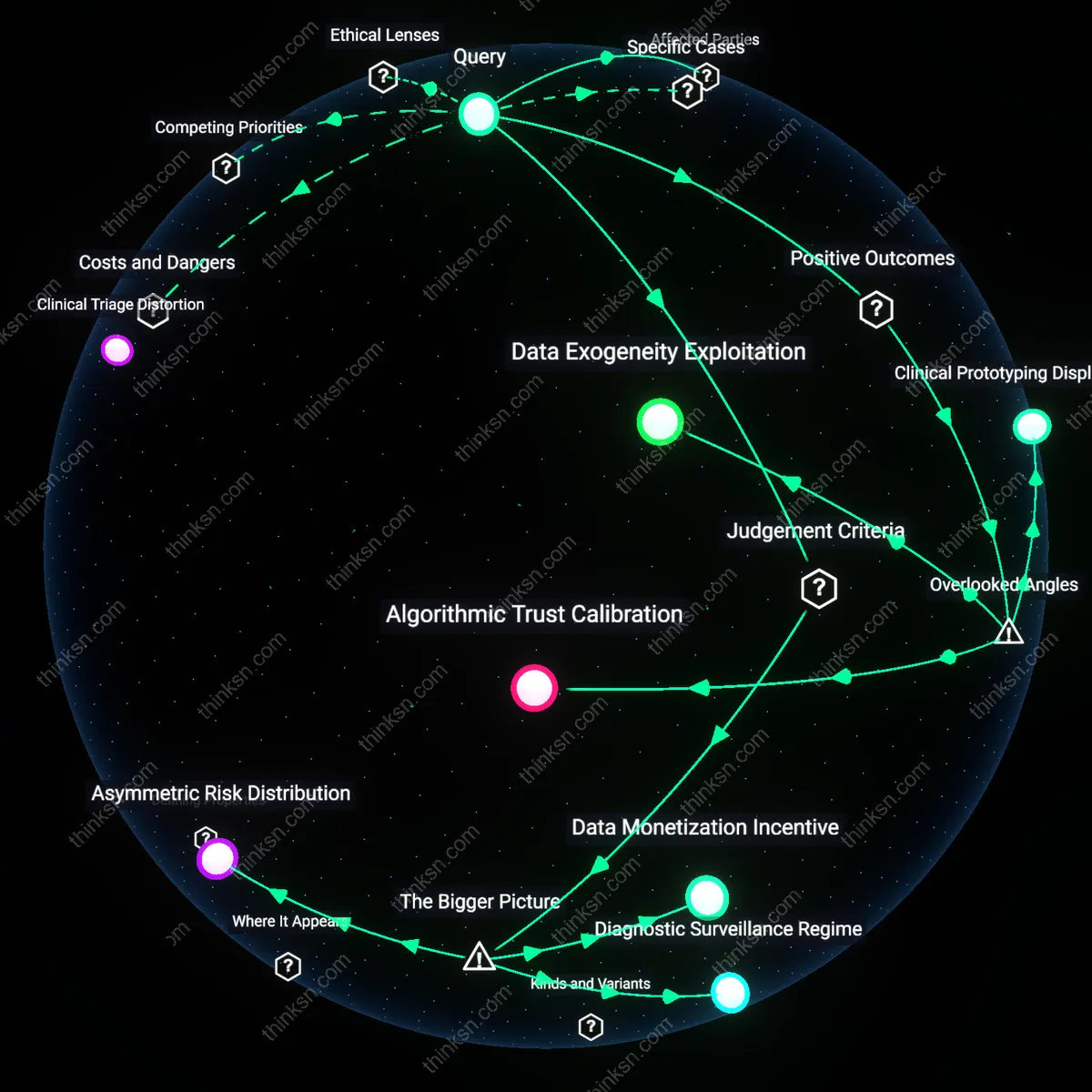
Analysis reveals 8 key thematic connections.
Key Findings
Commercial Identity Infrastructure
Societal pressure to undergo genetic ancestry testing should be checked by regulating the marketing practices of direct-to-consumer genetics firms, because these companies profit from inflating cultural expectations around genetic identity. Corporate campaigns—like those from 23andMe and AncestryDNA—leverage emotionally charged narratives of belonging and self-discovery to naturalize testing as a civic rite of self-knowledge, thereby expanding their biometric databases under the guise of personal empowerment. This dynamic transforms intimate questions of heritage into data-extractive opportunities, sustained by digital platforms that reframe voluntary participation as social inevitability, thus normalizing genetic surveillance without delivering commensurate health value. The non-obvious insight is that the pressure stems not from public curiosity alone but from a monetized ecosystem engineered to convert identity searches into scalable biological assets.
Epistemic Inflation Cycle
Medical institutions must resist endorsing genetic ancestry tests in primary care settings, as their tacit validation amplifies the misperception that ancestry data yields actionable health insights for most patients. Despite limited clinical utility for conditions governed by polygenic or environmental factors, family medicine providers—under pressure to adopt 'personalized' medicine—sometimes integrate ancestry results into preventive counseling, unintentionally legitimizing speculative health claims. This institutional endorsement feeds a feedback loop where patients demand tests they believe are medically warranted, and providers comply, mistaking widespread adoption for efficacy. The overlooked mechanism is how healthcare systems, aiming to appear innovative, inadvertently elevate commercially driven data to clinical relevance, reinforcing social pressure through professional authority.
Cultural Dispossession Feedback
Indigenous communities and descendant populations bear disproportionate harm from normalized ancestry testing, as widespread individualizedDNA claims erode collectively held cultural lineages and territorial rights. When non-Native individuals use genetic results to assert tribal affiliations—such as in cases involving Cherokee or Māori identity—this fragments politically recognized sovereignty and undermines legal frameworks based on kinship, nationhood, and historical continuity. These tests, promoted as tools of personal discovery, destabilize communal identity claims by prioritizing genetic individualism over treaty-based or community-recognized belonging, enabling appropriation while offering no reciprocal accountability. The underappreciated consequence is that societal pressure to test does not merely exploit consumer desire but actively degrades collective self-determination, especially where genetic narratives override lived community membership.
Epistemic austerity duty
Institutions promoting genetic ancestry testing should be held to an epistemic austerity duty, limiting encouragement when probabilistic results risk displacing more reliable sources of identity and health knowledge. Public health systems in countries like Iceland or Estonia, where state-supported genetic databases exist, show how population-level certainty can distort individual interpretation—common variants get over-interpreted as meaningful when they are not. The non-obvious effect is that widespread testing under social pressure depletes collective attention from actionable public health interventions, shifting focus toward geneticized narratives that obscure structural determinants of health. This reframes the ethical concern not as individual risk but as a distributive crisis of epistemic resources.
Ancestral data overhang
The societal expectation to test must be weighed against the risk of creating an ancestral data overhang—a surplus of uncurated, emotionally freighted genetic records that future institutions will be forced to steward without clear governance. Unlike medical records, which follow regulatory paths, genetic ancestry data generated through consumer platforms like 23andMe often lacks retention policies, especially when tied to identity claims such as tribal enrollment or diasporic return. This overhang becomes a hidden burden for future archivists, legal systems, and kin networks who inherit contested interpretations of belonging and predisposition. The overlooked dependency is that contemporary social pressure outsources intergenerational data governance to institutions not designed to handle it.
Commodification Threshold
The normalization of genetic ancestry testing in the United States after 2010, driven by direct-to-consumer companies like 23andMe and AncestryDNA, shifted public perception from medical evaluation to identity commerce, as marketing eclipsed clinical utility. These firms leveraged post-millennial declines in genomic sequencing costs and rises in personalized branding to position DNA tests as tools for self-discovery rather than health intervention, channeling societal curiosity into consumption. The mechanism—replacing physician-mediated testing with algorithmic ancestry reports framed as personal revelation—transformed genetic data into a cultural commodity, severing expectations of medical actionability from usage. This shift reveals how technological accessibility, once decoupled from clinical oversight, can recast biological data as consumer identity, normalizing participation without tangible health return.
Post-Genomic Ritual
In post-apartheid South Africa, the emergence of genetic ancestry testing among urban middle-class communities after the 2000s reframed lineage inquiry as a ritual of reconciliation, where individuals sought to reconstruct identities fragmented by racial classification under apartheid. As state-led truth processes waned, private DNA testing absorbed the symbolic role of redress, despite offering no health interventions, because it promised restored genealogical continuity. This transition—from collective historical reparation to individualized genetic storytelling—demonstrates how ancestry tests fill institutional vacuums in identity formation once political transitions stall. The non-obvious insight is that genetic testing gains social pressure not through medical promise but by occupying culturally resonant roles once held by political or religious institutions.
Surveillance Drift
In China after 2015, the state-embedded expansion of genomic databases—such as those operated by BGI Group in collaboration with regional health authorities—has gradually reframed genetic testing from a personal choice to a civic expectation, particularly in ethnic minority regions like Xinjiang. While initially marketed for ancestry and disease prevalence studies, these initiatives have transitioned into infrastructure for population surveillance, where individual participation is tacitly compelled through workplace or community mandates. The shift lies not in public demand but in the quiet integration of genetic data collection into public health and security frameworks, where 'voluntary' testing erodes into administrative normalcy. This reveals how minimal health benefits become socially reinforced when ancestry testing becomes a proxy for compliance within expanding biopolitical systems.