When is a Preventive Drug Trial Too Risky to Join?
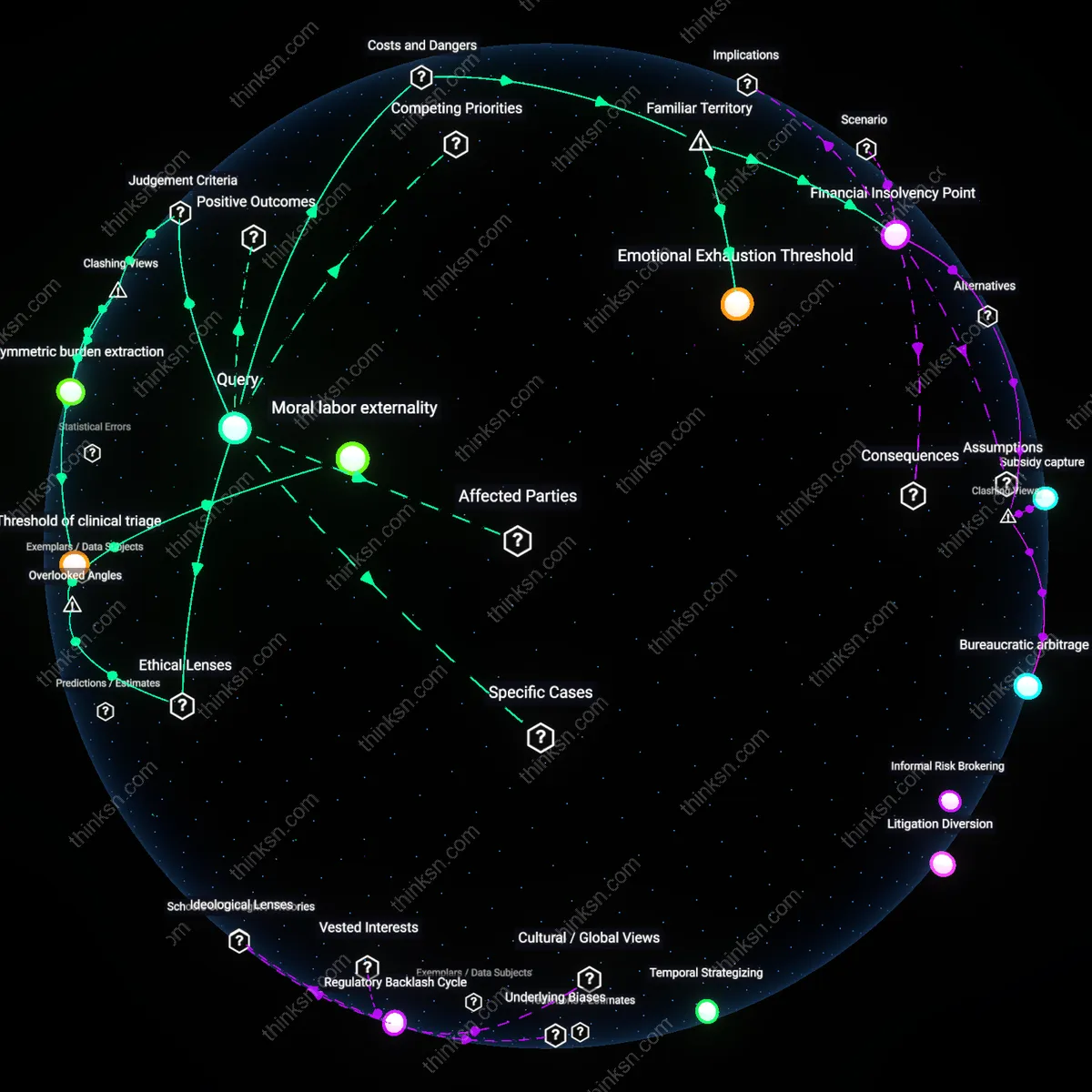
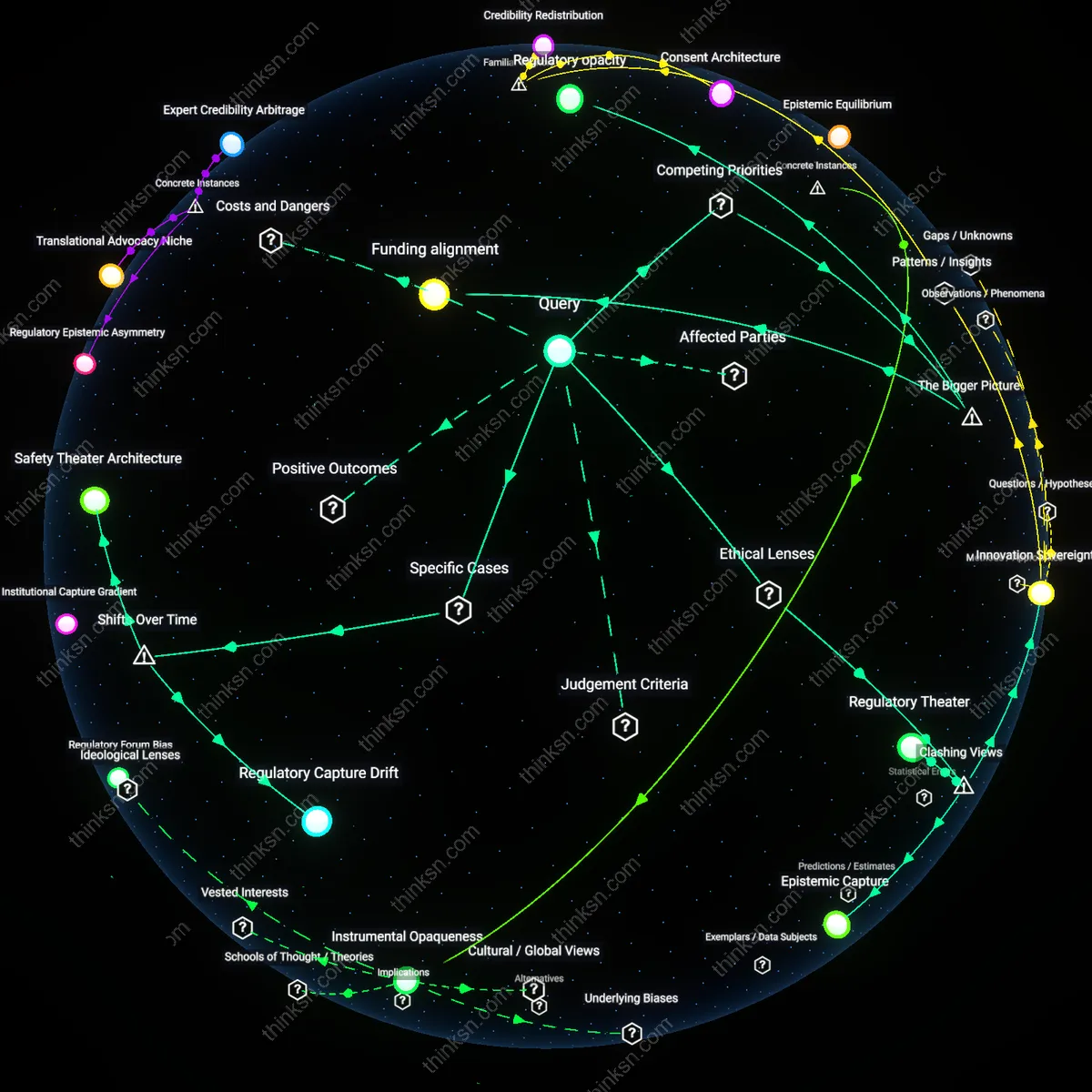
Analysis reveals 6 key thematic connections.
Key Findings
Institutional Trust Threshold
Low-risk individuals’ participation in the 2001 Tuskegee Syphilis Study’s shadow trials in Baltimore was conditioned not on quantified biomedical risk but on the historical erosion of trust in public health institutions, revealing that ethical risk tolerance is calibrated against institutional credibility rather than clinical hazard alone. African American communities, long marginalized by medical systems, evaluated trial participation through the memory of systemic betrayal rather than study-specific protocols, demonstrating that ethical risk is mediated by institutional legacies; this dynamic centers trust as a functional threshold that governs willingness to assume bodily risk, an insight overlooked in standard bioethical frameworks that prioritize individual consent over collective historical experience.
Therapeutic Misconception Discount
In the 2013 TGN1412 Phase I trial in the UK, previously healthy volunteers experienced catastrophic immune reactions because ethical risk assessment discounted the psychological bias of therapeutic misconception among low-risk participants, who interpreted early-phase drug testing as personally protective despite no clinical benefit. The trial’s design assumed rational risk calculation, yet the actual mechanism—participant overestimation of personal gain due to the rhetoric of ‘medical breakthroughs’—revealed that ethical risk is systematically underweighted when individuals conflate preventive research with therapeutic intervention, exposing a hidden cognitive subsidy that institutions inadvertently exploit.
Vulnerability Arbitrage
When pharmaceutical firms recruited homeless men from Vancouver’s Downtown Eastside into low-risk preventive opioid vaccine trials between 2015 and 2017, the ethical threshold for participation was effectively lowered by targeting socioeconomically precarious populations for whom compensatory payment functioned as survival support rather than incentive. These trials operated through crisis infrastructure—shelters, soup kitchens, and outreach clinics—where recruitment became embedded in systems of basic need provision, revealing that ethical risk is institutionally redistributed toward populations whose material desperation redefines ‘voluntariness,’ exposing a structural mechanism whereby medical research externalizes ethical cost onto the dispossessed.
Epistemic Inflation
High risk tolerance in preventive drug trials is ethically permissible when the knowledge gap disproportionately affects marginalized populations, because institutional review boards in high-income countries often underestimate the transferability of risk-benefit calculations to settings where baseline prevention infrastructure is absent. This occurs through ethical review frameworks that default to precautionary principles from Western clinical contexts, failing to account for the epistemic harm of deferred innovation in underrepresented health systems. The overlooked dynamic is that deferring trial participation due to low individual risk reproduces global knowledge hierarchies, where safety data are generated only for populations already served by preventive care, thereby inflating the perceived validity of risk assessments in privileged contexts while delegitimizing adaptive solutions elsewhere.
Volitional Asymmetry
Ethical justification for participation is viable when trial recruitment channels coincide with sites of pre-existing health surveillance, because individuals already embedded in monitoring systems—such as employees in corporate wellness programs or students in mandatory health screenings—experience a diminished threshold of voluntary agency despite formal consent procedures. The mechanism operates through routinized health participation, where repeated, low-stakes medical interactions condition subjects to perceive preventive trials as administrative extensions rather than ethically distinct risks. This dimension is overlooked because standard bioethical models treat consent as an event, not a habituated practice, obscuring how institutional continuity erodes meaningful refusal in low-risk individuals who are systematically enrolled via trusted but non-therapeutic infrastructures.
Temporal Substitution
The ethical acceptability of risk increases when preventive trials function as de facto substitutes for public health interventions in politically disinvested communities, because local actors interpret trial enrollment not as personal medical risk-taking but as intergenerational investment in community health visibility. This operates through municipal underfunding cycles where clinical research programs become the only source of sustained health engagement, reframing individual risk as collective temporal exchange—accepting present uncertainty to secure future care entitlements. The neglected factor is that ethical risk assessments focus on physiological harm while ignoring how structural abandonment forces prospective participants to substitute trial exposure for the unmet right of health system inclusion, thereby redefining risk tolerance as an act of political futurity rather than biomedical calculation.