Eco-Grief: Rational Response or Paralyzing Risk?
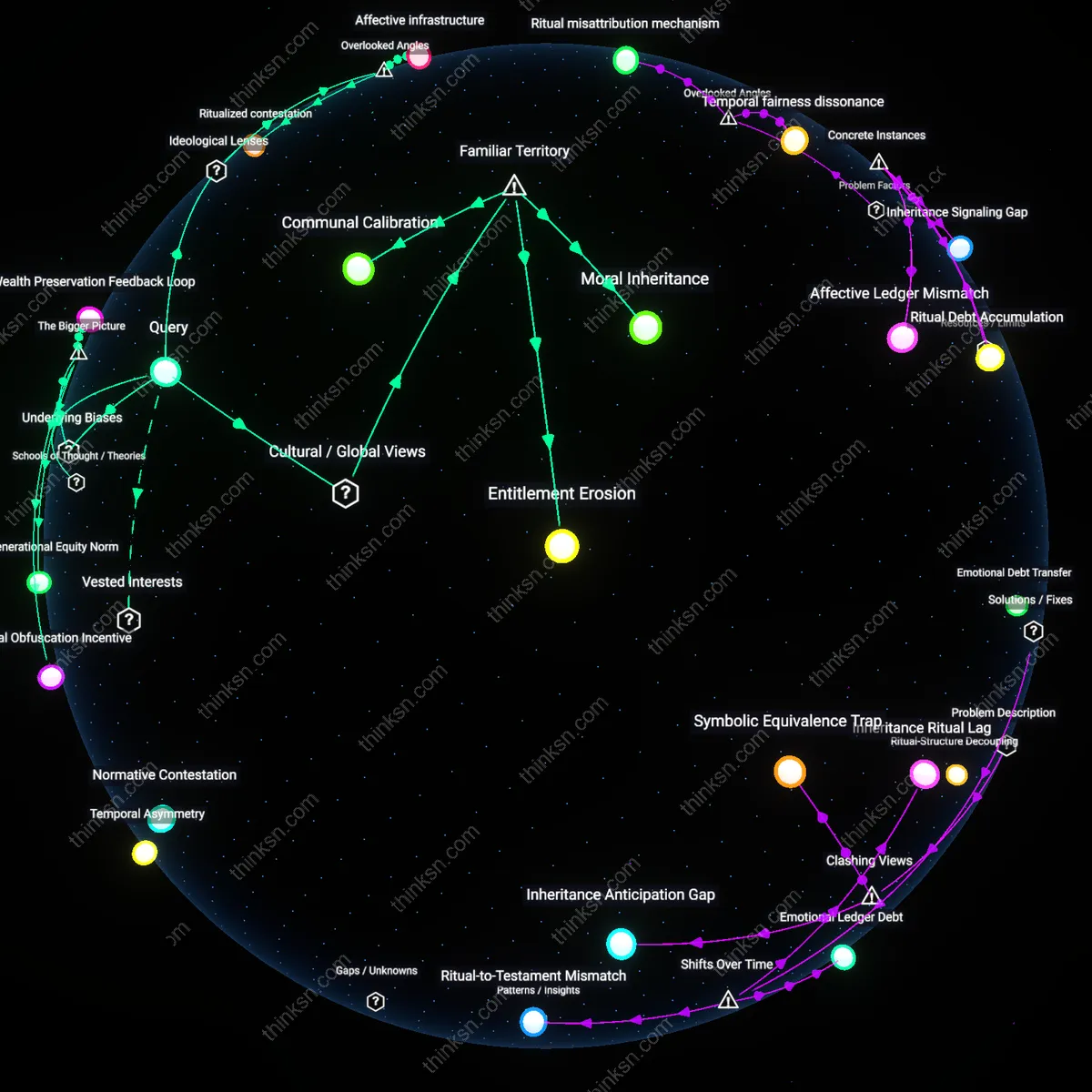
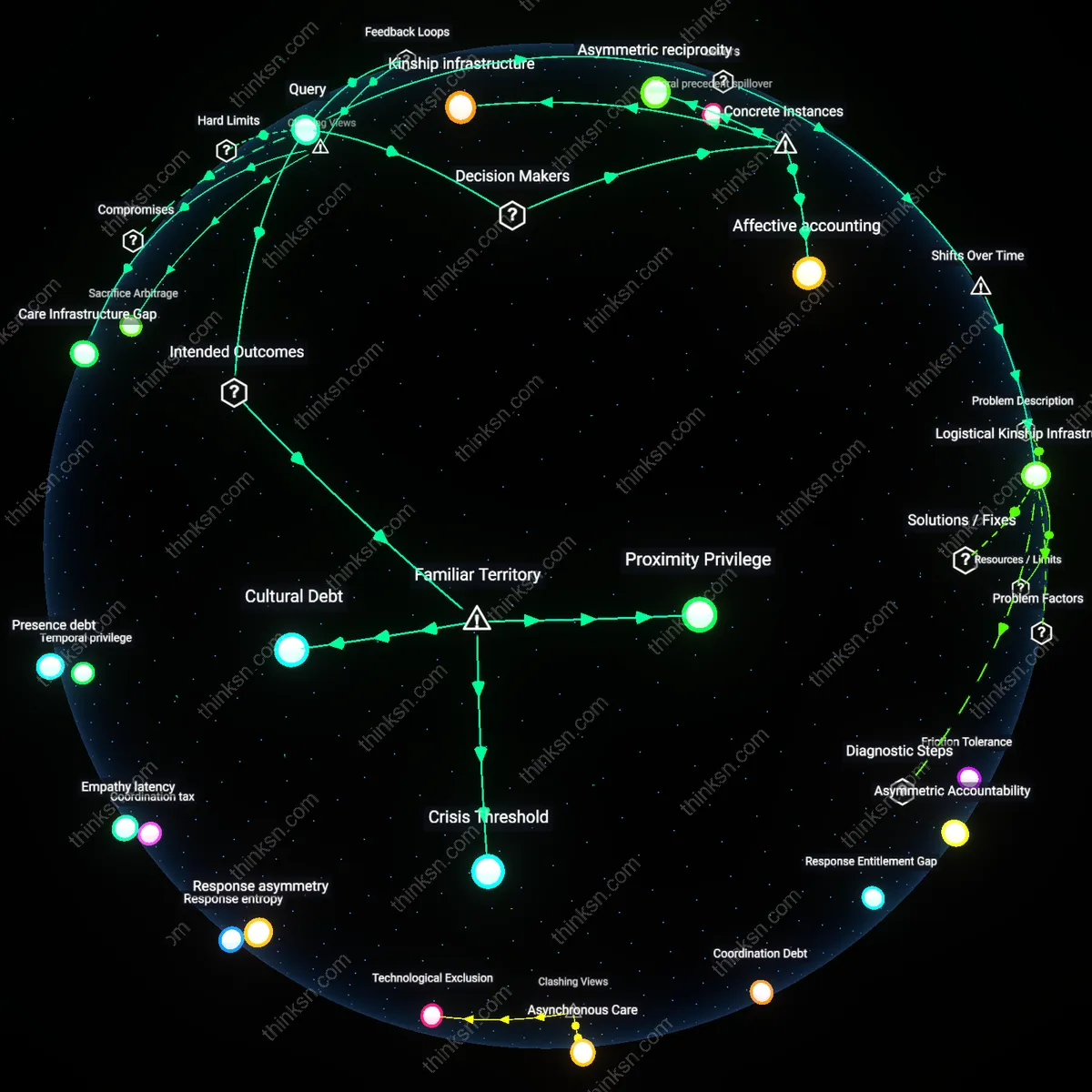
Analysis reveals 7 key thematic connections.
Key Findings
Temporal bandwidth
Eco-grief is a rational reaction that can enhance political engagement when it aligns with actors’ temporal bandwidth for future risk perception, particularly among urban professionals in high-income countries who experience climate disruptions as repeated near-miss events rather than direct harms. These individuals process eco-grief not as paralyzing despair but as a signal of violated expectations about linear societal progress, which, when channeled through time-flexible civic platforms like municipal resilience task forces, can accelerate policy experimentation. The overlooked mechanism here is temporal bandwidth—the often-invisible cognitive capacity to project emotional stakes across long time horizons—because most analyses treat time as a neutral backdrop rather than a distributive resource that shapes whose grief becomes politically actionable. When temporal bandwidth is low, eco-grief appears inert; when high, it functions as anticipatory moral accounting.
Emotional infrastructure
Eco-grief hinders political engagement when communities lack emotional infrastructure—such as intergenerational mourning rituals or trusted local mediators—that transforms personalized distress into collective agency, a dynamic evident in Indigenous coastal communities facing forced relocation due to sea-level rise. In these settings, grief accumulates in silence because formal climate adaptation programs ignore the affective preconditions for mobilization, treating emotion as noise rather than a structural component of resilience. The absence of emotional infrastructure means eco-grief leaks out as withdrawal or medicalized depression rather than protest or policy demand, revealing that affective coherence is a prerequisite for sustained activism. This dependency is routinely bypassed in climate psychology and policy design, which privilege information and incentives over emotional continuity.
Grief asymmetry
Eco-grief is irrational as a widespread political motivator because it operates through grief asymmetry—the uneven moral weight assigned to visible ecological losses (e.g., charismatic megafauna, ancient forests) versus invisible systemic degradation (e.g., soil microbiome collapse, atmospheric nitrogen cycles), skewing advocacy toward symbolically potent but ecologically narrow interventions. This distortion benefits NGOs reliant on donor appeal, such as international conservation groups that prioritize polar bear campaigns over groundwater depletion in South Asian agriculture, thereby reshaping engagement agendas away from systemic leverage points. The overlooked driver is not grief itself, but the semiotic economy of environmental loss that commodifies sorrow, privileging photogenic suffering over diffuse harm and entrenching a politics of visibility that undermines holistic policy coalitions.
Moral Injury of Delay
Eco-grief is a rational response to environmental inaction when viewed through the lens of intergenerational justice, a principle central to environmental ethics and human rights law; this judgment emerges from the post-1987 shift when the Brundtland Commission’s definition of sustainable development created a legal-moral expectation that future generations’ welfare would inform present policy, making the emotional recognition of betrayal by institutions a cognitively appropriate response to the gap between normative commitments and actual governance. The failure of states to meet emissions targets post-Kyoto (1997) solidified this affective reaction as a form of moral injury—not just personal sorrow, but a systemic mismatch between espoused duties and institutional action—revealing how ethical frameworks institutionalized in one era can generate new forms of psychological consequence in another when violated.
Temporal Reparations Debt
Eco-grief becomes irrational only when measured against neoliberal environmentalism’s redefinition of political temporality after 1990, when climate action was reframed as a series of market-based, incremental adjustments rather than an urgent ethical reckoning, thus pathologizing anticipatory mourning for future losses as ‘premature’ or ‘unproductive’; this shift—from crisis response to managed adaptation—converted existential loss into actuarial risk, rendering grief politically unintelligible not because it lacks basis, but because it references a moral timeline that exceeds the short electoral and fiscal cycles that now govern environmental policy. The residual condition this produces is a temporally dislocated ethics, where rationality is bound to present institutional time, and grief indexes a debt owed across decades that no current mechanism acknowledges or can repay.
Grief as Political Catalyst
Eco-grief can re-energize political engagement when channeled through collective action, as seen in the Sunrise Movement’s mobilization of youth following climate-related disasters. After Hurricane Maria devastated Puerto Rico in 2017, young activists—many with familial ties to the island—transformed personal trauma into a public campaign demanding federal climate accountability, illustrating how emotionally rooted responses can become politically strategic when institutional neglect is perceived. The movement leveraged media narratives of loss not as endpoints but as mobilizing frames, revealing that grief, when organized, disrupts depoliticized despair and forges new forms of civic agency. This case challenges the assumption that emotional distress is inherently disempowering, showing instead how it can seed insurgent politics when tied to shared identity and moral outrage.
Paralyzing Sincerity
In rural Tasmania, where decades of industrial logging eroded ancient temperate rainforests despite sustained scientific warnings and community protests, long-term eco-grief among conservationists led to a quiet withdrawal from formal political processes. Figures like Bob Brown and groups such as the Tasmanian Wilderness Society witnessed incremental environmental loss despite repeated advocacy, fostering a sense that systemic inaction rendered participation futile. Over time, this erosion of efficacy shifted engagement from lobbying and litigation to retreat into personal ethical living—like off-grid subsistence—revealing how prolonged exposure to policy failure can transmute grief into a disabling sincerity, where emotional truth replaces political strategy. The case exposes how credibility in one’s moral position, when repeatedly ignored, may paradoxically deepen disengagement.