Free Budgeting Apps: Security Risks vs. Convenience?
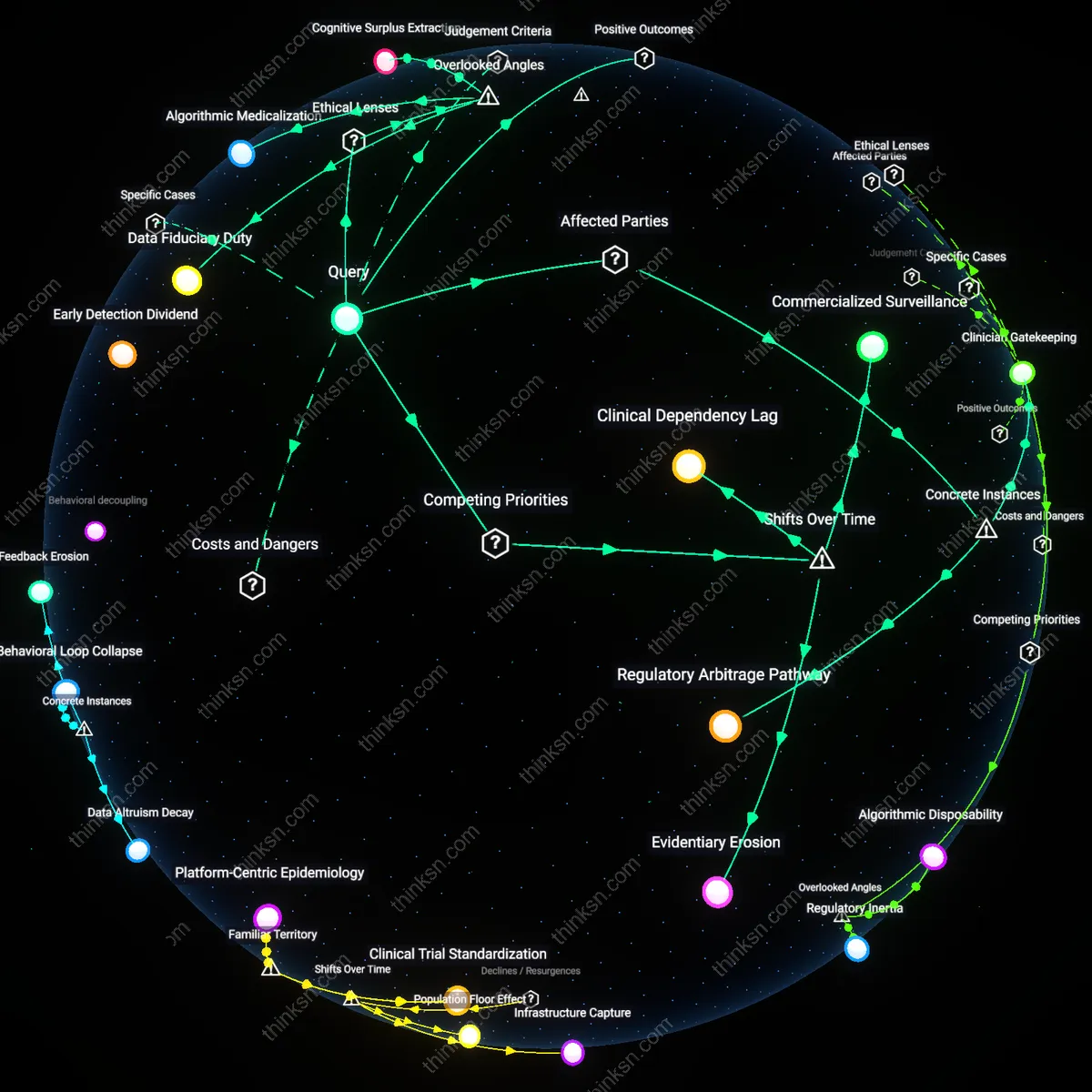
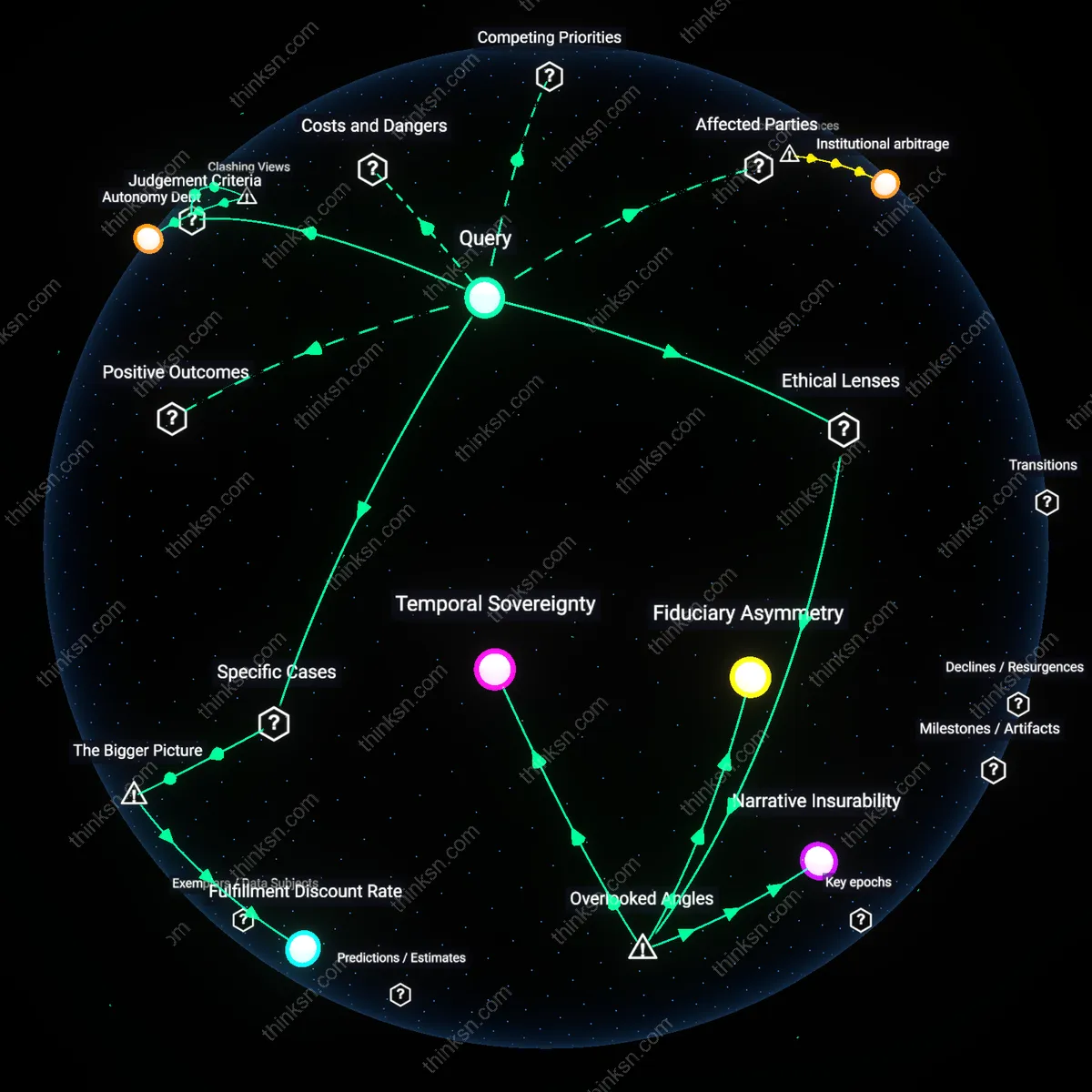
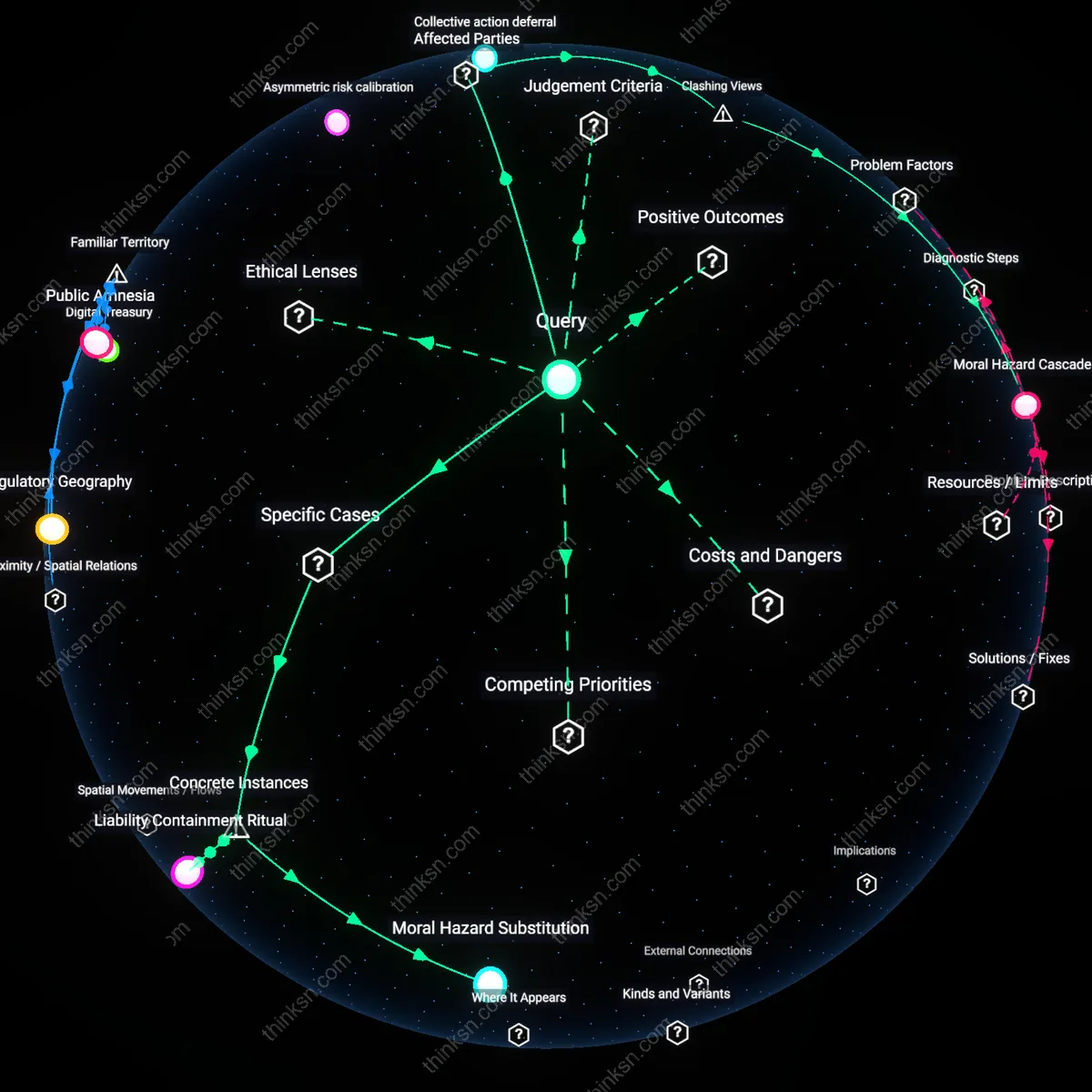
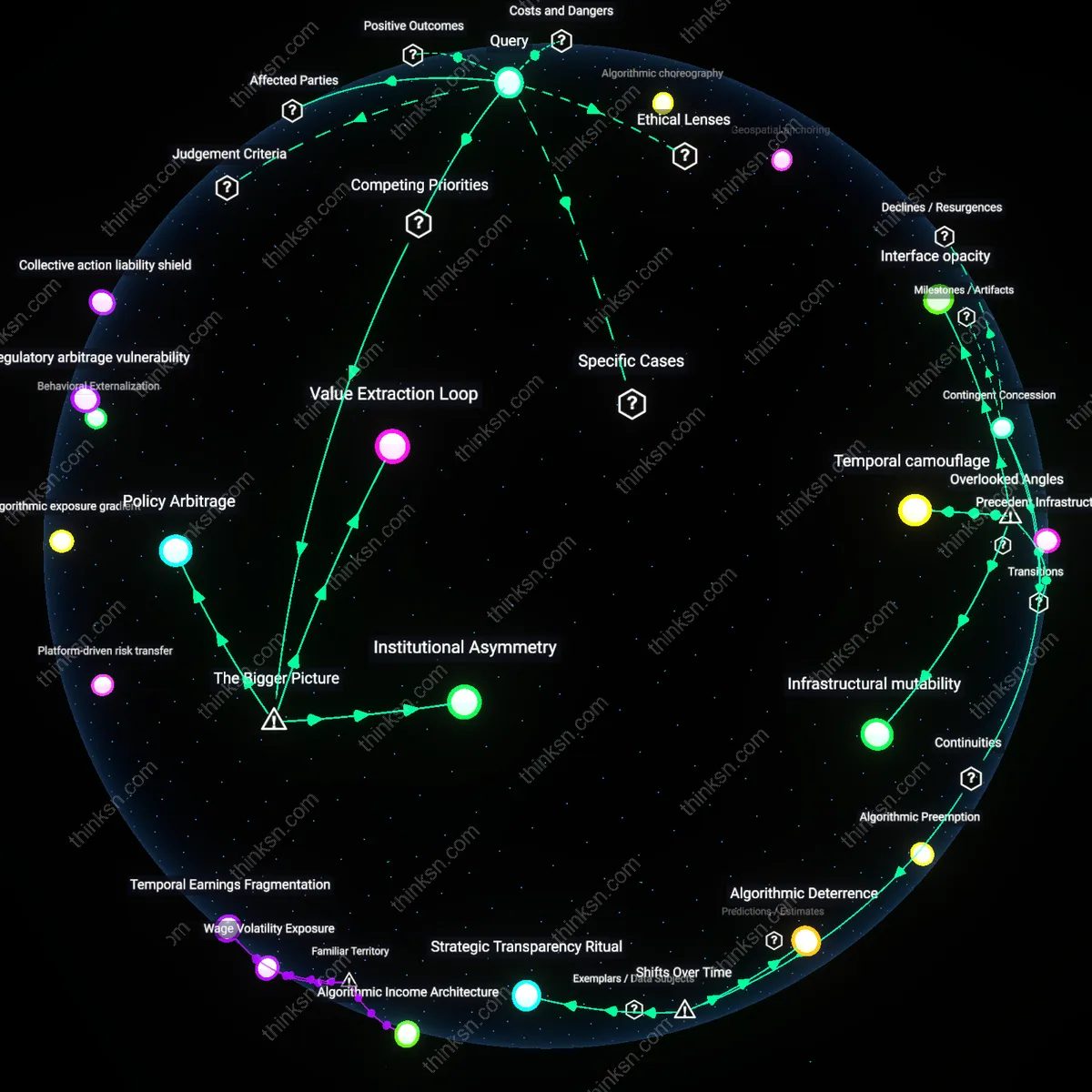
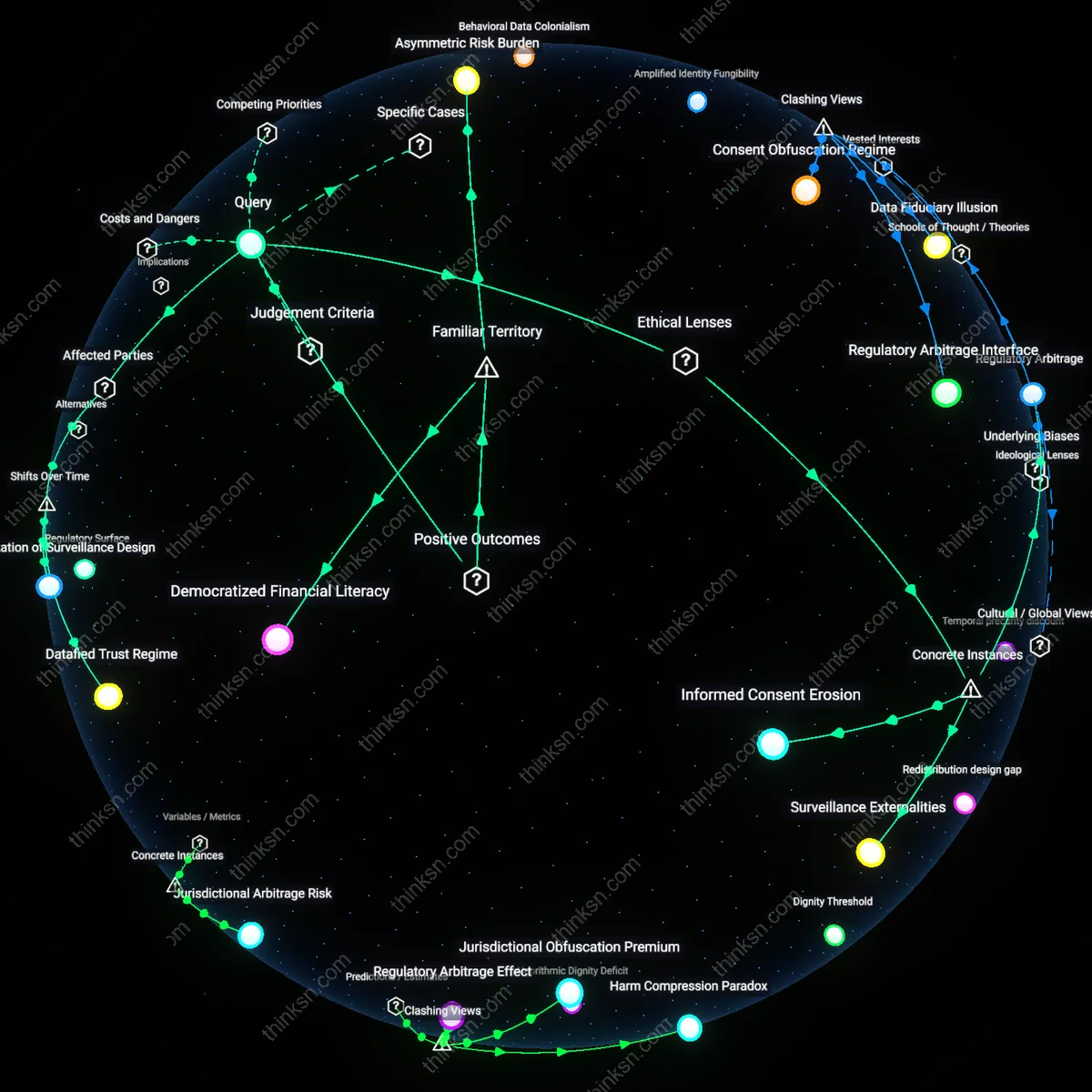
Analysis reveals 9 key thematic connections.
Key Findings
Datafied Trust Regime
The shift from institutional banking relationships to algorithmic personal finance tools after 2010 transferred trust from regulated entities like credit unions to unregulated fintech startups, embedding financial monitoring in consumer apps that monetize behavioral data; this realignment reframed user convenience as continuous data exposure, where the mechanism of budgeting automation depends on persistent access to transactional feeds, making data breaches not accidental but systemic byproducts of the service model—revealing how financial self-discipline is now institutionally outsourced to platforms with weak fiduciary obligations, a transformation normalized by the smartphone era’s expectation of frictionless control.
Asymmetric Risk Adoption
Beginning in the mid-2000s, the rollout of free digital budgeting tools like Mint created a new risk dynamic where low- and middle-income users—disproportionately unbanked or underbanked—gained access to financial planning previously reserved for wealth advisory clients, yet this inclusion relied on API aggregators that store credentials across multiple financial institutions, shifting breach vulnerability from centralized bank databases to fragmented third-party servers; the underappreciated consequence is that marginalized populations, who benefit most from these tools, also face disproportionate harm when data is compromised, exposing a temporal divergence between democratized access and equitable security investment.
Normalization of Surveillance Design
Since the 2015 consolidation of financial data aggregators under firms like Intuit and Yodlee, the integration of budgeting apps into core banking experiences has redefined constant data scraping as standard practice, embedding surveillance architecture into everyday money management such that opting out of data sharing means forfeiting functionality; this pivot from discrete data entry to automatic synchronization has made financial visibility contingent on surrender, revealing that the modern convenience-security tradeoff is not a balance but an engineered dependency shaped by the post-2010 API economy’s capture of personal finance infrastructure.
Democratized Financial Literacy
Free budgeting apps directly expand access to financial planning tools for low-income households who previously lacked affordable options. By automating expense tracking and goal setting through user-friendly interfaces, these apps function as de facto financial education platforms, particularly on smartphones in urban and suburban America where banking deserts persist. The underappreciated shift is that convenience here doesn't just mean time savings—it transforms financial agency for populations traditionally excluded from professional financial advice.
Normalized Data Surveillance
The widespread adoption of free budgeting apps reinforces the public assumption that sharing transaction-level financial data is a reasonable price for convenience. This normalization occurs through familiar onboarding flows that mirror other consumer apps, embedding data surrender into routine digital behavior, especially among millennials and Gen Z users on platforms like iOS and Android. The overlooked consequence is that such habituation weakens collective resistance to intensified financial data harvesting, even when breaches expose patterns far beyond individual apps.
Asymmetric Risk Burden
Low-income users gain the most functional benefit from free budgeting tools but disproportionately suffer the consequences of data breaches due to limited recourse and recovery resources. These breaches often expose detailed spending habits that can be weaponized through discriminatory lending or predatory marketing, particularly in communities of color where trust in formal financial institutions is already eroded. The unspoken dynamic is that convenience operates as a lure that redistributes risk upward, masking systemic vulnerability under the guise of universal accessibility.
Informed Consent Erosion
The 2017 Equifax breach, in which sensitive financial data of 147 million Americans was exposed due to inadequate security in a system users did not voluntarily choose, reveals that consent in free budgeting apps is structurally compromised when data is monetized or shared with third parties without transparent opt-in mechanisms. This failure operates through the asymmetry of information between users and fintech platforms, where the guise of convenience masks the irreversible surrender of financial privacy. The non-obvious insight is that even ethically designed consent frameworks collapse when data is repurposed beyond the original user agreement, rendering autonomy a procedural fiction rather than a substantive right.
Regulatory Arbitrage
The 2020 enforcement action against Clearview AI by the FTC exposed how free apps leveraging financial-like personal data operate in legal gray zones by exploiting gaps between consumer protection laws and financial privacy statutes like GLBA. When budgeting apps harvest transaction data under terms of service rather than banking regulations, they evade fiduciary obligations while functioning as de facto financial intermediaries. The significance lies in how companies strategically position themselves outside regulatory perimeters, using technological ambiguity to avoid accountability—revealing that convenience is often subsidized by deliberate legal underclassification.
Surveillance Externalities
The 2018 integration of Mint with Intuit’s TurboTax ecosystem demonstrated how aggregated budgeting data enables predictive behavioral profiling that extends far beyond financial planning, such as targeted tax product upselling based on intimate life events inferred from transaction patterns. This mechanism functions through data spillover within corporate conglomerates, where convenience apps act as on-ramps to broader surveillance infrastructures. The underappreciated dynamic is that individual risk is not limited to breach likelihood but includes systemic exploitation of aggregated behavioral data for profit—transforming personal finance tools into instruments of commercial social engineering.