Income Volatility Hedge
Treat freelance income volatility not as a risk to smooth over but as a signal to build asymmetric financial advantages through time-bounded asset lockups. Freelancers who designate a fixed percentage of high-earning months into inaccessible accounts—enforced by smart contracts or institutional intermediaries—exploit their own income instability to create forced savings that counteract future dry spells, a mechanism observed in gig-platform workers using prepaid rent vehicles in cities like Berlin and Austin. This contradicts the dominant planning model that prioritizes income stabilization through diversification or insurance, revealing that strategic self-constraint under hard liquidity limits can outperform predictive financial modeling in irregular income streams.
Pension Arbitrage Window
Design career phases around temporary opt-outs from contributory pension systems by leveraging jurisdictions with portable, non-employer-tied retirement vehicles—such as the Swedish IPS or Dutch individual pension accounts—allowing freelancers to redirect otherwise mandated contributions into higher-yield, personally controlled investments during peak earning windows. This approach treats pension unreliability not as a personal shortcoming but as a structural inefficiency that skilled workers can exploit across regulatory borders, challenging the assumption that continuity in pension contributions is inherently optimal, and exposing a temporal loophole where short-term 'pension detachment' increases long-term autonomy.
Meaning Premium Tax
Accept that pursuing meaningful freelance work imposes a predictable financial penalty—akin to a 'tax' on purpose—and pre-emptively structure contracts to extract compensatory premiums by embedding clauses that trigger automatic rate escalation when projects align with personal values or social impact metrics, as codified in cooperatively governed freelance platforms in Italy and Quebec. This reframes financial resilience not as a product of income volume but of intentional value extraction from non-market logics, clashing with the mainstream view that meaning and money must be balanced trade-offs, instead proving that meaning itself can be securitized into contractual financial instruments.
Deferred Dependence
Shift contractual anchoring from retirement-dated payouts to project-structured income floors to recalibrate work design around episodic security. Freelancers in the post-2008 gig economy increasingly couple platform-based gigs with union-backed portable benefit agreements—such as those piloted by Freelancers Union in New York—which decouple health and retirement accruals from single employers and tie them to verifiable work periods, making income floor commitments (e.g., minimum per-project payments) a binding condition of contract formation rather than a post-hoc safety net. This move reframes financial resilience not as deferral to a future pension disbursement but as distributed, time-bound guarantees embedded in freelance workflows—revealing how the erosion of defined benefit schemes since the 1980s has pushed risk-bearing onto individuals, who now engineer reverse-structured stability by repurposing short-term contracts as building blocks of long-term security.
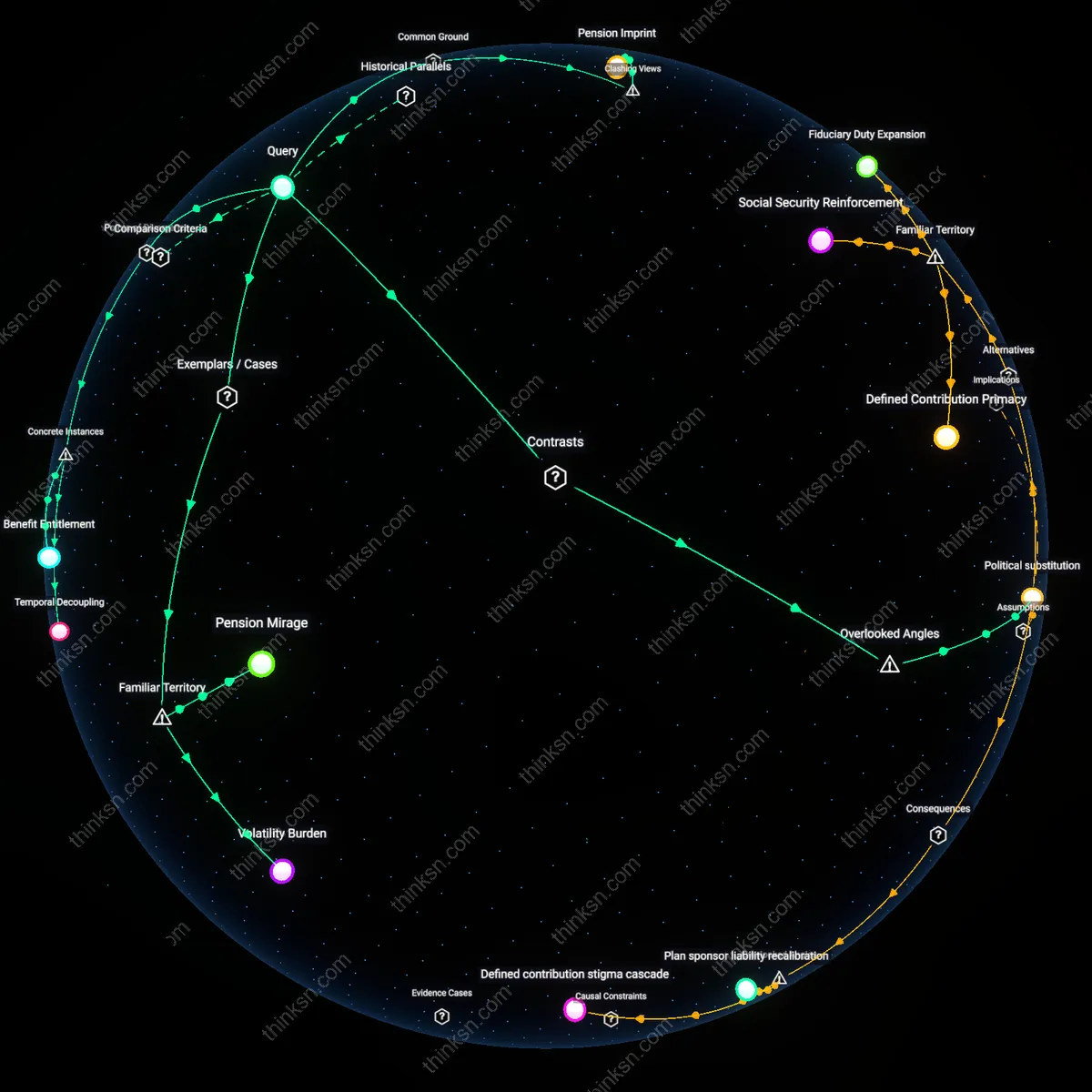
Pension Arbitrage
Freelancers who strategically time formal employment episodes to capture employer-contributed pension benefits while otherwise operating independently create a reinforcing feedback loop that stabilizes long-term retirement exposure. This is possible because public and private pension schemes in countries like Germany and France require only minimum contribution durations to secure pro-rated lifetime payouts, allowing workers to alternate between freelance income and short-term contracts with firms seeking flexible labor—such as tech consultancies or creative agencies—thereby gaming the social insurance system without violating eligibility rules. The non-obvious dynamic is that pension systems designed to promote labor stability inadvertently enable strategic labor mobility, turning statutory benefits into hybridized, self-managed retirement vehicles sustained by cyclical re-entry into formal employment.
Platform Co-Opposition
When freelance platform users collectively withhold data or manipulate engagement metrics—such as by coordinating periods of inactivity or inflating bid prices through collusive underbidding—they trigger a balancing feedback loop that forces platforms like Upwork or Fiverr to renegotiate terms of work or risk ecosystem collapse. This occurs because platform valuations depend on the illusion of organic supply-demand equilibrium, which is disrupted when freelancers act as a de facto labor bloc exploiting their aggregated structural position within algorithmically managed markets. The underappreciated reality is that even decentralized gig workers can generate countervailing power not through formal unions, but by weaponizing their micro-level behavioral inputs to alter macro-level platform economics, thereby securing more resilient income conditions outside pension-dependent retirement models.
Skill Half-Life Hedging
Professionals who orient their freelance careers around skills with longer industry half-lives—such as regulatory compliance in finance or clinical research methodology—create a self-sustaining feedback loop in which aging does not erode income potential because demand remains stable across economic cycles and technological shifts. This stability arises from institutional inertia in highly regulated sectors like pharmaceuticals or energy, where change is bottlenecked by legal and safety constraints, enabling mid-career experts to command premium rates without constant retraining. The overlooked driver is that resilience in freelance work does not stem from adaptability alone, but from deliberately selecting domains where systemic resistance to innovation protects experienced practitioners from displacement, making long-term financial planning less dependent on pension assurances.
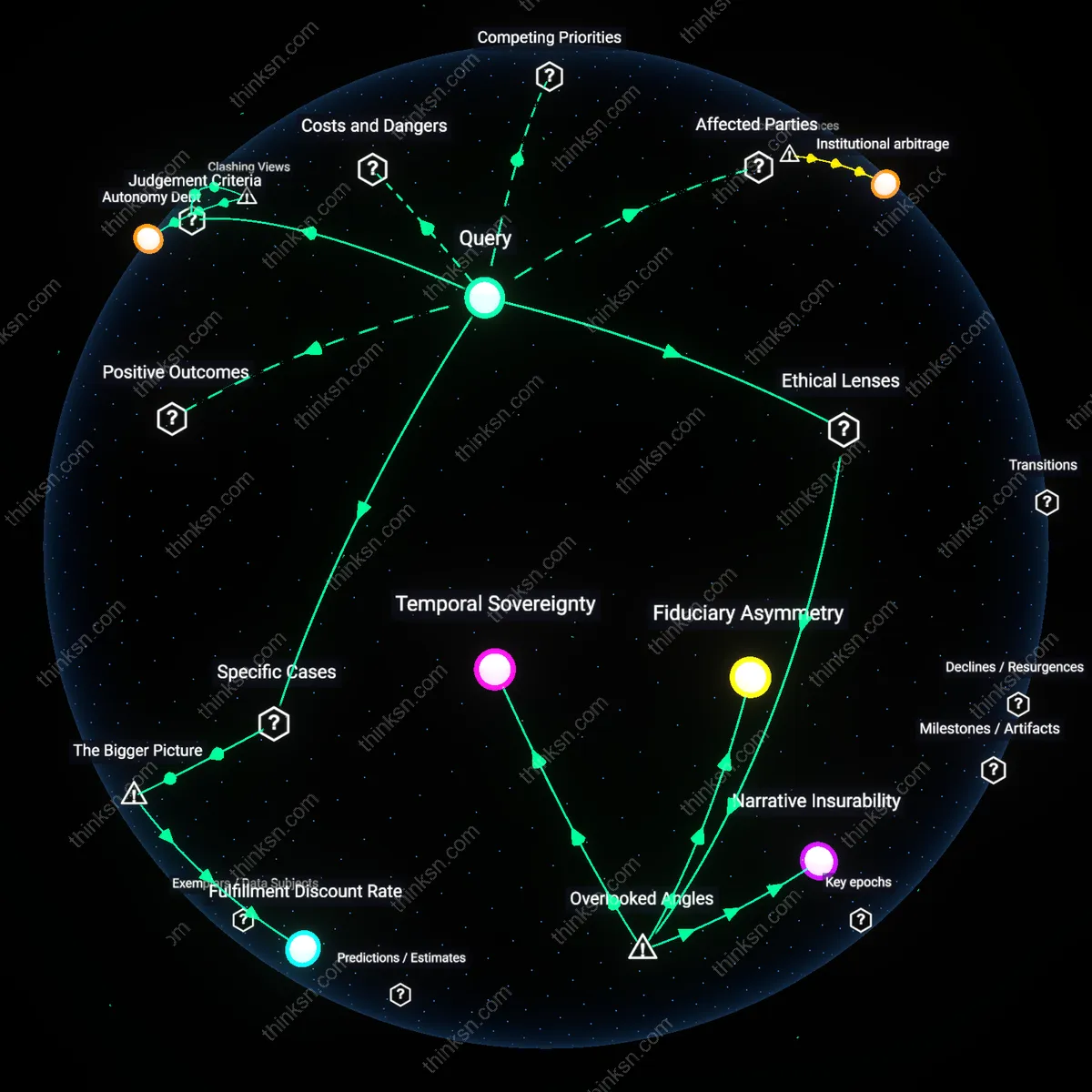
Institutional arbitrage
Shift toward industries where public-sector pension spillovers create private freelance safety nets, as seen in Nordic creative sectors where municipal arts grants enable self-employed artists to sustain income during retirement transitions. In Sweden, Statens Kulturråd (the Swedish Arts Council) administers individual project grants that accumulate toward state-recognized pension credits for freelance designers, writers, and performers—blurring the boundary between gig work and pensioned employment. This system emerged from union-led negotiations embedding freelance eligibility into cultural policy, not labor law, revealing that pension resilience can be backdoored through sector-specific public funding rather than generalized labor reform. The non-obvious insight is that pension reliability can be gamed by aligning freelance work with politically strategic public institutions, not by mimicking traditional employment.
Temporal stacking
Design overlapping income phases across decades by leveraging corporate sabbatical programs structured to seed freelance transitions, exemplified by Siemens AG’s long-standing internal mobility system that permits German engineers to pause salaried roles for up to three years to pursue independent technical consulting while retaining pension accrual and health benefits. This mechanism functions because Siemens treats career interludes as innovation incubation periods, crediting freelance technical work toward internal seniority if documented outcomes meet R&D benchmarks. The program persists due to codetermination laws granting German works councils veto power over workforce planning, incentivizing companies to embed flexibility into stable employment models. The underappreciated reality is that freelance resilience depends not on leaving institutions but on institutions sanctioning temporary exits that preserve long-term financial continuity.
Credential collateralization
Convert occupational expertise into self-sustaining revenue vehicles through professional associations that issue tradable certifications, as demonstrated by the American Institute of Certified Public Accountants (AICPA) enabling freelance CPAs to monetize their credentials via subscription-based compliance toolkits and continuing education platforms that generate passive retirement income. AICPA members can license proprietary audit frameworks to fintech startups or teach accredited courses through the association’s digital marketplace, where royalty streams accrue in tax-advantaged retirement accounts linked to licensure status. This model thrives because state licensing boards delegate standard-setting to AICPA, giving its credentials legal force and market exclusivity. The overlooked dynamic is that freelance financial resilience emerges not from project work but from institutionalized knowledge control—where professional legitimacy becomes a revenue-generating asset independent of active labor.
Skill Stack Portability
Build a transferable skill stack across freelance roles to maintain income continuity despite pension instability. Freelancers who cultivate interoperable competencies—such as digital product design, data literacy, or cross-platform content creation—leverage labor markets that reward modular expertise, allowing rapid re-employment in adjacent sectors when demand shifts; this operates through platform economies like Upwork or Fiverr, where reputation systems weight technical range over employment history, a mechanism most overlook because public discourse equates retirement planning with employer affiliation, not asset-like skill design.
Clients as Pension Anchors
Treat long-term freelance clients as functional pension providers by structuring contracts to include recurring revenue and exit incentives. When independent workers negotiate retainers, automatic renewals, or equity in client projects, they embed financial resilience directly into client relationships—systems that mimic employer-sponsored security without institutional sponsorship; this is underappreciated because people associate pension reliability with state or corporate actors, not bilateral service agreements that can be intentionally designed to amortize longevity risk.
Income Architecture Diversity
Diversify income architecture by combining time-based gigs with asset-based revenue streams such as templates, courses, or licensed work. Freelancers who convert episodic labor into reusable digital products—via marketplaces like Gumroad or Teachable—create compounding income layers that reduce dependence on continuous work hours, operating through the infrastructural shift toward low-friction micro-entrepreneurship; this contrasts with the dominant narrative that equates freelance stability solely with workload volume, ignoring how monetizable outputs can restructure financial exposure over time.