Investing in Flood Defense: Uncertainty and High Risk?
Analysis reveals 4 key thematic connections.
Key Findings
Adaptive governance
A community should institutionalize iterative decision-making that adjusts flood-defense investments based on monitoring hydrological data and infrastructure performance, because rigid long-term planning locks in assumptions that may not survive climate variability. This approach activates a balancing feedback loop where new data from storm events or sensor networks triggers reassessment of risk models and spending priorities, involving local government engineers, climate scientists, and emergency managers in cyclical review processes. Unlike one-time infrastructure bets, this mechanism prevents system instability caused by overconfidence in predictive models, revealing how the *non-obvious* need for procedural flexibility becomes critical when physical and climatic systems outpace static engineering solutions. The connection holds through formalized review cycles that convert environmental feedback into policy adjustment, resisting the reinforcing loop of escalating commitment to obsolete designs.
Spatial inequity feedback
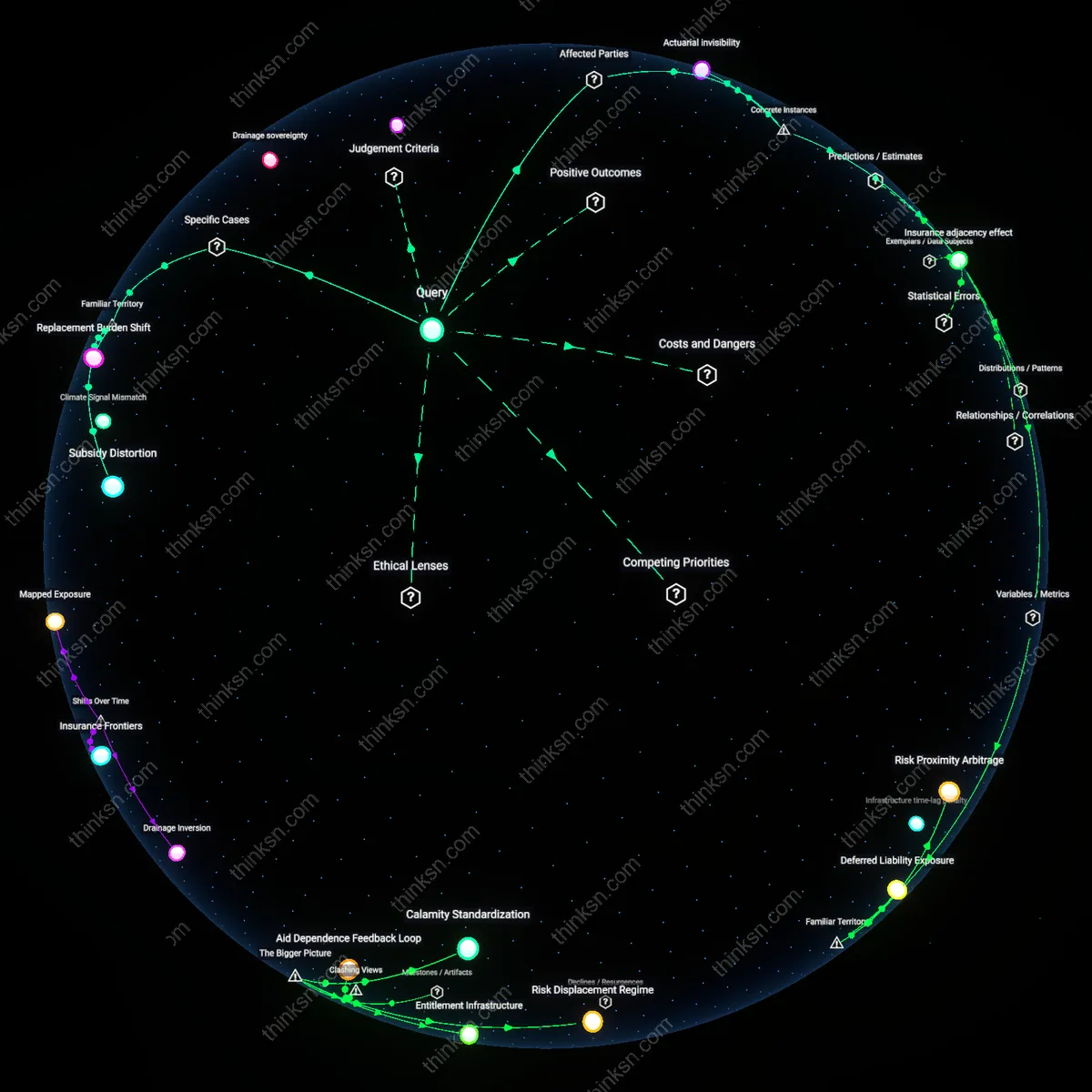
A community should prioritize flood-defense investment by mapping how protection for certain areas redistributes water stress to lower-elevation or politically marginalized neighborhoods, because engineered defenses often create a reinforcing feedback loop where safer zones attract more development, increasing downstream runoff and flood risk elsewhere. This dynamic involves zoning boards, real estate developers, and civil engineers who respond to perceived safety with intensified construction, thereby amplifying pressure on unprotected areas and reducing system-wide resilience. The non-obvious insight is that flood defenses can destabilize regional hydrology and social equity simultaneously, not merely protect—this feedback is enabled by fragmented jurisdictional authority that allows one municipality to impose externalities on another through altered drainage patterns. The causal factor is the misalignment between hydrological basins and political boundaries, which allows localized risk reduction to generate broader systemic risk.
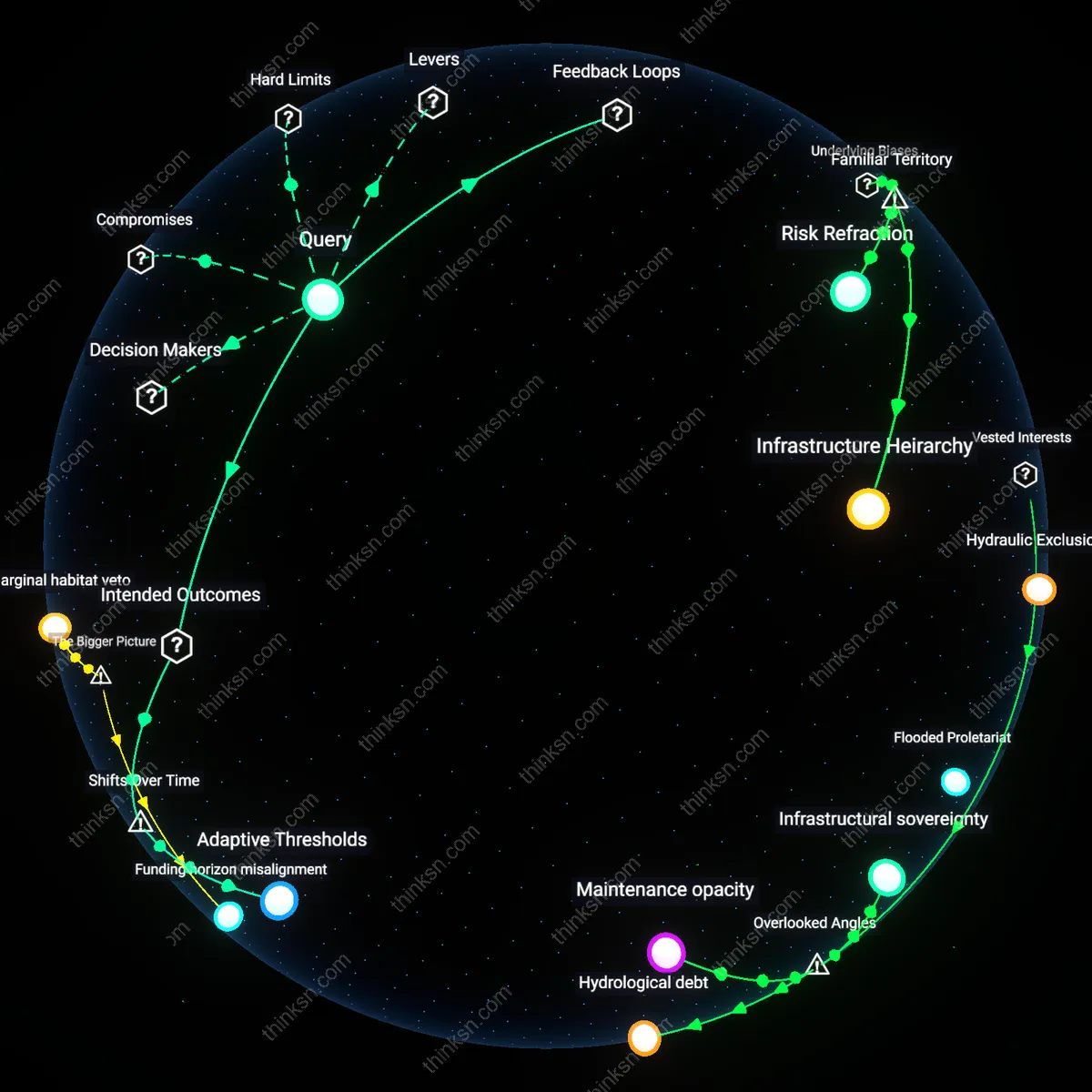
Adaptive Thresholds
A community should decide on flood-defense investment by institutionalizing real-time hydrological feedback into participatory budgeting cycles, so that funding thresholds automatically escalate as sensor networks register intensification of rainfall extremes. This mechanism embeds shifting climate baselines directly into fiscal decision-making through interoperable systems—like the Dutch Rijnland water board’s integration of river stage data with autonomous levy adjustments—which reveals that the traditional separation between infrastructure planning and environmental monitoring has collapsed under chronic uncertainty. The non-obvious insight is that democratic legitimacy now accrues to systems that dynamically couple ecological data streams to financial authority, rather than to static referenda or fixed master plans.
Temporal Veto
A community should decide on flood-defense investment by granting future residents' representatives a binding deliberative role in present-day approval processes, modeled after New Zealand’s Te Awa Tupua legislation that confers legal standing to rivers. This intergenerational veto power emerged as a distinct mechanism only after post-2010 climate litigation exposed the democratic deficit of discounting beyond-2100 impacts, rendering obsolete the assumption that current majorities can fully dispose of long-range risks. The underappreciated insight is that uncertainty no longer justifies delay—it inverts responsibility, elevating future non-existence participants into tangible political constraints on today’s capital choices.