Expert Debate: How Much Exercise for Teens with Busy Schedules?
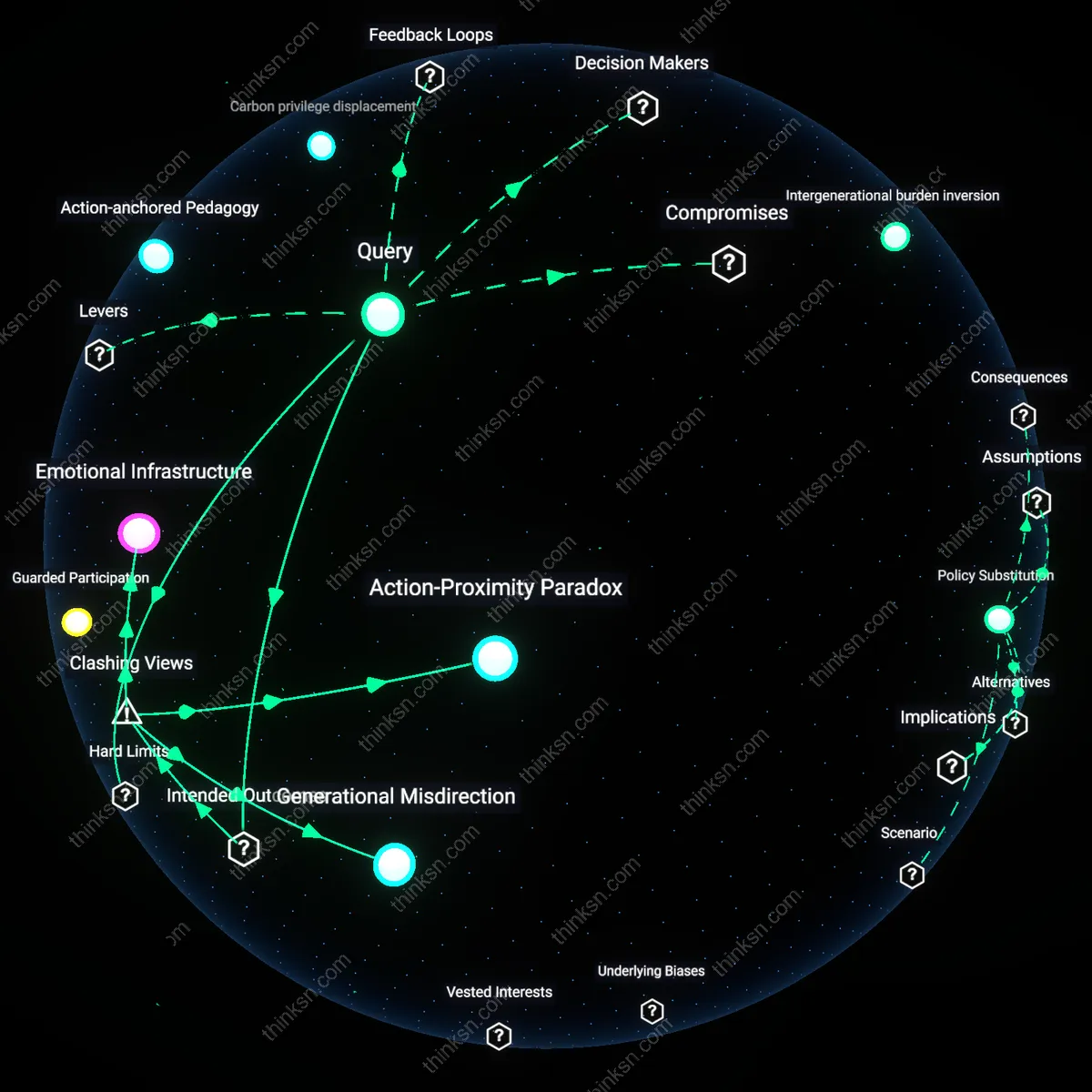
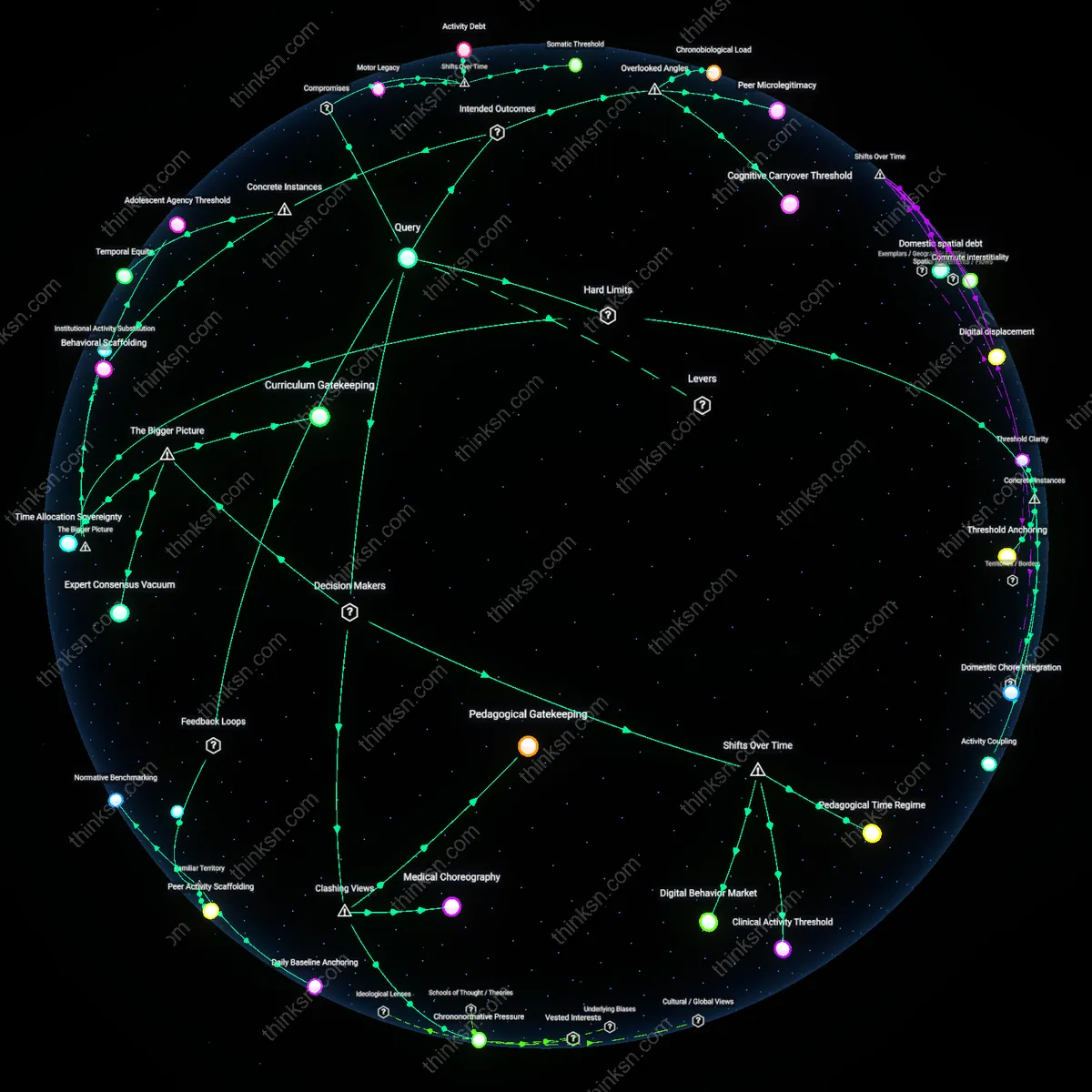
Analysis reveals 29 key thematic connections.
Key Findings
Temporal Anchoring
A parent should schedule physical activity immediately after school to maximize adherence, as demonstrated by the structured dismissal protocols at Finland’s public secondary schools, where students engage in mandatory 30-minute movement blocks before extracurriculars or homework; this mechanism works because it treats physical activity as a fixed institutional transition rather than a negotiable household choice, reducing decision fatigue and aligning with circadian peaks in adolescent energy; the underappreciated insight is that timing, not duration or intensity, becomes the critical compliance variable when time is constrained.
Activity Coupling
Parents should integrate physical activity into existing transportation routines, such as requiring adolescents to bike or walk to school when feasible, exemplified by the city of Odense, Denmark’s school commute infrastructure, where 40% of children cycle to school year-round due to protected bike lanes and school-zone traffic controls; this works through spatial design that removes parental time investment for supervision while ensuring daily moderate exertion; the overlooked reality is that standalone exercise competes with time, but embedded movement bypasses the scheduling conflict entirely by piggybacking on non-negotiable routines.
Threshold Clarity
Parents should enforce a minimum daily threshold of 45 minutes of moderate-to-vigorous physical activity, based on the dosage observed in the Avon Longitudinal Study of Parents and Children (ALSPAC) in Bristol, UK, which found measurable mental health and metabolic benefits plateau at this duration among adolescents regardless of intensity; this operates through dose-response epidemiology made actionable via activity tracking paired with school-day planning; what is rarely acknowledged is that conflicting expert advice often stems from mistaking optimal ranges for individual performance versus population-level thresholds for baseline health, and parents must default to the latter as a non-negotiable floor.
Threshold Anchoring
Set a non-negotiable baseline of one hour of moderate activity daily, as Finland’s national school system does by embedding mandatory movement between classes, because physiological thresholds for adolescent development require consistent daily activation regardless of expert disagreement or academic pressures, and this anchor creates a hard limit that prevents erosion under scheduling demands; the insight is that consistency—not intensity—serves as the primary driver of developmental benefit, which is underappreciated in policy debates focused on sport specialization or high-performance training.
Domestic Chore Integration
Treat household labor such as grocery carrying, yard work, or dog walking as structured physical activity, as seen in rural Japanese communities where adolescents routinely contribute to family farming or elder care with documented fitness outcomes comparable to formal exercise, because culturally embedded tasks provide sustained moderate exertion without requiring additional time or resources, revealing that activity need not be isolated or labeled as 'exercise' to be physiologically effective—a reality often ignored in Western models that privilege leisure-time sports.
Structural Time Ceiling
Set weekly physical activity by the fixed hours outside academic obligations and sleep, because school schedules and rest requirements create a hard cap on available time; this ceiling—enforced by school district start times, homework loads from core subject departments, and pediatric sleep guidelines—functions as a non-negotiable constraint that overrides general recommendations, making optimization a process of fit rather than ideal adherence. The non-obvious insight is that variability in expert advice becomes irrelevant once the physically available slots are mapped, shifting the decision from medical guidance to logistical calibration within immovable blocks of a teen’s day.
Institutional Activity Substitution
Treat school-based physical education and sanctioned sports as the de facto baseline level of activity, because public education mandates in most U.S. states require a minimum PE curriculum—often defined per grade level by state education codes—rendering informal or supplemental exercise secondary and discretionary. This reclassifies parental oversight from direct scheduling to monitoring compliance with institutional delivery, where the school system absorbs responsibility for meeting developmental thresholds, and the parent's role reduces to ensuring attendance and advocacy if programs fall short.
Adolescent Agency Threshold
Calibrate activity to the point where voluntary participation begins, because sustained engagement in physical activity during adolescence depends more on perceived autonomy than on prescribed volume, and pushing beyond this threshold triggers resistance that undermines long-term habits; this dynamic is amplified by developmental neurobiology, where increasing prefrontal cortex sensitivity to coercion interacts with school-based time pressures to make externally imposed regimens counterproductive. The overlooked mechanism is that optimal activity is not a health metric but a behavioral equilibrium—determined by the teen’s internal reward system, not expert consensus.
Activity Inertia
Parents should align physical activity with existing school-day movement patterns to stabilize engagement. The adolescent's daily schedule—dominated by classroom transitions, recess, and physical education—creates a latent structure of incidental activity that already resists change; stabilizing around these familiar moments leverages balancing feedback loops built into institutional routines. When families build on these embedded transitions rather than imposing external regimens, they avoid triggering time-conflict alarms that disrupt adherence. Most assume structured exercise is inherently superior, but the non-obvious insight is that everyday school movements form a hidden scaffold that maintains consistency without parental enforcement.
Normative Benchmarking
Parents should calibrate activity levels to peer-group behaviors observed in local schools to anchor sustainable routines. Adolescents regulate effort based on visible social norms—like how much running happens during lunch or who walks to school—creating reinforcing loops where perceived normalcy determines participation. When a parent uses observable, localized patterns as a reference point, rather than expert-abstraction, the adolescent’s behavior shifts within a frame of peer-stabilized expectations. Most advice treats guidelines as universal, yet the underappreciated reality is that social mimicry in school hallways and playgrounds outweighs medical recommendations in daily decision-making.
Daily Baseline Anchoring
Set a non-negotiable daily minimum of 30 minutes of moderate physical activity, such as brisk walking or cycling, that operates independently of school demands. This baseline functions as a personal inertia breaker within the home environment, where parental authority can override institutional variability; it creates a consistent input into the adolescent’s energy regulation system, reducing reliance on sporadic PE classes or after-school programs. Because this routine stabilizes metabolic and circadian feedback loops, it diminishes the volatility caused by fluctuating school schedules, making long-term adherence more likely despite expert disagreement on ideal quantity — the stability of the habit, not its scale, becomes the active ingredient.
Peer Activity Scaffolding
Leverage structured social routines like neighborhood pick-up games or group bike rides that are initiated and sustained by peer dynamics rather than adult direction. These activities tap into adolescents’ intrinsic motivation for social belonging, creating a reinforcing feedback loop where participation increases social capital, which in turn heightens desire to remain physically active. Unlike school-mandated exercise, which can trigger resistance, peer-led movement is filtered through the familiar lens of friendship and status, making it more resistant to schedule disruptions and immune to debates over clinical recommendations — the social reward becomes the regulator.
Pedagogical Time Regime
Adopt school-day activity integration as the primary determinant of physical activity levels, because post-1980s educational reforms shifted physical education from a regular curriculum component to an optional or reduced-period offering, creating a structural dependency on institutional scheduling rather than parental guidance; this reconfiguration transferred decision-making power from families to district-level administrators and state education boards who now regulate time allocation, making the school’s daily timetable the de facto architect of adolescent movement patterns; what is underappreciated is that parental choices about extracurricular activity are no longer about volume but about compensating for systemic time deficits engineered by policy shifts in public education.
Clinical Activity Threshold
Follow clinical guidelines issued by pediatric medical associations, because the standardization of adolescent activity metrics after the 2008 Physical Activity Guidelines for Americans transformed vague recommendations into quantified health benchmarks, shifting authority from localized or parental judgment to biomedical surveillance frameworks; pediatricians and public health agencies now serve as gatekeepers of 'adequacy,' embedding diagnostic criteria into routine wellness visits that reframe insufficient movement as a clinical risk factor akin to hypertension or obesity; the non-obvious consequence is that parents are effectively positioned as compliance agents within a preventive medicine regime that pathologizes inactivity rather than promoting holistic development.
Digital Behavior Market
Treat screen-mediated physical engagement—such as exergaming or fitness tracking apps—as the emerging proxy for traditional activity, because the post-2010 proliferation of wearable technology and gamified exercise platforms has redefined what counts as 'valid' physical effort, transferring influence from schools and doctors to tech companies and algorithmic feedback loops; platforms like Strava, Fitbit, and Beat Saber now shape adolescent motivation through data visibility and social comparison, making user engagement metrics the new determinant of activity adherence; the overlooked shift is that parental decision-making is no longer about enforcing duration or intensity but about managing access to digital ecologies where activity becomes a byproduct of entertainment ecosystems.
Pedagogical Gatekeeping
Parents should delegate authority to school physical education departments to standardize activity levels, because these institutions are structurally positioned to reconcile expert guidelines with temporal constraints through curricular design. Local school districts, particularly those adhering to state-mandated fitness assessments like California’s PFT, operationalize conflicting health and educational directives by embedding calibrated physical activity into required coursework, effectively compressing multiple objectives into existing school time. This shifts parental decision-making from individualized arbitration of expert advice to reliance on institutional implementation, revealing that the true bottleneck in adolescent activity is not time or parental knowledge but the hidden curriculum that determines when and how movement is legitimized in education.
Chrononormative Pressure
Parents ought to base activity levels on their adolescent’s self-reported energy rhythms rather than external expert benchmarks, because circadian and social timing—such as early school start times in districts like Seattle Public Schools—systematically disrupt biological readiness for physical exertion. Evidence indicates that neurotypical adolescents experience a phase delay in sleep-wake cycles, making morning exercise counterproductive despite expert endorsement, while post-school activity aligns better with physiological and motivational peaks. This approach challenges the assumption that optimal activity is defined by quantity or frequency, instead exposing the regulatory force of institutional time structures that treat all adolescents as temporally uniform.
Medical Choreography
Parents should treat conflicting expert advice as a signal to resist fixed activity targets altogether and instead negotiate movement through adolescent-led choice, because pediatric exercise recommendations are often derived from population-level models that ignore daily variability in mental load, such as those imposed by AP course schedules or standardized test prep. Clinical guidelines issued by entities like the American Academy of Pediatrics assume modular time and consistent motivation, but in high-pressure academic environments like magnet high schools, physical activity becomes sustainable only when it is intermittent and socially embedded—like walking to school with peers or informal sport—rather than regimented. This reframes the parent’s role not as a scheduler but as a broker of autonomy, uncovering how medical authority implicitly choreographs behavior in ways that conflict with lived adolescent temporality.
Curriculum Gatekeeping
A parent should defer physical activity decisions to school athletic directors and curriculum committees because these institutional actors control access to structured exercise and define ‘acceptable’ forms of bodily engagement during school hours. These decision-makers allocate time slots, budget, and policy legitimacy to specific activities—such as sports over recess or PE over free play—thereby selecting which forms of physical exertion are institutionally endorsed. The non-obvious consequence is that parental discretion is functionally constrained not by expert disagreement but by who controls the school timetable and its implicit hierarchy of bodily norms.
Expert Consensus Vacuum
Parents should base physical activity levels on longitudinal patterns observed in local community centers and youth leagues rather than expert guidelines because these community institutions reflect functionally negotiated agreements among pediatricians, coaches, and school officials despite public disagreements. These venues operationalize compromise positions through scheduling, insurance requirements, and enrollment rules, effectively creating de facto standards that bypass academic debates. The underappreciated mechanism is that local implementation consensus, not expert opinion, becomes the binding constraint on what is feasible and socially accepted.
Time Allocation Sovereignty
Parents should negotiate physical activity within the family’s control over evening and weekend hours, since municipal zoning boards and district school calendars hold sovereign authority over when adolescents are physically available for structured activity. These governmental bodies set the fixed durations of the school day, extracurricular windows, and transportation schedules, thereby compressing discretionary time into predictable bands. The key insight is that physical activity cannot be optimized independently of temporal sovereignty—the real limit is not expert advice or child motivation, but calendar control by unseen bureaucratic actors.
Activity Debt
Parents should calibrate physical activity by identifying where school-day constraints override developmental needs, treating missed movement as a deficit carried forward in the adolescent’s weekly routine. Historically, the separation of academic learning from bodily engagement—codified in mid-20th-century U.S. school reforms that prioritized standardized testing and classroom seat-time—transformed physical activity into an expendable segment rather than a cognitive complement, creating chronic underactivity masked by intermittent PE classes. This shift rendered daily movement a negotiable cost rather than a developmental prerequisite, making structured recess or exercise casualties of schedule optimization; the non-obvious consequence is that lost activity does not vanish but accumulates as physiological and behavioral liabilities, especially during puberty’s metabolic reorganization.
Motor Legacy
Parents should assess physical activity by rebuilding routines that reflect pre-industrial patterns of embodied labor and communal play, which were displaced by postwar suburbanization and car-dependent design. Until the 1970s, adolescent movement was largely unstructured but high-volume, woven into daily life through walking to school, household chores, and neighborhood games—forms of incidental activity since eroded by increased screen time, reduced outdoor access, and institutionalized leisure. The compression of physical development into discrete ‘exercise’ blocks (e.g., 30-minute PE sessions) ignores this deeper motor heritage, obscuring how neurotypical adolescents still respond physiologically and emotionally to extended, self-directed motion; the underappreciated insight is that optimal activity is not a metric but a continuity—a biological memory of sustained engagement disrupted by modern time compartmentalization.
Somatic Threshold
Parents should determine activity levels by observing when changes in mood, sleep, or focus signal a breach in the adolescent’s evolving capacity for self-regulation, a threshold that emerged distinctly in the digital era. During the 1990s and 2000s, screen-based culture rewired expectations for downtime, redefining physical exertion as optional rather than regulatory, while simultaneously increasing cognitive load through multitasking and attention fragmentation. This dynamic shifted the role of physical activity from socialization or necessity to a counterbalance for neural overstimulation, making its optimal dose less about duration or intensity and more about timing relative to mental fatigue. The non-obvious reality is that today’s adolescents hit somatic thresholds earlier—not due to weakness, but because their nervous systems face qualitatively different stressors than previous generations, requiring movement not just for health but for affective equilibrium.
Chronobiological Load
Schedule physical activity according to the adolescent’s endogenous cortisol and melatonin rhythms rather than fixed time blocks. School systems impose standardized timing that disrupts the hormonal readiness for exertion, where morning-heavy academics followed by after-school sports create a mismatch between circadian peaks in alertness and physical capacity; aligning moderate-to-vigorous activity with individualized post-pubertal chronotypes—measured via sleep-log data and actigraphy—optimizes neural recovery and metabolic efficiency. This approach reveals that timing relative to biological phase shifts, not just duration or intensity, governs sustainable engagement—overlooking this conflates compliance with benefit, rendering standard ‘60 minutes daily’ guidelines ineffective for late-maturing teens.
Peer Microlegitimacy
Let peer-driven informal activity during unstructured school intervals determine the intensity and form of physical engagement instead of adult-designed programs. Adolescents accumulate meaningful movement through socially embedded behaviors—walking between classes with friends, stair use in clusters, or active commuting in small groups—that evade traditional tracking yet constitute durable, self-reinforcing routines; these micro-activities gain legitimacy not through adult approval but through group norming, where exclusion risk polices participation more reliably than parental or institutional mandates. The overlooked mechanism is that peer-contextualized movement, though low in prescribed intensity, sustains adherence precisely because it avoids the performance identity that structured sports impose, which many neurotypical teens implicitly resist as a threat to social positioning.
Cognitive Carryover Threshold
Cap physical activity at the point just before measurable decline in next-day classroom attentional focus, monitored through teacher-reported engagement metrics and digital task persistence logs. While experts advocate maximal activity, sustained high-volume exertion can impair prefrontal consolidation in adolescents due to overnight cortisol elevation, resulting in reduced working memory availability during morning lessons; using real-time academic performance indicators as a feedback loop, rather than physiological or athletic benchmarks, recalibrates 'optimal' as the level that supports cognitive throughput without depletion. This reframes physical optimization not as an isolated health target but as a modulator of neurocognitive resource allocation—revealing that bodily effort can undermine its own purpose when decoupled from classroom cognitive economy.
Behavioral Scaffolding
A parent should embed physical activity within existing academic routines by leveraging institutional touchpoints, such as the model adopted at Da Vinci Charter Academy in Davis, California, where teachers integrate kinesthetic learning blocks into science lessons—students simulate planetary motion through movement—enabling sustained activity without adding time, functioning through the school-day’s structural predictability, which makes incidental exercise feel obligatory and invisible, thus bypassing resistance common in standalone regimens.
Temporal Equity
A parent should prioritize consistency over duration by treating physical activity as a recurring minimal investment, demonstrated by Tokyo Metropolitan Government’s ‘Ten-Minute Movement’ initiative in public junior highs, where students perform three daily 10-minute functional fitness circuits during class transitions, revealing that fragmented exertion accumulates into meaningful physiological adaptation when distributed equitably across time, challenging the Western assumption that efficacy requires prolonged, uninterrupted exercise.