Do In-Vitro Embryos Face Legal Risks in Out-of-State Labs?
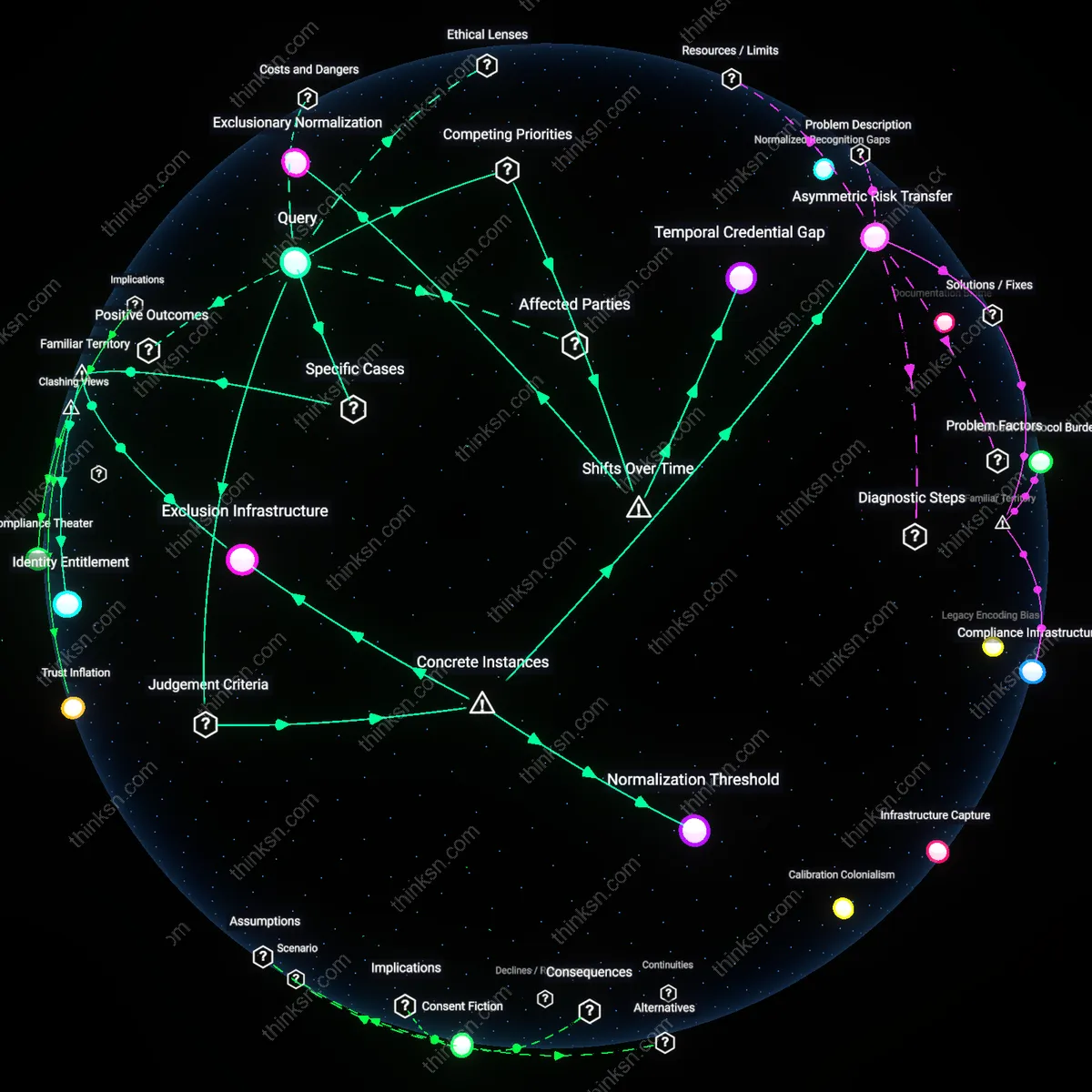
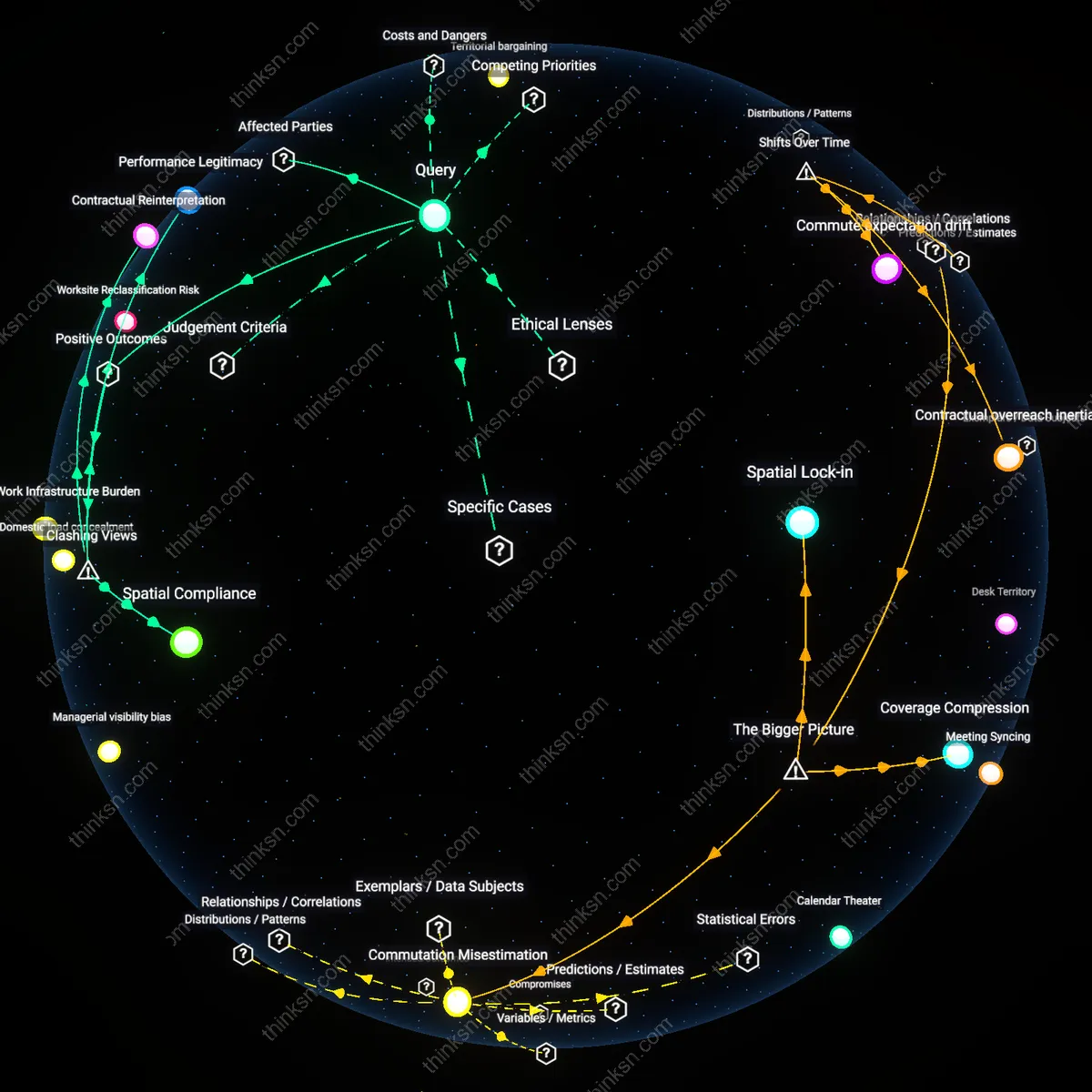
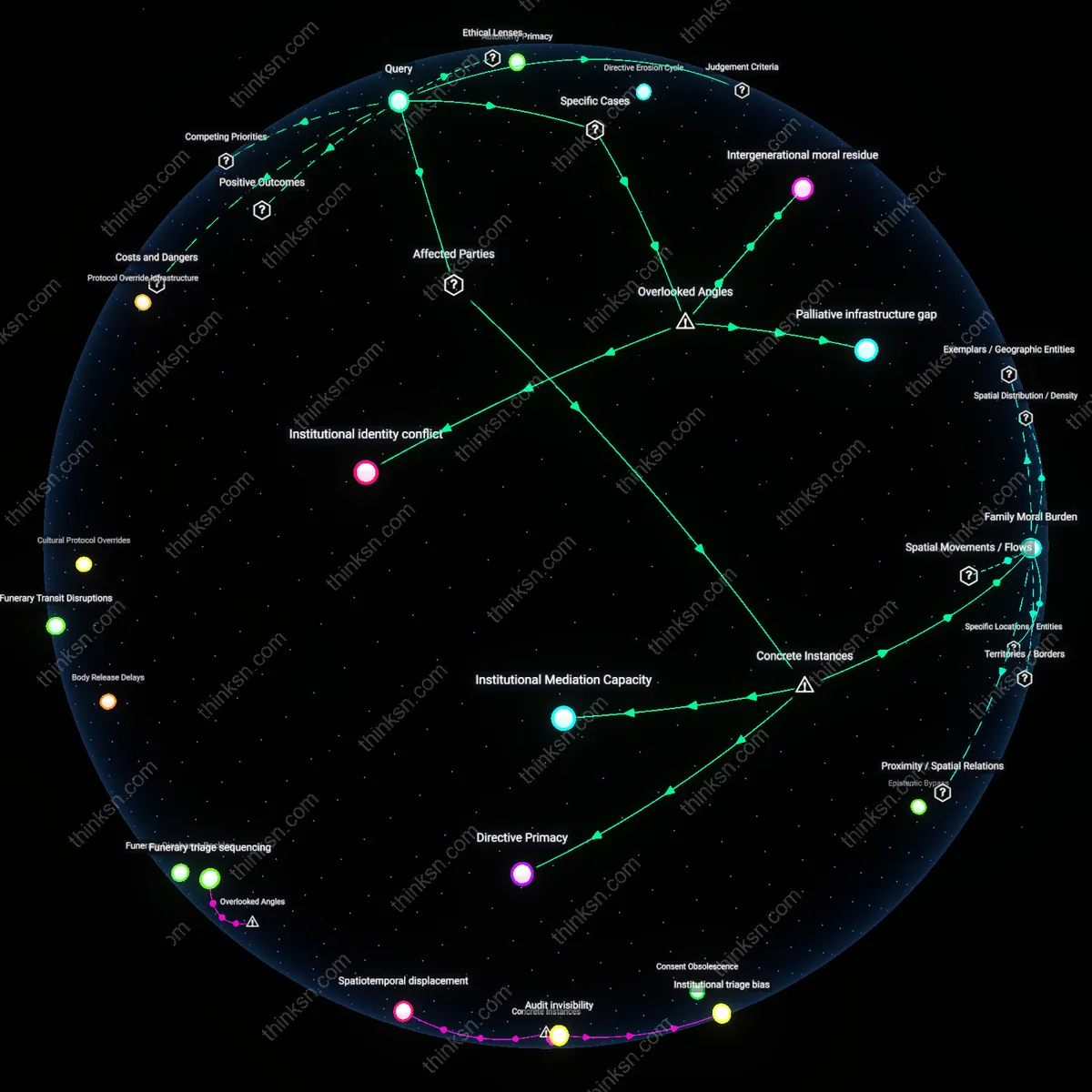
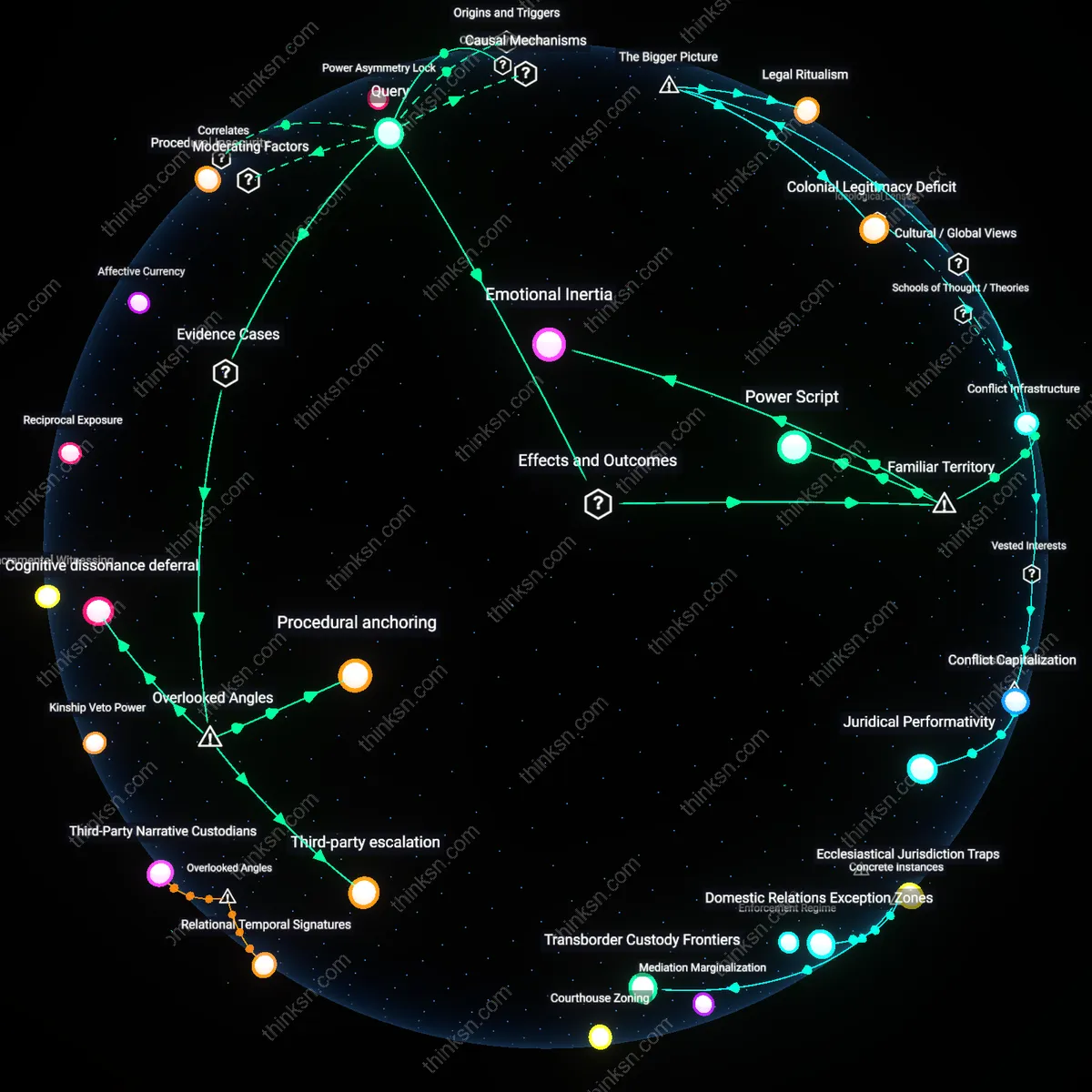
Analysis reveals 7 key thematic connections.
Key Findings
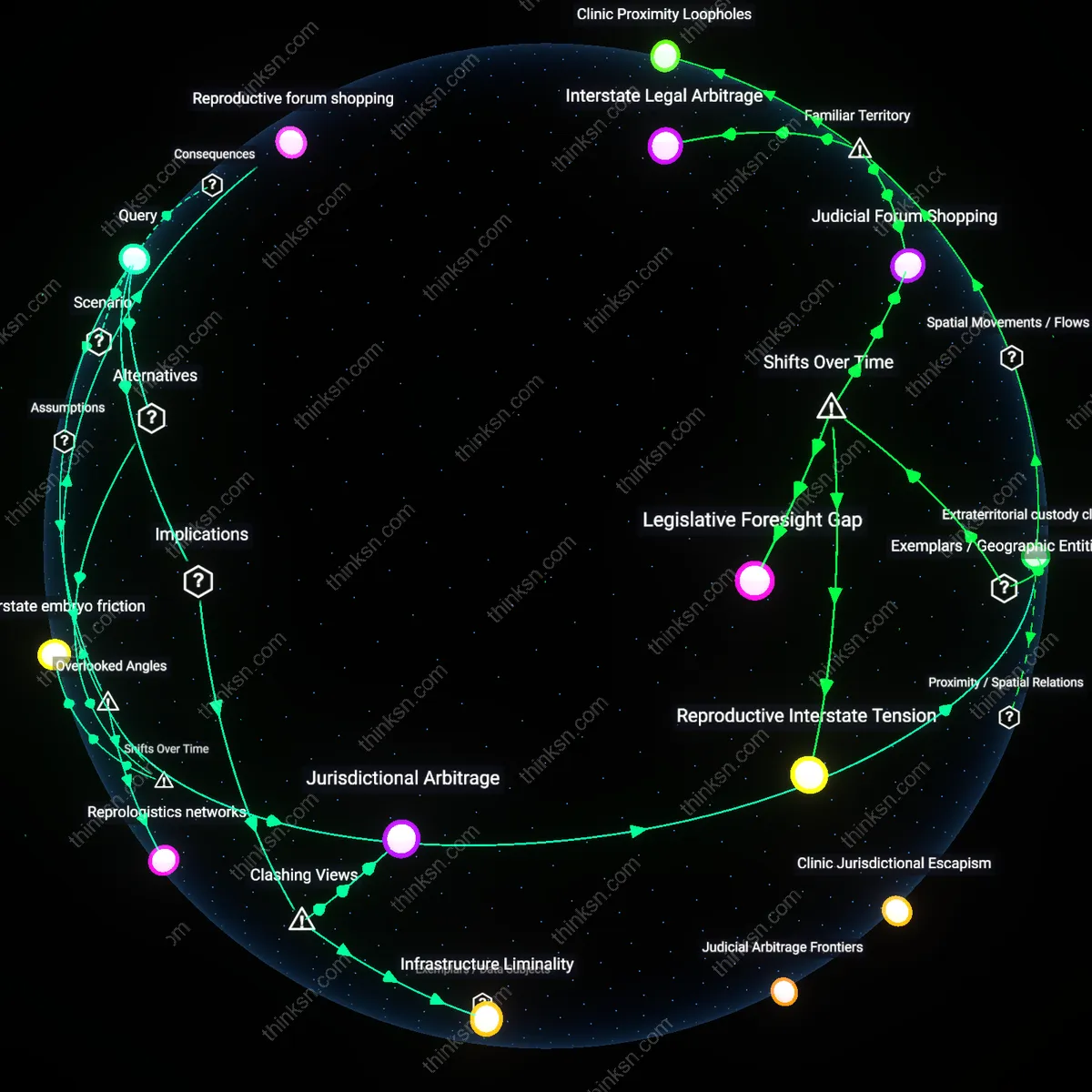
Extraterritorial custody claims
A state recognizing personhood at conception could compel its residents to legally assert custody over out-of-state IVF embryos as if they were children, triggering interstate legal conflicts over bodily autonomy and jurisdictional reach. This mechanism emerges when state-defined personhood generates parental obligations that transcend physical borders, implicating constitutional tensions between the Full Faith and Credit Clause and due process protections—especially when one state imposes legal parenthood without the other’s recognition. The non-obvious dimension is that personhood statutes may not just regulate abortion or embryo destruction but activate dormant family law tools like custody petitions to project sovereignty beyond state lines, turning private fertility decisions into interstate legal battles.
Reprologistics networks
Fertility clinics may form extrastate consortia to re-route IVF embryo storage into jurisdictional safe harbors, creating black markets in embryo transport governance where logistical routing, rather than ethics or law, determines legal vulnerability. This occurs as clinics anticipate enforcement risks not from local statutes but from seizure attempts via interstate compacts misapplied to frozen biological materials, leveraging gaps in the Uniform Anatomical Gift Act and FAA regulations on hazardous biological shipments. The hidden dependency is that cold chain integrity and courier jurisdictional routing—typically invisible technical concerns—become central to reproductive rights preservation, transforming reproductive medicine into a terrain of infrastructural evasion.
Interstate embryo friction
A state recognizing personhood at conception could trigger legal conflicts over IVF embryos stored in labs outside its jurisdiction by asserting extraterritorial legal authority over embryos originating within its borders. This mechanism operates through interstate comity disputes in family and reproductive law, where courts must decide whether to recognize out-of-state storage or disposition decisions that contradict the home state’s personhood designation. The non-obvious dimension lies in how embryonic personhood, once confined to internal regulation, now forces federal courts to navigate conflicts between state sovereignty and bodily autonomy in a post-Dobbs legal environment, revealing a latent constitutional instability around reproductive mobility. This shift crystallized after 2022, when several states enacted trigger laws that redefined prenatal legal subjects, projecting jurisdictional claims beyond physical borders.
Cryogenic legal liminality
The recognition of personhood at conception reclassifies cryopreserved IVF embryos as legal persons even when stored indefinitely in out-of-state laboratories, thereby transforming their status from medical specimens to rights-bearing entities under certain state laws. This change functions through evolving regulatory interpretations by fertility clinics and biobanks that must now navigate dual-status risks—federal research guidelines versus state criminal liability—especially when embryos move across state lines. The underappreciated transition occurred during the 2010s, when long-term embryo banking became routine while state personhood statutes remained dormant, creating a deferred legal collision now surfacing in states like Louisiana and Missouri, where personhood frameworks originated in prenatal homicide laws but are being retroactively expanded.
Reproductive forum shopping
Personhood recognition at conception incentivizes patients and fertility providers to selectively choose jurisdictions for embryo storage based on legal risk, generating a de facto market in reproductive asylum. This dynamic emerged prominently after 2020, as clinics in states like Colorado and California began marketing 'embryo sanctuary' services to out-of-state clients fleeing restrictive regimes, leveraging differences in state civil codes and enforcement priorities. The significance lies in the shift from medical logistics to legal strategy in fertility care, exposing how reproductive governance has fractured along state lines, turning laboratory location into a pivotal variable in constitutional avoidance tactics previously seen only in abortion travel networks.
Jurisdictional Arbitrage
A state’s recognition of personhood at conception could trigger extraterritorial legal claims over IVF embryos stored in facilities outside its borders, compelling courts to treat frozen embryos as persons whose relocation or disposal constitutes interstate harm. This mechanism emerges through conflicts in state personhood statutes and multi-state fertility practices, where reproductive clinics in permissive states become de facto sanctuaries vulnerable to legal incursions from restrictive jurisdictions. Contrary to the intuitive assumption that embryo regulation stops at state lines, this dynamic reveals how personhood designations can project legal authority beyond geographic boundaries—exposing a hidden infrastructure of reproductive jurisdictional arbitrage.
Infrastructure Liminality
IVF embryos stored outside a personhood-recognizing state become legally unmoored artifacts, excluded from both the rights-bearing regime of the declaring state and the regulatory norms of their host jurisdiction, creating a novel category of jurisdictionally exiled biological entities. This occurs through the mismatch between static legal personhood and mobile biomedical infrastructure, where cryogenic labs in states like Massachusetts or California hold embryos that are simultaneously 'persons' under Texas or Idaho law and 'property' under local law. Far from clarifying status, this dissonance reveals that high-tech reproductive practices depend on deliberate legal gray zones—what this condition names is the essential, if unacknowledged, role of liminality in sustaining modern fertility infrastructure.