Do Voluntary Climate Pledges Undermine Future Generations?
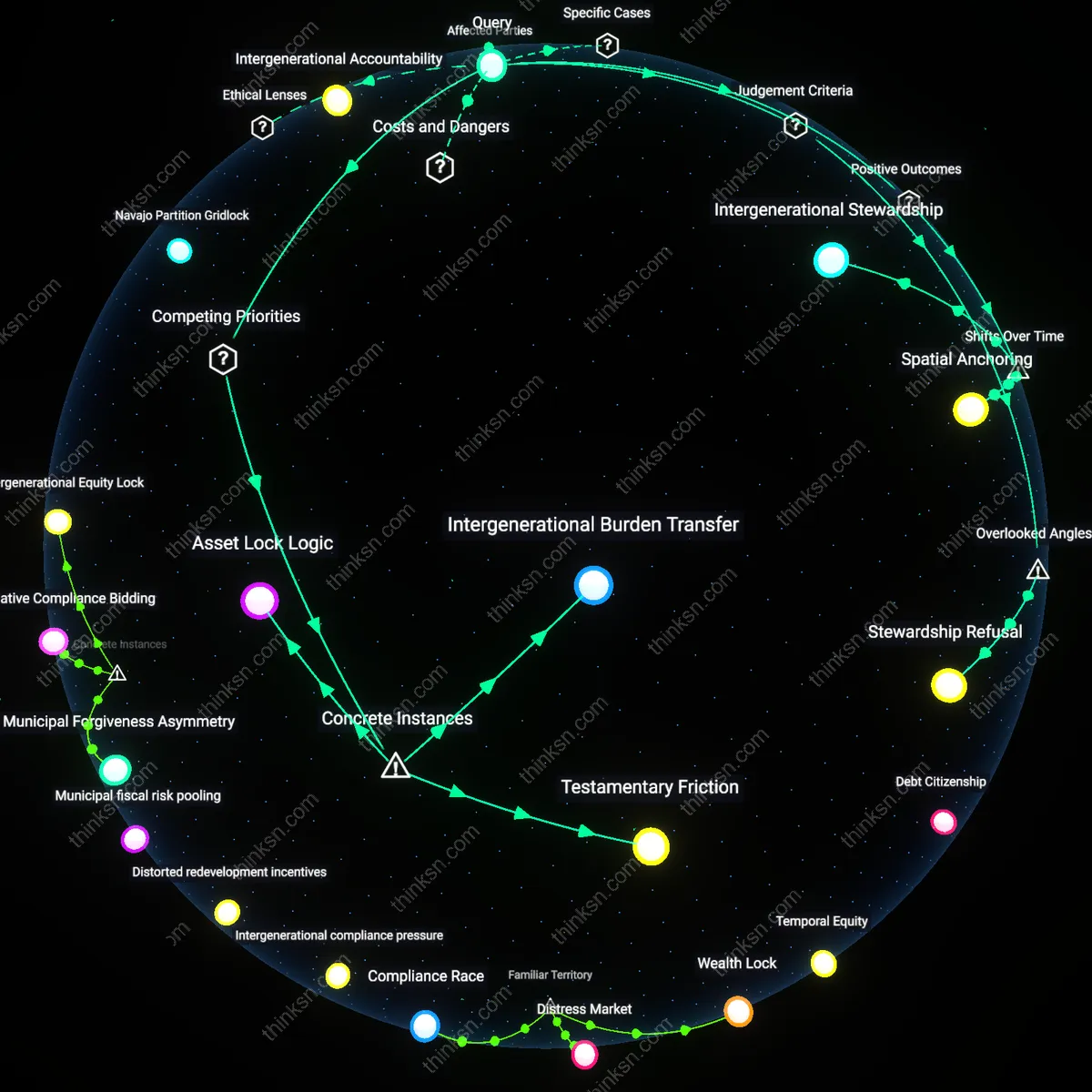
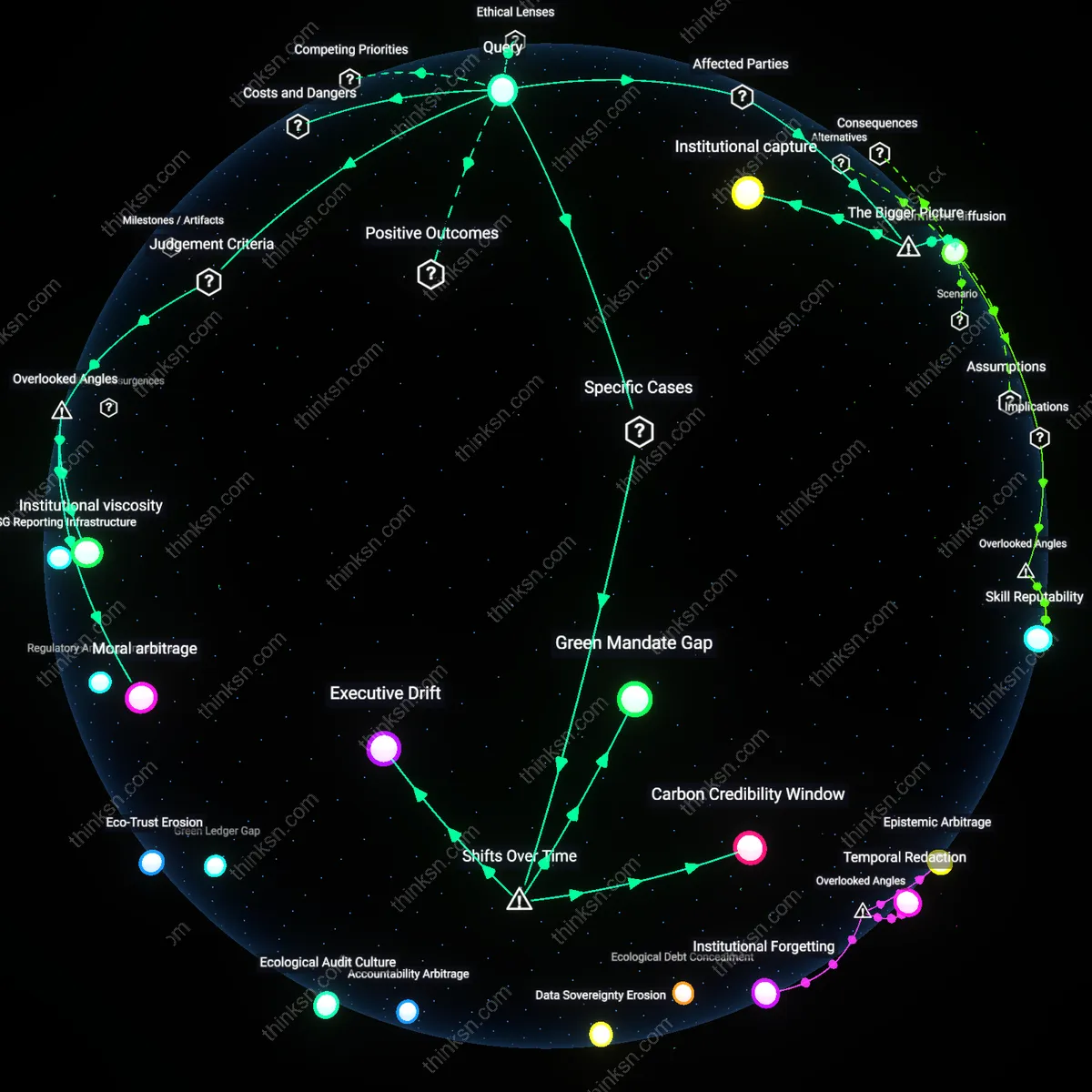
Analysis reveals 7 key thematic connections.
Key Findings
Deferred Liability
Voluntary climate pledges by G20 nations, such as India’s net-zero by 2070 commitment under the Glasgow Climate Pact, allow current development imperatives to override intergenerational equity, shifting mitigation costs to future populations who inherit degraded ecosystems and constrained energy access; this mechanism functions through intergovernmental bargaining that legitimizes delayed action via aspirational timelines, revealing how sovereign development agendas exploit enforcement gaps to externalize long-term risks onto unborn citizens for whom they bear fiduciary moral responsibility.
Performative Accountability
The ‘carbon neutrality’ pledge by Delta Airlines in 2020, lauded in corporate sustainability rankings, relied heavily on unenforceable carbon offset programs in Peruvian forests—where Indigenous communities were excluded from verification processes and benefit-sharing structures—demonstrating how enforcement-free commitments enable powerful actors to project ethical stewardship while offloading responsibility onto vulnerable populations bearing the burden of contested conservation, thereby creating a legitimacy shield that undermines intergenerational justice by substituting symbolic action for material continuity.
Governance Arbitrage
After the Paris Agreement, China’s coal power expansion—justified through nationally determined contributions framed as ‘peak emissions’ by 2030—exploited the absence of binding enforcement to rapidly build new plants financed through Belt and Road Initiative loans to nations like Pakistan, where regulatory oversight is weak and future populations will face disproportionate heat stress and air pollution; this reveals how actors leverage jurisdictional fragmentation to treat voluntary commitments as strategic instruments for maintaining energy dominance while insulating themselves from downstream human consequences.
Epistemic Erosion
The absence of enforcement in voluntary climate pledges accelerates epistemic erosion by institutionalizing symbolic commitments that degrade the integrity of scientific forecasting systems. Policymakers, industries, and publics begin to treat projections of future harm as negotiable rather than evidentiary, weakening the feedback loops between climate modeling and decision-making—especially in transnational forums like the UNFCCC where compliance mechanisms are advisory. This dynamic is rarely acknowledged because most justice analyses focus on material outcomes, not the slow collapse of trust in predictive knowledge infrastructures that future generations depend on to anticipate and avoid catastrophe.
Intergenerational Arbitrage
Voluntary pledges enable intergenerational arbitrage, where present actors systematically shift climatic risk into the future by exploiting the time lag between emission and impact to offload liabilities onto unborn populations. Because enforcement mechanisms fail to close this temporal loophole, financial and political systems—such as sovereign green bonds or carbon credit markets—treat avoided near-term penalties as fiscal wins, even when long-term thresholds are breached. The danger lies in treating this as mere discounting, when in fact it is a structural exploitation of non-contemporaneous accountability, a mechanism more akin to financial derivatives than environmental policy.
Performance Diplomacy
When nations treat climate commitments as symbolic gestures rather than operational mandates, they prioritize reputation over results, using pledges to secure soft power while avoiding structural economic shifts. This dynamic thrives in multilateral forums where visibility trumps verification, enabling high-emission states to appear cooperative without altering extractive industries. The overlooked consequence is that public perception—shaped by media coverage of promises—becomes a substitute for justice, turning climate summits into stages for geopolitical theater.
Moral Inflation
As countries repeatedly overpromise in climate accords with no follow-through, the meaning of ‘commitment’ erodes, diluting the moral weight of future declarations and weakening societal expectations for intergenerational fairness. This inflation occurs because civil society and markets respond to announcements as if they were achievements, rewarding intent instead of outcomes through green finance labels or diplomatic goodwill. The unseen effect is that each new pledge becomes less credible, making it harder to mobilize urgent action when thresholds are crossed.