Does Selective Disclosure Undermine True Generational Trust?
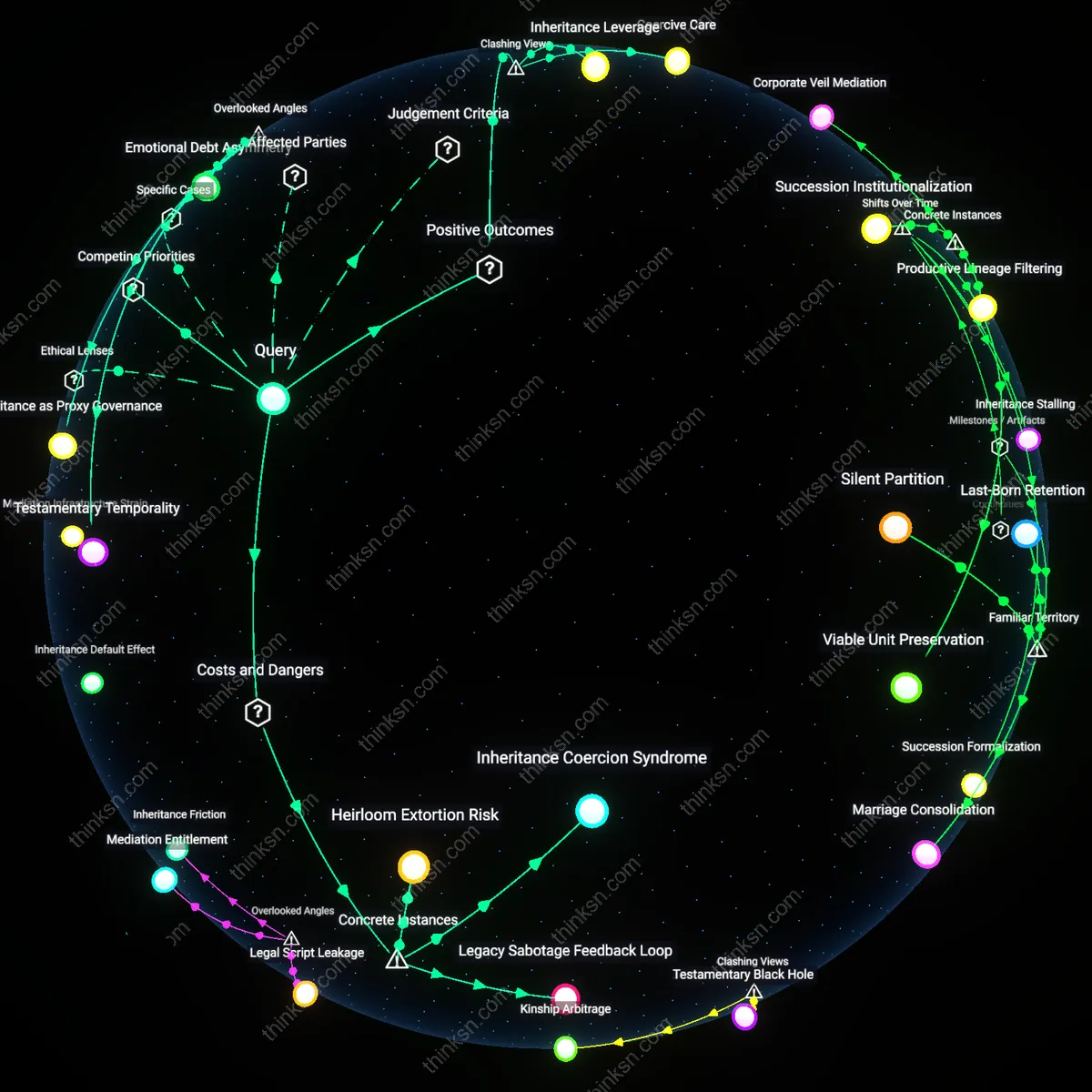
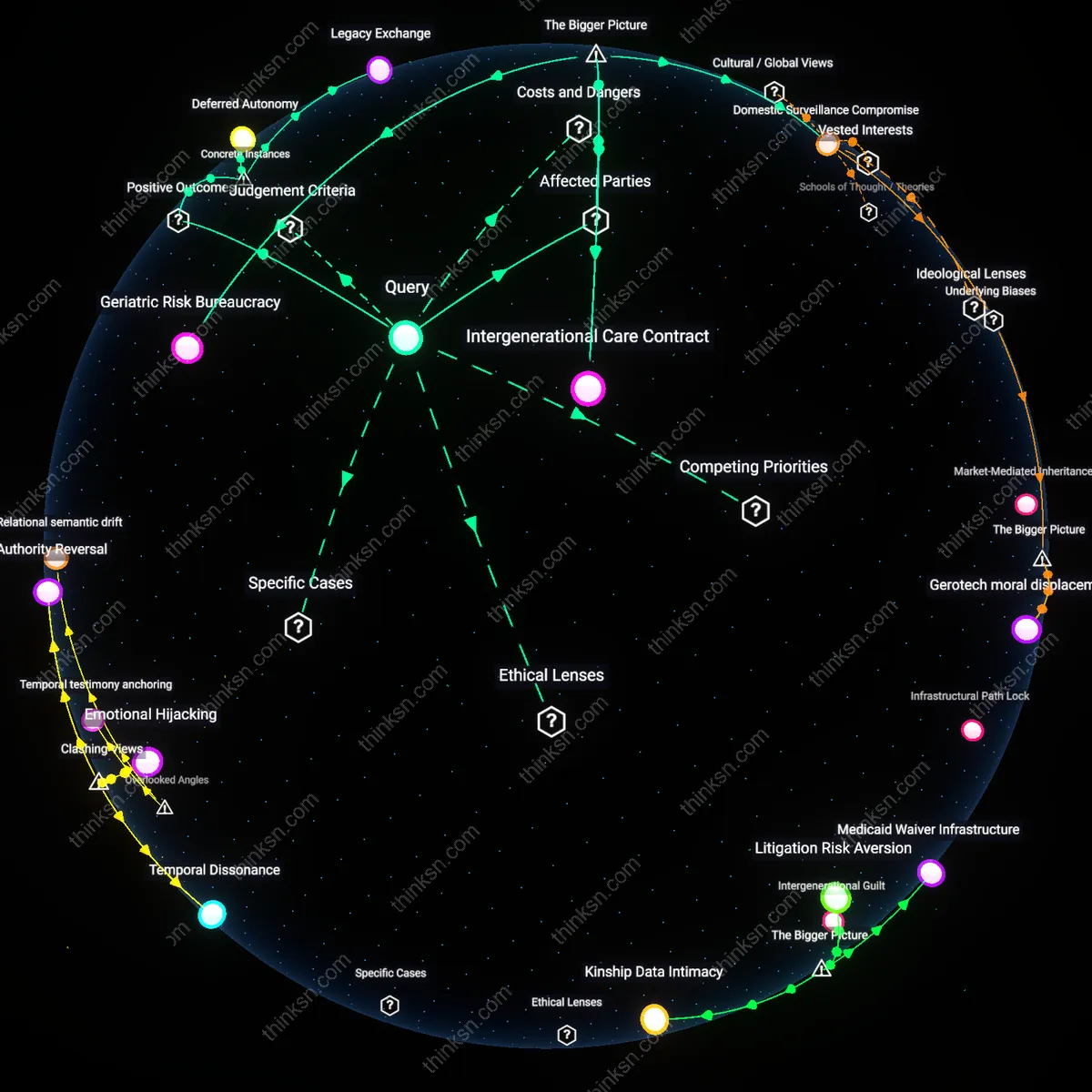
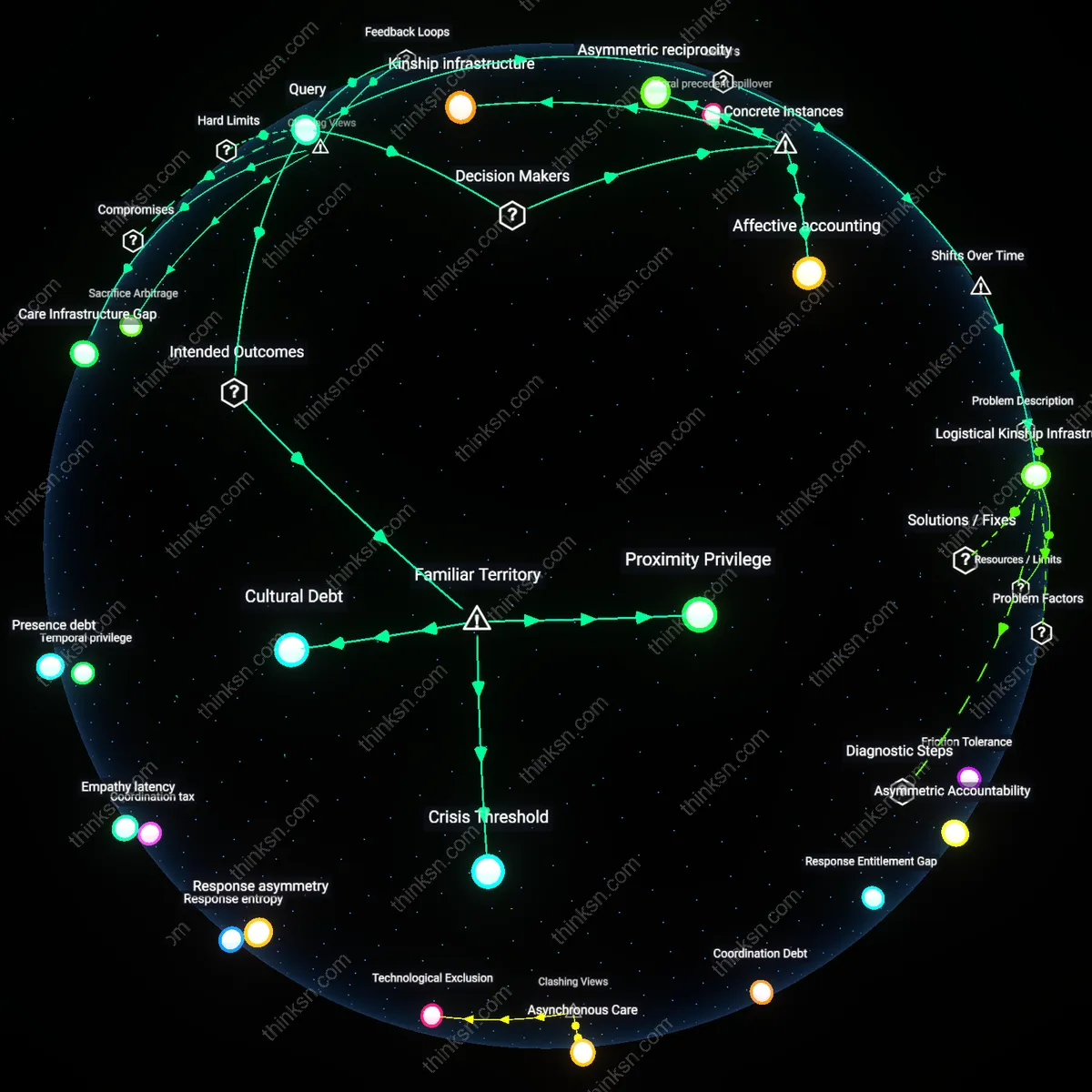
Analysis reveals 9 key thematic connections.
Key Findings
Harmony Debt
Selectively sharing values with elders to maintain harmony is ethically unjustifiable because it shifts emotional labor onto younger generations in Confucian-influenced family systems, where institutionalized filial piety norms in East Asian households treat intergenerational conflict avoidance as a moral duty — this creates a compounding 'Harmony Debt' where truth deferral erodes self-integrity over time, revealing that the price of surface stability is internal moral fragmentation among youth who learn to treat honesty as a threat to relational continuity.
Epistemic Gatekeeping
Hiding values from elders to preserve peace functions as a rational act of epistemic self-defense when older generations monopolize moral authority within Mediterranean Catholic families, where church-endorsed patriarchal structures equate dissent with disrespect — in such settings, strategic omission becomes a necessary tool for younger members to preserve autonomy, exposing that the real threat to trust is not concealment but the systemic suppression of alternative worldviews under the guise of reverence.
Trust Arbitrage
Curating values shared with elders sustains intergenerational trust in post-Soviet households where political disillusionment has rendered ideological transparency a vulnerability, as younger Ukrainians selectively disclose beliefs to avoid triggering older relatives’ trauma from state propaganda — here, omission is not betrayal but a tactical investment in relational longevity, demonstrating that trust in high-distrust societies often depends on withholding truth to protect the capacity for future dialogue.
Relational Prudence
Selectively sharing values with elders to maintain harmony is ethically justified when judged by the principle of relational sustainability, where long-term family cohesion outweighs momentary transparency. This mechanism operates through kinship networks in collectivist societies—such as intergenerational households in rural East Asia—where open conflict risks severing caregiving obligations and redistributing economic burdens unpredictably. What’s underappreciated in the Familiar Territory of ‘filial respect’ is that silence isn’t necessarily deception but a cultivated restraint that preserves mutual obligation under asymmetric authority.
Epistemic Honesty
Selective disclosure to elders undermines genuine intergenerational trust because it violates the norm of epistemic reciprocity, where all parties in a moral community deserve access to authentic beliefs shaping collective decisions. In suburban U.S. families, for instance, young adults often withhold progressive views on gender or religion not out of malice but fear of destabilizing household peace, yet this erodes elders’ capacity to engage in good faith dialogue or revise perspectives. Against the Familiar Territory of ‘protecting feelings,’ the unacknowledged cost is a one-way transparency that entrenches generational epistemic dependency rather than mutual growth.
Cultural Fidelity
Withholding certain values from elders to sustain harmony serves as an act of cultural continuity, judged by the criterion of normative endurance—preserving rituals and structures that outlive individual authenticity. Among diasporic communities, such as second-generation Muslims in Western Europe, strategic silence on secular lifestyles allows participation in religious ceremonies that anchor communal identity and intergenerational transmission of language and custom. While Familiar Territory frames this as 'compromise,' the deeper dynamic is not evasion but calibrated performance that sustains symbolic belonging even amid private divergence.
Harmony Preservation Norms
Selectively sharing values with elders to maintain harmony is ethically justified because it preserves intergenerational peace in postcolonial African families adapting to rapid urbanization since the 1990s, where open value conflict risks fracturing kinship networks essential for economic survival. In countries like Ghana and Nigeria, younger generations navigating globalized identities often withhold dissent on gender roles or religious practice not out of deception but to sustain household cohesion amid resource interdependence, especially where elders control housing or lineage-based land rights. This quiet accommodation emerged as a survival mechanism during the structural adjustment era, when state withdrawal intensified familial responsibility—a shift that transformed filial discretion into a stabilizing social protocol rather than mere politeness.
Eldership Recalibration
Selectively sharing values with elders undermines genuine intergenerational trust only if eldership is viewed as static authority, but since the late 20th-century democratization of knowledge via internet access, younger people in East Asian societies like South Korea have redefined eldership as relational rather than hierarchical, allowing partial disclosure to function as a trust-maintenance strategy during transitional decades. As digital literacy eroded the elder’s traditional role as knowledge gatekeeper post-2000, selective sharing became a pragmatic buffer—youth affirm respect through ritual compliance while privately cultivating modern values like individualism, thus avoiding ruptures that marked earlier generational clashes under Confucian rigidity. This evolution reveals eldership not as fixed moral authority but as a role in flux, modulated by information access and intergenerational negotiation rhythms.
Value Triangulation
Selectively sharing values with elders strengthens long-term intergenerational trust when viewed through the lens of Soviet dissident families post-1968, where partial truth-telling became a cultivated skill to protect both personal integrity and collective safety under state surveillance, revealing that strategic omission can be an ethical bridge across value divides. In this context, younger reformers shared enough truth to preserve emotional authenticity while withholding politically dangerous beliefs, establishing an unspoken pact of mutual protection that sustained family bonds through decades of repression. The normalization of such triangulation—balancing honesty, safety, and care—produced a resilience model later mirrored in diasporic communities navigating cultural dissonance under Western multiculturalism from the 1990s onward.