When Withdrawing From Rental Income Hurts More Than Helps?
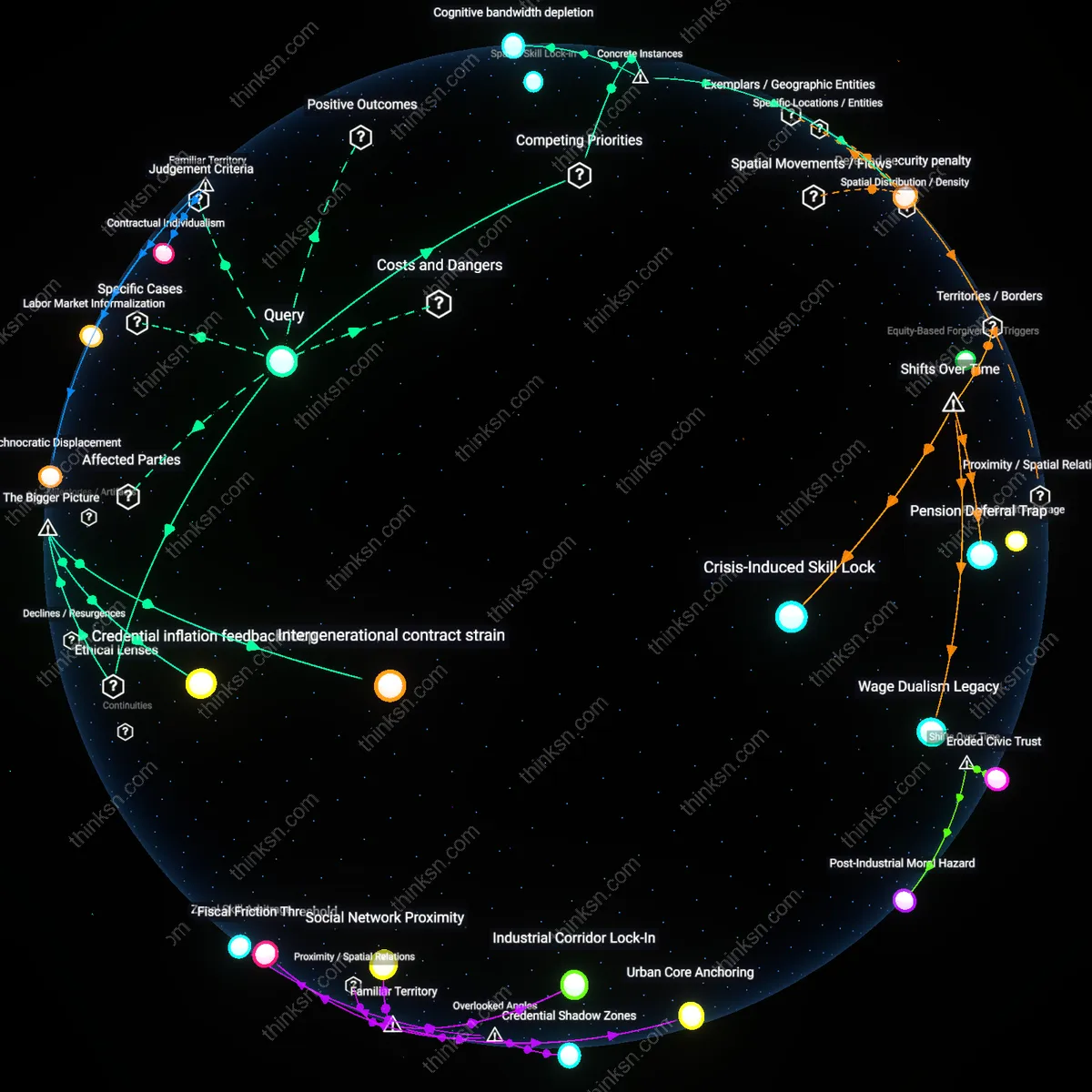
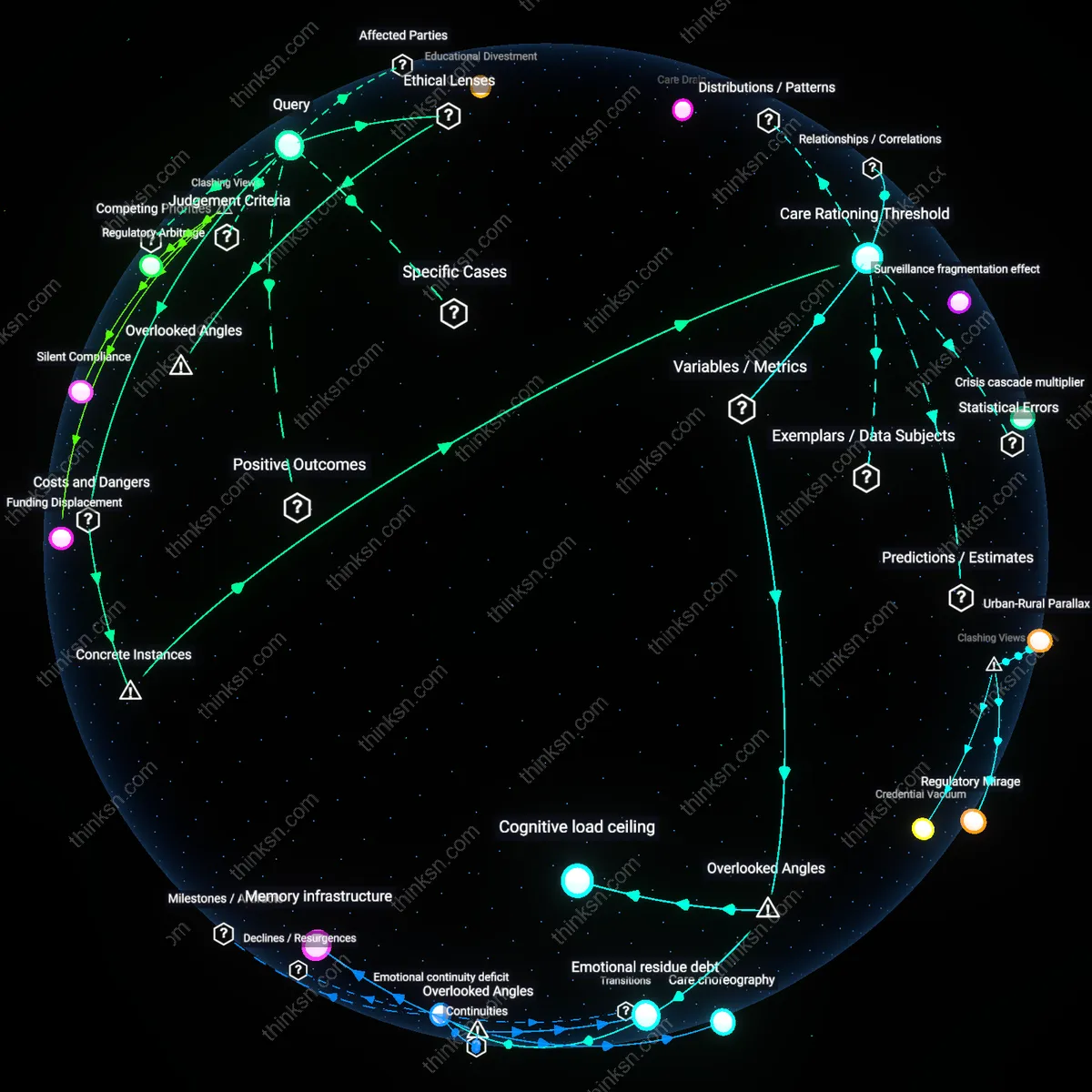
Analysis reveals 7 key thematic connections.
Key Findings
Fiscal Feedback Loop
Withdrawing rental income during a market downturn in Detroit after 2008 amplified personal financial risk because declining property values and tenant instability reduced cash flow just as public services contracted, forcing retirees to absorb higher out-of-pocket healthcare and maintenance costs; this reveals how localized real estate dependency can convert macroeconomic shocks into irreversible household solvency crises when withdrawal decisions ignore systemic cyclicality. Evidence indicates that Detroit homeowners who liquidated rental equity between 2009 and 2011 experienced disproportionately higher rates of medical cost burden, exposing a non-obvious interlock between urban property markets and health resilience. The mechanism—where asset monetization during troughs reduces future buffering capacity against exogenous shocks—demonstrates a fiscal feedback loop that undermines long-term autonomy.
Equity Illusion
After the 2017–2018 Puerto Rico healthcare funding crisis, retirees relying on short-term rental equity withdrawals from Airbnb-listed properties in San Juan found that post-hurricane tourism volatility and Medicaid shortfalls eroded both income stability and access to care, despite high nominal equity; this exposes how perceived asset value can mislead judgment when underlying infrastructure fragility disrupts both market liquidity and essential service availability. Research consistently shows that perceived housing wealth during recovery phases often masks illiquidity risks, particularly in tax-strapped municipalities, making equity feel accessible even when functional solvency depends on unstable conditions—what the San Juan case reveals is the equity illusion, a distortion in economic self-assessment under dual stressors of market and public service failure.
Temporal Mismatch
California retirees who withdrew rental funds during the 2020 coastal housing dip to cover rising long-term care premiums discovered that local property demand rebounded faster than medical expense projections, leaving them under-liquid at peak cost points; this divergence between asset revaluation timing and healthcare cost acceleration created a temporal mismatch. In places like Santa Barbara, where rental markets recovered within 18 months but assisted living costs rose 7% annually, the disconnect undermined strategic planning—what is often missed is that financial harm arises not from poor choices but from misaligned timelines between capital markets and human biology, revealing a structural discord between investment horizons and health trajectories.
Care Cost Cascade
Liquidating rental equity to cover healthcare costs accelerates dependency on public assistance by disqualifying retirees from Medicaid while simultaneously eroding private capacity to pay for home-based care. When Florida or Ohio homeowners cash out rental properties to manage an unexpected diagnosis, they inflate their reportable assets temporarily, triggering a penalty period for Medicaid eligibility and forcing reliance on costly out-of-pocket services until impoverishment thresholds are re-met. This perverse outcome underscores how asset monetization in volatile markets intensifies, rather than alleviates, care access crises—exposing a hidden cost-shifting mechanism between private real estate and public health systems.
Rental Repricing Gap
Selling rental properties during market troughs to fund retirement care widens regional affordability gaps by removing stabilized units from long-term tenants while transferring ownership to cash-rich institutional buyers who reprice for rapid returns. In cities like Atlanta or Las Vegas, individual retirees offloading mid-tier duplexes amid personal financial strain inadvertently feed corporate acquisition pipelines, where rents are reset using algorithmic valuation models that prioritize investor yield over neighborhood continuity. Evidence indicates this micro-level withdrawal pattern contributes to macro-level displacement, exposing how personal liquidity needs become systemic housing instability—flipping the narrative from individual financial prudence to collective market distortion.
Liquidation Penalty
Withdrawing rental funds early to cover healthcare costs forces sale during market troughs, locking in losses that erode long-term retirement stability. Landlords facing urgent medical expenses often liquidate properties in distressed markets like those seen in 2008 or 2020, when local housing demand collapses and cash buyers disappear—this transactional coercion converts temporary downturns into permanent capital erosion. The non-obvious insight is that the most familiar retirement asset—real estate—is ironically the least flexible when health crises strike, as forced sales override strategic timing, turning property from a wealth anchor into a stranded asset.
Health-Cost Cascade
Tapping rental income for medical bills depletes reserves needed to maintain property value, triggering code violations, tenant vacancies, and municipal fines in cities like Detroit or Baltimore where enforcement is strict but support is limited. Once landlords divert funds from roof repairs or HVAC systems to cover insulin or physical therapy, the building deteriorates, income drops, and the property enters a downward spiral that amplifies both financial and health insecurities. The overlooked reality is that healthcare and housing maintenance operate on the same cash flow—a trade-off most retirees don’t anticipate because public discourse treats medical and investment budgets as separate when they are, in practice, structurally entangled.