Zero-Tolerance Policies: Safety Boon or Path to Prison?
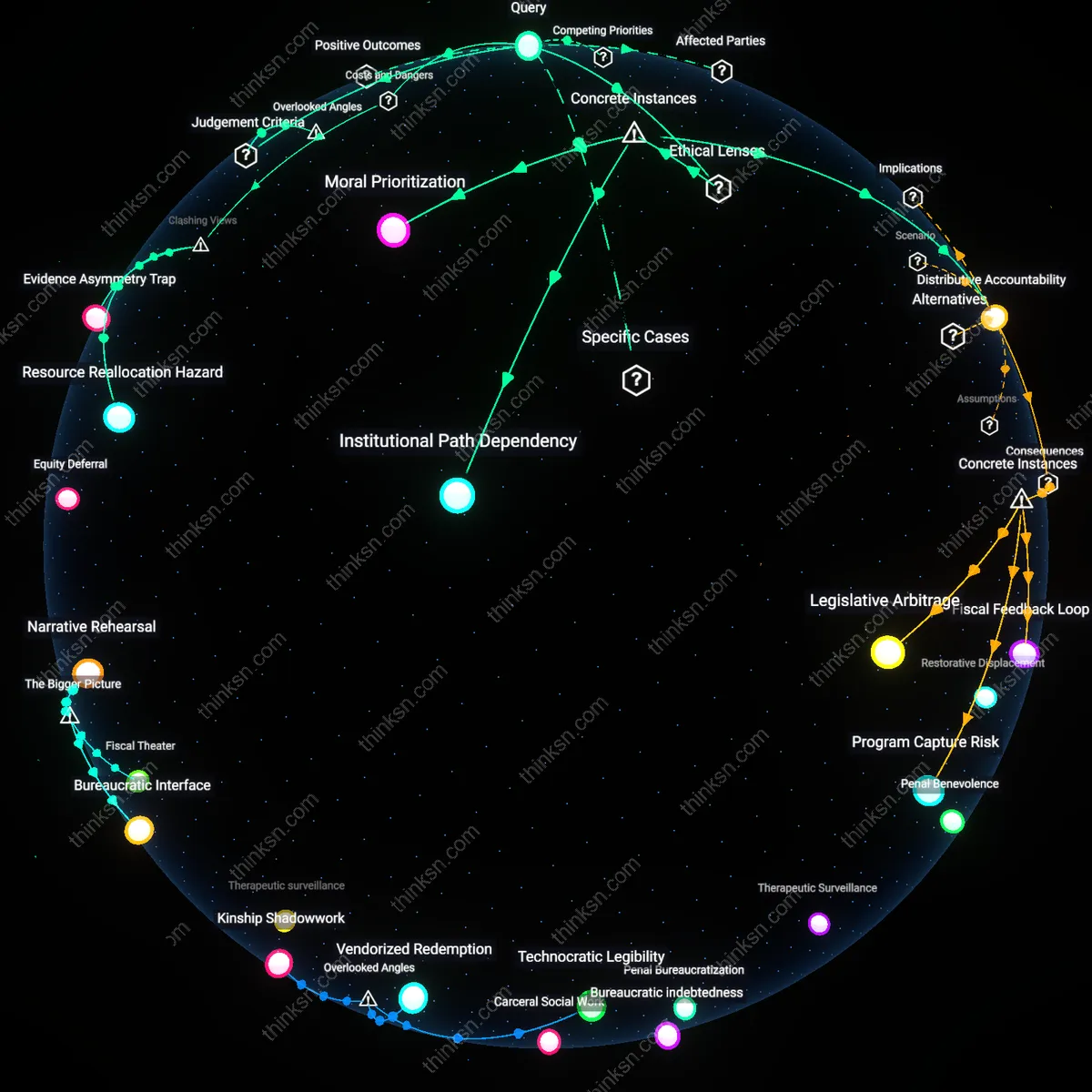
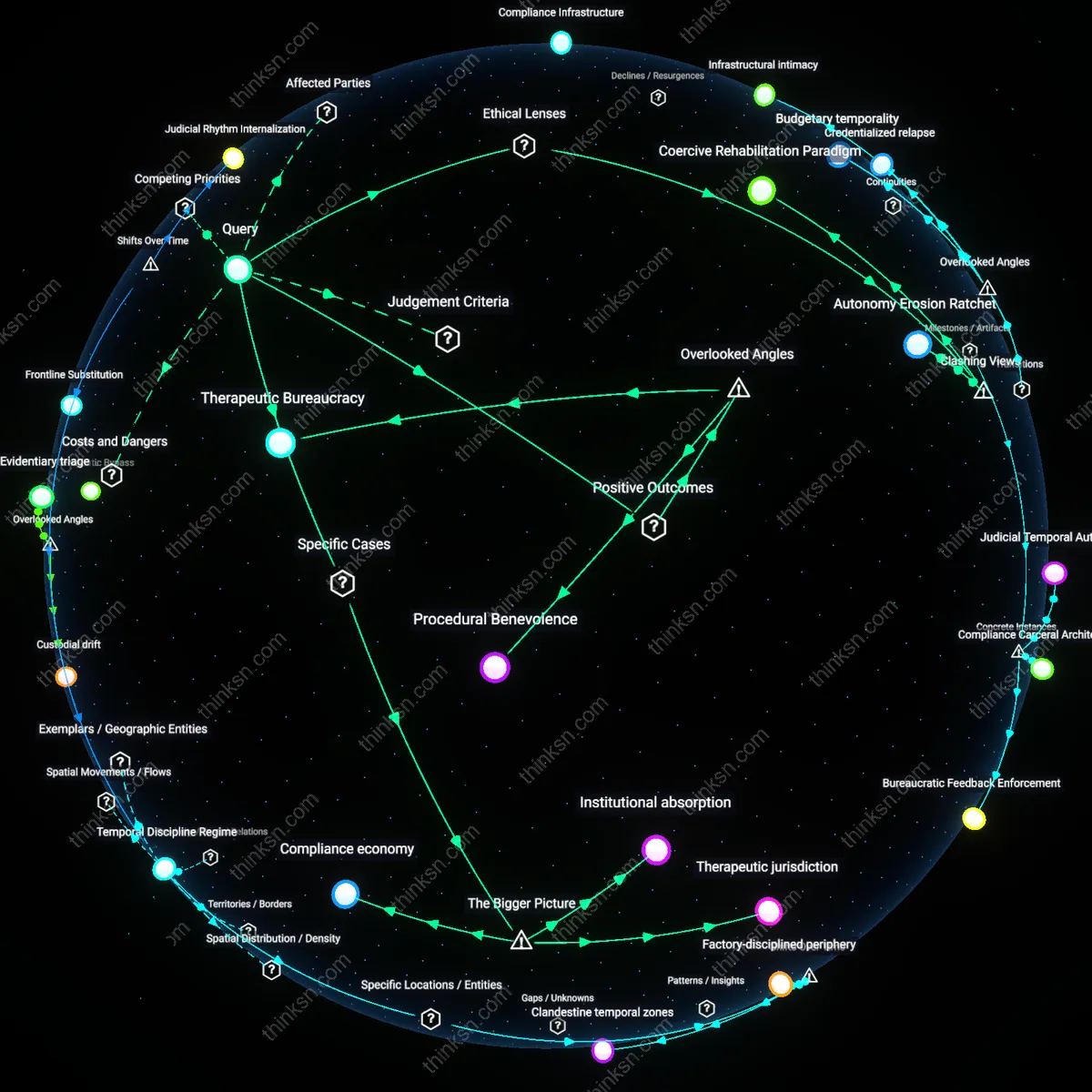
Analysis reveals 12 key thematic connections.
Key Findings
Custodial Staff Surveillance Norms
Zero-tolerance policies increase school safety only insofar as they activate custodial staff as de facto behavioral monitors who enforce informal discipline through heightened surveillance of marginalized youth. Because these employees are rarely included in policy design or training, they replicate racialized behavioral assumptions—such as equating Black students' loitering with threat—via daily interactions that escalate minor infractions under the policy’s mandatory framework, thereby invisibly expanding the pipeline before official infractions are even recorded. This dynamic is overlooked because analyses focus on teachers and administrators, yet custodians, bus drivers, and cafeteria workers operate as unacknowledged nodes in the disciplinary apparatus, normalizing suspicion in routine spaces like hallways and restrooms.
Special Education Reassignment Pathways
Zero-tolerance policies worsen the school-to-prison pipeline not primarily through suspension but by triggering automatic referrals to alternative education settings that function as administrative gateways to special education classification for behaviorally labeled students—particularly Black and Latinx youth with undiagnosed trauma. These reassignments are driven by legal risk avoidance rather than educational need, and once classified, students are disproportionately funneled into programs with prison-like protocols and low academic rigor, making future incarceration more likely. This pathway remains hidden because disability placement is treated as protective, but in practice, it often serves as an institutional detour toward carceral tracking.
Parental Compliance as Coercion
Zero-tolerance policies improve perceived safety by shifting disciplinary responsibility onto families, forcing parents of marginalized youth to voluntarily withdraw or home-school their children to avoid criminal charges under inflexible rules, thereby concealing expulsion rates while still removing students from school. This informal attrition—pressured by school resource officers and administrators who threaten juvenile court involvement for minor acts—creates a paperless pipeline where the school avoids accountability for exclusion, but the outcome is functionally equivalent to incarceration in terms of social disengagement. This mechanism is invisible in policy evaluations because it appears as parental 'choice' rather than institutional coercion.
Behavioral deterrence
Zero-tolerance policies improve school safety by clearly communicating that specific actions like violence or weapon possession will result in automatic suspension or expulsion, which deters students from engaging in such behaviors. This mechanism operates through consistent administrative responses in public high schools, where administrators, teachers, and students operate within a shared expectation of predictable consequences. What’s underappreciated is that this deterrence functions not through actual punishment frequency but through the widespread belief in its inevitability—making the policy’s symbolic presence more impactful than its enforcement record.
Institutional accountability
Zero-tolerance policies enhance accountability for school staff by removing discretion in enforcing discipline, reducing the risk of biased or inconsistent treatment across student demographics. In urban school districts with high teacher turnover, these rules create procedural uniformity, ensuring that every educator follows the same escalation path for infractions like drug possession or threats. The less obvious insight is that this standardization protects both students and staff by minimizing favoritism or perceived inequity in real-time classroom decisions, thereby reinforcing the school’s legitimacy in the eyes of parents and communities.
Crisis deflection
Zero-tolerance policies allow school administrators to rapidly externalize responsibility during high-profile incidents by immediately invoking predefined sanctions, shielding institutions from accusations of negligence. When a student brings a knife to a suburban middle school, for example, automatic referral to law enforcement shifts public scrutiny away from school leadership and toward the justice system. The unspoken function here is not safety per se but reputational protection—where the policy serves as a legal and media buffer, preserving institutional credibility even if student outcomes worsen.
Institutionalized Discretion
Zero-tolerance policies worsen the school-to-prison pipeline by transferring disciplinary authority from educators to law enforcement, a shift rationalized under utilitarian security ethics that prioritize measurable order over contextual fairness. This mechanism operates through administrative reliance on rigid rules to demonstrate compliance with federal safety regulations and avoid liability, incentivizing the criminalization of minor misbehavior—particularly among Black and disabled students—despite no evidence of improved safety. The non-obvious consequence is that the appearance of objectivity in these policies masks the systemic delegation of moral judgment to punitive institutions, embedding bias into ostensibly neutral procedures.
Racialized Risk Calculus
Zero-tolerance policies exacerbate the school-to-prison pipeline because they function as tools of racialized governance, justified under neoliberal public management doctrines that frame marginalized youth as inherent threats to institutional efficiency. Schools in underfunded urban districts adopt these policies not primarily for safety but to manage overcrowded classrooms and divert costly special education liabilities, aligning with political ideologies that externalize social inequality as individual pathology. The underappreciated dynamic is that federal funding structures and real estate valuation pressures covertly reward exclusionary discipline, making surveillance and removal economically rational for district administrators.
Legitimacy Substitution
Zero-tolerance policies undermine school safety by eroding relational trust between students and staff, a deterioration enabled by legal doctrines like qualified immunity and *T.L.O. v. New Jersey* that expand administrative authority while diminishing constitutional protections for minors. When schools substitute procedural certainty for ethical engagement, they activate a feedback loop in which marginalized youth, already subject to overpolicing in their neighborhoods, perceive institutions as adversarial—increasing defiance and reducing self-reporting of harm. The critical but overlooked factor is that the law’s symbolic endorsement of control rituals replaces genuine conflict resolution, making violence more likely rather than less.
Disciplinary Theater
Zero-tolerance policies do not enhance safety but instead perform safety by shifting administrative risk onto marginalized students; in cities like Chicago and Philadelphia, school districts under political pressure to appear 'tough on crime' rely on automated suspensions for minor infractions, which function less as behavioral deterrence and more as visible gestures of control to appease voters and policymakers—this ritualized punishment satisfies public demand for order without altering underlying conditions, thereby exposing how safety is staged rather than achieved.
Bureaucratic Capture
Far from weakening the school-to-prison pipeline, zero-tolerance policies are actively preserved by non-punitive actors—including progressive school boards and civil rights organizations—who tacitly accept them as necessary to justify federal funding streams and compliance monitoring; in districts like Los Angeles Unified, where police presence was officially reduced, surveillance infrastructure expanded under alternative grants framed as 'mental health support,' revealing that the pipeline persists not through overt criminalization but through administrative dependency on carceral logic embedded in funding mechanisms.
Pedagogical Invisibility
The real danger of zero-tolerance policies lies not in immediate punishment but in the systemic erasure of behavioral context during escalation—such as in Broward County, Florida, where restorative justice pilots succeeded only when teachers were granted authority to reclassify 'disorderly behavior' as teachable moments, proving that safety improves when schools resist adjudication in favor of development, a finding that inverts the assumption that strict rules prevent chaos by showing that discretionary responsiveness prevents isolation.