Is Specialized Dementia Care Worth Emotional Trauma for Families?
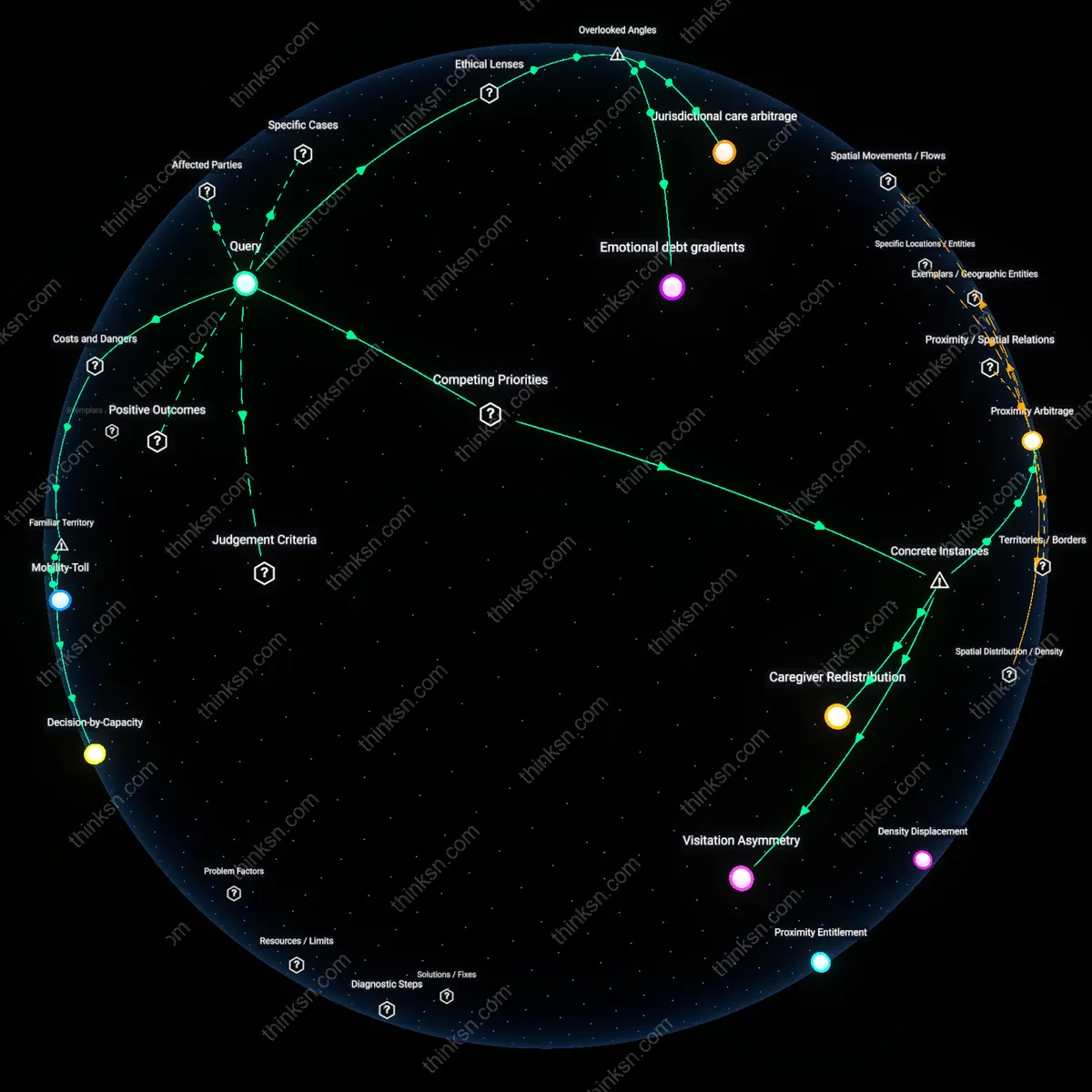
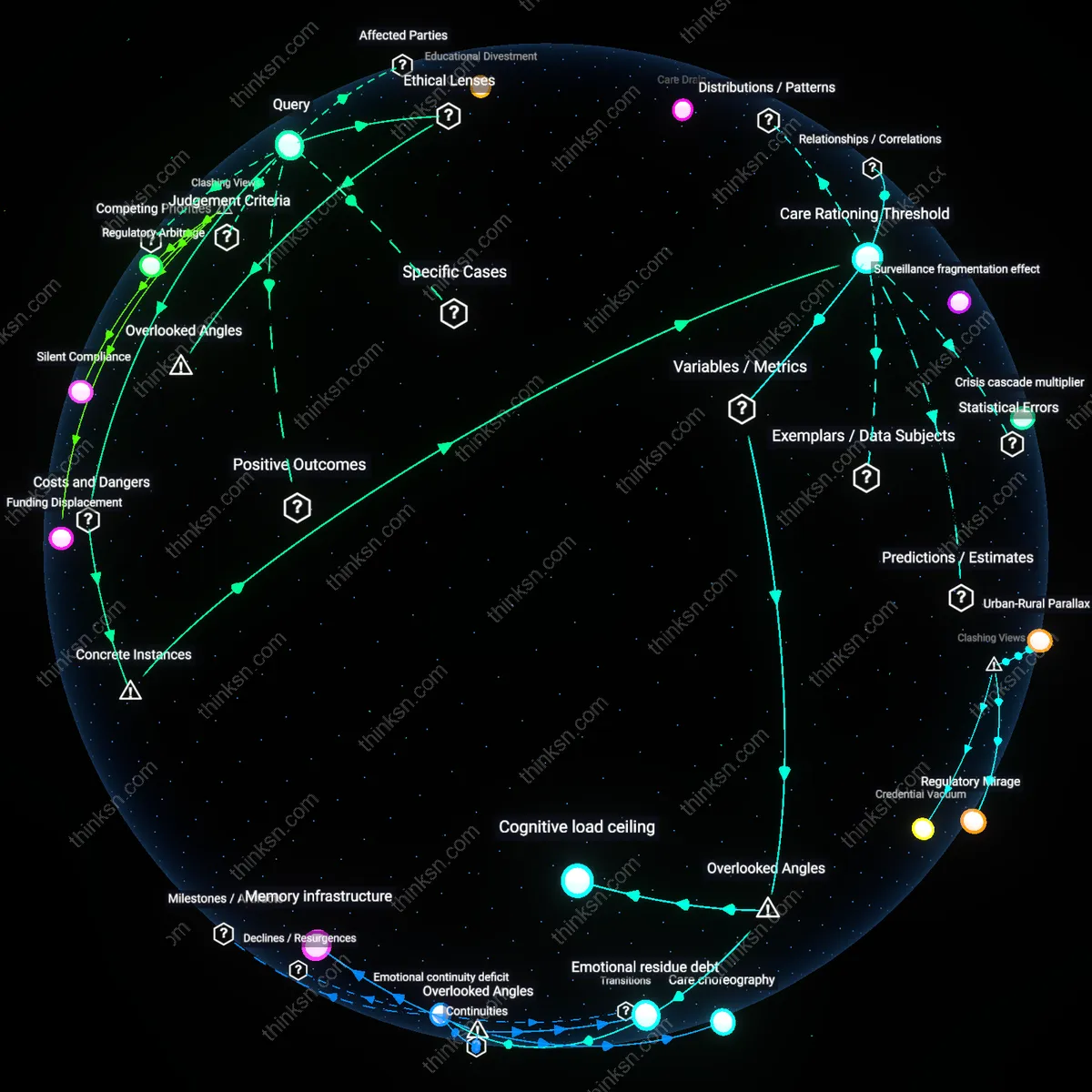
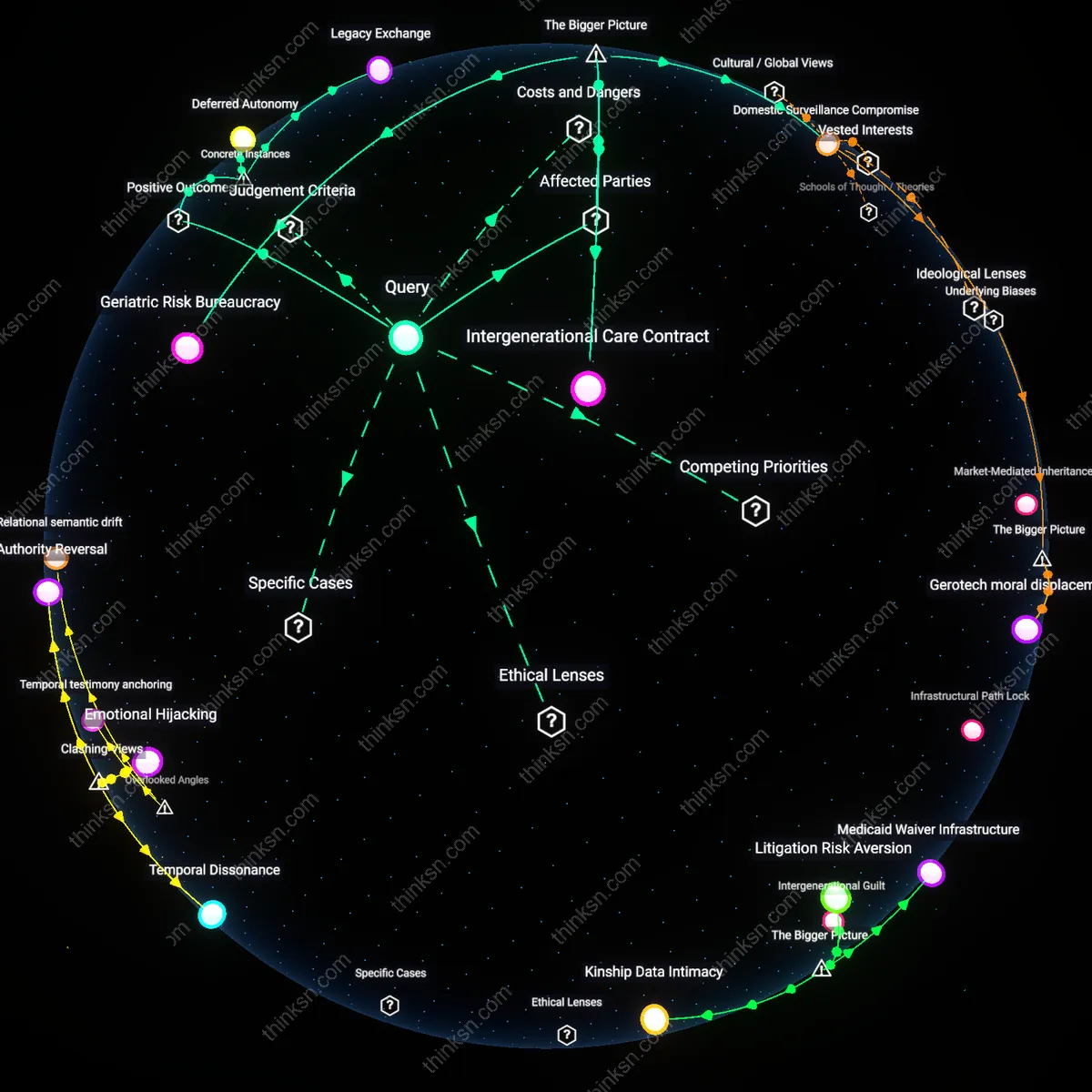
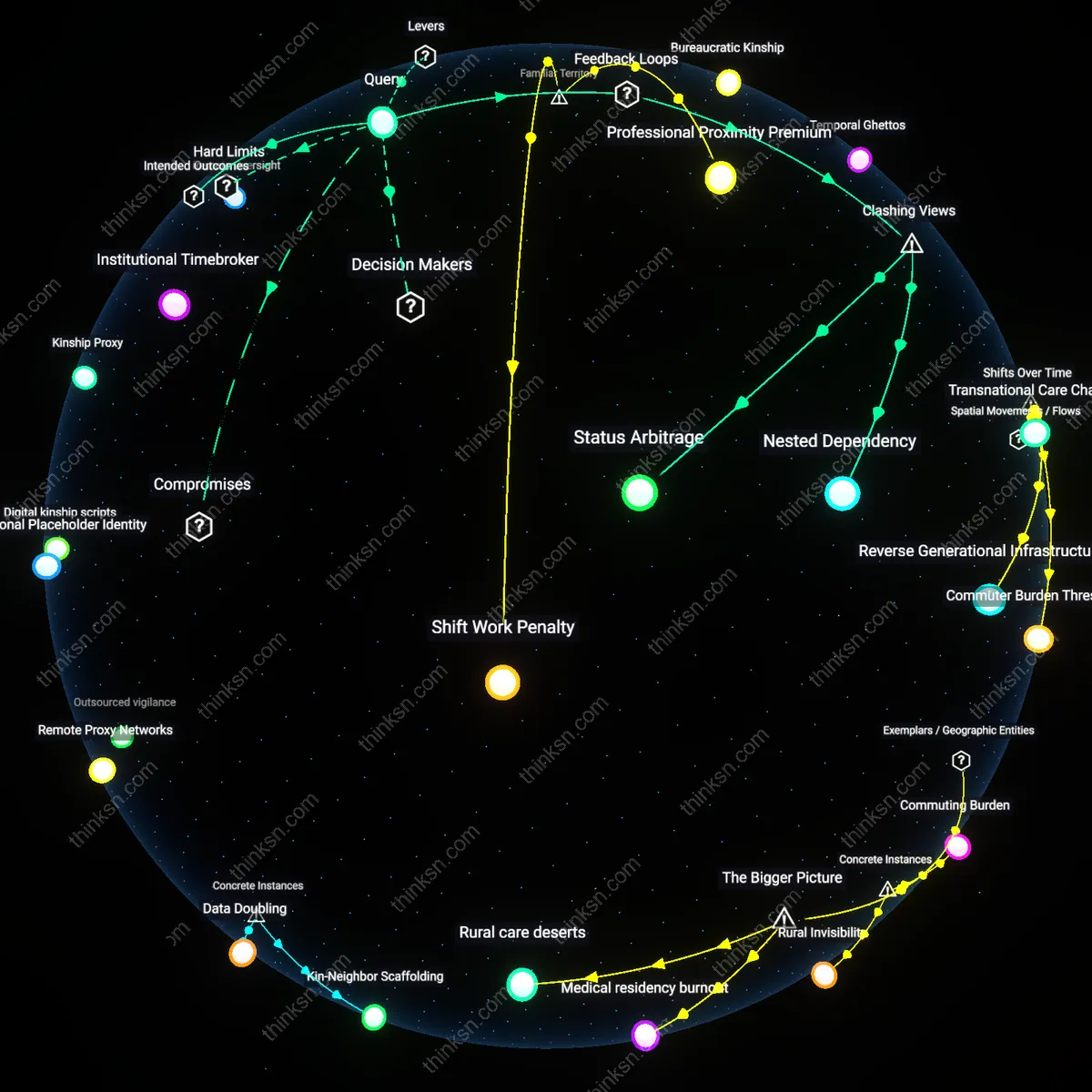
Analysis reveals 5 key thematic connections.
Key Findings
Care Proximity Tradeoff
Prioritize placing the parent in the nearest specialized dementia facility that maintains geographic access to their existing social network. This approach balances clinical necessity with emotional continuity by minimizing physical distance, enabling regular visits from known community members and preserving familiar environmental cues. The mechanism operates through regional healthcare infrastructure that distributes high-acuity dementia units across metropolitan zones, leveraging transportation networks to sustain relational bonds. The non-obvious insight is that proximity—even without full co-location—can sustain emotional resilience more effectively than either total isolation or substandard local care, reframing distance not as binary presence/absence but as visitability.
Familial Moral Burden
Designate one family member as primary decision-maker to absorb the emotional weight of relocation, thereby shielding the parent from cognitive dissonance between trust in their child and distress at displacement. This concentrates ethical agency within a single caregiver who can navigate guilt, logistical tradeoffs, and external expectations without involving the parent in deliberation. It functions through hierarchical kinship roles common in aging care systems, where adult children assume stewardship over parental autonomy in late-stage decline. The underappreciated dynamic is that familial structure itself becomes a moral container, absorbing tension that would otherwise fracture the patient’s psychological stability.
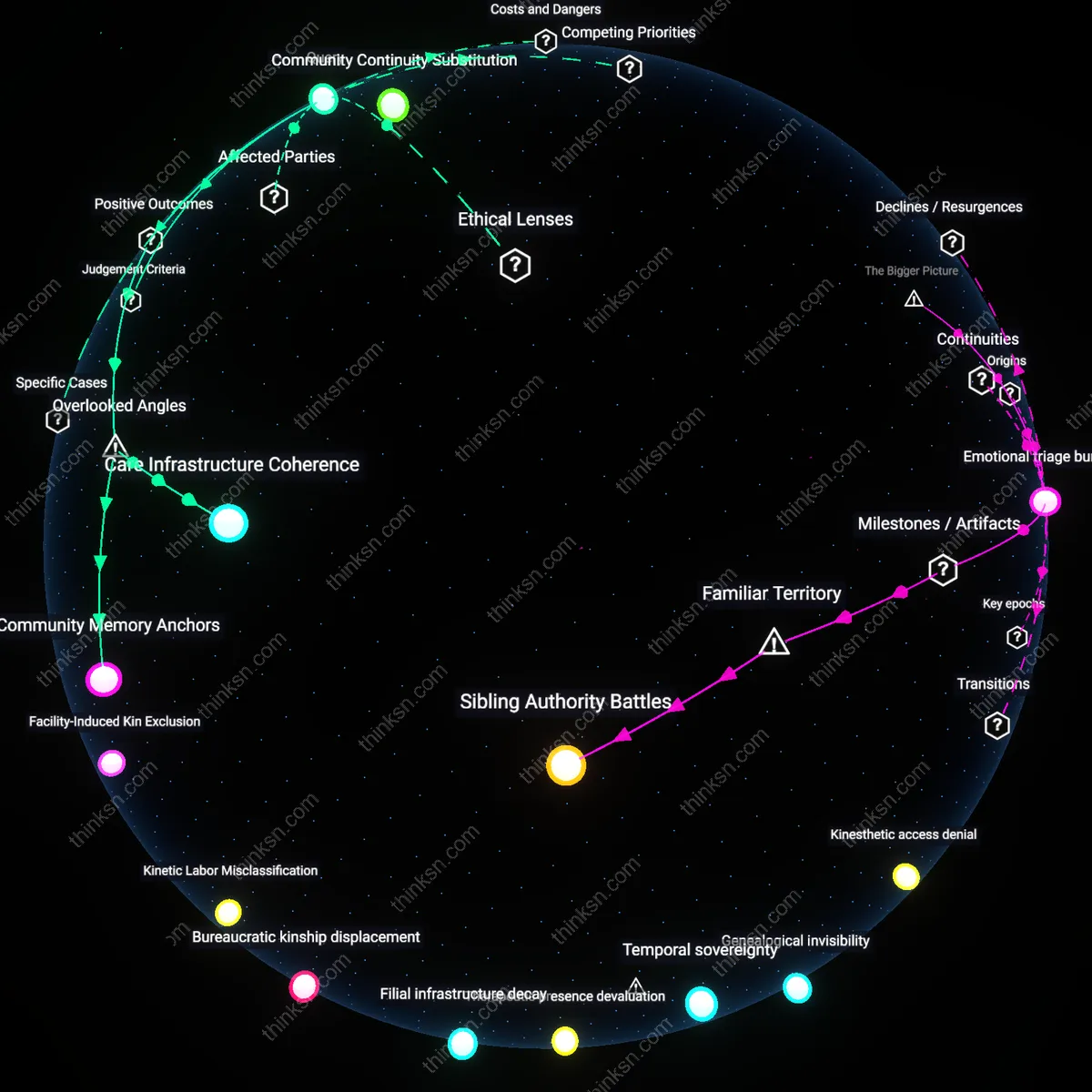
Community Continuity Substitution
Recreate elements of the parent’s original community within the specialized care environment by transferring personal artifacts, scheduling video calls with former neighbors, and coordinating volunteer visits from their former congregation or club. This works through environmental scripting in long-term care design, where sensory and social cues are intentionally replicated to simulate continuity. It leverages the principle that emotional belonging depends more on recognizable patterns than physical co-presence. The overlooked insight is that community is not a location-bound fact but a cognitively mediated construct—thus, curated imitation can fulfill affective needs even when geographic access is severed.
Care Infrastructure Coherence
Prioritize aligning relocation with existing regional care networks rather than individual facility quality alone, because integrated systems reduce long-term emotional fragmentation for both parent and family. This alignment leverages shared medical records, coordinated transport, and cross-trained staff, which collectively stabilize care transitions—most families assume the best facility is the top-rated one, but overlooked regional coherence in dementia ecosystems (e.g., Ontario’s Memory Clinics network) silently reduces caregiver burnout by minimizing coordination labor. The non-obvious benefit lies not in clinical excellence per se, but in the reduction of systemic friction that exacerbates emotional distress, shifting the decision frame from 'best care' to 'sustainable integration'.
Community Memory Anchors
Preserve access to the parent’s lifelong cultural touchpoints—such as a familiar place of worship, barber, or market—by structuring care within commuting distance of original neighborhoods, because these anchors sustain cognitive continuity more effectively than generalized social activities in new settings. Most dementia relocations sever these subtly embedded memory cues, assuming companionship in new facilities suffices, but the residual stability of context-specific routines (e.g., hearing a particular dialect at a grocery store) buffers disorientation and paradoxically enhances engagement with professional care. This overlooked environmental semiotics of belonging alters the emotional cost-benefit analysis, revealing that proximity to symbolic geography can be as vital as medical access.