Sudden Changes: Who Loses When E-Commerce Giants Shift Terms?
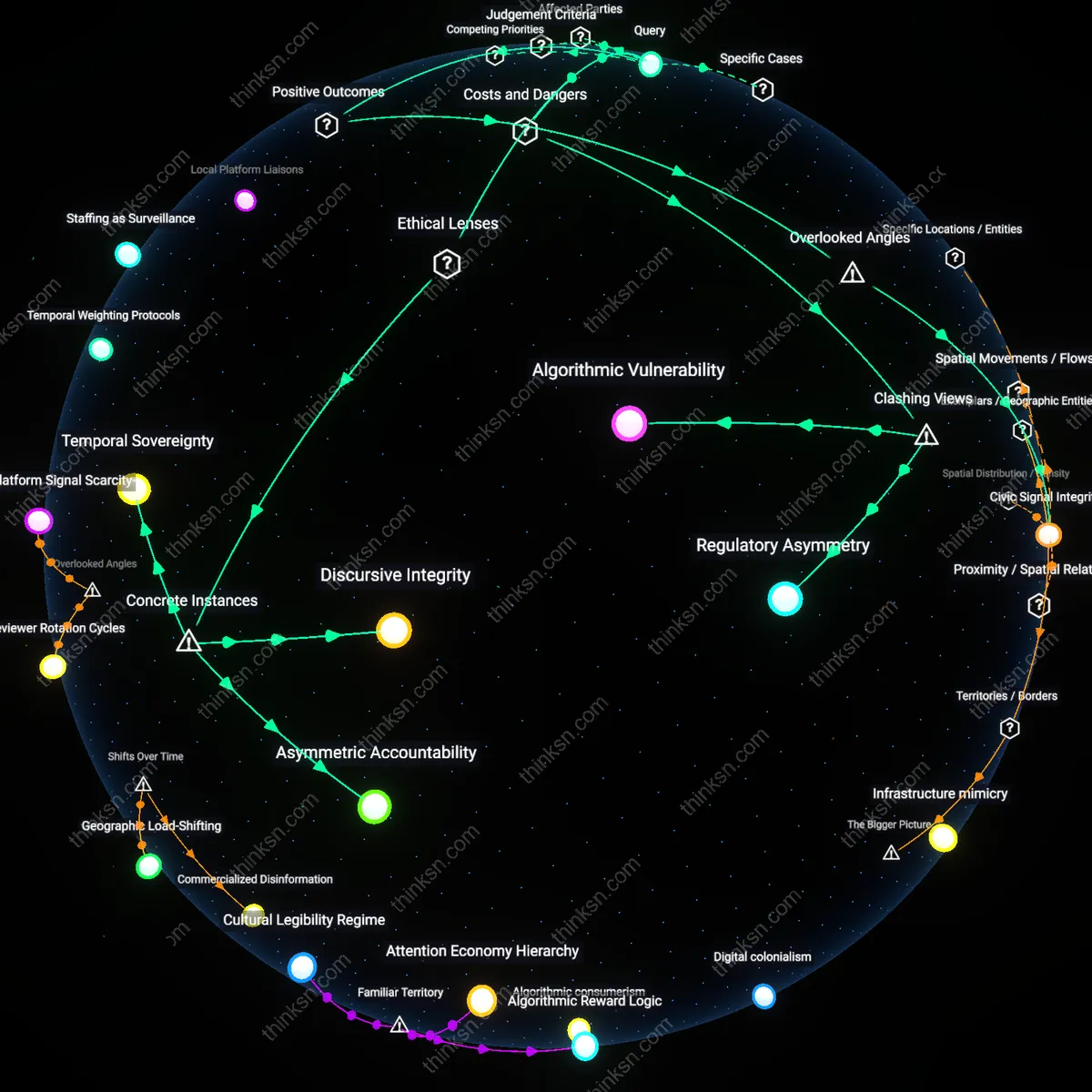
Analysis reveals 7 key thematic connections.
Key Findings
Contractual subordination
Payment processors and logistics partners are harmed indirectly when sellers face sudden term changes that destabilize their cash flows and fulfillment timelines, triggering downstream defaults or reduced volume commitments. These third-party service providers operate on thin margins predicated on seller stability and predictable transaction streams, yet they are excluded from platform governance, rendering their own business models vulnerable to unilateral decisions they cannot anticipate or influence. This exposure emerges from the hierarchical contractual architecture of e-commerce ecosystems — where the platform sits atop a stack of interdependent but siloed agreements — allowing upstream changes to cascade without contractual recourse. The underappreciated dynamic is that the platform’s legal autonomy over its terms generates systemic fragility in dependent commercial relationships that are economically vital but organizationally peripheral.
Ecosystem path dependency
Future competitors and innovation are harmed because entrenched platforms can leverage sudden term changes to deter new entrants and suppress alternative marketplace models that rely on fair access norms. When dominant platforms reconfigure seller fees, data rights, or interoperability rules without notice, they effectively raise the cost of exit and experimentation, locking sellers into ecosystems where innovation serves platform interests rather than market diversity. This operates through cumulative lock-in effects — built via network effects, accumulated reviews, and brand visibility — that make migration prohibitively costly even when terms deteriorate. The overlooked consequence is that the absence of procedural safeguards (like notice or appeal) doesn't just redistribute value in the short term but systematically skews the evolutionary trajectory of the entire digital marketplace, selecting against decentralized or user-centric alternatives.
Infrastructure Capture
The dominant e-commerce platform harms third-party logistics providers by shifting fulfillment liabilities, exposing them to reputational cascades when seller operations destabilize due to abrupt term changes; this occurs because logistics partners are embedded in the platform’s performance metrics without contractual autonomy, revealing how service dependencies can be exploited through opaque governance mechanisms—a harm that bypasses direct contractual relationships and targets operational intermediaries. This effect intensifies when platforms reclassify seller obligations mid-cycle, forcing logistics actors to absorb downstream volatility, a dynamic overlooked in seller-centric narratives of platform power.
Attention Arbitrage
Consumers are harmed when the platform alters terms to suppress seller visibility in favor of private-label goods, not through higher prices but by degrading decision-making quality via manipulated information environments; this mechanism functions through algorithmic demotion of independent sellers, which distorts comparative judgment under conditions of cognitive overload. The non-obvious insight is that consumer harm need not stem from price or availability but from the covert restructuring of attentional pathways, challenging the assumption that only sellers bear the cost of visibility controls.
Regulatory Arbitrage Pathways
National regulators are harmed when platforms unilaterally change terms to preempt compliance by relocating seller obligations to jurisdictions with weaker enforcement, thereby eroding regulatory coherence through jurisdictional fragmentation; this occurs when terms are engineered to exploit asymmetries in cross-border oversight, turning seller dependencies into vectors of legal evasion. The overlooked dynamic is that platforms don’t merely disempower sellers—they instrumentalize them as compliance proxies, then shield themselves by mutating contractual frameworks faster than regulatory systems can adapt, exposing a governance gap in transnational digital market oversight.
Platform Arbitrage Regime
Dominant e-commerce platforms began shifting seller dependencies from contractual reciprocity to unilateral control after 2015, most visibly when Amazon revised its Fulfillment by Amazon (FBA) terms to reclassify seller inventory risks during logistical failures—transferring liability without consultation to third-party sellers in Ohio and Pennsylvania warehouses. This reconfiguration exploited sellers’ sunk costs in platform-specific logistics integration, binding them tighter as traffic gatekeepers tightened algorithmic visibility levers post-2018. The non-obvious effect was not reduced trust but increased irreversible seller investment, locking in compliance through path dependency rather than competitive negotiation, thus normalizing asymmetric contractual adaptation as standard operating procedure.
Traffic Rentiership
When Shopify modified its app store policies in 2020 to restrict checkout API access, it severed integrations that developers like ReCharge had spent years building, revealing a shift from open platform growth to controlled ecosystem extraction. This pivot occurred after Shopify merchants collectively generated over $3 billion in GMV through third-party apps, marking a threshold where platform value capture no longer required seller empowerment but could actively extract it. The mechanism—algorithmic gatekeeping of monetizable user pathways—allowed Shopify to internalize revenue streams previously shared with developers, exposing how dependency formation over time enables rent extraction at inflection points of ecosystem maturity.