Is a State Complaint Better than Small Claims for Deceptive Ads?
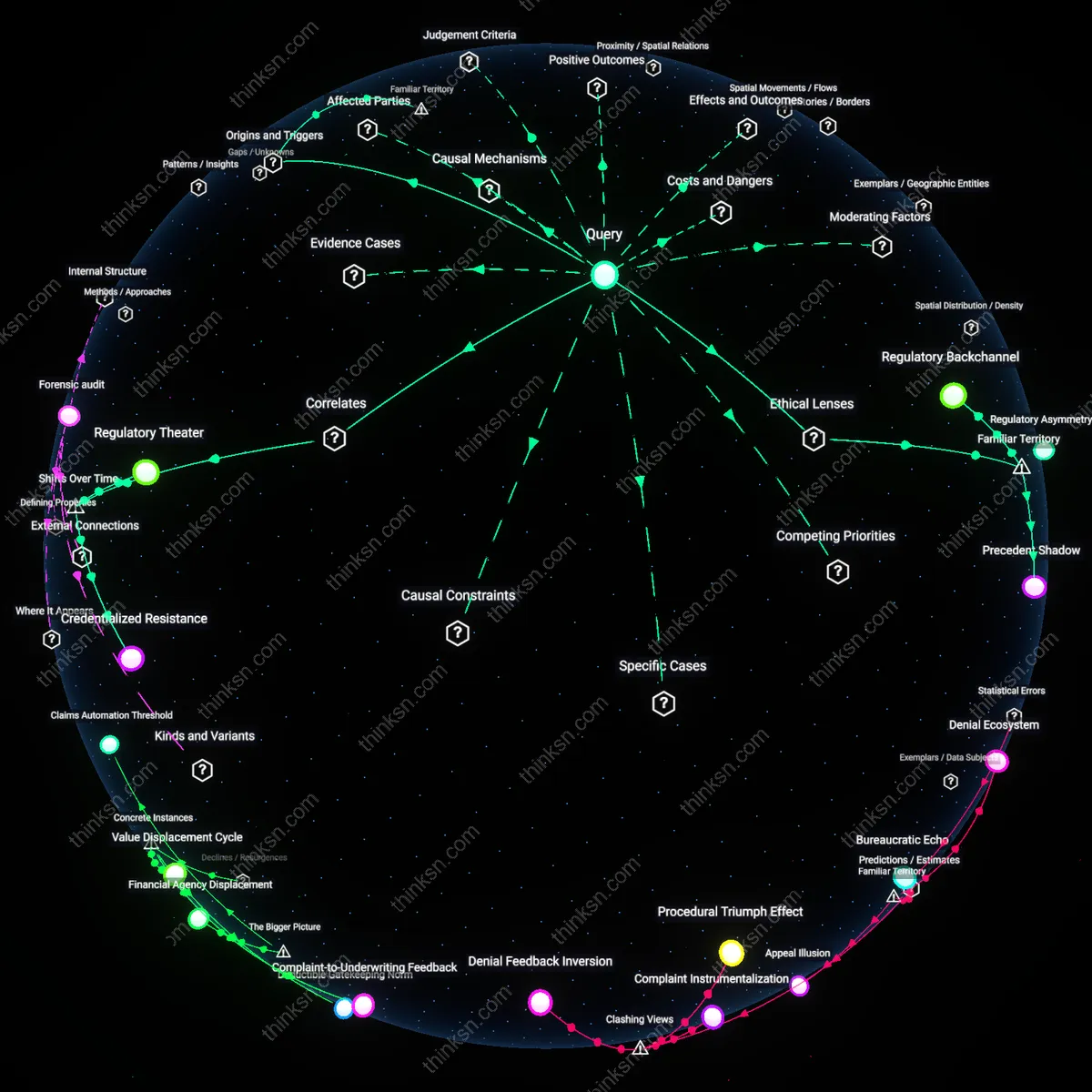
Analysis reveals 12 key thematic connections.
Key Findings
Institutional Leverage
Filing a complaint with a state consumer protection office yields better financial restitution than small-claims court by activating institutional enforcement power that aggregates individual grievances into systemic corrective action. State agencies like the New York Attorney General’s Office can investigate patterns of deceptive advertising, impose fines, and mandate refund programs across thousands of consumers—mechanisms unavailable to isolated plaintiffs in small-claims venues. This collective redress model transforms a personal loss into part of a broader enforcement docket, leveraging regulatory authority to extract recoveries that exceed what piecemeal litigation could achieve. The non-obvious insight, masked by the public’s litigation-focused mindset, is that bureaucratic actors often secure more compensation through administrative pressure than courts do through adjudication.
Judicial Visibility
Pursuing a small-claims lawsuit provides better financial restitution than a state complaint because it forces a public, adjudicated resolution that creates binding liability and immediate payout mechanisms. Unlike passive complaints that rely on bureaucratic prioritization, small-claims filings compel corporate defendants—especially local businesses or franchisors sensitive to court records—to settle quickly to avoid precedential judgments or reputational exposure in public dockets like those in California’s Superior Court system. The process operates through procedural immediacy and visibility, not regulatory scale, making it more effective for individuals when the offender is a visible, repeat market participant. The underappreciated reality, contrary to popular belief in government advocacy, is that courts offer a direct, contestable venue where individuals retain procedural control and avoid agency backlog.
Regulatory leverage asymmetry
Filing a complaint with a state consumer protection office does not typically yield direct financial restitution for individuals, unlike small-claims court, because enforcement is systemic rather than compensatory, relying on state attorneys general to prioritize pattern investigations over individual redress, which shifts leverage toward structural deterrence rather than immediate consumer recovery. This mechanism redirects individual grievances into a public enforcement pipeline where harm is aggregated across complainants, enabling prosecutorial discretion to shape outcomes — a process that deprioritizes speed and personal payout. The non-obvious implication is that the state's interest in curbing industry-wide practices undermines its function as a restitution conduit, despite superficial access advantages.
Jurisdictional precedent economy
Pursuing a small-claims lawsuit offers more direct financial restitution than a state complaint because adjudication creates binding liability within a narrow, rules-based forum designed for individual remedy, where evidentiary thresholds are low and judgments enforceable against defendants domiciled within the jurisdiction. Unlike administrative complaints, which depend on bureaucratic triage, small-claims rulings generate precedents that accumulate interpretive weight in local legal ecosystems, influencing future filings and corporate risk calculus. The underappreciated dynamic is that each small-claims victory, even if modest, feeds a distributed deterrent effect fueled by judicial frequency rather than centralized enforcement.
Institutional feedback latency
Consumer protection complaints often fail to deliver financial restitution because they function as data inputs into long-term regulatory monitoring systems, where feedback loops between reporting and enforcement are mediated by political budgeting, inter-agency prioritization, and violation thresholds that favor corporate-scale patterns over isolated incidents. This structural delay means individual complainants rarely see compensation without parallel private action, revealing that the state office acts as a sensor network rather than a remedial system. The overlooked consequence is that the very design enabling broad market oversight simultaneously disables timely personal reparation.
Speed-Power Tradeoff
Filing with a state consumer protection office delivers faster restitution than a small-claims lawsuit because it bypasses court scheduling and leverages administrative enforcement already staffed in agencies like California’s Department of Justice or New York’s Division of Consumer Protection. The mechanism—administrative referral—allows investigators to issue immediate corrective demands or initiate pattern-and-practice investigations, especially when fraud is systemic, accelerating resolution without requiring individual plaintiffs to prove harm. This is underappreciated because the public equates legal power with courtroom victory, overlooking that state offices can compel corporate refund programs preemptively, while small claims only address one plaintiff at a time.
Enforcement Amplifier
A small-claims lawsuit provides more direct monetary restitution than a state complaint because it results in a legally enforceable judgment for actual damages awarded to the individual plaintiff by a judicial officer, typically in courts like the Maricopa County Justice Court or Queens Civil Court. The mechanism—binding adjudication—forces the defendant to pay or face contempt, garnishment, or liens, a tangible outcome absent from non-adjudicative agency complaints, which often end with cease-and-desist letters. This is underappreciated because people assume state agencies ‘protect’ them in the same way a court judgment does, failing to distinguish warnings from compensatory orders.
Regulatory signaling power
Filing a complaint with a state consumer protection office does not yield better financial restitution for individuals than small claims court because these agencies lack direct enforcement authority to compel compensation, but it triggers regulatory signaling power that can lead to broader enforcement actions affecting multiple victims. State offices aggregate complaints to detect patterns of deceptive advertising, enabling investigations or rulemaking that may result in fines or mandated refunds across entire consumer bases—mechanisms unavailable in small claims court. This systemic leverage is non-obvious because individual filers rarely perceive their complaint as data input in a surveillance-regulatory pipeline rather than a direct claim for personal redress, thus underestimating its political utility while overestimating its compensatory function.
Judicial restitution efficiency
Pursuing a small-claims lawsuit typically provides faster and more certain financial restitution to individuals than filing a state complaint because courts can issue binding monetary judgments enforceable by liens or wage garnishment, a capability consumer protection offices do not offer. The small claims process is designed for speed and low cost, with plaintiffs in states like California able to recover up to $12,500 without legal representation, while agency complaints often result in non-monetary remedies like corrective notices or compliance letters. The non-obvious reality is that judicial restitution efficiency favors individual agency but requires proactive navigation of court procedures—a burden that disadvantages vulnerable populations even when the system technically works in their favor.
Regulatory Leverage
Filing a complaint with the California Department of Consumer Affairs led to a swift settlement from a for-profit college chain after investigators used aggregated complaints to trigger an administrative audit, revealing systemic deception that individual small-claims cases could not have uncovered due to dispersed harm. The state’s authority to impose penalties across all victims simultaneously created pressure for restitution that exceeded what any single plaintiff could win in court, demonstrating how regulatory enforcement scales across multiple claims to extract remedies that decentralized litigation cannot match.
Procedural Accessibility
A tenant in Detroit who filed a complaint with the Michigan Attorney General’s Consumer Protection Division received a mediation outcome from a door-to-door timeshare seller that included full reimbursement without appearing in court, whereas small-claims proceedings would have required evidence preparation, scheduling, and enforcement steps few low-income complainants navigate successfully. The state office reduced transaction costs not by legal force alone but by structuring default pathways to resolution that align with complainants’ limited capacity, revealing that access to restitution often depends more on procedural design than adjudicative power.
Deterrence Signal
When the New York Attorney General’s office pursued a public enforcement action against a dietary supplement company based on dozens of consumer complaints, the resulting consent decree included a $2 million restitution fund and a ban on future misleading claims, a scope unattainable through piecemeal small-claims suits that target isolated harms. The signal sent by state intervention—not just to the defendant but to the broader market—transformed individual grievances into systemic correction, indicating that consumer protection filings function less as restitution mechanisms per se and more as triggers for market-wide behavioral enforcement.