When Is a Parents Move About Custody, Not Fresh Start?
Analysis reveals 8 key thematic connections.
Key Findings
Judicial Scrutiny Threshold
A parent's relocation request became a tactical maneuver when family courts in the 1980s began systematically weighing the motive behind moves post-divorce, transforming geographic mobility into a litigable intent within custody disputes. This shift emerged as custody determinations moved from paternal presumption to the ‘best interests of the child’ standard, enabling courts to scrutinize whether relocation served genuine familial needs or strategic separation from the non-custodial parent. The mechanism—judicial evaluation of intent within mobility—reveals how spatial decisions became evidentiary proxies for parental fitness and coercive control, a non-obvious evolution given that physical distance was once considered a neutral life choice rather than a relational tactic.
Digital Access Compensation
Relocation ceased to be automatically tactical after 2015, when widespread access to high-fidelity digital communication created functional continuity of parenting across distances, altering the very definition of ‘access’ in custody law. Platforms like Zoom and shared digital calendars enabled non-custodial parents to maintain routine involvement, reducing the material impact of physical separation and thus diminishing the strategic weight of relocation. This technological mediation subtly redefined proximity not as geographic closeness but as scheduled, observable engagement—revealing a previously invisible threshold where infrastructure, not intent, became the determinant of legitimacy.
Judicial Mobility Threshold
A parent's relocation request becomes a tactical maneuver when courts establish a de facto distance criterion—such as moving beyond a specific jurisdictional boundary—triggering heightened scrutiny that treats geographic movement as legal strategy rather than personal choice; this shift occurs because family courts, overwhelmed by precedential inconsistency, use distance as a proxy for intent, transforming a parent’s pursuit of economic or emotional security into a procedural liability; the non-obvious consequence is that the same relocation viewed as therapeutic or necessary in one county may be treated as obstructive in another, exposing how arbitrariness in judicial thresholds converts personal reinvention into legal risk.
Temporal Preemption
A relocation shifts from legitimate to tactical when it is initiated immediately after a custody dispute arises, not before, thereby weaponizing the timeline of family dissolution to preempt judicial oversight; this timing exploits the procedural lag in family court systems, where urgent logistical actions—like signing leases or transferring schools—are completed before hearings can convene, framing irreversible decisions as fait accompli; the overlooked reality is that the legal system interprets sequence as strategy, meaning the very act of seeking a fresh start can be recast as sabotage when chronology overrides stated intent.
Emotional Capital Drain
Relocation becomes tactical when it leverages a parent's demonstrated emotional instability not as a reason to block the move, but as proof of necessity—reframing mental health deterioration as justification for geographic escape, thereby forcing courts to weigh the cost of denying rehabilitation against the child’s continuity of care; this inversion turns therapeutic claims into coercive instruments, where the plea for personal healing pressures judges to accept distance as the only viable treatment, revealing how caregiving systems reward crisis performance over structural solutions.
Custodial friction index
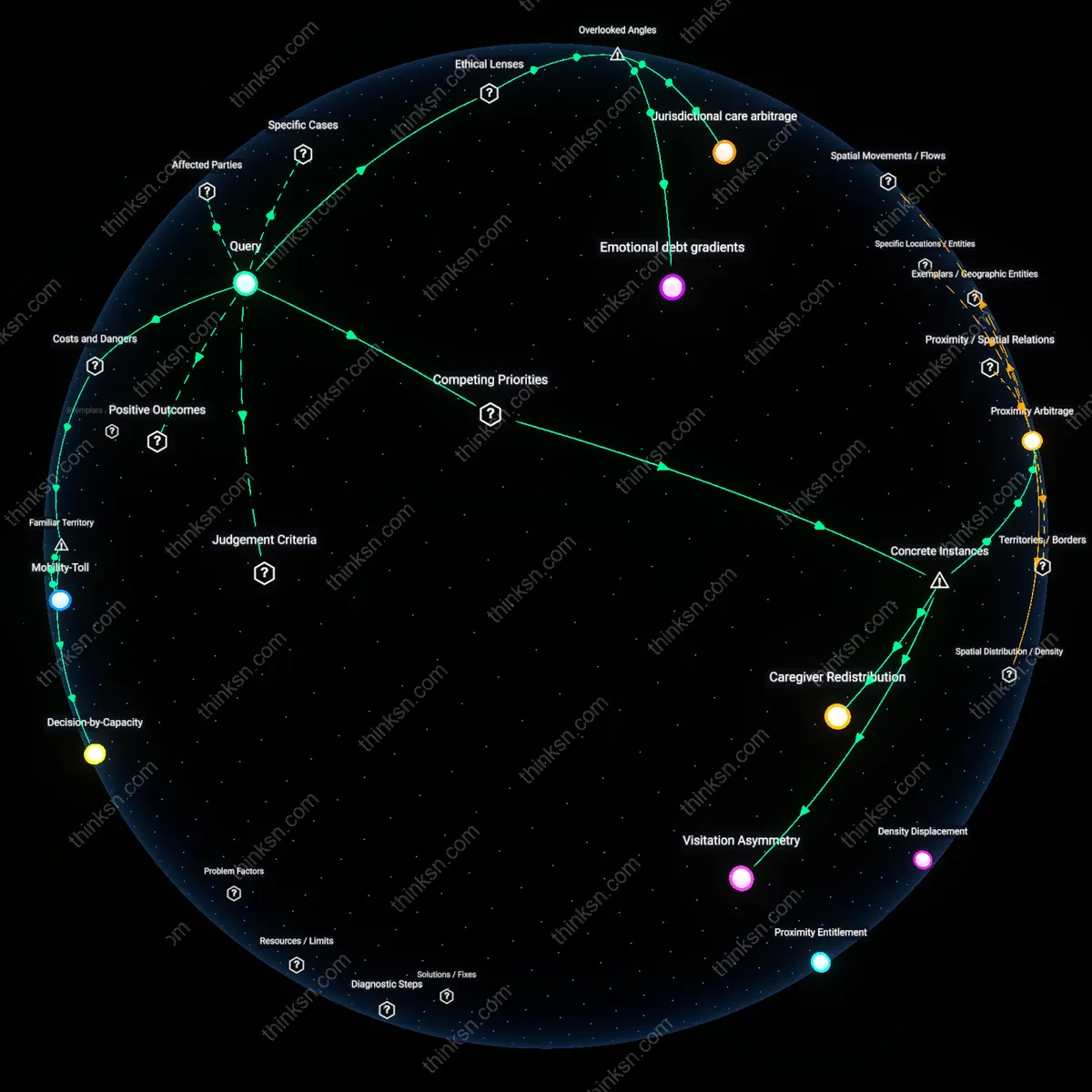
A parent's relocation request becomes a tactical maneuver when it exploits jurisdictional disparities in family court enforcement speed, leveraging procedural delays in the non-relocating parent’s ability to contest custody modifications. This occurs not through overt deception but by triggering administrative bottlenecks—such as differing state timelines for contempt hearings or visitation enforcement—which systematically disadvantage the left-behind parent’s real-time access, thereby altering de facto custody before any legal ruling. Most analyses focus on intent or emotional disruption, overlooking how the mechanical pace of court operations can be weaponized through geography, turning procedural asymmetries into coercive leverage. The non-obvious factor is not the move itself, but how differential judicial tempo creates a covert custodial advantage.
Emotional labor arbitrage
A relocation request shifts from legitimate to tactical when it transfers the burden of emotional continuity—managing children’s attachment disruptions, school transitions, and kinship severance—disproportionately onto the non-relocating parent while exempting the relocating parent from accountability. This functions through the unspoken expectation that the sedentary parent must absorb the relational fallout of distance, such as scheduling compensatory visits or soothing separation anxiety, even as they lose physical proximity; ethical frameworks like care ethics reveal this as a quiet exploitation of asymmetric responsibility. Standard evaluations miss that tacticalness can reside not in deception, but in the strategic offloading of affective work, thereby reshaping power while appearing merely logistical.
Data inheritance rupture
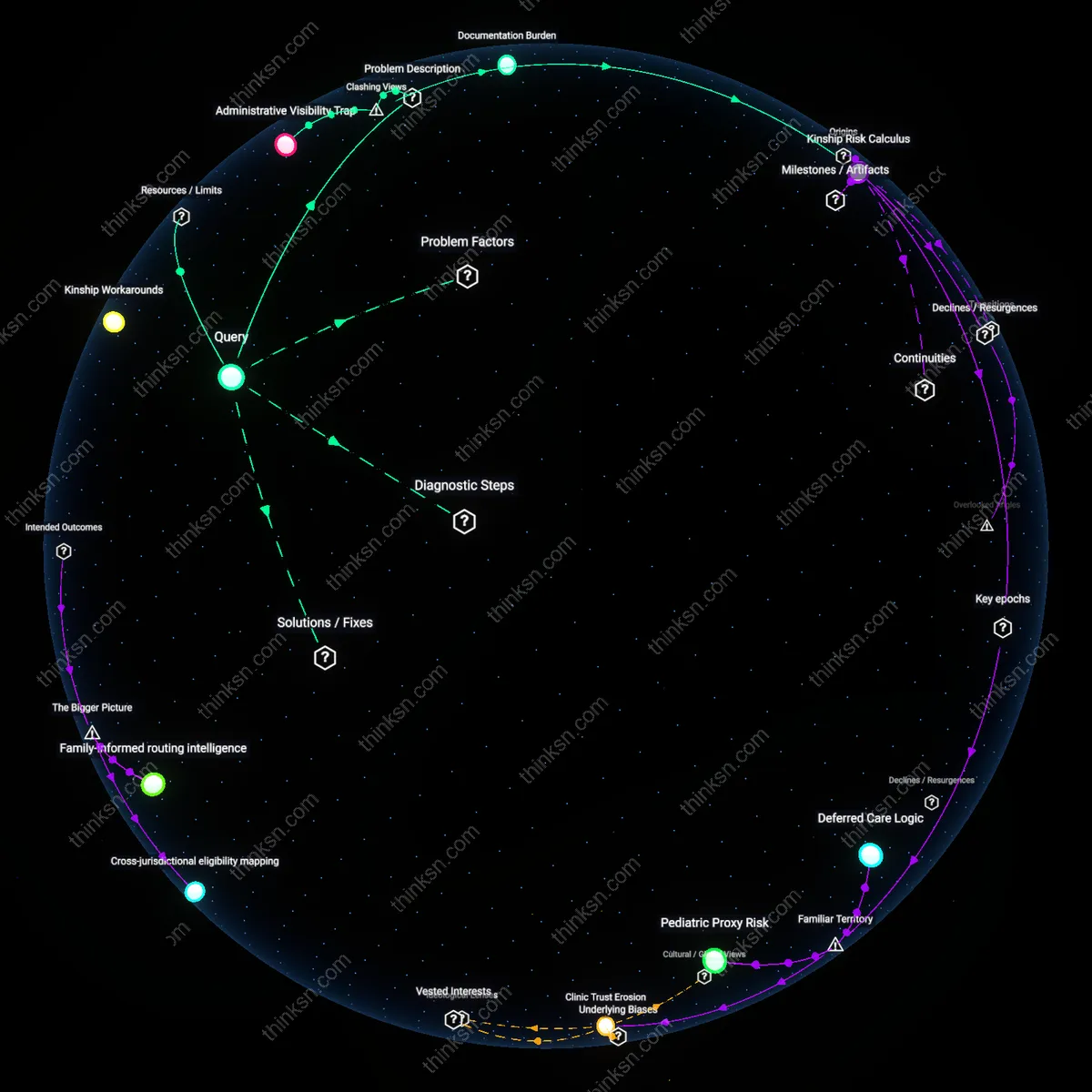
A relocation becomes tactical when it severs the non-relocating parent’s access to ambient, everyday data streams that inform caregiving—school communications, pediatric updates, peer interactions—thereby eroding their epistemic footing in custody decisions. This shift occurs not through denial of formal visitation but by disrupting the organic flow of micro-information that accumulates in locational embeddedness, a loss rarely recoverable through mandated reports or scheduled calls. Liberal legal doctrines emphasizing equal rights overlook this epistemic dispossession, where tacticalness emerges not from intent to exclude but from the unregulated degradation of situational awareness, tipping decision-making authority to the parent who remains contextually present.