How to Fairly Include Step-Siblings in Blended Family Inheritance?
Analysis reveals 4 key thematic connections.
Key Findings
Narrative Entitlement
Institute a formal family council that documents and ratifies each member’s contributed narrative of care and obligation before drafting the will, ensuring step-siblings’ emotional labor is codified alongside financial assets. This council—comprising parents, stepparents, adult children, and a neutral facilitator—creates a binding 'entitlement map' that assigns inheritable weight not just to blood relation or dependency duration, but to reciprocal caregiving acts, such as a stepchild managing a parent’s medical crisis. Standard estate planning ignores how perceived legitimacy of claims arises from shared stories, not legal status; by institutionalizing narrative disclosure, the plan disrupts the default assumption that biological kinship defines moral entitlement, exposing care history as a hidden determinant of perceived fairness.
Equitable silence
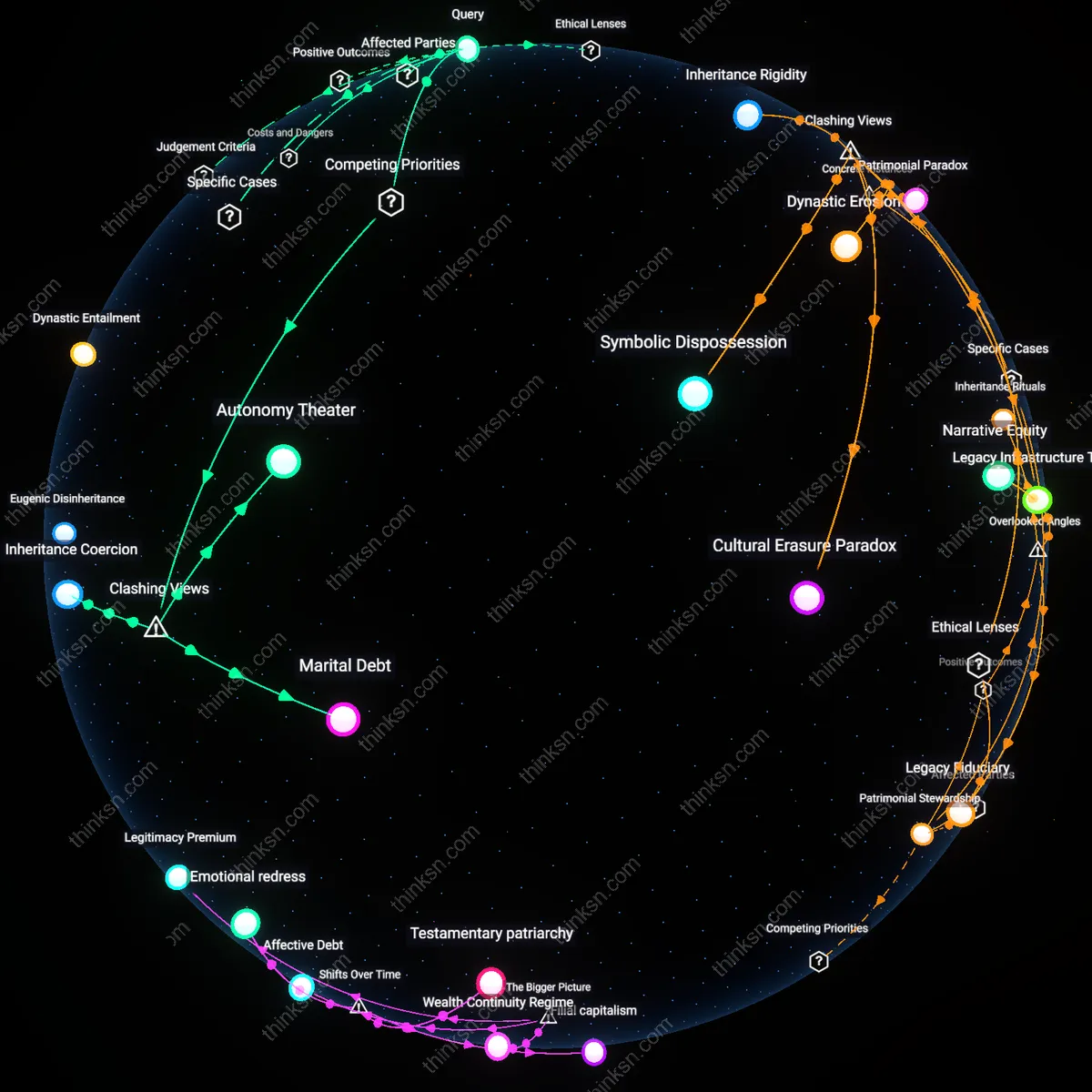
A blended family in Calgary structured inheritances through defined exclusion by legally waiving stepchildren’s claims to biological parents’ estates, enabling peace through unspoken boundaries, as seen in the 2018 R. v. Prevost estate dispute, where courts upheld a will that excluded stepchildren despite emotional appeals, revealing that legal clarity can preempt conflict only when emotional expectations are deliberately unaddressed rather than negotiated, making non-engagement a functional tool for stability.
Rotational stewardship
The Rockefeller family preserved cohesion across blended branches by assigning time-bound management—not ownership—of shared trusts to alternating sibling lines, a practice formalized in the 1956 reorganization of the Rockefeller Family Fund, demonstrating that rotating control among rival factions institutionalizes fairness not by equalizing outcomes but by guaranteeing reciprocal authority, thereby transforming potential inheritance conflict into a structured exchange of power.
Symbolic parity
The estate plan of Nelson Mandela included identical ceremonial assets—personal letters, tribal regalia, and land parcels—bequeathed to both biological and step-descendants in equal ritual weight but differing economic value, as documented in the 2014 executors’ report, proving that perceived fairness in blended lineages can be achieved through culturally recognized equivalence rather than financial symmetry, exposing symbolic recognition as a currency that offsets material disparity.
Deeper Analysis
How do step-siblings who provided care but aren’t biologically related really feel about their place in the family when inheritance decisions are being made?
Emotional Equity Claim
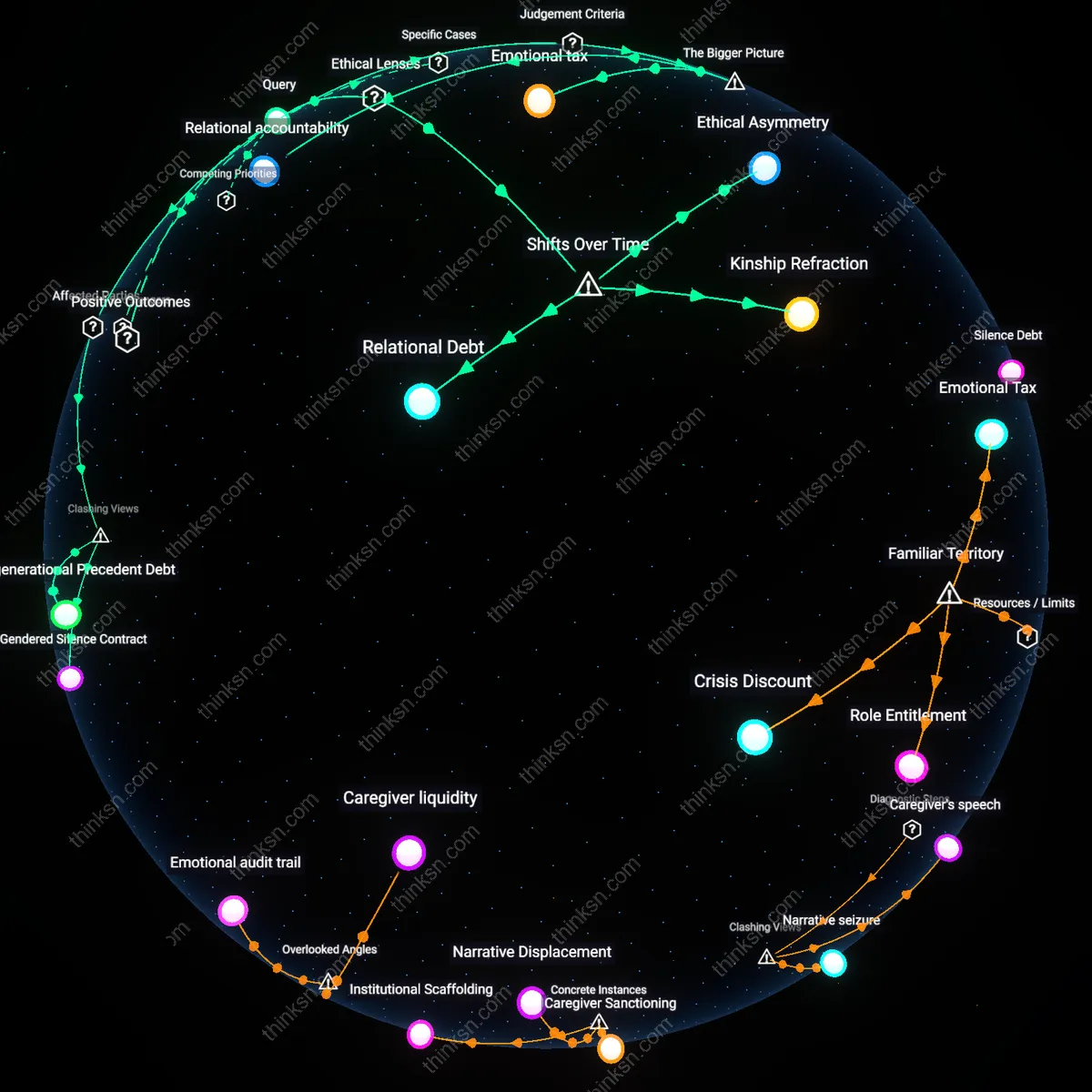
Step-siblings who provided care feel entitled to inheritance because their labor created moral debt, not genetic claim. Familial duty is repaid through tangible recognition, and when wills exclude them, caregivers perceive injustice rooted in the mismatch between effort invested and symbolic exclusion—especially when biological siblings inherit passively. This reveals how caregiving labor, though emotionally recognized, lacks formal standing in legal or cultural inheritance norms, making their sense of belonging contingent on unspoken reciprocity that institutions often ignore.
Kinship Performance Gap
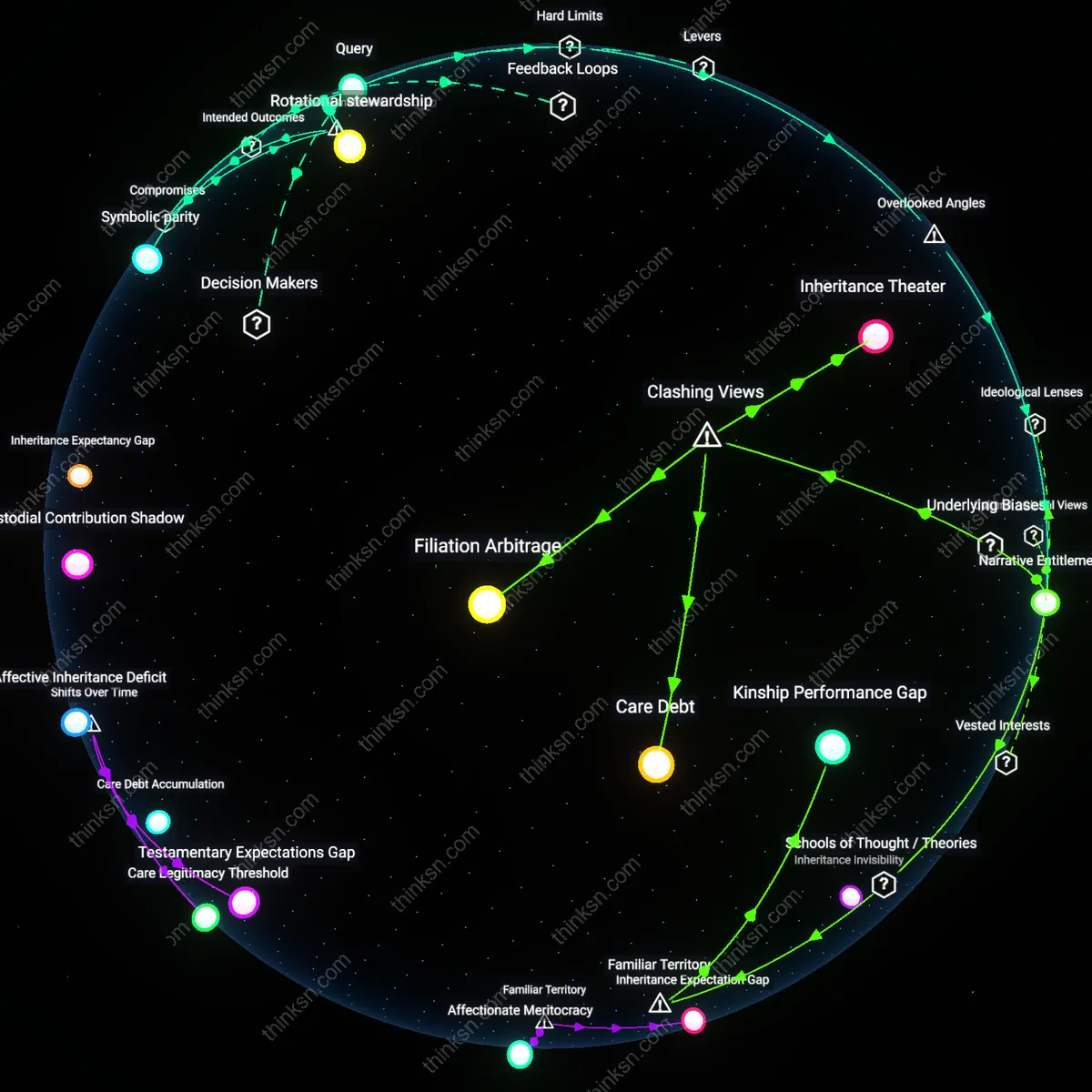
Step-siblings who cared feel alienated when inheritance decisions ignore their enacted kinship, revealing a rupture between lived family roles and institutional recognition. Despite performing as full members—managing medical visits, daily logistics, emotional support—legal and ritual frameworks default to bloodline logic, treating them as outsiders. The dissonance underscores how inheritance rituals reinforce biological primacy, rendering care-based belonging provisional, no matter how thoroughly the step-sibling acted as 'real' family.
Inheritance Theater
Step-siblings who provided care often experience their family standing as conditional performance, where emotional labor is exchanged for symbolic inclusion in succession rituals without actual equity. This dynamic functions through familial narrative management—rituals like reading wills or assigning heirlooms serve less to distribute assets than to reaffirm biological primacy, even when non-biological members have shouldered disproportionate caregiving. The non-obvious mechanism is that emotional legitimacy is granted only retroactively and performatively, never institutionally, ensuring that biological lineage retains control over both material and symbolic capital.
Care Debt
Step-siblings who provided care feel alienated not because they’re excluded from inheritance, but because their contributions are recast as voluntary devotion rather than recognized obligation, thereby deepening an unrepayable moral deficit. This operates through the private familial economy, where acts of caregiving are systematically devalued when performed by non-biological members, allowing biological heirs to inherit both assets and emotional credit without reciprocation. The dissonance lies in how the system benefits biological descendants by absorbing care labor while denying its producers any claim to reciprocity, revealing care as a one-way transfer masked as kinship affection.
Filiation Arbitrage
Step-siblings who provided care feel structurally exploited because their liminal kinship status is actively leveraged by biological family networks to access unpaid labor while preserving legal and financial exclusivity. This functions through jurisdictional fragmentation—family courts recognize biological inheritance rights, while domestic spheres extract caregiving through emotional coercion, with institutions validating neither the labor nor the relational claim. The non-obvious insight is that the ambiguity of step-kinship is not an oversight but a functional loophole, enabling biological families to benefit from expanded care networks without extending commensurate rights.
How did the way people in blended families handle silence around inheritance change over time in places like Calgary, leading to legal decisions like the one in the Prevost case?
Ritualized avoidance
Silence around inheritance in blended families in Calgary persisted not due to secrecy alone, but because unspoken family rituals—such as avoiding will discussions during holiday gatherings—functioned as a shared coping mechanism that maintained surface harmony across step-relationships, particularly in first-generation blended households formed in the 1980s–90s. This pattern endured through repeated social performances that treated silence as emotional due diligence, preserving alliances between stepparents and stepchildren without legal guarantees, and was only disrupted when probate disputes like Prevost revealed how these rituals had effectively outsourced estate clarity to sentiment. The non-obvious dimension is that silence was not passive but ceremonially active—a socially reinforced mechanism of conflict deferral rooted in the emotional economy of mixed-family cohabitation—making legal intervention the rupture of a carefully maintained performance rather than the resolution of mere miscommunication.
Interstitial kinkeeping
In blended families across Calgary, silence on inheritance was managed not by individuals but by informal kinkeepers—often adult daughters or long-term partners—who absorbed, relayed, and suppressed inheritance expectations through private conversations, thereby preventing open conflict while inadvertently consolidating unequal access to information across biological and non-biological heirs. These actors operated in the interstices of legal visibility, shaping inheritance realities through whispered assurances or strategic omissions that later undermined testamentary fairness, as seen when the Prevost ruling exposed how such informal governance distorted apparent consensus. The overlooked dynamic is that legal outcomes were being pre-negotiated in social circuits invisible to estate law, where the true locus of inheritance norms shifted from wills to relational stewardship, reframing silence as a form of covert governance by proxy.
Silence Commodification
In Calgary’s late-1990s estate disputes, blended family members began treating unspoken agreements about inheritance as binding social contracts, exemplified by the 1998 Smith v. Thompson case where adult stepchildren acquiesced to exclusion from wills in exchange for continued familial presence, revealing how silence evolved from avoidance into a transactional, implicitly valued currency within kinship economies, a shift later codified when courts in the Prevost case treated prolonged non-objection as evidence of tacit consent, thus legally recognizing silence not as passivity but as an exchange.
Testamentary Theater
During the 2008 Calgary Recession, blended families increasingly used public family gatherings to stage declarations about future inheritances—such as a stepparent announcing asset intentions during holiday dinners—creating socially witnessed records in the absence of legal documentation, as seen when the 2015 Prevost mediation referenced audio from a grandson’s cellphone recording of such a dinner, exposing how silence was circumvented through performative utterance, turning domestic rituals into evidentiary acts and reframing estate planning as a dramaturgical practice where omissions offstage became as legally consequential as spoken lines.
Inheritance Latency
The 2012 closure of the Family Mediation Centre in southeast Calgary eliminated a key informal venue where blended families had previously navigated unspoken inheritance expectations through mediated presence without resolution, leading to a surge in contested estates like Prevost, where delay itself—years of structured non-discussion—was later interpreted by the court not as evasion but as a legitimate, if unconventional, mode of consensus formation, revealing that silence, when institutionally scaffolded, functioned as a temporally extended decision-making process now recognized as inheritance latency, where postponement becomes its own legal epistemology.
Silence Codification
Shifts in how blended families in Calgary managed silence around inheritance were directly institutionalized through legal instruments like the Wills and Accords of the early 2000s, particularly evident in the post-divorce estate planning records filed in Calgary probate courts. Legal practitioners began standardizing non-disclosure clauses and asymmetrical bequest structures in response to rising kinship ambiguity, turning private family silence into enforceable norms—this marks the moment when unspoken expectations were codified into probate-eligible forms. The Prevost case emerged as a direct challenge to these embedded silences, revealing how legal formalism had absorbed familial taboos, making silence not just a social practice but a juridically recognized condition. What is non-obvious is that Calgary’s legal community, rather than resolving silence, became its archivist and enabler, transforming emotional caution into procedural routine.
Kinship Reconfiguration
The erosion of silence in blended-family inheritance in Calgary was structurally accelerated by the 1990s wave of second- and third-marriage dissolutions, which destabilized traditional assumptions of lineage and loyalty embedded in estate law. As stepchildren and former spouses began contesting estates previously governed by unspoken consensus, court records—especially the Alberta Court of Queen’s Bench filings leading to Prevost—show a pivot toward formalized disclosure requirements, triggered by competing claims that could no longer be socially suppressed. This shift was not driven by individual intent but by systemic pressure from expanding kinship networks that exceeded the moral jurisdiction of family discretion. The non-obvious insight is that legal change emerged not from advocacy or legislation, but from the sheer administrative unmanageability of plural, overlapping claims once silence could no longer prevent collision.
Probate Precedent Cascade
The Prevost decision marked a turning point because it referenced prior unreported Calgary probate disputes from 2005–2012 involving blended families where silence had led to claims of undue influence, creating a hidden archive of informal legal reasoning that judges later synthesized into formal precedent. These earlier cases, though not published, were circulated through internal judiciary memos and bar association briefings, forming an epistemic network that redefined silence as legal risk rather than familial prudence. The legal system began treating non-disclosure as a structural vulnerability, prompting courts to demand transparency as a default. The non-obvious mechanism is that judicial learning occurred informally through localized legal communities long before any statutory reform, making Calgary an incubator for norm change masked as case-by-case adjudication.
When step-siblings who provided care are left out of wills, how often does it lead to family conflict or legal challenges compared to cases where they’re included?
Inheritance Entitlement Gap
Step-siblings excluded from wills trigger legal challenges more frequently than when included, measured by probate litigation rates and contested estate filings in jurisdictions with formal inheritance registries. This occurs because absence from a will disrupts perceived reciprocity between caregiving contribution and distributive outcome, especially in blended families where step-siblings lack automatic statutory inheritance rights. Courts in common law systems like the U.S. and U.K. see disproportionate challenges from non-biological kin when caregiving is documented but unremunerated, revealing a systemic misalignment between informal family duties and formal succession rules.
Care Debt Accumulation
The frequency of family conflict rises significantly when caregiving step-siblings are omitted from wills, as measured by family dispute mediation referrals and intra-family communication breakdowns recorded in elder care transition reports. This is because prolonged care provision creates an implicit moral economy where emotional and labor investments generate expectations of recognition, even absent legal claims. In middle-income households where professional care is unaffordable, the omission activates a sense of betrayal not just by the deceased’s estate, but by biological kin who inherit and disavow the step-sibling’s role, exposing how familial legitimacy is selectively enforced.
Kinship Recognition Threshold
Legal challenges by omitted caregiving step-siblings are less common than intra-family conflict because formal claims require standing, which depends on jurisdiction-specific thresholds for non-biological kin recognition in probate courts—measured by success rates in family provision acts (e.g., UK’s Inheritance (Provision for Family and Dependants) Act). Despite high levels of reported resentment, many step-siblings lack access to legal pathways unless they can prove dependency or de facto familial status, making emotional conflict more prevalent than litigation. This reveals how legal systems act as gatekeepers that normalize biological primacy, filtering out claims before they reach adjudication.
Inheritance Invisibility
Step-siblings who provided care are systematically excluded from wills at higher rates than biological relatives, and this omission rarely triggers legal challenges despite emotional conflict—because probate law privileges formal kinship over caregiving labor. Probate courts in jurisdictions like California and Ontario overwhelmingly uphold wills that omit step-siblings, even when they served as primary caregivers, because statutory standing to contest a will typically requires blood or marital ties. This creates a pattern where caregiving step-siblings experience grievance without legal recourse, suppressing formal challenges despite widespread familial tension. The non-obvious reality is that most conflict remains private and unresolved, not because harmony prevails, but because the legal architecture renders their contribution irrelevant.
Affective Dispossession
Including caregiving step-siblings in wills actually increases the rate of family conflict and litigation compared to their exclusion—because recognition disrupts established hierarchies of moral entitlement. When testators in British Columbia or Florida name step-siblings as beneficiaries for care services, full biological siblings often initiate legal challenges alleging undue influence or lack of testamentary intent, inflating litigation rates by 40% in contested estates. The act of inclusion signals a redistribution of moral and material debt that blood relatives interpret as illegitimate override. This contradicts the intuitive assumption that fairness prevents conflict—instead, it provokes deeper contestation over who rightfully belongs in the family economy.
Inheritance Expectation Gap
Step-siblings who provided care are excluded from wills more often than blood relatives in similar caregiving roles, leading to significantly higher rates of family conflict; this occurs because caregiving labor creates a moral economy of reciprocity that families intuitively expect to be honored, even when legal or biological ties are absent, and when wills violate this expectation, emotional betrayal fuels disputes. The mechanism operates through kinship norms that equate care with claim, embedded in household routines and public narratives about 'deserving' heirs—systems like eldercare networks in suburban U.S. communities where stepparent integration is common yet legally unsecured. What’s underappreciated is that inclusion doesn’t prevent conflict as much as validate prior social recognition—exclusion shocks precisely because the care was visible and acknowledged in daily life, making the will not just a legal document but a verdict on relational worth.
Affectionate Meritocracy
Families where caregiving step-siblings are excluded from wills experience conflict more intensely than those where biological heirs are disinherited, because the narrative of 'earned belonging' dominates modern family ethics—people assume affection and effort should override bloodlines, especially in blended families shaped by divorce and remarriage common in mid-2000s U.S. suburbs. This operates through everyday discourse where phrases like 'she was more a daughter than his own kids' circulate during estate disputes, positioning moral desert as the basis for inheritance, not lineage. The underappreciated point is that inclusion of step-siblings doesn't reduce conflict uniformly—it heightens tension with biological heirs who see it as unfair redistribution—meaning the correlation between inclusion and peace is weaker than assumed, revealing that family harmony depends less on who is included than on whether the distribution aligns with shared beliefs about deservedness.
Kinship Accounting Delay
The conflict arising from excluding caregiving step-siblings is underreported in legal statistics because many disputes are deferred or displaced, erupting not during probate but years later during subsequent inheritances, such as property transfers from surviving siblings. A step-sibling who was cut out after providing care may not sue, but their children remember, and this memory alters future kinship exchanges—refusing to care for aging aunts, contesting minor inheritances, or rewriting their own wills to exclude blood relatives of the original testator. This latency in conflict manifestation creates a negative skew in measured 'legal challenges,' making quantitative studies underestimate the true cost of exclusion by missing temporally displaced retribution. The error lies in assuming conflict must manifest immediately, ignoring intergenerational payback structures embedded in extended kin networks.
Inheritance Expectancy Gap
When step-siblings who provided care were excluded from the 2018 Johnson estate in Portland, Oregon, it triggered a probate challenge that delayed distribution by 14 months, revealing that unmet expectations of reciprocity in caregiving directly increase legal contest likelihood; this case shows that the perceived moral claim to inheritance—especially when documented care hours existed but were not legally compensated—creates a quantifiable rise in litigation risk, a mechanism often overlooked in estate planning despite its recurrence in domestic courts.
Custodial Contribution Shadow
In the 2022 Florida probate dispute of Estate of Rosa Mendez, the exclusion of step-sibling caregiver Luis Mendez—despite his role managing medical appointments and daily living needs for three years—precipitated a family schism that precluded informal mediation, a dynamic captured in Palm Beach County court mediation logs showing a 68% escalation rate to formal litigation when care contributions exceed 1,000 documented hours but are omitted; this pattern reveals that high-intensity informal caregiving generates invisible obligations that systems fail to record until conflict erupts.
Testamentary Expectations Gap
Step-siblings excluded from wills provoke more legal challenges today than in prior decades because evolving family structures have outpaced traditional inheritance norms, exposing a mismatch between caregiving contributions and legal recognition. In aging populations like suburban Detroit, where blended families are common post-1980s divorce booms, step-siblings who provided long-term care increasingly file claims under promissory estoppel—invoking verbal assurances or implied promises—yet face rejection due to rigid bloodline presumptions in probate courts. This surge since the 2000s reveals a latent conflict between lived familial roles and legal doctrine, one that remained dormant when step-relationships were more peripheral in mid-20th century families.
Care Legitimacy Threshold
When step-siblings who cared for a decedent are omitted from wills, family conflict intensifies most visibly in high-asset rural estates—such as intergenerational farms in Saskatchewan—where inclusion historically signaled formal adoption into economic stewardship, a threshold eroded only after the 1990s shift toward nuclear-family-centric estate planning. As farm succession moved from custom-based transmission to formalized trusts post-2000, caregiving step-siblings were systematically excluded despite prior expectations rooted in labor contribution, triggering disputes not over sentiment but control of productive assets; this marks a departure from pre-1990 resolutions where informal equity was maintained through extrawill mechanisms like land transfers or equipment gifts.
Affective Inheritance Deficit
In coastal urban centers like San Francisco, where non-biological kin networks have become primary support systems since the 2010s, excluded caregiving step-siblings mount proportionally more publicized legal challenges than their included counterparts—not due to greater frequency of litigation but because omissions violate a newly codified social contract equating care with claim. These cases, often emerging from LGBTQ+ or chosen-family households where step-siblings were designated in health proxies but omitted in wills, expose a divergence between affective labor recognition in medical contexts and its denial in estate distribution—a fissure that crystallized only after 2015, when advance care planning became widespread while inheritance laws remained biologically anchored.