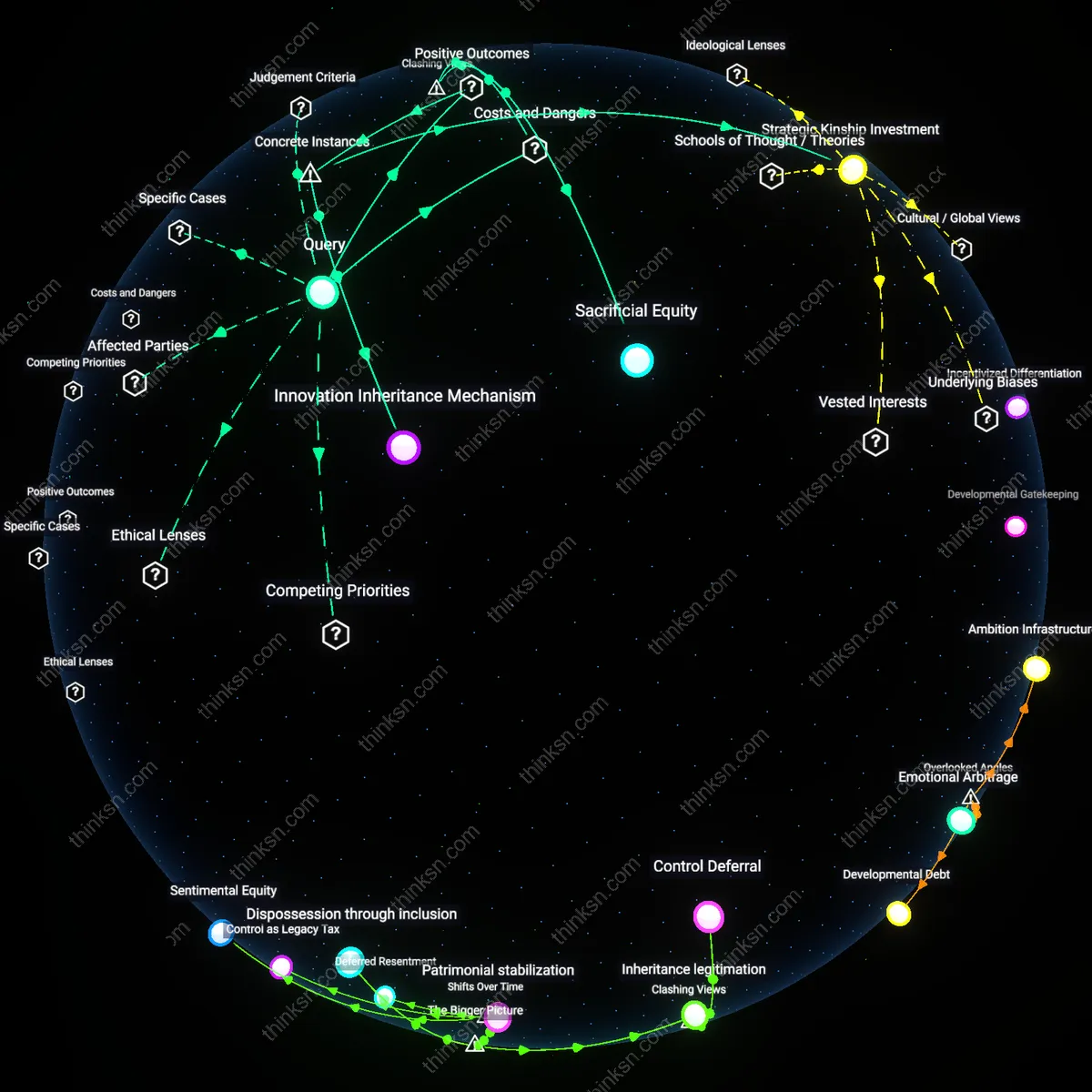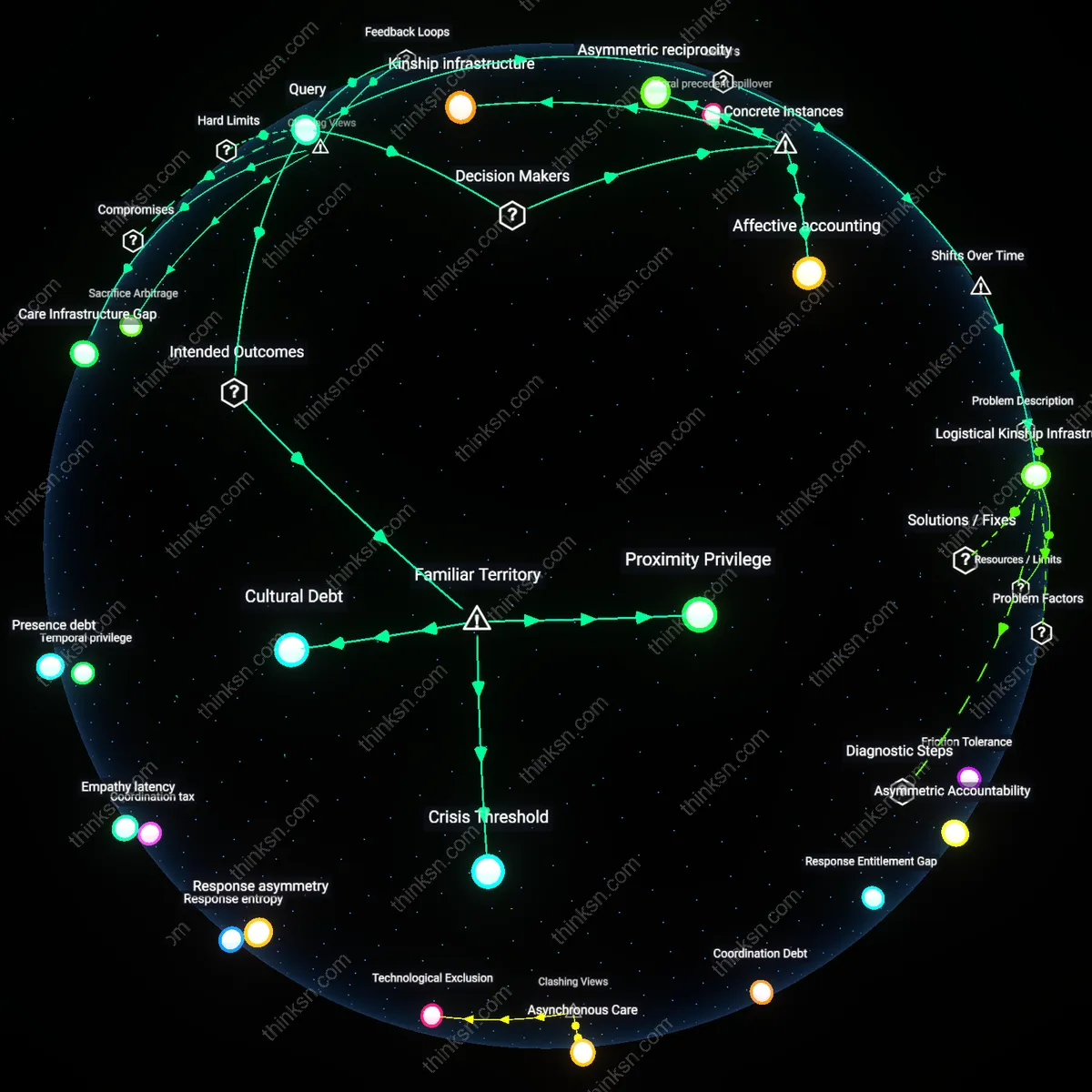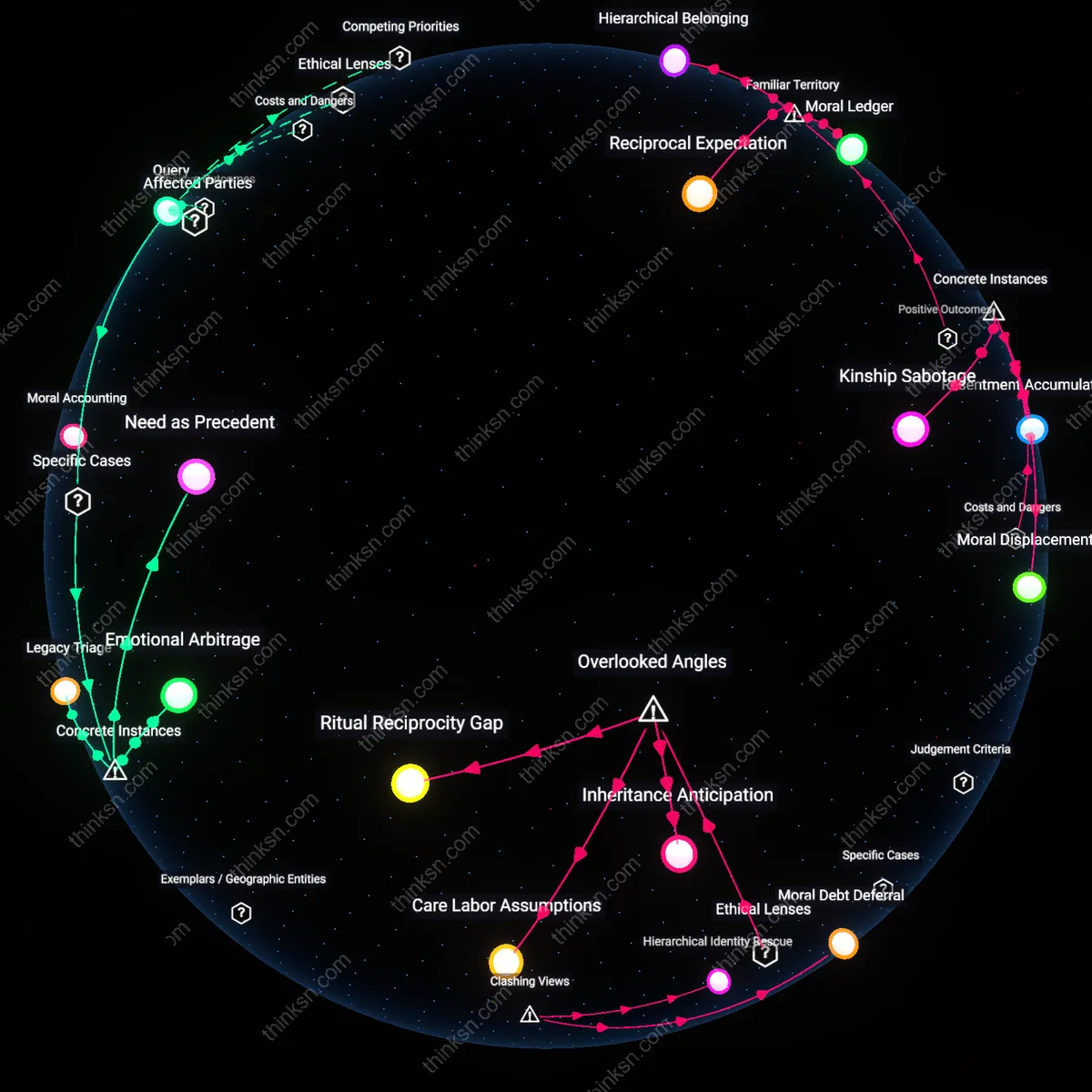
Inequitable Inheritance: Fairness vs. Sibling Needs?
Analysis reveals 6 key thematic connections.
Key Findings
Moral Accounting
Unequal inheritance distribution based on perceived need creates lasting conflict when judged against an implicit standard of fairness tied to equal deserts. Siblings evaluate allocations through a moral economy where contributions, sacrifices, and symbolic recognition accumulate as credits or debts, and when need-based rationales override this ledger—such as giving more to a financially struggling sibling—those who provided eldercare or emotional labor interpret the outcome as a nullification of their investment. This mechanism operates through familial systems of unspoken reciprocity, where fairness is measured not by outcomes but by the recognition of historical asymmetries in effort and obligation. The non-obvious insight is that people don’t primarily resent need-based distribution itself, but the erasure of their accounted sacrifices under a logic that treats dependency as the sole moral claim.
Authority Entitlement
Parents’ unilateral decisions to distribute inheritance by perceived need provoke sibling conflict when the decision-making process undermines adult autonomy and sibling parity. The parent, acting as a final moral authority, invokes a caretaking rationale—such as supporting a disabled or impoverished child—which others cannot contest without appearing selfish, yet this centralized discretion replicates childhood power dynamics where fairness was administered top-down rather than negotiated. This dynamic functions through hierarchical family governance structures that persist into adulthood, where the parent’s role shifts from provider to arbiter, granting them moral license to override distributive norms. The underappreciated element is that resentment stems less from the distribution itself and more from the disenfranchisement of siblings in a decision that reasserts parental supremacy at the expense of peer equity.
Need Hierarchy
When inheritance is allocated by perceived need, it establishes an implicit ranking of worth that reconfigures sibling relationships into a system of moral dependency and stigma. The sibling receiving more is cast not as receiving redress but as deficient—marked by failure, illness, or incapacity—and this categorization triggers shame or resented pity, while recipients of less feel their stability has been penalized. This operates through a social valuation system where resources signal esteem, and need-based distribution inverts the usual link between merit and reward, transforming economic support into a visible marker of status loss. The overlooked consequence is that the very mechanism intended to correct inequality—addressing material disadvantage—ends up entrenching relational inequality by institutionalizing a hierarchy of legitimacy in who deserves care and who must provide it.
Legacy Triage
In the Baring family of 19th-century England, unequal inheritance distribution based on perceived financial vulnerability among siblings led to long-term estrangement between branches of the family, as younger sons receiving smaller portions resented the trustees' moral judgments about need; this mechanism reveals how inheritance becomes not just a transfer of wealth but a hierarchical assignment of worth, where the arbiters of need assume quasi-parental authority over adult siblings’ lives. The non-obvious insight is that fairness is destabilized not by inequality per se, but by the implicit power to diagnose and categorize siblings as 'deserving' or 'undeserving'—a role that corrodes fraternal parity.
Need as Precedent
In post-apartheid South Africa, rural Xhosa families reallocating ancestral land based on perceived economic hardship among siblings have seen formal family councils institutionalize 'need assessments' that, while attempting equity, generate new grievances when siblings interpret them as intrusive or inconsistent; this system shows how the act of codifying need within customary law transforms subjective compassion into a bureaucratic standard that can be gamed or challenged. What is underappreciated is that procedural fairness fails to resolve emotional injury when the metric of distribution—need—invites ongoing scrutiny of personal life choices, such as migration or career shifts, turning inheritance into a retrospective audit of sibling worthiness.
Emotional Arbitrage
The 2003 inheritance dispute among the siblings of Mexican artist Frida Kahlo—in which the Mexican state claimed stewardship of her estate over familial claims, partly justified by asserting that some heirs were 'less in need' due to other sources of income—triggered public rifts among surviving relatives who rejected state-imposed moral calculus about their emotional or symbolic ties to Kahlo’s legacy; this case illustrates how external institutions wielding need-based criteria disrupt internal family narratives of belonging. The overlooked dynamic is that when need is used to override symbolic claims—such as custodianship of art or memory—siblings reinterpret material distribution as a denial of identity, converting financial inequity into existential erasure.