Should You Start a Boutique Firm When Competition Is High?
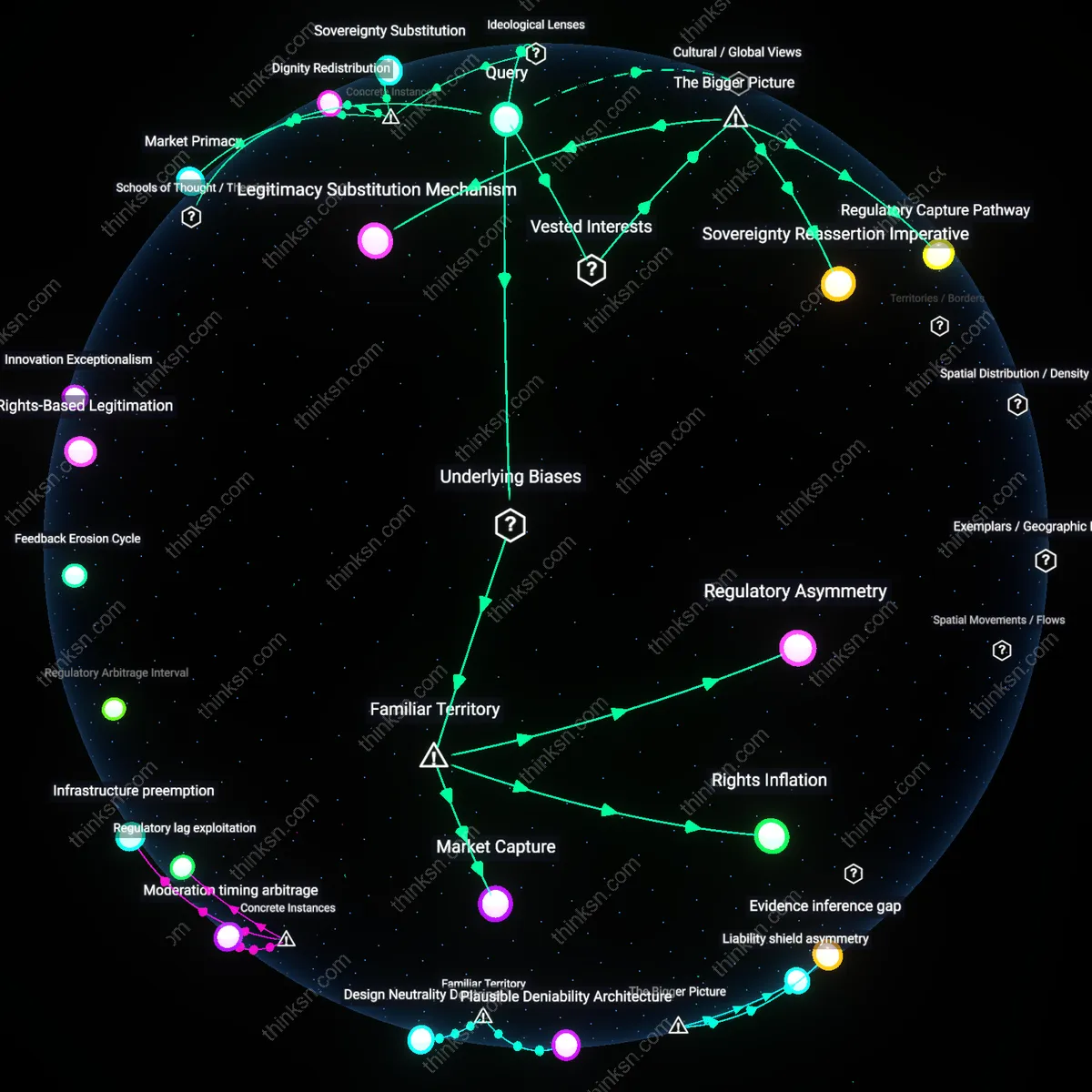
Analysis reveals 8 key thematic connections.
Key Findings
Strategic Differentiation Yield
Choose the boutique if its niche specialization enables deeper client impact through focused expertise, because professional services thrive on perceived uniqueness in saturated markets, and firms that command premium trust in narrow domains disproportionately capture high-margin work despite volume disadvantages, which reveals that market saturation penalizes generalists more than specialists—a dynamic most overlook when equating size with stability.
Autonomy-Innovation Feedback
Join the boutique if decision-making proximity to leadership accelerates professional agency, because in small firms, junior staff routinely interface with partners and shape service design, creating a feedback loop where individual initiative directly influences firm trajectory, a mechanism invisible to those who assume career growth depends only on brand-name validation rather than real-time operational influence.
Cultural Equity Stake
Opt for the boutique when its formative stage allows you to co-author its norms and values, because early-stage professional firms distribute cultural ownership like equity, and individuals who embed before institutional inertia sets in effectively gain disproportionate sway over ethical standards, promotion criteria, and work rhythms, a dimension absent in discourse that reduces job choices to compensation and title.
Client Capture Pathway
Accepting a role in a saturated boutique increases the risk of tacit entanglement in client-driven advocacy that undermines impartial standards. To differentiate themselves in a crowded market, boutiques often align closely with client interests to secure retention and referrals, especially when clients are powerful regulatory subjects or investors with repeated needs. This proximity distorts advice-giving, as consultants internalize client narratives to maintain access, gradually normalizing advocacy over objectivity. The systemic danger lies in how individual career decisions aggregate into a broader erosion of professional neutrality, where boutiques function not as independent advisors but as de facto extensions of client strategy—subverting the legitimacy of the entire advisory class.
Strategic Obscurity
Choosing a boutique firm over saturated alternatives optimizes for invisibility within hierarchies, not visibility of achievement. Professionals in high-tracked careers—such as management consulting or corporate law—often accept lower brand recognition at boutiques to elude the performance-based surveillance of large firms, where metrics enforce conformity and erode autonomy. The mechanism is deliberate marginalization from dominant career ladders, which insulates the individual from institutional demands to scale, specialize, or subordinate judgment to client-driven priorities. This reveals that career agency is not always expressed through ascent but can be exercised through withdrawal—a non-obvious form of resistance against the assumed imperative to maximize positional power.
Specialization premium
Choosing a boutique professional-services firm over saturated alternatives became advantageous when deep industry focus began generating outsized client loyalty, as seen in legal boutiques like Quinn Emanuel transitioning from niche litigators to dominant players in high-stakes IP disputes during the 2010s; their shift from generalist emulation to unapologetic specialization redefined competitive advantage, revealing that market saturation penalizes broad service models more than small scale. This trajectory highlights how the erosion of middle-ground consultancies after 2008 created asymmetric opportunities for ultra-focused actors who leveraged timing and sectoral inflection points rather than competing on breadth.
Generational leverage
The decision to join a boutique became strategically viable when millennial and Gen Z professionals began prioritizing visible impact and accelerated responsibility over brand-name prestige, a shift crystallized in accounting-adjacent ESG advisory boutiques such as Control Risks’ climate division expanding rapidly between 2018 and 2023; younger talent accepted lower starting compensation for direct engagement with transformative mandates, enabling these firms to punch above their weight. This reversal of the traditional career logic—where scale guaranteed early-stage influence—exposes a structural realignment in professional motivation driven by cohort-specific values rather than economic necessity alone.
Infrastructure arbitrage
Boutique viability increased once digital collaboration tools matured post-2020, allowing small legal and management consultancies like Parthenon-EY’s spin-off advisory units to access global talent and clients without replicating Big Four overhead, a break from the pre-2010 requirement for physical density and centralized training. Firms that exploited this infrastructural shift by operating as networked microhubs—such as boutique M&A advisors in Frankfurt and Austin scaling cross-border deals via secure cloud platforms—demonstrate how technological layering decoupled growth from institutional mass, making deliberate smallness a scalable model rather than a transitional phase.