Repeated Imaging: When Radiation Risk Exceeds Rheumatoid Arthritis Diagnosis Benefits?
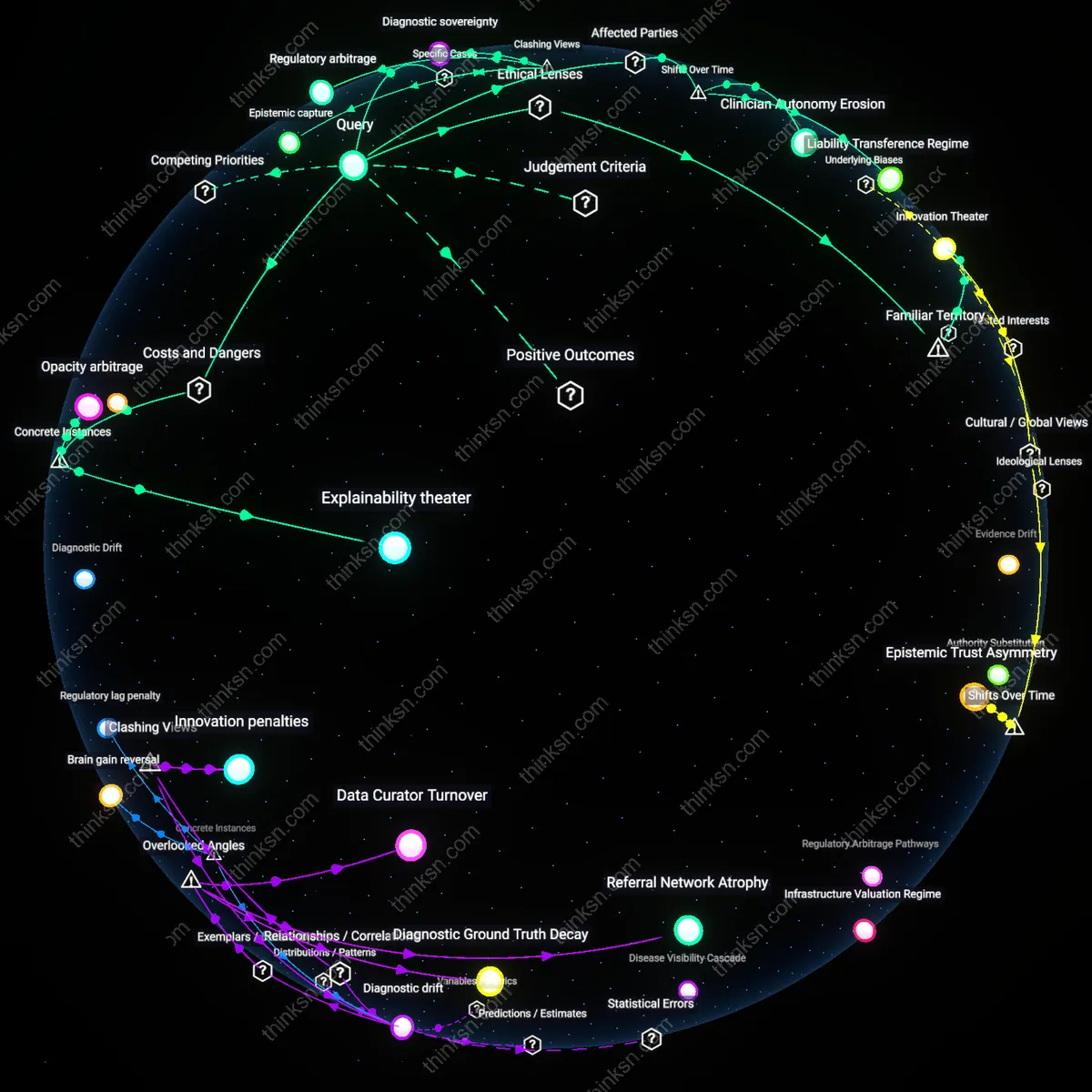
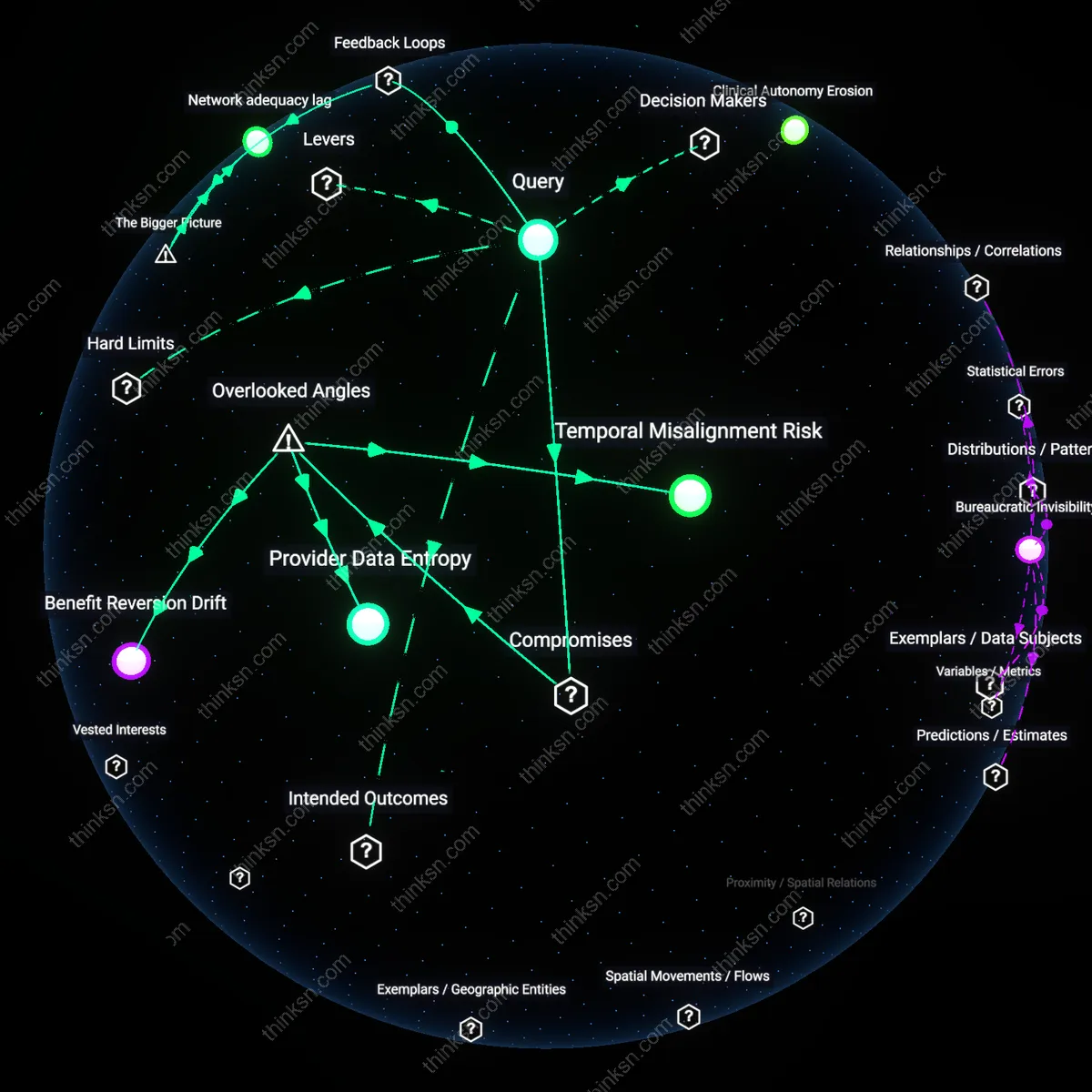
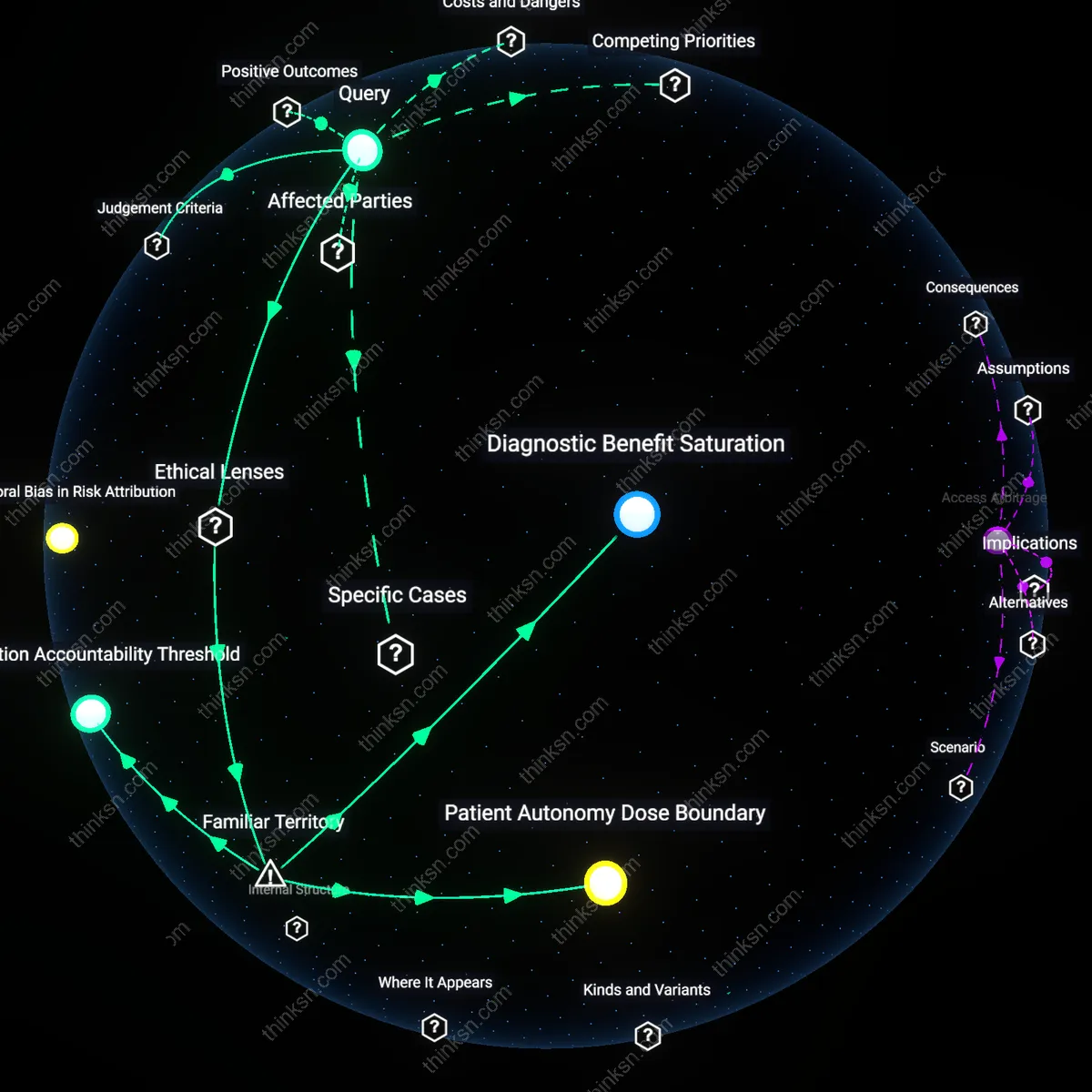
Analysis reveals 6 key thematic connections.
Key Findings
Temporal Bias in Risk Attribution
Radiation risk from repeated imaging in rheumatoid arthritis is systematically underestimated because clinical evaluations discount future stochastic effects against immediate diagnostic utility, particularly when disease activity appears unstable. This judgment relies on efficiency—maximizing diagnostic yield per unit time—but ignores how time-delayed harm alters risk-benefit calculus, privileging short-term treat-to-target goals over latent carcinogenic probability. The overlooked dynamic is the institutional temporal framing of benefit (measured in months of joint preservation) versus risk (distributed over decades of potential malignancy), which shifts the ethical weight of cumulative exposure in chronic monitoring. This matters because standard guidelines treat radiation as a static marginal cost, not a compounding liability whose significance increases with surveillance duration and patient longevity.
Imaging Entanglement with Therapeutic Authority
The diagnostic value of imaging in rheumatoid arthritis becomes entangled with physician autonomy and clinical reputation, such that repeated scans are sustained beyond radiation risk thresholds to preserve clinician control over treatment narratives. This emerges from a professional ethics framework emphasizing clinical judgment and individualized care, which inadvertently elevates image-based documentation as proof of vigilance. The overlooked dynamic is how imaging functions as a bureaucratic shield—protecting rheumatologists from malpractice scrutiny or peer critique—making risk accumulation a secondary concern to social and institutional credibility. This shifts understanding from a biomedical trade-off to a sociomedical performance, where the residual diagnostic yield is less about disease detection than about maintaining therapeutic legitimacy in uncertain clinical trajectories.
Infrastructure-Driven Surveillance Intensity
Radiation risk exceeds diagnostic benefit when imaging frequency is determined less by clinical indicators than by local availability of high-cost modalities like MRI and high-resolution ultrasound, particularly in academic medical centers with capital investment in rheumatology imaging infrastructure. This follows practical efficiency understood as equipment utilization rates, where institutional economics subtly redefine 'necessary' monitoring to match scanner throughput capacity. The overlooked dependency is how fixed-cost recovery mechanisms in hospital financing shape clinical protocols, leading to surveillance intensification not through overt overuse but through normative recalibration of 'standard of care' in resource-rich settings. This reframes radiation risk as a byproduct of capital logistics rather than clinical misjudgment, exposing how technical capacity distorts risk-benefit thresholds in specialty care.
Radiation Accountability Threshold
The accumulated radiation risk from repeated imaging exceeds its diagnostic value in rheumatoid arthritis monitoring when a patient’s lifetime attributable cancer risk surpasses established safety benchmarks defined by radiological protection agencies. This threshold is determined through epidemiological models used by bodies like the International Commission on Radiological Protection (ICRP), which weigh incremental cancer probability against clinical benefit within a framework of justification and optimization (ALARA principle). Clinicians, radiologists, and regulatory protocols interact within this system to limit exposure, yet the non-obvious reality is that standard monitoring practices often fail to formally calculate cumulative dose per patient—despite public familiarity with ‘radiation danger’—because imaging decisions are decentralized across specialties and time.
Diagnostic Benefit Saturation
The diagnostic value of repeated imaging in rheumatoid arthritis monitoring peaks early in disease progression, and beyond that point, additional scans yield diminishing clinical returns while radiation risk accumulates. This inflection occurs when structural joint damage is either clearly established or remains stable under treatment, making further radiographic confirmation redundant—a dynamic recognized intuitively in clinical heuristics such as ‘monitoring until actionable change stops.’ The underappreciated aspect is that despite widespread trust in imaging as a proxy for disease activity, most patients enter a phase where clinical assessment and biomarkers suffice, yet the ritual of routine X-rays persists due to institutional routine and defensive medicine shaped by malpractice liability norms.
Patient Autonomy Dose Boundary
Radiation risk exceeds diagnostic benefit when patients are no longer able to make informed choices about cumulative exposure due to fragmented care and absent dose documentation in medical records. Within the ethical framework of informed consent—an expression of deontological respect for autonomy—ongoing imaging without transparent communication about total radiation burden violates patient agency. The gap between public expectation of personalized risk disclosure and the reality of untracked, multi-procedure exposure across providers reveals how familiar concerns about ‘too many X-rays’ are structurally silenced by lack of longitudinal oversight, turning autonomy into a procedural formality rather than a meaningful safeguard.