Are All FDA Drugs Safe After Approval?
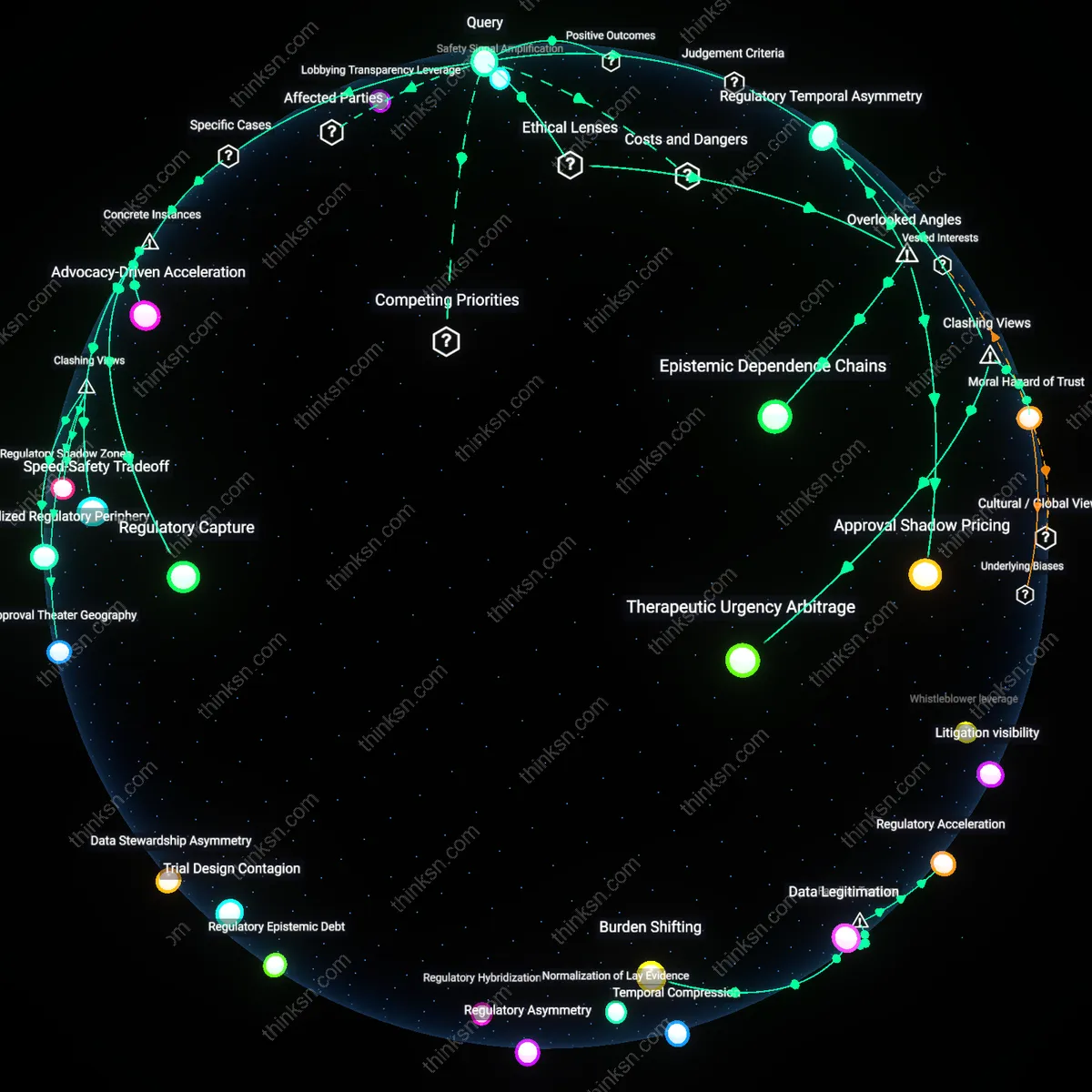
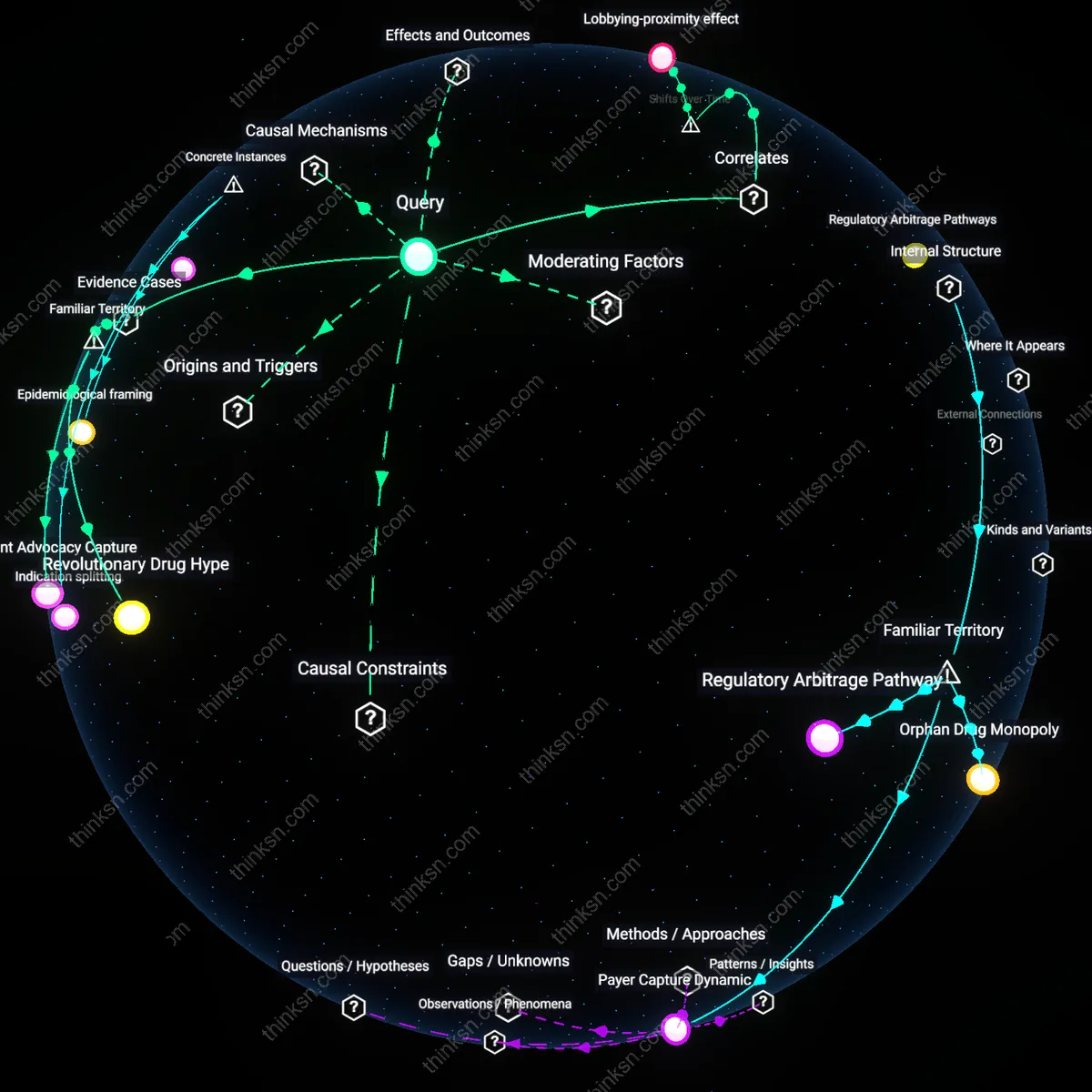
Analysis reveals 9 key thematic connections.
Key Findings
Regulatory Blind Spots
The belief that all FDA-approved drugs are safe does not hold because post-market surveillance systems can fail to detect rare adverse effects during pre-approval trials, as seen in the case of rofecoxib (Vioxx), where Merck’s drug was approved based on short-term trials that masked long-term cardiovascular risks, revealing that the FDA’s reliance on limited-duration clinical data creates systemic blind spots in identifying chronic harm, a non-obvious failure mode given the public assumption of pre-approval comprehensiveness.
Commercialization Pressure
The belief that all FDA-approved drugs are safe collapses under the weight of commercial incentives distorting risk assessment, exemplified by the rapid approval and aggressive marketing of OxyContin by Purdue Pharma, where the company’s influence on prescribing norms and downplaying of addiction potential—even after signals of misuse emerged—demonstrates how market-driven acceleration of drug adoption can override emerging safety signals, exposing a structural vulnerability in the approval ecosystem where economic momentum outweighs caution.
Latent Risk Accumulation
The belief in universal safety of FDA-approved drugs fails because long-term risks can accumulate only after widespread, chronic use, as demonstrated by the case of bisphosphonates like Zoledronate, approved for osteoporosis but later linked to atypical femoral fractures and osteonecrosis of the jaw only after years of use in aging populations, unveiling how time-dependent, cumulative toxicity escapes detection in trials designed for short-term efficacy, a critical but underrecognized limitation in pharmacovigilance.
Regulatory signaling cascades
The belief that all FDA-approved drugs are safe fails because post-approval safety issues trigger cascading adjustments in regulatory expectations for subsequent drug classes, altering risk tolerance in future approvals. When undisclosed adverse events emerge—such as with sodium-glucose transporter-2 (SGLT2) inhibitors and rare genital necrotizing fasciitis—the FDA revises labeling requirements not just for that drug but for entire therapeutic categories, propagating risk management protocols across pipelines. This dynamic is rarely acknowledged because oversight bodies are seen as static validators, not adaptive signal processors whose reactions to failure recalibrate developmental norms far upstream. The overlooked mechanism here is that each post-market safety event resets invisible thresholds for what level of uncertainty is deemed acceptable in new applications, thereby reshaping long-term drug development incentives.
Pharmaceutical liability arbitrage
The persistence of the belief in FDA-approved drug safety enables pharmaceutical firms to shift legal and financial risk onto healthcare providers and patients after approval, even when known ambiguities exist in trial data. Because FDA clearance is culturally treated as a liability firewall, companies can legally market drugs while omitting borderline-significant signals from pre-approval studies—such as borderline QT prolongation in certain antipsychotics—knowing that post-market harms will be interpreted as 'unforeseeable' despite detectable patterns in subgroup analyses. This creates a structural incentive to under-invest in marginal safety research prior to approval, distorting the economic calculus of drug development in favor of speed over thoroughness—a distortion hidden because legal risk allocation is typically analyzed at the product level, not as a systemic feature of approval legitimacy.
Clinical trial ecosystem inertia
Widespread belief in post-FDA approval safety sustains outdated trial design standards by reducing pressure to update inclusion criteria and monitoring protocols in subsequent studies, especially in chronic disease domains like type 2 diabetes where cardiovascular risk evolves over decades. When newer GLP-1 agonists are tested against older sulfonylureas—themselves approved before modern cardiac safety benchmarks—their relative risk appears acceptable, even if both classes carry underrecognized arrhythmic potential, because the trial infrastructure inherits historical baselines rather than current safety knowledge. This creates a recursive lag in evidentiary standards, rarely examined because efficacy comparisons dominate trial design discourse, while the epistemic dependency on legacy control arms remains invisible despite perpetuating latent harm pathways.
Post-Marketing Lag
Safety assurance of FDA-approved drugs is constrained by a temporal bottleneck between pre-approval trials and real-world use, which emerged as a systemic feature in the 1990s with accelerated approval pathways. Regulatory reliance on limited sample sizes and short-term outcomes during clinical trials—driven by pressures to deliver treatments for HIV/AIDS and cancer—created a structural delay in detecting rare or long-term harms, making post-marketing surveillance a necessary but reactive phase, which few patients or clinicians fully recognize as an inherent gap; this shift redefined 'safe' not as 'risk-free' but as 'not yet proven harmful,' a transformation in public health logic that remains underappreciated.
Pharmacovigilance Threshold
The belief in drug safety collapsed not due to individual failures but because the threshold for triggering safety reviews shifted only after the 2004 Vioxx withdrawal, which exposed how financial incentives and statistical standards had suppressed the visibility of cardiovascular risks. The institutional design of post-approval monitoring, which depends on voluntary reporting and cost-benefit calculations rather than proactive population-level tracking, became exposed as inadequate; this moment marked a transition where regulatory legitimacy began to hinge on risk communication, not just detection, revealing that 'safety' became a negotiated outcome shaped by liability and public relations pressures.
Approval Momentum
Drug safety became secondary to development speed following the Prescription Drug User Fee Act of 1992, which tied FDA funding to approval timelines and restructured the causal relationship between evidence and authorization. This financial incentive realigned the agency’s operational priorities, embedding a momentum wherein later safety issues were structurally marginalized, not through malpractice but through institutional routine; the underappreciated effect is that post-approval risk has become a normalized byproduct of a system designed for throughput, producing a residual category of accepted long-term uncertainty masked as scientific prudence.