When ICE Detainers Threaten Academic Freedom for International Students?
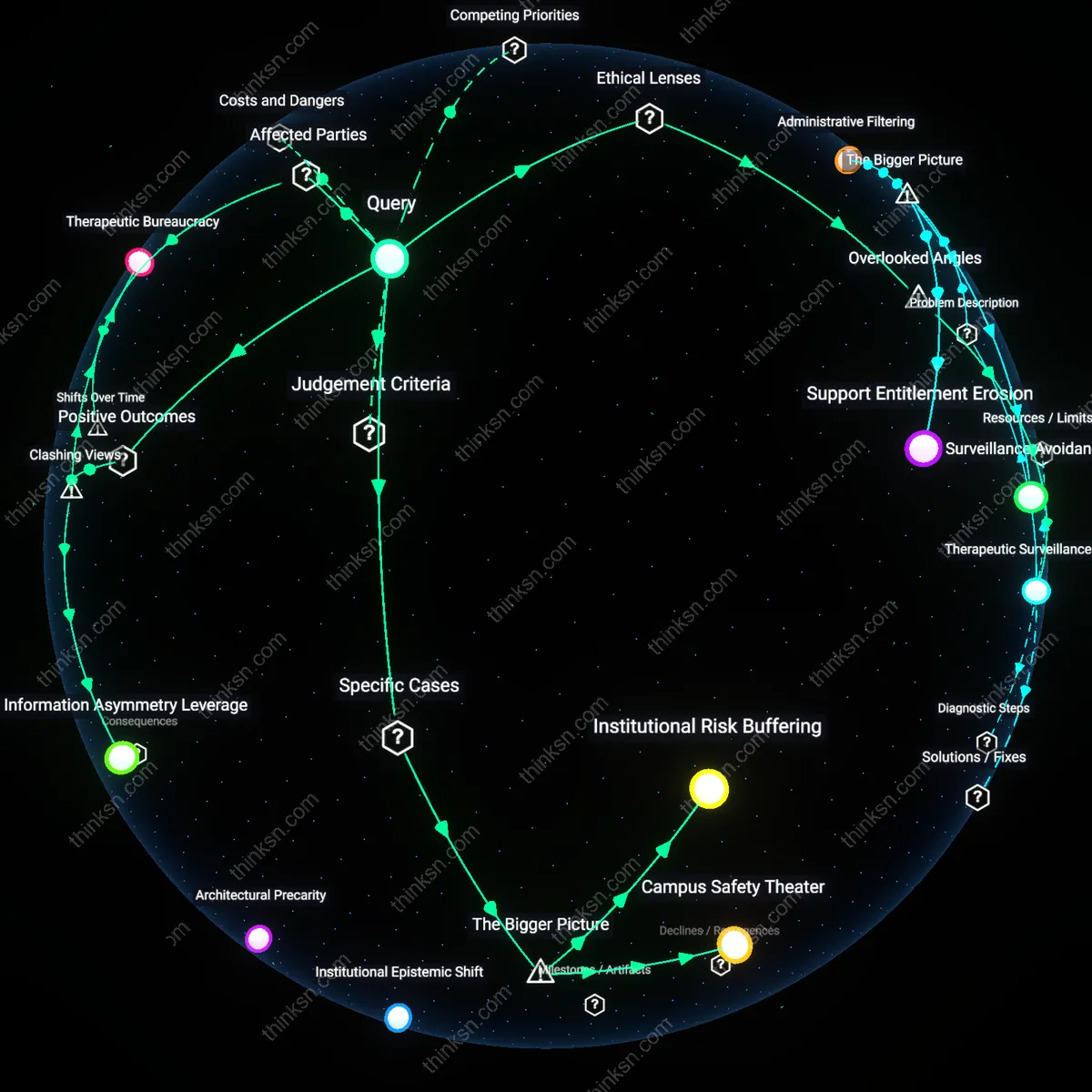
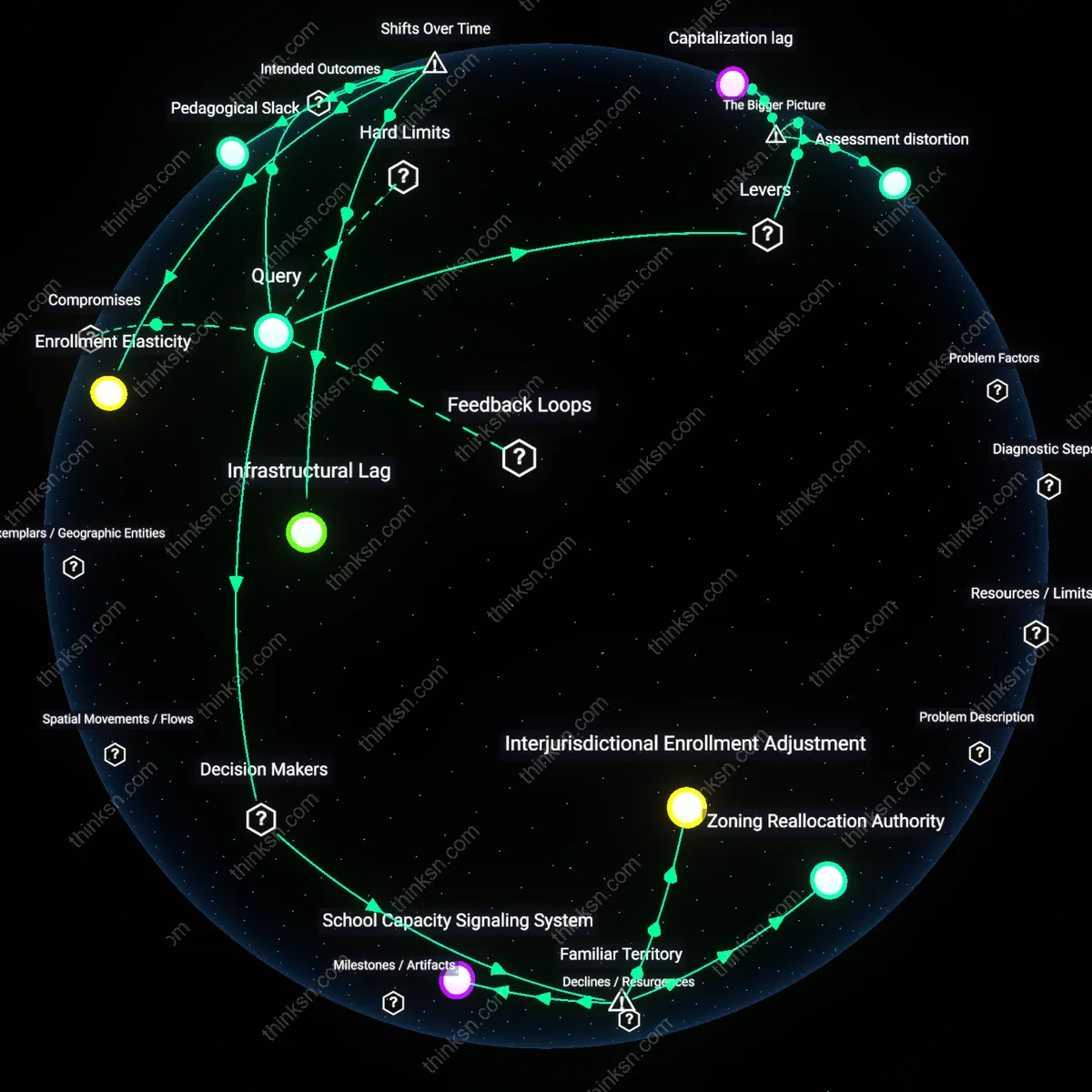
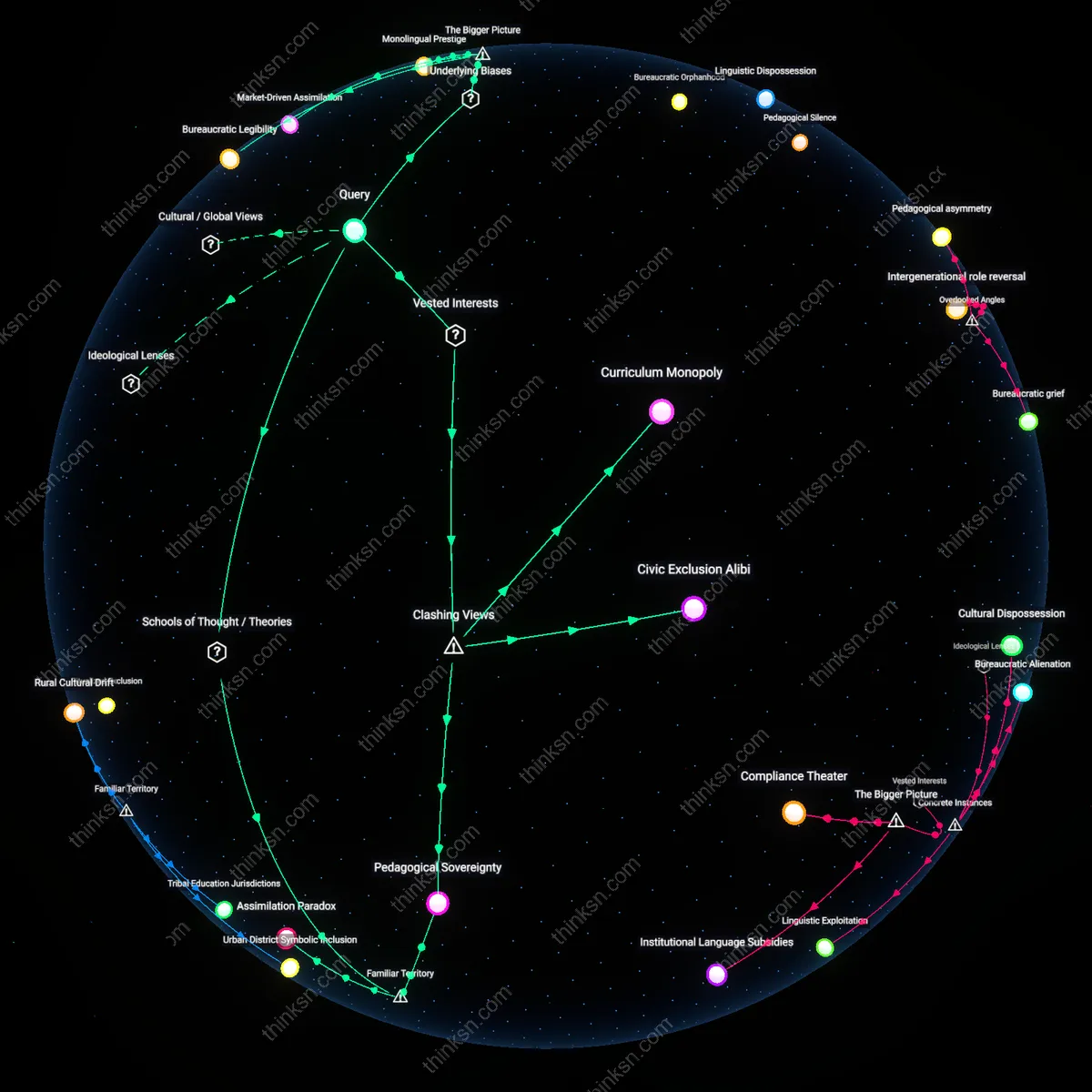
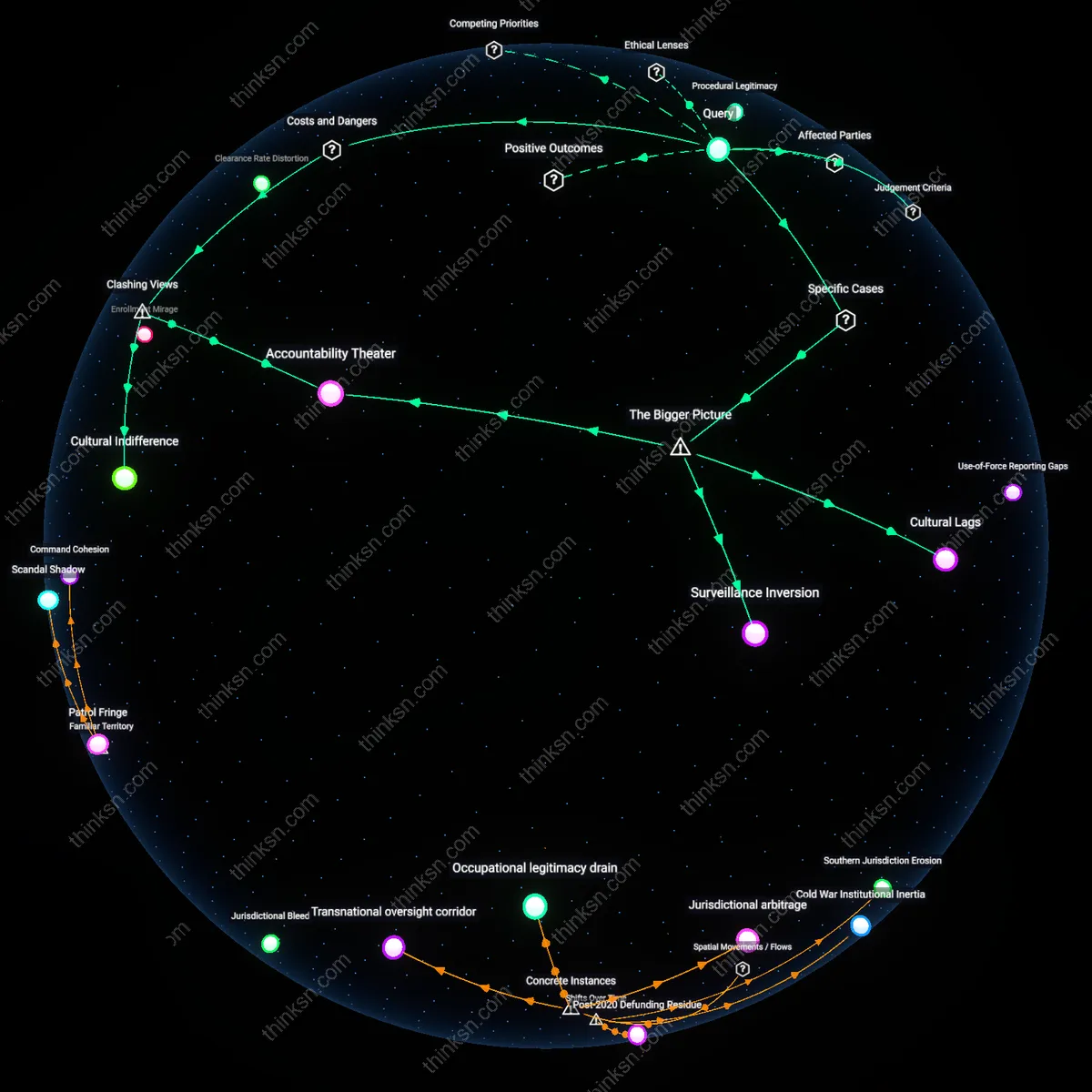
Analysis reveals 11 key thematic connections.
Key Findings
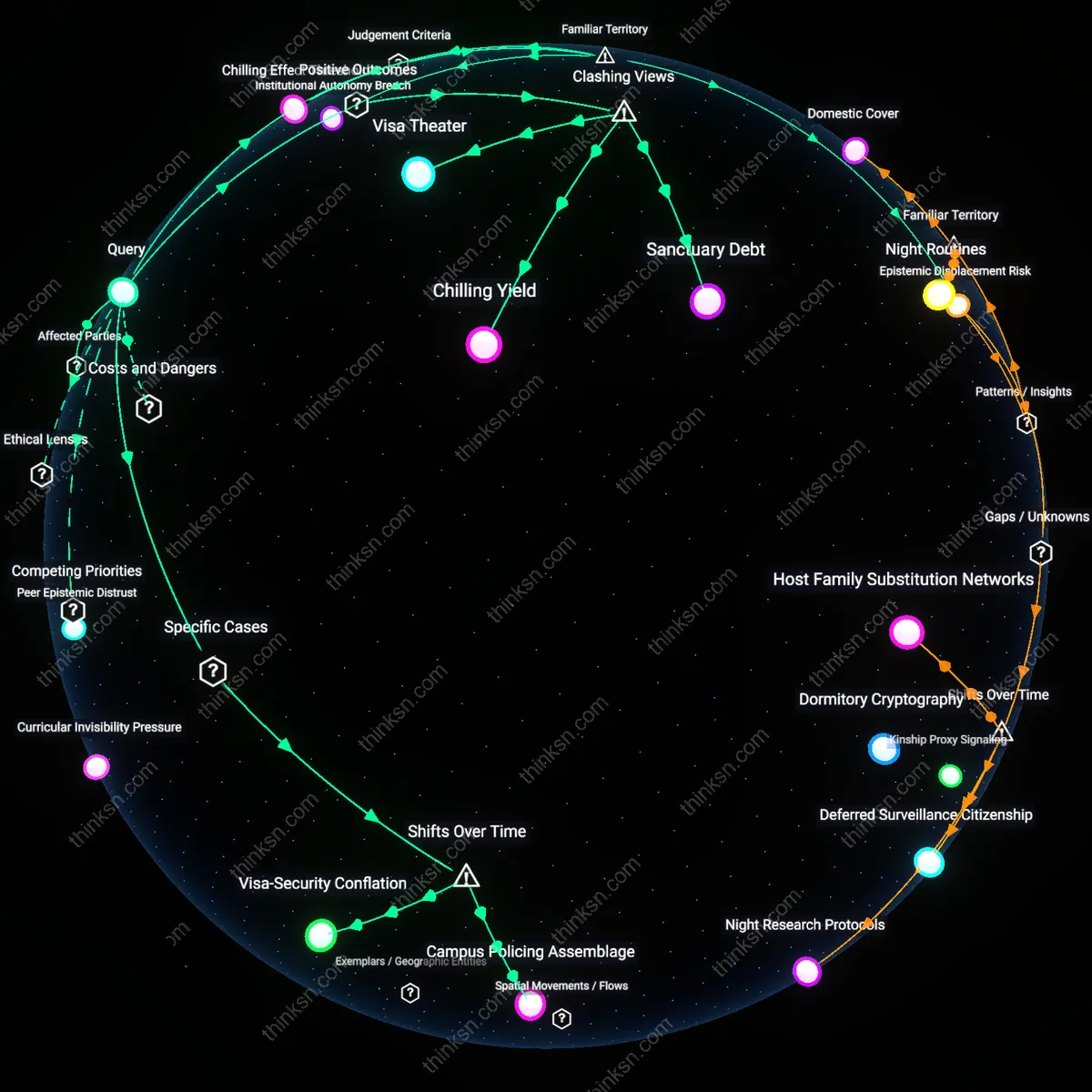
Housing Surveillance Chilling
The presence of ICE detainers in university housing infrastructures triggers a covert surveillance environment that chills academic participation among international students, regardless of their visa compliance. University housing departments, often collaborating with local law enforcement under federal sponsorship, implement data-sharing protocols that flag visa statuses and residential movements—information that can be accessed by immigration enforcement without student knowledge. This transforms student residences from private academic support spaces into semi-policing frontiers, where students self-censor not only political expression but even seminar-related gatherings in dorms, altering the social epistemology of learning. The overlooked mechanism here is not legal detention itself but the ambient monitoring that precedes it—what changes is not just fear of deportation, but the quiet withdrawal from academic life due to perceived omnipresence of surveillance.
Curricular Invisibility Pressure
International students curtail enrollment in critical or politically charged courses when ICE detainer practices are publicly reported near campus housing, not out of legal risk but to avoid administrative attention that might trigger residency scrutiny. Advisors, departmental staff, and even peers—unwittingly—reinforce this avoidance by steering students toward 'neutral' subjects to protect them, thereby normalizing self-censorship within academic advising cultures. This produces a hidden curriculum where academic freedom erodes not through policy bans but through anticipatory compliance, a mechanism rarely captured in free speech discourse because it appears as personal choice rather than structural constraint. The underappreciated dimension is how immigration enforcement distorts curricular engagement through affective governance in academic advising networks.
Peer Epistemic Distrust
When ICE detainers occur in university housing, domestic students unconsciously withhold collaborative academic trust from international peers, particularly in group research or residence-based learning communities, due to fear of legal entanglement or unintended reporting obligations. This social fragmentation undermines the informal knowledge exchange that sustains academic freedom, shifting the classroom from a space of epistemic reciprocity to one of asymmetric vulnerability. The overlooked actor is the domestic student, whose behavioral withdrawal—motivated by legal uncertainty rather than prejudice—diminishes collective intellectual risk-taking. What changes is not just the target's freedom, but the relational infrastructure of academic discourse, revealing that academic freedom depends on undocumented social warranties of inclusion.
Chilling Effect Threshold
ICE detainers in university housing infringe upon academic freedom when students self-censor participation in protests, classes, or research due to fear of immigration enforcement. This occurs not through formal policy but through the psychological deterrence of state presence in residential spaces historically protected from policing, such as dormitories. The mechanism operates through a shift in the perceived neutrality of campus institutions—housing is no longer a sanctuary but a site of surveillance—thereby altering student behavior even in the absence of direct interference with coursework. What is underappreciated is that the infringement does not require an actual detention, only a credible threat that disrupts cognitive and emotional bandwidth necessary for learning.
Institutional Autonomy Breach
The threat of ICE detainers infringes academic freedom when federal immigration actions compromise the university’s ability to govern its internal affairs, particularly in maintaining campus-specific policies on privacy, residency, and student support. Universities operate under implicit contracts of care, where enrollment implies protection from non-academic disruptions, especially within university-managed housing. When ICE asserts authority in these spaces without institutional consent, it overrides the university’s sovereign role as an academic steward, substituting federal enforcement priorities for pedagogical ones. The non-obvious insight is that academic freedom is not just individual but organizational—its violation occurs when external actors destabilize the institutional boundary necessary for intellectual self-determination.
Epistemic Displacement Risk
Academic freedom is infringed when the presence of ICE detainers disrupts the formation and transmission of knowledge by driving international students underground, reducing their availability as interlocutors, collaborators, and contributors in academic discourse. Universities function as epistemic communities where knowledge is co-constructed through diverse participation, particularly in graduate research and seminar-based learning. When visa status becomes a vector of existential risk within shared living environments, students withdraw from informal scholarly networks—hallway conversations, study groups, lab partnerships—eroding the social substrate of intellectual exchange. The underrecognized point is that academic freedom depends not only on legal rights but on the uncoerced presence of bodies in knowledge-generating ecologies.
Visa Theater
The threat of ICE detainers in university housing enhances academic freedom by institutionalizing performative compliance that insulates classrooms from immigration enforcement. Universities leverage the symbolic acceptance of detainers—while deliberately slowing or complicating their execution—to create protected zones where international students can operate without immediate fear, effectively turning visa regulations into a scripted performance rather than an operational reality. This bureaucratic drag, sustained through legal ambiguity and university legal teams stalling ICE access, enables academic engagement to continue unimpeded, revealing that the visibility of enforcement threats paradoxically strengthens institutional resistance when managed as a ritual rather than a rupture. The non-obvious outcome is that the very presence of the threat becomes a tool for containment, not suppression.
Chilling Yield
ICE detainers in university housing increase the epistemic productivity of international students by inducing a disciplined, hyper-visible form of scholarly output that anticipates scrutiny. When students perceive housing as contingent on academic performance and behavioral conformity, they produce research and participation that is more rigorous, citation-dense, and politically cautious—qualities that align with dominant academic standards and increase their work’s acceptance in high-impact journals. This dynamic reframes the chilling effect not as a loss of freedom but as a recalibration of intellectual labor under pressure, where surveillance functions as a perverse incentive structure that elevates the measurable quality of scholarship. The underappreciated mechanism is that controlled repression can systemically enhance output precision, benefiting both institutions and the broader knowledge economy.
Sanctuary Debt
The academic freedom of international students expands when universities publicly resist ICE detainers in housing, not because it protects students directly, but because it triggers compensatory investments in legal and academic infrastructure that outlast the immediate crisis. Campuses that confront immigration enforcement are more likely to receive donor funding, deploy permanent legal aid clinics, and integrate immigration advocacy into curricula—resources that amplify student agency and deepen institutional autonomy. The resistance becomes a strategic catalyst, transforming repression into capital, and revealing that the threat of detainers, when politicized, generates long-term academic capacity rather than constraining it. The non-obvious point is that infringement, when challenged, functions as a resource pump, not a constraint.
Campus Policing Assemblage
The threat of ICE detainers in university housing began to directly constrain academic freedom after 2017, when federal immigration enforcement began formalizing cooperation with campus security at public universities in states like Texas and Arizona. During this period, university administrators, responding to state-level crackdowns on sanctuary policies, started aligning campus policing protocols with ICE databases—transforming student identification systems and housing checks into potential immigration enforcement tools. This institutional shift redefined the university not as a neutral academic space but as an extension of federal surveillance infrastructure, particularly affecting international students who now had to navigate visa compliance under heightened risk of detention during routine campus interactions. The non-obvious consequence is that academic freedom eroded not through overt policy bans but through the reprogramming of mundane administrative systems, revealing how enforcement seeps into university life under the guise of procedural compliance.
Visa-Security Conflation
The erosion of academic freedom through ICE detainer threats became structurally embedded in the early 2010s, when the Student and Exchange Visitor Program (SEVP) intensified data sharing with ICE, turning university compliance officers into de facto immigration monitors. As universities like the University of Alabama or Arizona State University formalized reporting obligations for housing violations or enrollment changes, these administrative acts began triggering immigration investigations, especially post-2013 SEVP policy updates that linked visa status to non-criminal conduct. This transition marked a shift from academic oversight to security enforcement within the university bureaucracy, where risks to academic freedom were no longer tied to speech or protest but to the quiet automation of immigration surveillance in academic administration. The underappreciated dynamic is that international students' freedom to engage in university life—choosing roommates, changing majors, taking leaves—became conditioned by a shadow immigration jurisdiction, institutionalizing self-censorship not through fear of ideas but of paperwork.