Does Independent Funding Make EU Chemical Safety Better than US EPA?
Analysis reveals 5 key thematic connections.
Key Findings
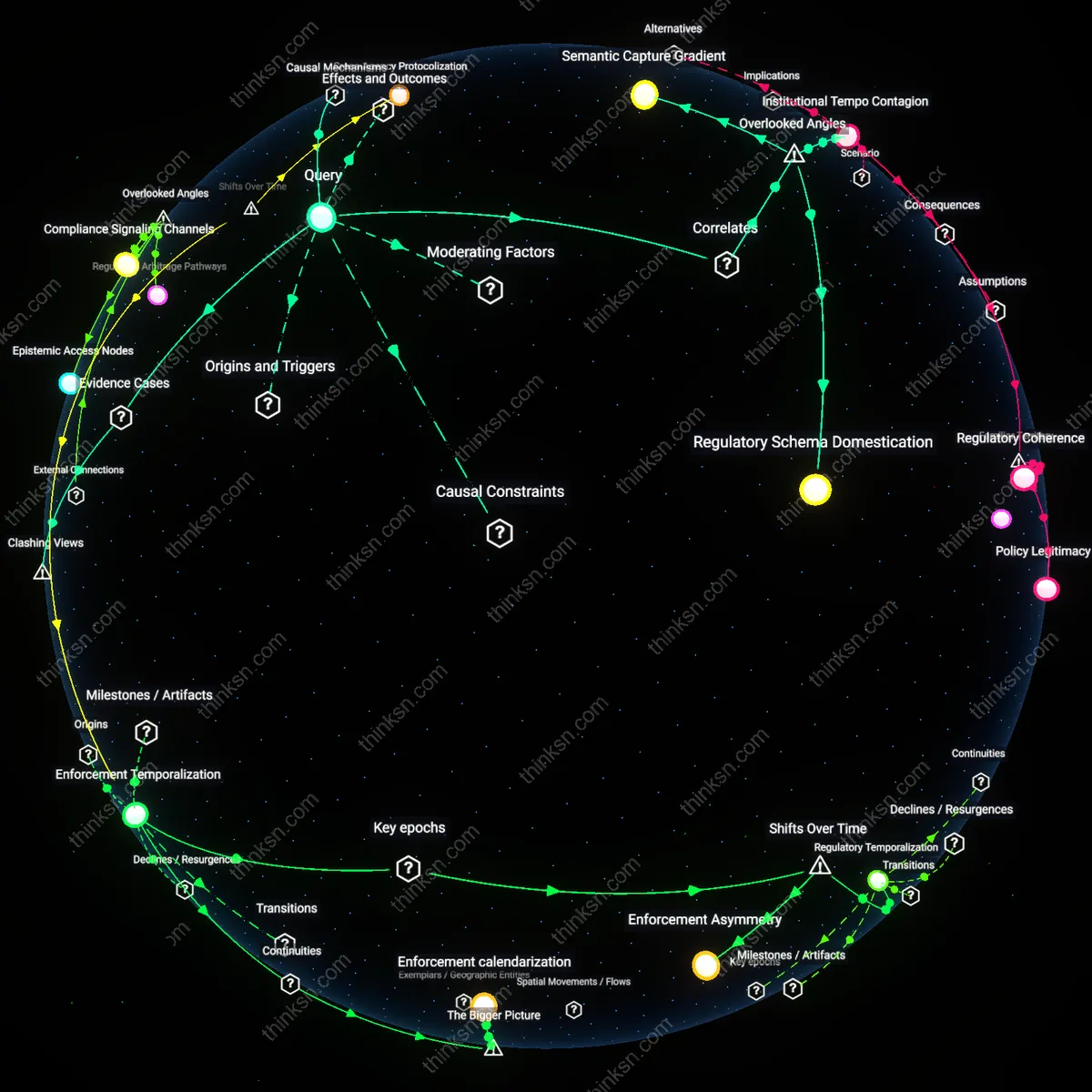
Regulatory Temporality
The EU’s chemical safety regulator, ECHA, demonstrates superior responsiveness to emerging chemical risks compared to the U.S. EPA due to its event-triggered funding mechanism tied to industry registration deadlines, which creates enforceable procedural milestones that compress decision cycles. Unlike the EPA’s reliance on annual congressional appropriations that incentivize risk-averse budget stabilization and backlog accumulation, ECHA’s REACH regulation structures funding around mandatory submission waves—such as the 2018 and 2023 registration deadlines—which force forward movement in risk assessment regardless of political cycles. This non-obvious temporal structuring of financial inflows converts funding into a time-bound operational lever, transforming what is typically seen as a fiscal arrangement into a hidden engine of regulatory pace—an overlooked dimension because analysis usually treats funding as a volume problem, not a rhythm problem.
Epistemic Bureaucracy
The effectiveness disparity between ECHA and the EPA is less about funding independence per se than about the degree to which each agency consolidates technical authority within its own institutional memory, with ECHA’s model deliberately insulating scientific assessors from political override through binding dossier evaluation mandates, whereas the EPA’s decentralized review process allows external actors to re-litigate settled science. Because ECHA’s funding is tied directly to the generation and maintenance of chemical dossiers—living documents updated by registrants—its scientists operate within a feedback-rich epistemic loop where data quality is enforced through iterative compliance, not one-off approval. This creates a self-reinforcing technical culture rarely acknowledged in funding debates, where stability comes not from budget insulation but from the institutionalization of scientific dispute resolution inside technical protocols, shifting the focus from financial autonomy to cognitive continuity.
Litigation Substitution
ECHA’s limited public litigation pathways amplify the effectiveness of its funding structure by reducing legal contestation as a delay tactic, whereas the EPA’s funding stability is perpetually undermined by court-ordered moratoria triggered by industry lawsuits that exploit procedural gaps—an asymmetry rarely attributed to funding models. Because REACH places the burden of proof and data generation squarely on industry registrants from the outset, challenges to ECHA decisions require upfront technical investment, disincentivizing frivolous appeals, while the EPA’s history of under-resourced pre-market review enables regulated entities to force de facto regulatory paralysis through litigation predicated on data scarcity. The overlooked mechanism is that independent funding only functions effectively when paired with procedural barriers to exploitation—ECHA’s funding works not because it’s independent, but because it’s embedded in a system where legal resistance is economically filtered, making financial autonomy sufficient only if litigation cannot substitute for compliance.
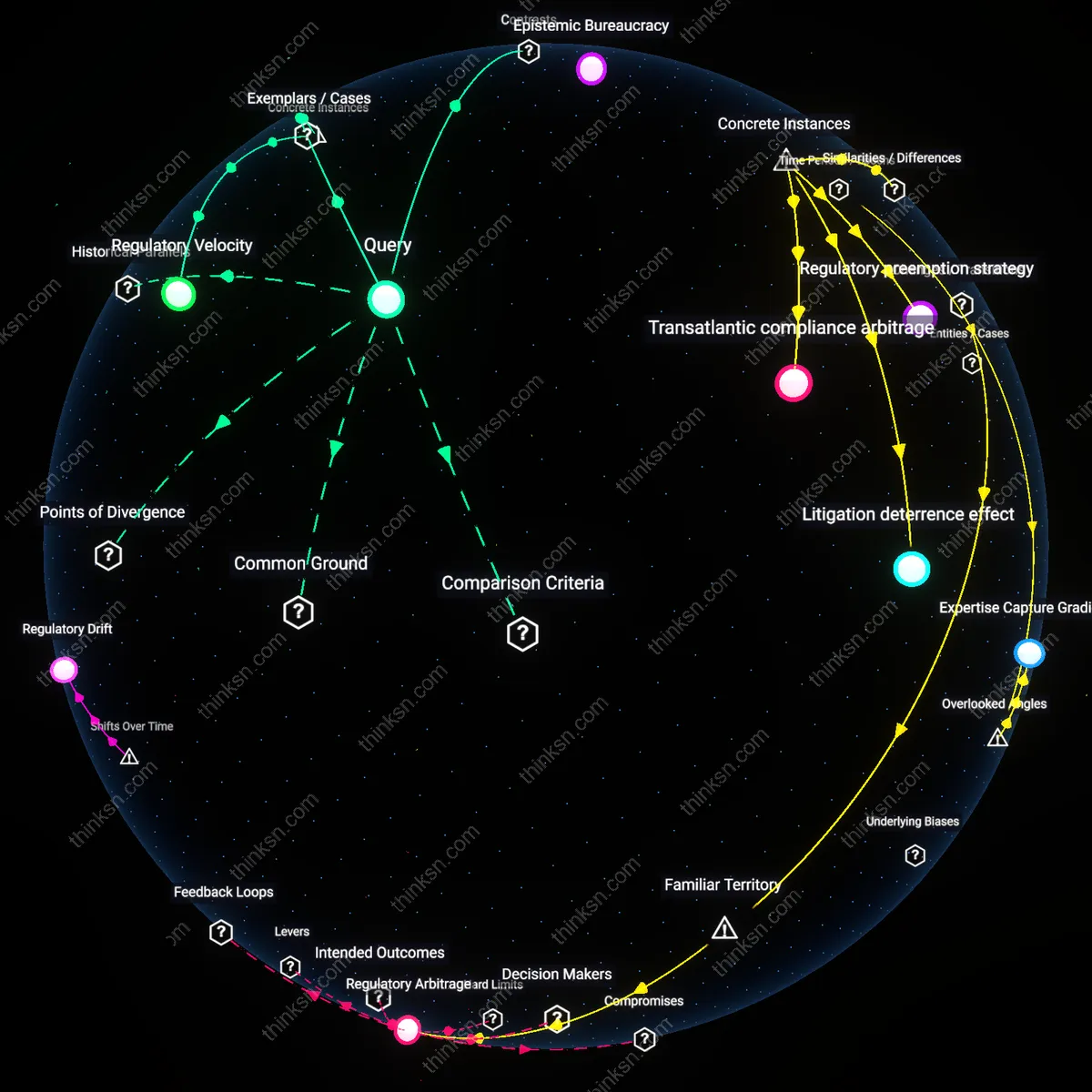
Regulatory Velocity
The European Chemicals Agency’s rapid restriction of endocrine-disrupting bisphenol A in thermal paper by 2016—driven by its independent budget from industry fees under REACH—demonstrates faster hazard-based regulatory action compared to the U.S. EPA’s delayed response under TSCA, where congressional appropriations and political interference slowed similar measures until 2023. ECHA’s funding model insulates risk assessment from annual political budget negotiations, enabling sustained scientific momentum, a mechanism overlooked in cross-agency comparisons that focus only on legal mandates. This case reveals that financial autonomy can compress decision timelines even on chemically identical threats.
Assessment Sovereignty
Denmark’s Environmental Protection Agency, operating under the EU framework yet with nationally ring-fenced chemical assessment funds, issued autonomous restrictions on microplastics in rinse-off cosmetics in 2018—two years before EU-wide measures—by leveraging its secure funding to commission independent ecotoxicological reviews outside ECHA’s pipeline. This national-level initiative, enabled by dedicated fees on product registrants, reveals how financial insulation at sub-EU levels can accelerate science-led action beyond supranational coordination. The case underscores that funding granularity, not just independence, determines regulatory initiative.