How Clashing Religious and Secular Upbringings Shape Child Psychology?
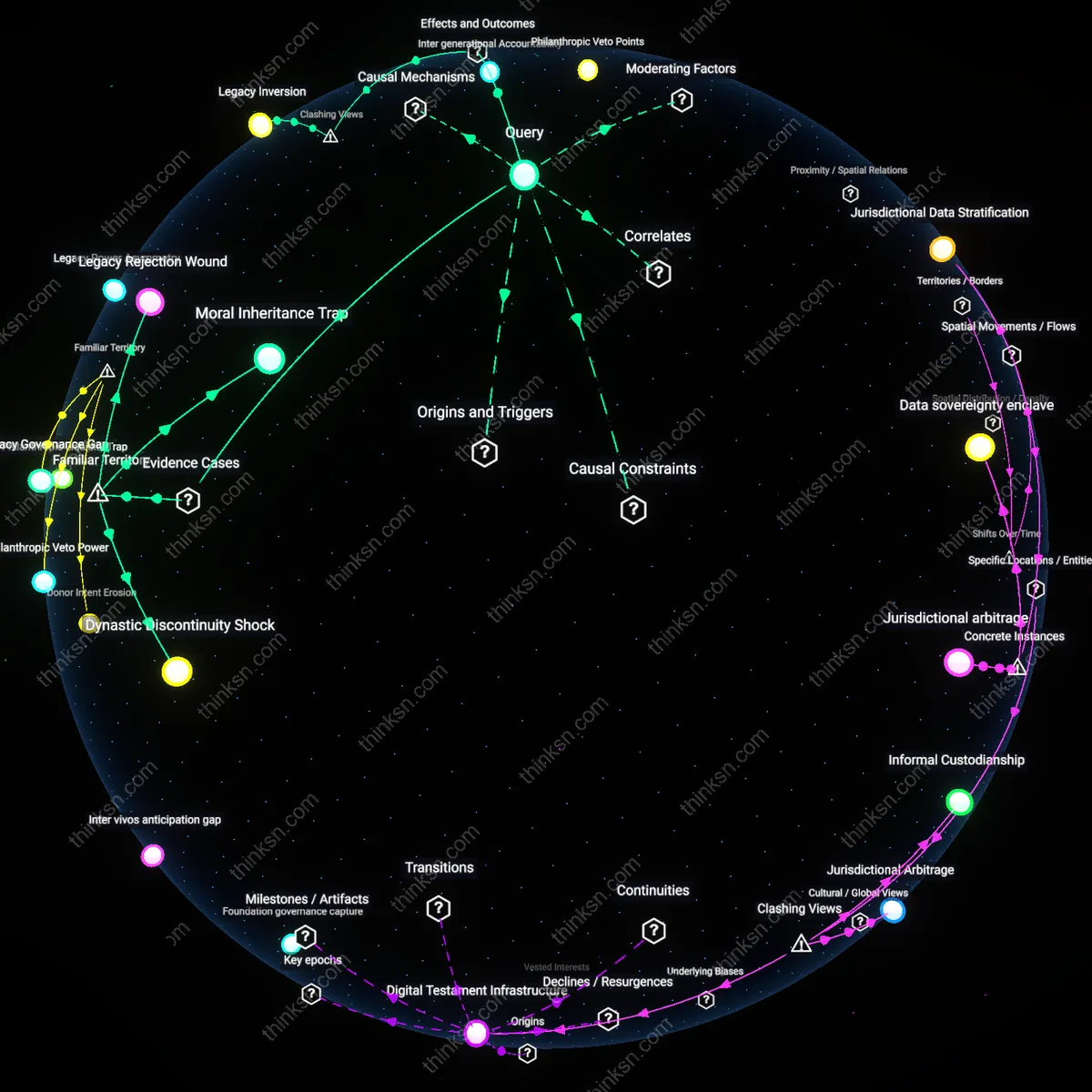
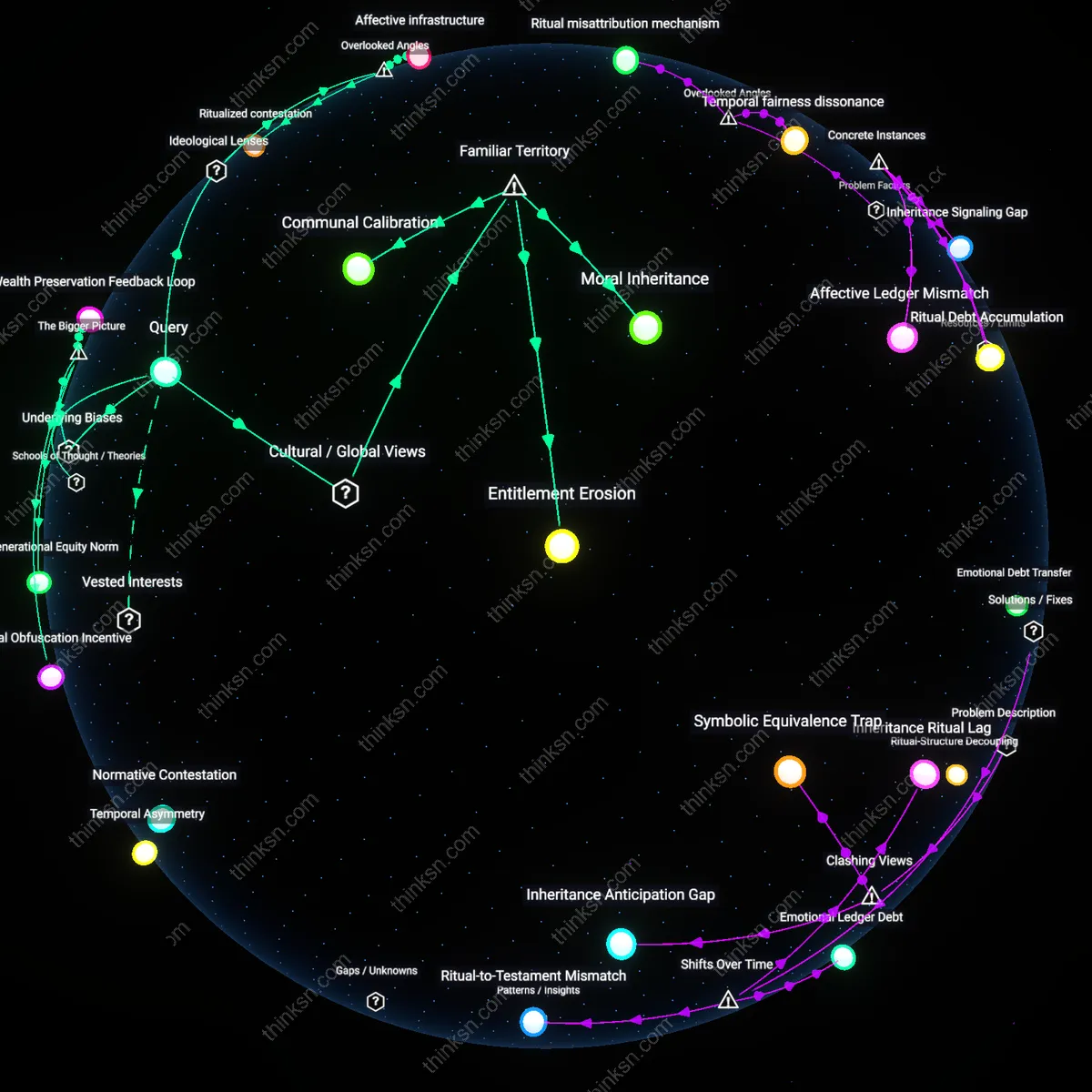
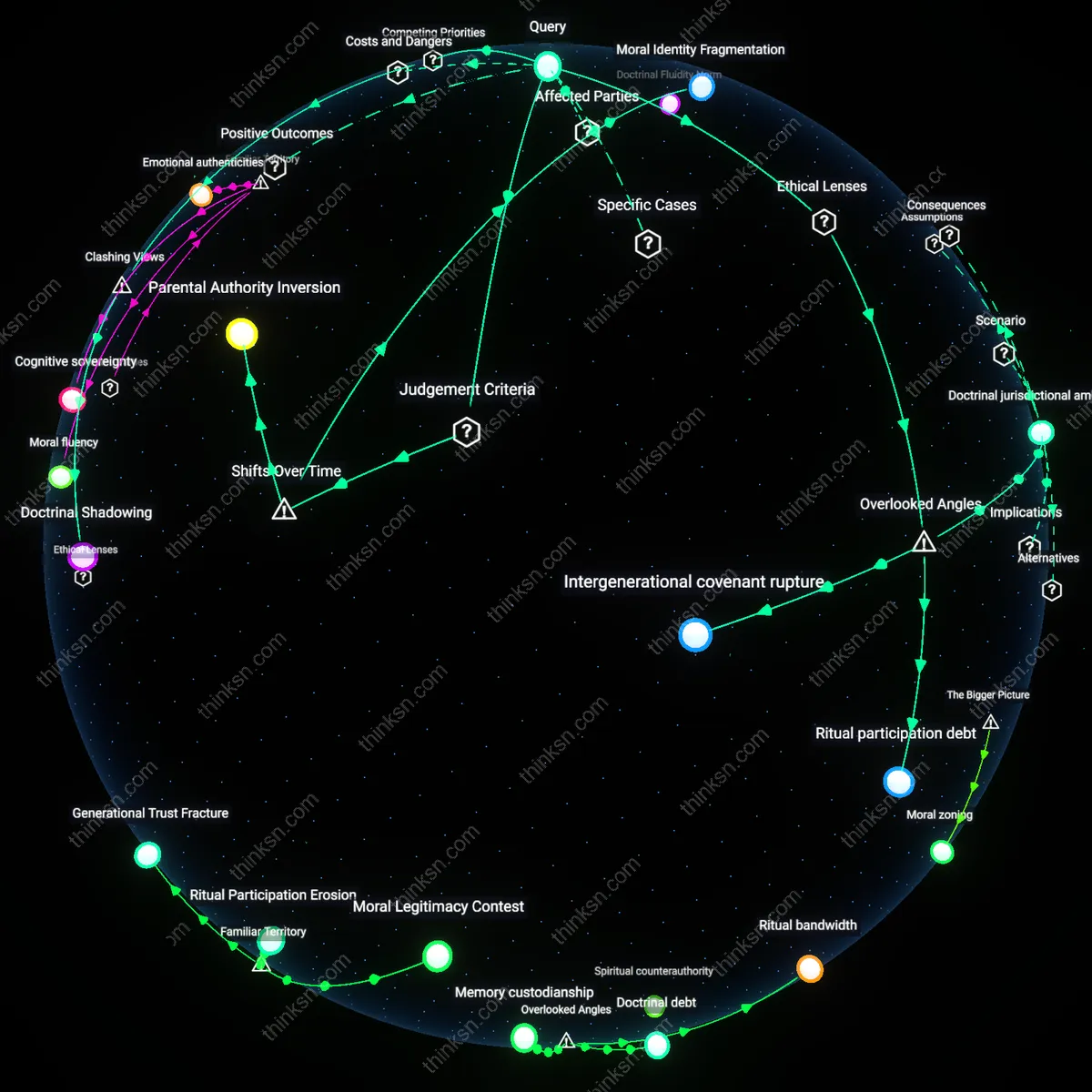
Analysis reveals 8 key thematic connections.
Key Findings
Generational Trust Deficit
Children experience heightened anxiety and cognitive dissonance when grandparents enforce rigid religious doctrines that contradict their parents’ secular, autonomy-supportive values, because institutionalized religiosity in mid-20th-century family structures has shifted toward privatized belief systems in late-capitalist societies, leaving children as unresolved mediators of competing authority frames; this psychological strain reveals a non-obvious legacy of the post-1960s erosion of communal religious authority, where faith transitioned from a collective inheritance to a contested personal choice, destabilizing intergenerational trust.
Parental Authority Inversion
When grandparents leverage religious dogma to undermine secular parenting—such as opposing gender-inclusive education or mental health support—children internalize a hierarchy in which moral legitimacy is outsourced to external doctrinal sources rather than familial reasoning, a shift accelerated by the 1980s rise of politicized religious movements that redefined grandparental influence as ideological counterweights to perceived cultural decline, making children’s psychological outcomes a proxy for broader societal battles over secularization and control.
Moral Identity Fragmentation
Children exposed to clashing religious and secular worldviews across generations exhibit delayed moral self-cohesion, as the late-20th-century shift from duty-based familial roles to rights-based individualism transformed the family into a site of ethical negotiation rather than transmission, rendering psychological conflict not a personal pathology but the residual effect of transitioning from collective religious ontology to pluralistic, performative identity regimes where loyalty and authenticity pull in opposing directions.
Belief Sovereignty
Children exposed to authoritarian religious beliefs from grandparents while being raised secularly by parents do not primarily experience internal conflict between belief systems, but instead develop a covert competence in belief sovereignty—strategically compartmentalizing identity to preserve relational access without cognitive integration. This mechanism emerges not from ideological confusion but from a pragmatic negotiation of emotional survival, where affection from grandparents is contingent on performative adherence, and parental trust depends on authenticity; the child thus learns to dissociate belief from belonging. The non-obvious insight, clashing with the dominant narrative of psychological harm through contradiction, is that the tension becomes a training ground for epistemic agility, where competing truth claims are managed not as crises but as social currencies—revealing that psychological resilience can emerge not despite fragmentation, but through its instrumentalization.
Doctrinal Shadowing
Grandparents’ authoritarian religious presence exerts psychological influence not through direct conflict with secular parenting, but through doctrinal shadowing—where unchallenged rituals, symbols, and moral framings persist in the background of family life, subtly shaping the child’s implicit value architecture even when explicitly rejected by parents. This occurs because secular parents often avoid direct counter-doctrinal engagement to preserve family peace, unintentionally allowing religious scripts to occupy emotional and temporal niches (e.g., holiday routines, caregiving moments) where critique is absent and repetition breeds familiarity. Challenging the assumption that open dialogue neutralizes ideological interference, this dynamic reveals that silence in the face of ritualized belief functions not as neutrality, but as permissive sedimentation—where meaning accumulates beneath the threshold of conscious contestation.
Intergenerational covenant rupture
Children experience heightened identity dissonance when grandparents invoke religious covenants as transgenerational moral contracts, because these claims position parental secularism not as a difference in values but as a breach of ancestral obligation, activating guilt and familial betrayal narratives that most psychological models overlook; this mechanism operates through the implicit theology of lineage common in conservative religious communities, where salvation is framed as collective and intergenerational, making the child’s internal conflict less about belief and more about loyalty—rendering standard autonomy-versus-control paradigms insufficient to capture the depth of moral injury incurred.
Doctrinal jurisdictional ambiguity
When grandparents assert doctrinal authority in family settings despite lacking formal religious office, children absorb a hidden lesson in contested moral sovereignty, wherein religious truth appears as a power struggle rather than a belief system, destabilizing their capacity to trust any institutional guidance—including secular ones—because the unspoken conflict between grandparents and parents reveals that moral knowledge is unequally distributed and politically enforced, a dynamic rarely codified in research that presumes clear boundaries between familial and institutional authority.
Ritual participation debt
Children develop subconscious burdens of ritual participation debt when they comply with grandparents’ religious practices while endorsing secular upbringing at home, because repeated ceremonial performance without authentic assent generates a felt moral obligation to the ritual itself, not just the participants, producing a silent psychological tax that persists even after disengagement—this latent cost is invisible in studies focused on overt conflict or cognitive dissonance, yet it shapes long-term affective dispositions toward belonging and authenticity.