Does Failing Really Build Character for Specialists Struggling to Rejoin Work?
Analysis reveals 9 key thematic connections.
Key Findings
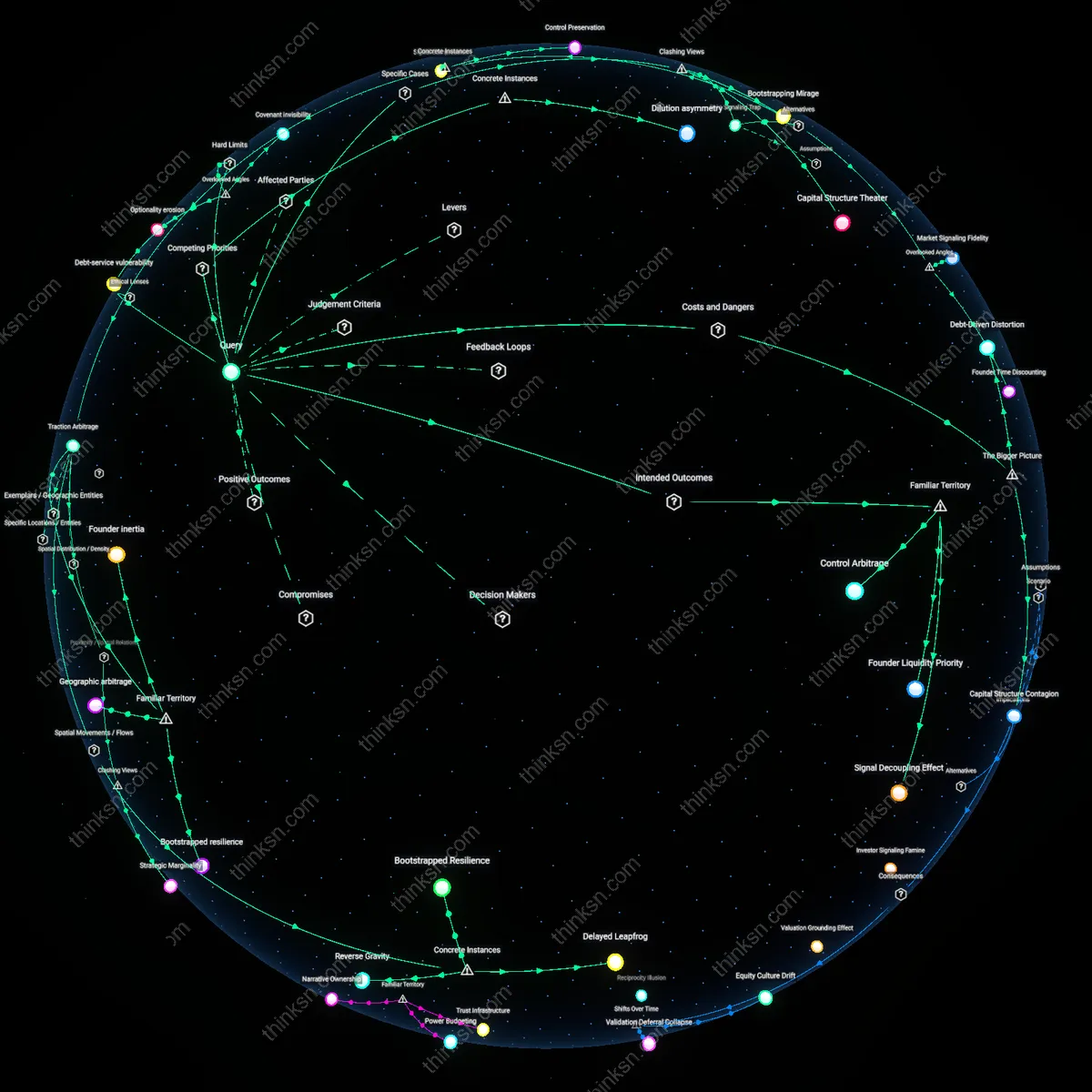
Narrative Overload
The widespread celebration of Steve Jobs’s return to Apple after being ousted frames his redemption as a personal triumph born of resilience, obscuring how his elite social capital, prior equity stake, and connections to major investors like Ross Perelman were the actual enablers of his re-entrance—revealing that the narrative of failure building character diverts attention from the preexisting access that makes second chances possible in high-tech entrepreneurship.
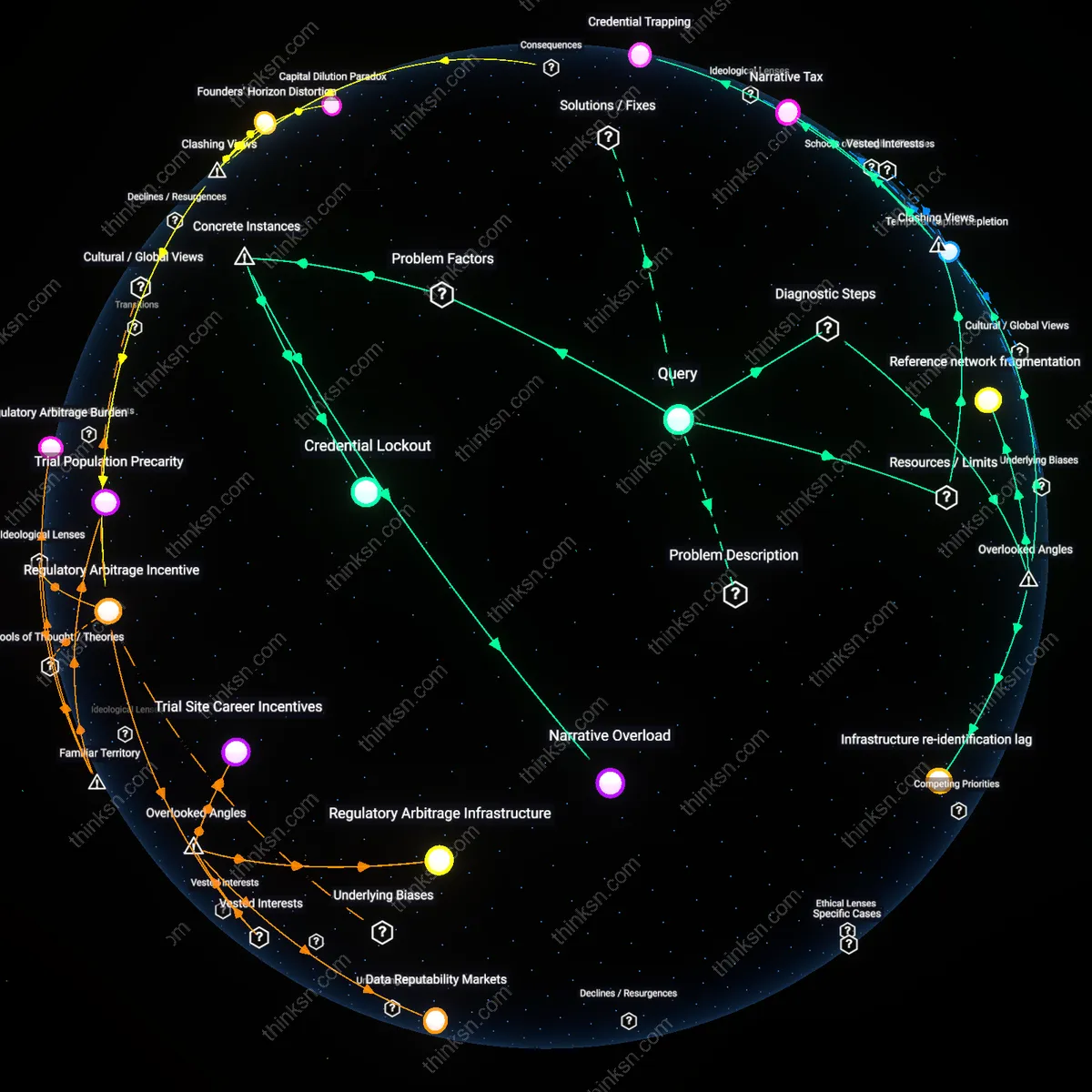
Credential Lockout
After the collapse of Theranos, Elizabeth Holmes’s inability to re-enter regulated health technology startups—even in advisory roles—illustrates how specialized fields like medical diagnostics enforce strict legitimacy thresholds through institutional gatekeepers such as the FDA and CLIA-certified labs, where past failure becomes a permanent technical disqualifier, not a moral growth opportunity—showing that systemic accreditation regimes override personal redemption in safety-critical domains.
Network Asymmetry
When Black founders in Silicon Valley, such as those from historically excluded communities, fail in AI startups and struggle to regain funding—unlike their white counterparts with similar failure profiles—VC networks like those in Sand Hill Road perpetuate re-employment through informal trust mechanisms that treat failure as formative only when embedded in socially proximate circles—exposing how the belief in redemptive failure functions as a privilege shield, not a universal principle.
Temporal capital depletion
Failure builds character only for those who can afford extended unemployment without eroding their temporal capital—the irretrievable time needed to maintain field-specific cognitive proximity. In specialized domains like biotech or quantum computing, prolonged absence from active R&D networks results in rapid skill atrophy and epistemic obsolescence, not due to personal deficiency but because access to cutting-edge knowledge is gated by active institutional affiliation; this temporal erosion is invisible in narratives celebrating resilience, yet it systematically excludes founders whose post-failure runway is constrained by caregiving duties, debt, or lack of liquid assets. The overlooked mechanism is not stigma or skill loss per se, but the unacknowledged privilege of time as a fungible resource.
Reference network fragmentation
The belief that failure builds character obscures how re-employment in specialized fields depends on intact reference networks—clusters of past collaborators, investors, and technical peers who validate credibility through informal endorsements. Founders from underrepresented demographics or non-elite institutions face compounded re-entry barriers when failure fractures these networks, not because they lack perseverance, but because their references carry less weight in closed recruitment circuits like aerospace or semiconductor design; the assumption that resilience restores access ignores how trust is socially cached in advance, and that failed founders without high-status endorsers are excluded from recovery pathways even with superior technical recovery. This hidden dependency on pre-existing social collateral disrupts the meritocratic logic of 'learning from failure.'
Infrastructure re-identification lag
In specialized fields such as genomics or defense AI, re-employment hinges on a founder’s ability to rapidly re-identify within proprietary knowledge infrastructures—private data lakes, restricted algorithmic toolchains, or government-certified labs—that are inaccessible outside active contracts or affiliations. The character-building narrative elides how failure creates a lag in re-identification, not due to personal demotivation but because security clearances, API entitlements, and dataset licenses dissolve upon project termination, requiring months of bureaucratic reinstatement; this systemic re-onboarding delay penalizes founders without institutional patrons who can fast-track access, turning recovery into a procedural race rather than a test of grit. The unexamined variable is not skill or will, but the administrative velocity of identity restoration in closed technical ecosystems.
Temporal Mismatch
Belief in failure as character-building ignores the fixed runway of financial and social capital that founders in biotech or deep tech possess, collapsing their re-employment window before systemic hiring lags can accommodate them. Venture funding cycles and personal burn rates create a hard deadline by which failed founders must regain income, yet specialized industries require lengthy validation periods for new ventures or roles—meaning that even capable individuals are filtered out not by competence but by timing misalignment. This reveals how moral narratives of resilience distract from structural delays in labor absorption, particularly where accreditation or project gestation periods exceed individual liquidity. The non-obvious insight is that character is irrelevant when the system operates on incompatible clocks.
Credential Trapping
The idea that failure strengthens resolve obscures how specialized fields like quantum computing or aerospace contract around formalized credentials that failed founders cannot regain through grit alone. After a venture collapses, hiring entities use affiliation with successful projects as proxies for reliability, yet failure—even instructive failure—disrupts the continuity of institutional endorsement needed to access labs, grants, or R&D teams. This dynamic entrenches a self-referential meritocracy where past success is prerequisite to future opportunity, making the 'lessons of failure' inaccessible as currency. The friction here is that personal growth from failure cannot override gatekeeping mechanisms that treat failure as disqualification, not development.
Narrative Tax
Founders in AI or cleantech who internalize the 'failure builds character' ethos inadvertently concede the burden of explanation, forcing them to frame past ventures as redemptive arcs rather than critiques of market or funding structures. Investors and employers then treat this narrative labor as a prerequisite for re-entry, privileging those who can perform humility and growth over those who lack the rhetorical or emotional resources to do so. This extracts unpaid cognitive and affective work from already-fragile individuals, converting systemic risk into personal storytelling obligations. The non-obvious consequence is that the culture of resilience doesn’t just overlook structural barriers—it actively exploits them by shifting accountability onto the individual’s ability to narrate defeat convincingly.