What Happens When a Green Card Sponsor Goes Bust?
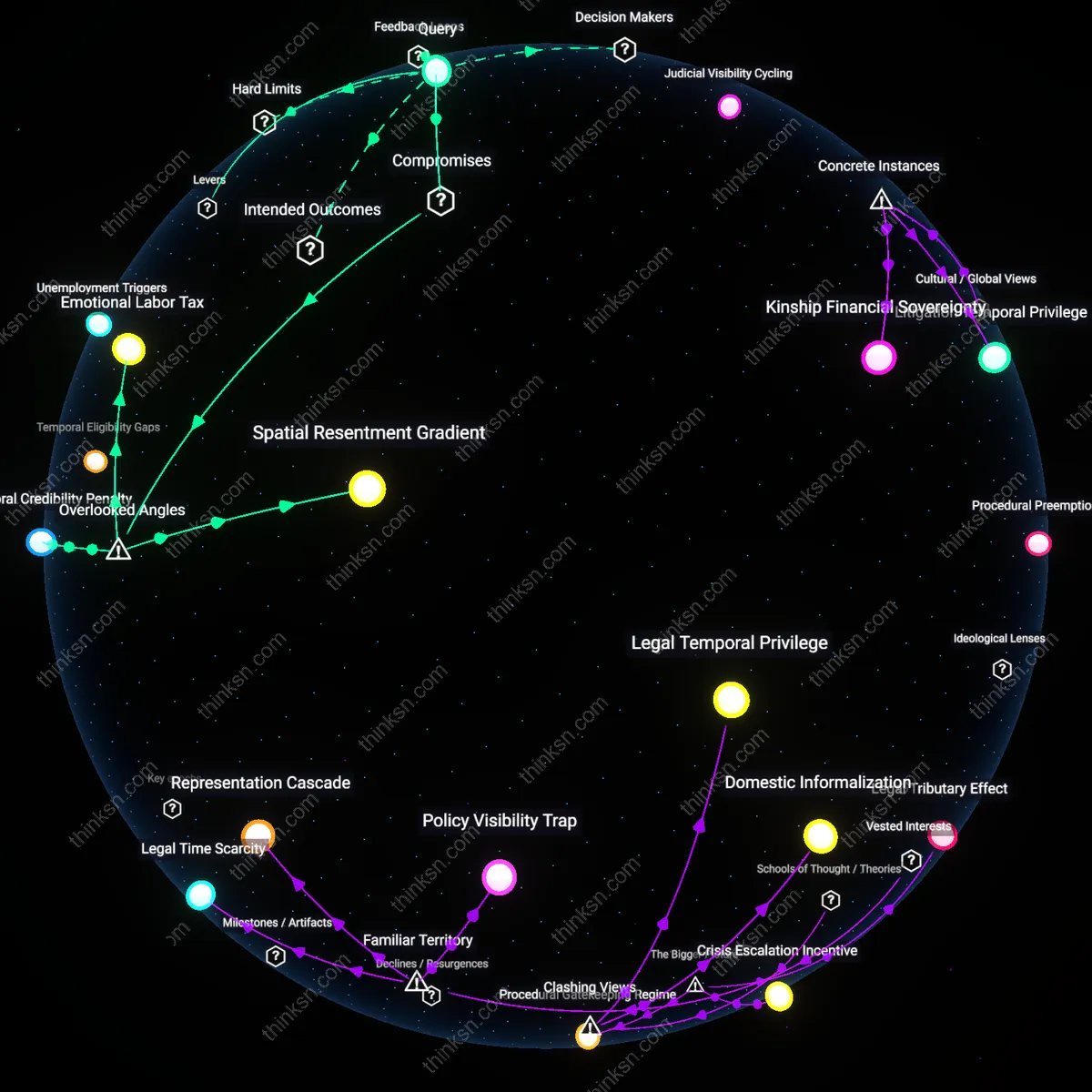
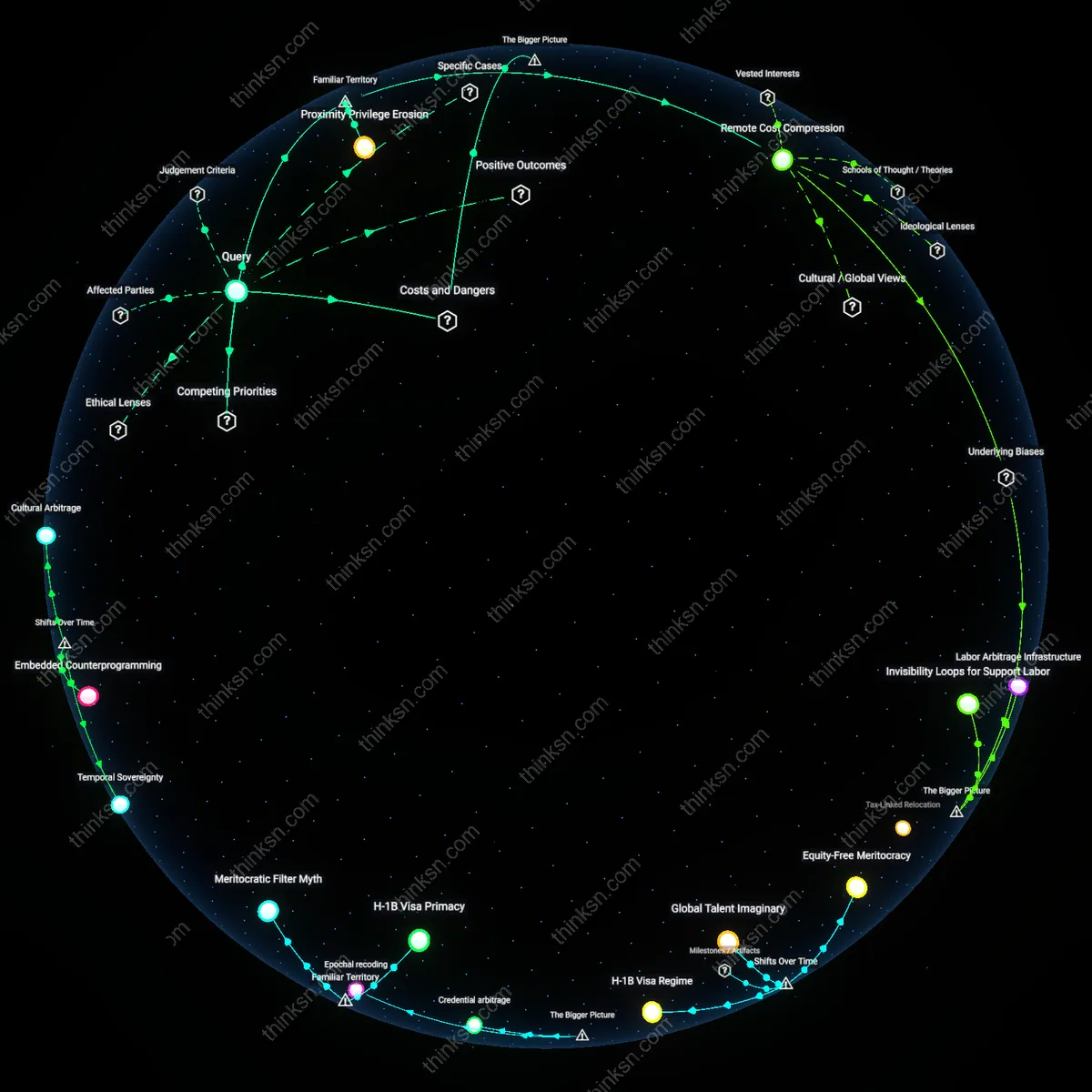
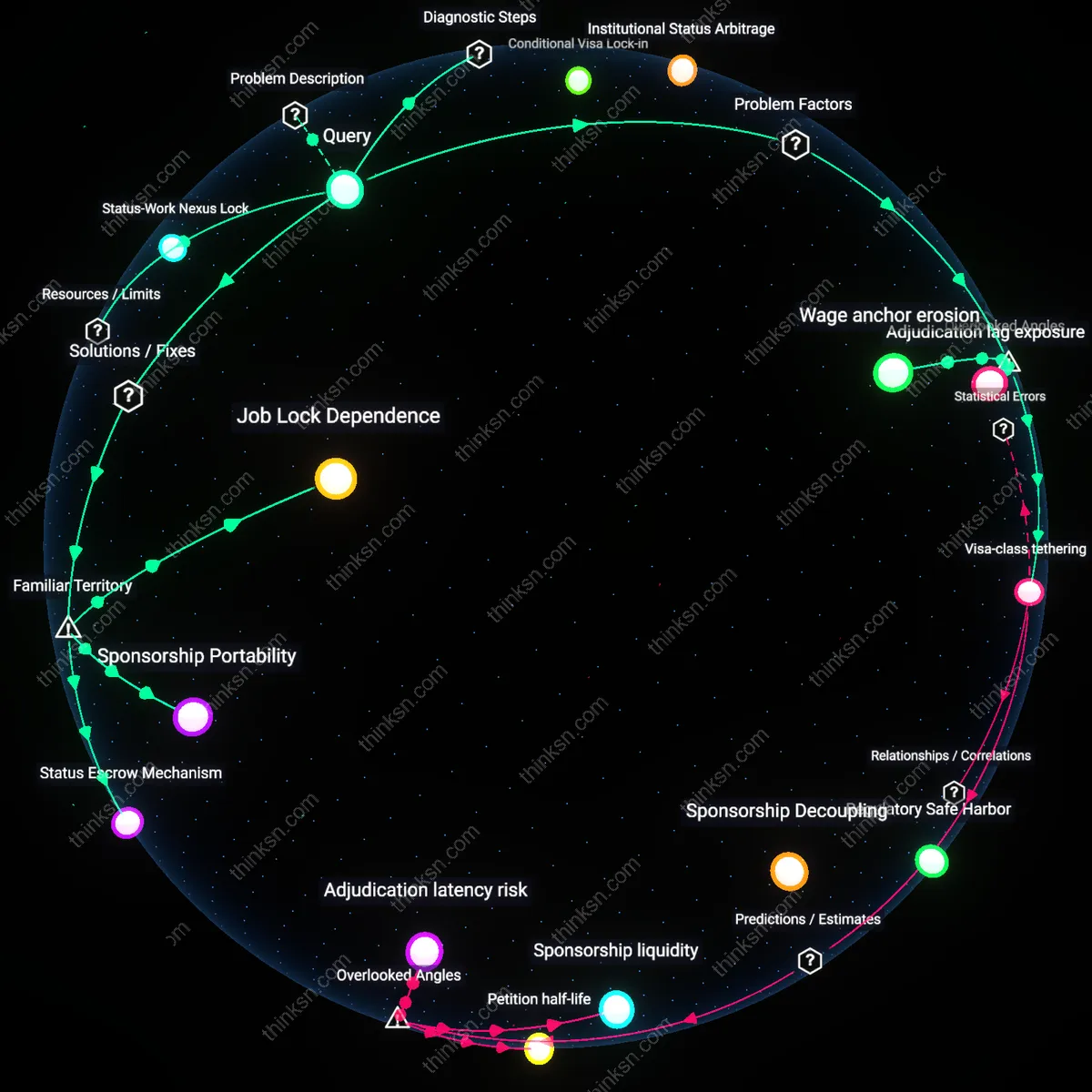
Analysis reveals 12 key thematic connections.
Key Findings
Visa-class tethering
Employer bankruptcy severs the implicit but legally unenforced continuity between an immigrant's job offer and their ongoing visa classification, leaving green card holders in legal limbo even after approval if the sponsoring entity dissolves before I-485 adjudication. The U.S. immigration system assumes job-based petitions reflect durable employment relationships, yet bankruptcy law dissolves corporate liability and obligations without triggering interagency immigration review, creating a blind spot where the Department of Labor and USCIS do not coordinate to reassign or validate pending applications. This exposes a structural dependency on employer survivability that is never disclosed during the green card process, making status continuity contingent on corporate longevity rather than immigrant compliance. The overlooked issue is not job loss per se, but the erasure of the petitioning entity itself—an administrative void that nullifies the legal fiction of sponsorship without formal cancellation, trapping applicants in a status that exists in name only.
Adjudication lag exposure
Green card applicants in the EB-2 and EB-3 categories face disproportionate risk during prolonged adjudication periods because employer bankruptcy invalidates the 'permanent job offer' requirement retroactively, even if the worker remains employed by a successor entity through asset acquisition. Bankruptcy courts prioritize creditor claims over immigration commitments, and while asset purchasers may retain foreign-national employees, they are under no obligation to assume sponsorship liabilities unless explicitly negotiated—something rarely done in distressed sales. This creates a temporal vulnerability where delays in USCIS processing amplify exposure to status disruption, turning bureaucratic inertia into a de facto gatekeeper of residency. The unnoticed factor is that the longer the government takes to approve a petition, the more probable it becomes that external economic shocks—not immigrant behavior—determine outcomes, shifting risk from individual merit to macroeconomic volatility.
Wage anchor erosion
When an employer files for bankruptcy, the foundational labor certification (PERM) that anchors the green card application collapses because its validity depends on the employer's ability to pay the prevailing wage at the time of filing and through approval—a financial promise voided by insolvency. While USCIS does not formally audit ongoing wage capacity post-filing, the legal basis for the petition evaporates when the employer’s financial standing is nullified in bankruptcy court, leaving no mechanism for wage obligation transfer or alternative sponsorship validation. This creates a hidden dependency on the employer’s sustained solvency, a precondition never verified during adjudication but capable of retroactively invalidating years of compliance. The key blind spot is that immigration status rests on a fiscal guarantee no agency monitors after submission, making the green card process vulnerable to balance sheet failures invisible to immigration law.
Conditional Visa Lock-in
Employer bankruptcy severs the prerequisite job offer for EB-2 and EB-3 green card applicants, as demonstrated by the 2013 USCIS policy memo clarifying AC21 portability only applies after 180 days of I-485 pending status, leaving applicants like those at Infosys during its 2020 layoffs stranded without lawful work authorization despite approved I-140 petitions. This mechanism reveals that conditional permanent residency is structurally tethered to continuous employment verification, not immigration intent, which destabilizes status even when the beneficiary is not at fault. The non-obvious insight is that statutory portability protections are temporally gated, rendering early-stage employment shocks irreversible despite existing immigration milestones.
Sponsorship Recapture Failure
When SolarWinds filed for Chapter 11 in 2023, its foreign national green card holders lost access to unreleased labor certifications (PERM) and unclaimed visa numbers despite years of investment in the immigration pipeline, exposing a system where employer-sponsored priority dates are not individually owned or transferable absent proactive filing. This instance illustrates that the U.S. immigration system treats employer sponsorship as an all-or-nothing event, not a cumulative benefit, and thus fails to protect individual progress when corporate insolvency voids pending applications. The underappreciated dynamic is that immigration equity—time, money, effort—accrued by employees is legally unrecoupable, even when federal regulations allow job changes post-I-140 approval.
Institutional Status Arbitrage
After H-1B sponsor Synopsys eliminated positions in 2022, several Indian-born green card applicants on the EB-3 track with pending adjustment-of-status applications were forced into consular processing abroad due to loss of underlying status, revealing that USCIS does not recognize economic dislocation as grounds for retaining in-country processing privileges, unlike asylees or VAWA applicants. This case shows that immigration status maintenance is contingent on continuous employer validation rather than individual admissibility, enabling institutions to effectively arbitrage worker vulnerability during restructuring. The overlooked reality is that no statutory counterpart to AC21 exists for those who haven’t filed I-485 for 180 days, creating a protection gap exploited during cyclical layoffs.
Job Lock Dependence
Employers should be required to notify green card holders and USCIS within 30 days of filing for bankruptcy to trigger protected status. This obligation would bind corporate officers during Chapter 11 proceedings, activate automatic work authorization continuance through Employment Authorization Documents (EADs), and route affected employees to an expedited adjustment process via pre-vetted labor certifications. While the public widely associates green card stability with employer sponsorship, few recognize how the absence of formal notification protocols converts routine corporate restructurings into immediate immigration jeopardy, exposing a structural dependency on job retention that mimics de facto indenture.
Sponsorship Portability
Green card applicants in the final stages of adjustment should be allowed to transfer pending employment-based petitions to new employers without re-filing or recapturing visa numbers. This change would operate through USCIS regulatory reinterpretation of 'same or similar occupation' under AC21, expanding it to cover post-bankruptcy mobility within the same SOC code family. Although most understand that changing jobs risks green card delays, the deeper issue is the lack of a legal mechanism for sponsorship inheritance—where the visa petition becomes detachable from the original employer like a financial instrument, breaking the assumption that sponsorship is a singular, non-transferable corporate act.
Status Escrow Mechanism
USCIS should establish an automatic immigration status freeze for lawful permanent residents on conditional status or near approval when their employer files for bankruptcy. This mechanism would suspend deportation grounds related to employment loss and preserve priority dates by holding petitions in administrative escrow for up to one year. Given widespread awareness that job loss can derail green cards, it is striking that no counterweight exists to the 'all or nothing' timeline—where approval depends on continuous employment, even during systemic economic events. This would formalize a buffer that already functions informally in asylum or TPS cases, treating employer collapse as an exogenous shock rather than individual failure.
Visa Sponsorship Chasm
Employer bankruptcy immediately severs the immigration sponsorship tether that ties a green card holder’s conditional residency or pending application to their legal status, particularly in cases where the I-140 petition or labor certification is employer-dependent; this exposes green card applicants in the EB-2 or EB-3 categories to abrupt work authorization gaps and green card abandonment, even if they find new employment, because USCIS does not automatically port approved petitions across sponsors without proactive, timely filings that require legal resources many displaced workers lack. This structural fragility reveals how the U.S. immigration system outsources immigration stability to private employers, making individual status contingent on corporate solvency—an alignment that ignores the volatility of labor markets and creates a sponsorship chasm when firms collapse, a systemic flaw rarely addressed in immigration reform debates.
Temporal Precarity Trap
Green card holders in the process of adjusting status—especially those on employment-based visas with expiring H-1B protections—face a narrow time-bound vulnerability when their employer files for bankruptcy, because they typically have only 60 days of regulatory grace period to find new sponsorship or risk unlawful presence, yet the job search, visa transfer, and PERM labor certification processes routinely exceed this window due to bureaucratic processing delays at DOS and USCIS; this misalignment between administrative timelines and economic reality traps workers in a temporal precarity trap, where systemic inefficiencies in federal immigration processing become de facto deportation mechanisms not through explicit policy but through procedural lag, a consequence exacerbated by underfunded immigration courts and outdated digital infrastructure at USCIS that fail to accommodate displaced workers’ urgency.
Status-Work Nexus Lock
The U.S. immigration system structurally conflates employment continuity with legal status maintenance, meaning that when an employer goes bankrupt, the green card applicant loses not only income but also the underlying justification for their presence—even if they are years into the process—because current regulations do not recognize 'economic displacement' as a valid basis for status preservation, forcing workers into a status-work nexus lock where remaining lawfully requires immediate reemployment under identical visa conditions, a demand that ignores sector-specific job scarcity and discriminates against older or highly specialized workers; this reflects a broader systemic bias in U.S. immigration policy toward static, employer-controlled labor models rather than dynamic worker mobility, effectively criminalizing involuntary job loss in a way that other industrialized nations with portability-driven systems avoid.