Caught Between Generations: The Mental Toll on LGBTQ Teens
Analysis reveals 4 key thematic connections.
Key Findings
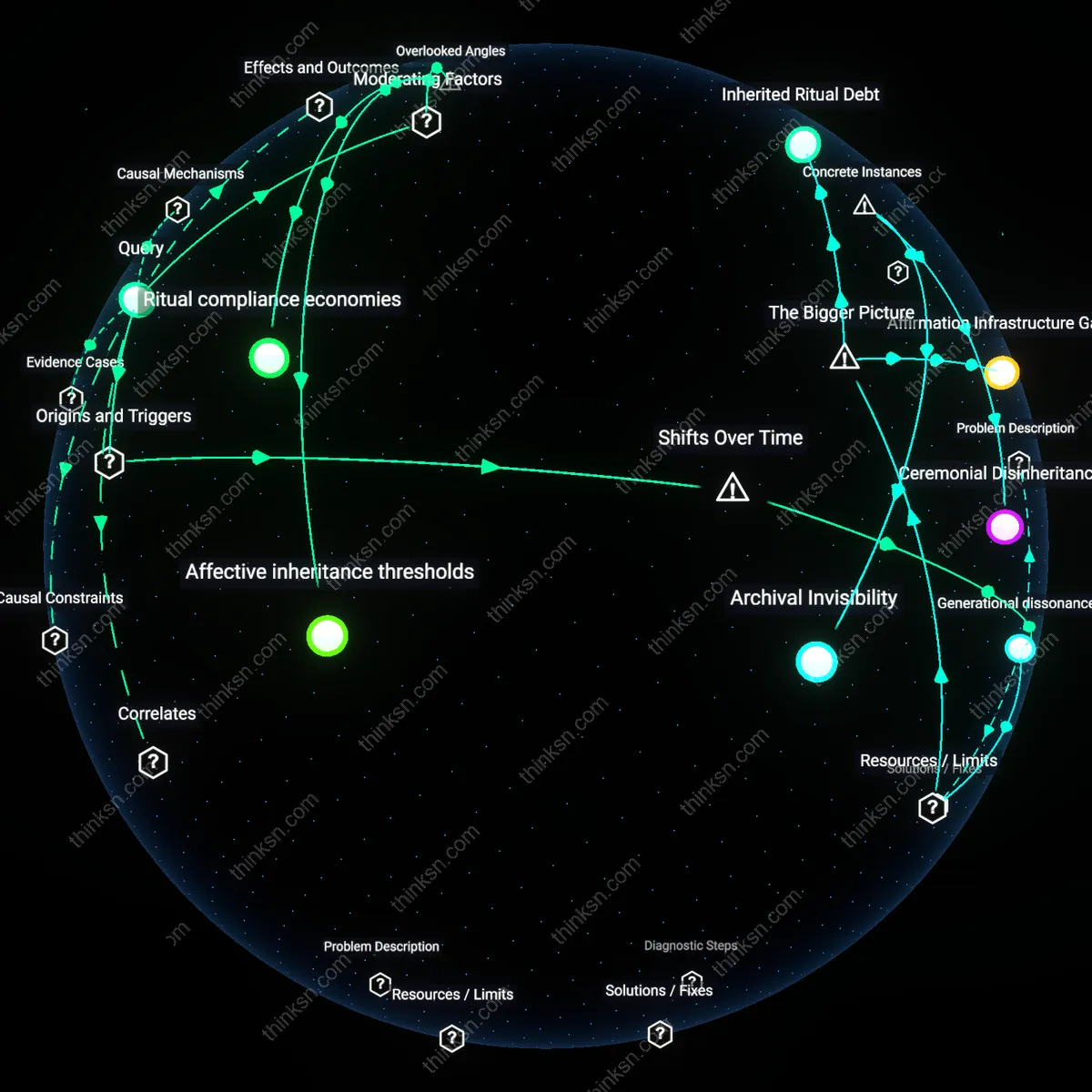
Generational dissonance
The psychological impact on LGBTQ teens arises when evolving cultural acceptance of queer identities in post-2010 urban educational environments clashes with entrenched heteronormative values preserved in familial lineages, particularly among grandparents socialized in mid-20th-century religious communities. This conflict emerges not primarily from overt rejection but from unspoken rituals of silence and omission—holiday traditions, lineage narratives, or naming practices—that position the teen’s identity as a disruption to intergenerational continuity. The shift from pre-1990s eras, where homosexuality was institutionally pathologized, to a present where teens assert identity as innate and public, reorients the grandparent’s silence from passive disapproval to perceived moral betrayal. What is underappreciated is how the teen’s psychological distress is not just reaction to hostility but to the symbolic weight of severed lineage, rendered acute by the contrast between peer-based affirmation and ancestral erasure.
Intergenerational silence brokers
Teens who manage identity conflicts with homophobic grandparents by recruiting parents as buffered intermediaries experience lower psychological distress than those who engage directly, because the parent’s dual role as gatekeeper and translator dampens emotional exposure and filters hostility through institutional family norms, a dynamic overlooked because analysis often focuses on direct dyadic conflict rather than third-party mediation structures that absorb and redirect tension, making familial indirection a protective mechanism rather than a failure of confrontation.
Affective inheritance thresholds
LGBTQ teens exhibit markedly higher resilience when their grandparents express homophobia rooted in sociohistorical isolation—such as growing up in regions with no visible queer referents—compared to active ideological opposition, because perceived cultural deficit reduces personalization of rejection and enables empathic reframing, a distinction rarely isolated despite its power to shift psychological burden from internalized shame to external contextual understanding.
Ritual compliance economies
In households where LGBTQ teens preserve superficial adherence to intergenerational rituals—such as religious observances or holiday traditions governed by homophobic grandparents—they gain covert relational leverage, as their performance secures permission to exist within the family without identity endorsement, revealing an underground economy of symbolic concession that eases immediate stress but subtly entrenches identity fragmentation, a cost that remains invisible in outcome metrics focused on overt acceptance or rejection.