Do Habitability Complaints Get Stalled by Limited Budgets?
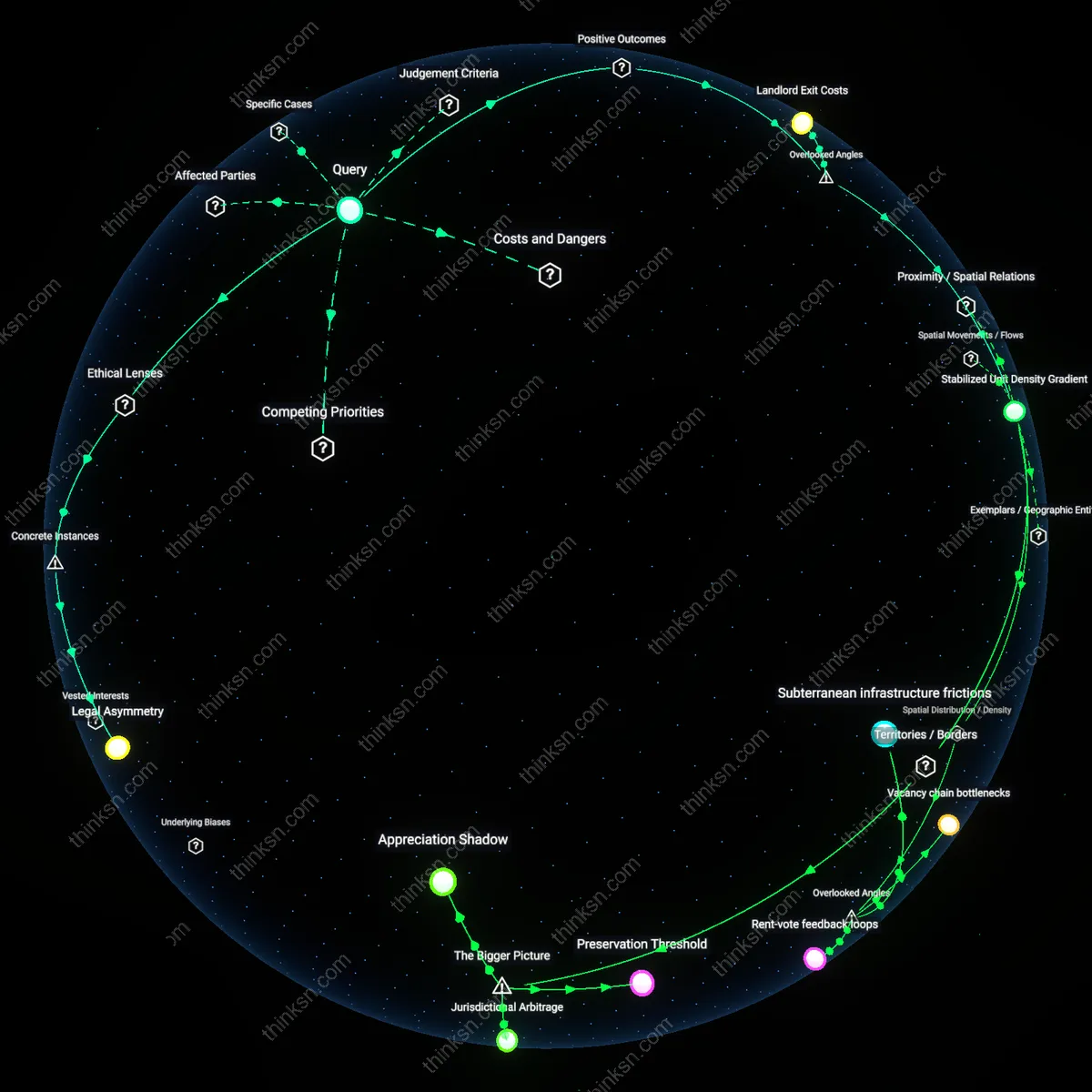
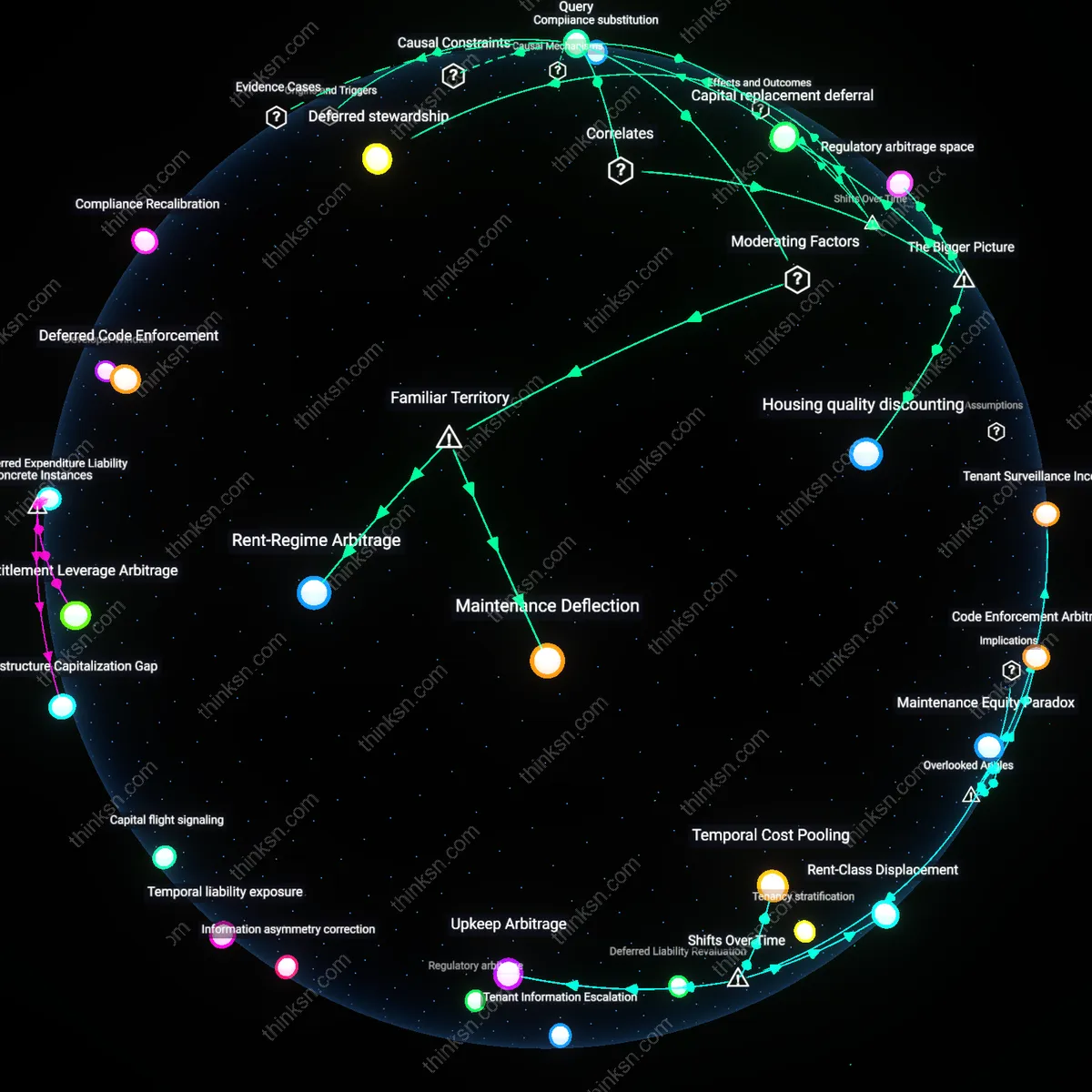
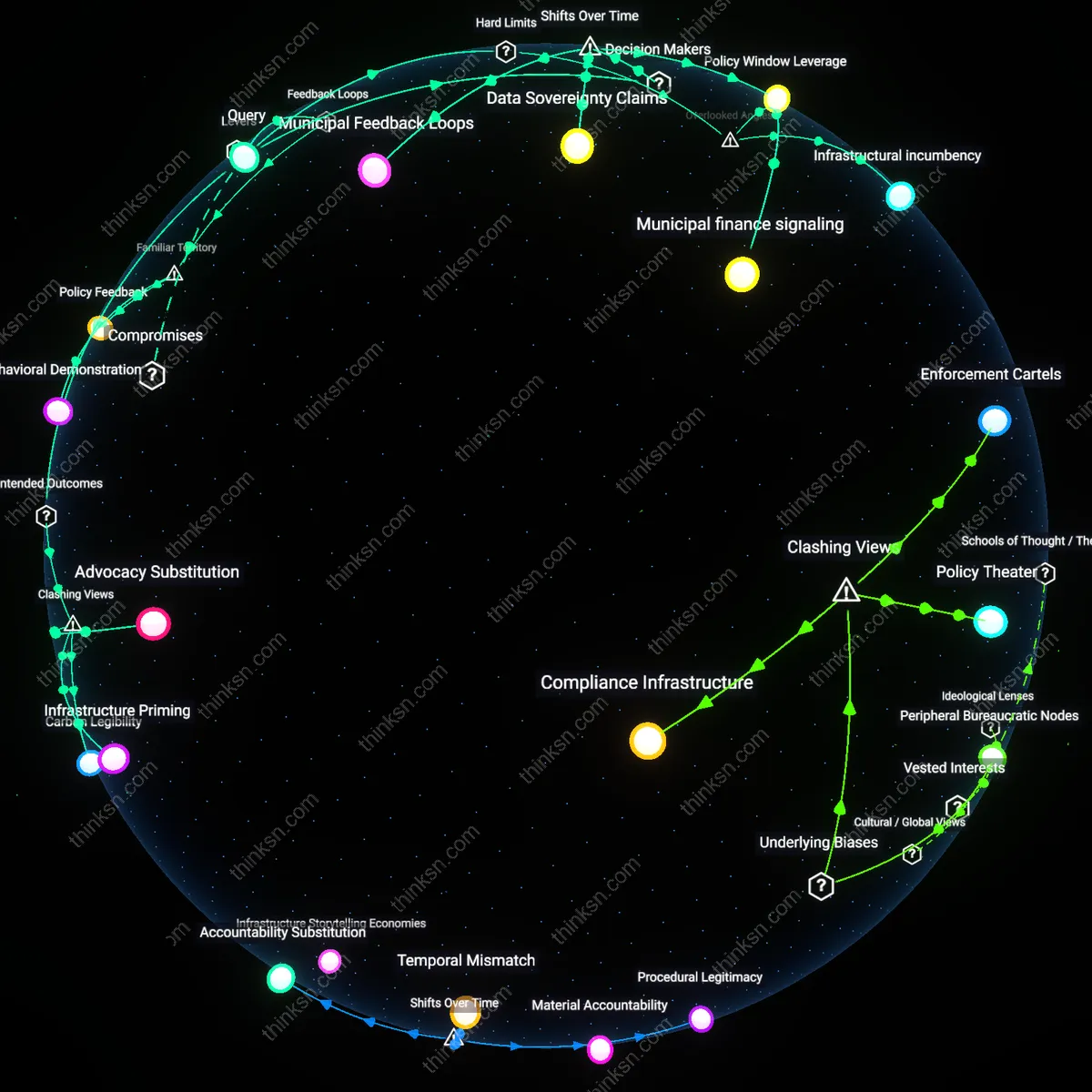
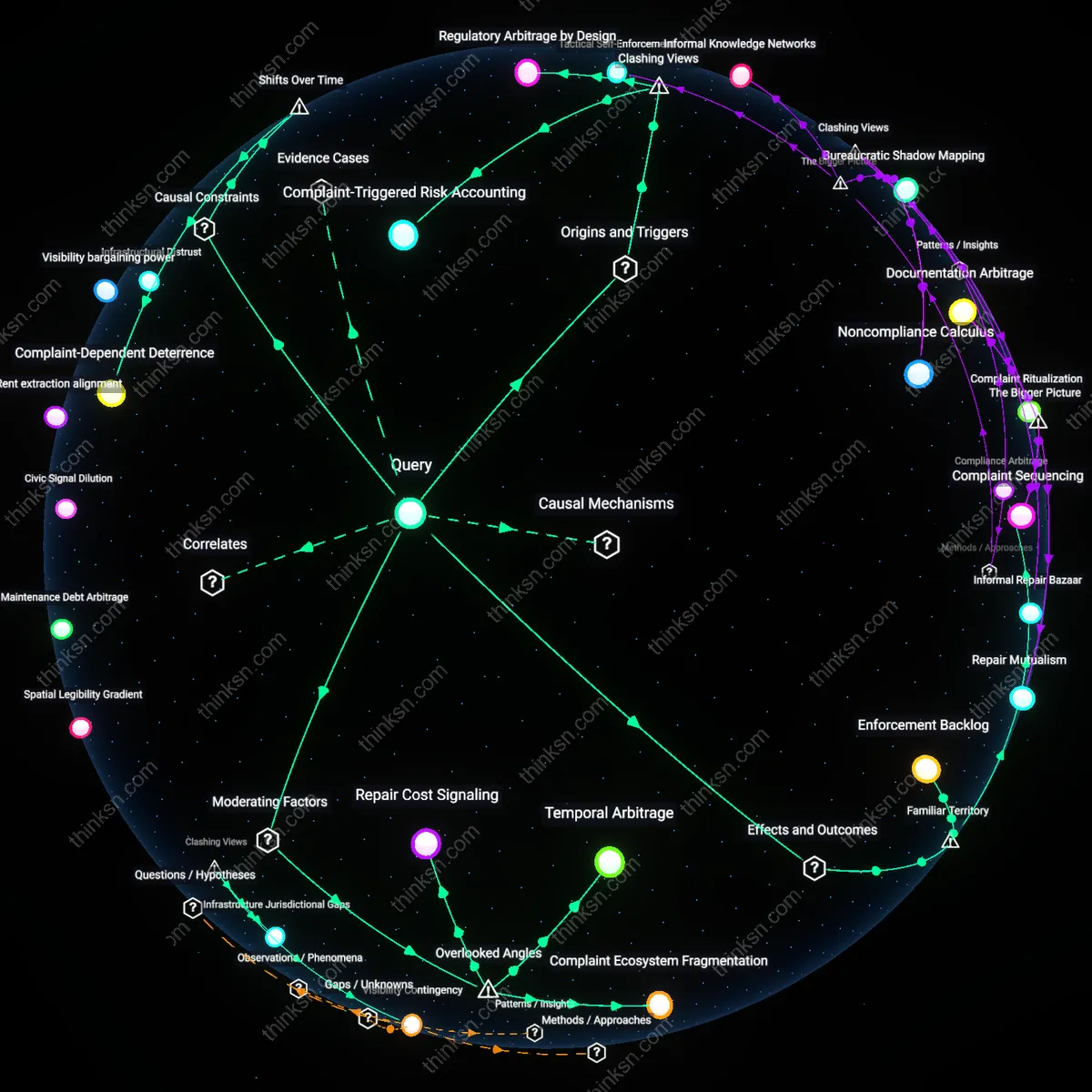
Analysis reveals 9 key thematic connections.
Key Findings
Bureaucratic Temporal Advantage
Limited enforcement funding enables landlords to exploit the city’s procedural delays, not because regulators are indifferent but because underfunded inspection units compress caseloads into fixed audit cycles, allowing landlords to predict and outlast intervention timelines. This creates a de facto extension of noncompliance windows, where repairs are timed only after the risk of penalty exceeds the cost of delay—turning enforcement lulls into strategic assets. The non-obvious revelation is that slowness is not a system failure but a calculable feature that landlords actively leverage, reframing regulatory delay as a synchronized opportunity rather than an obstacle.
Complaint-Triggered Risk Accounting
Landlords do not merely react to habitability complaints—they recalibrate property management strategies the moment a tenant files, using the complaint itself as a signal to initiate cost-benefit analyses on repair timing, legal exposure, and potential rent adjustment. Because enforcement funding caps the number of follow-up inspections, landlords can allocate deferred maintenance across multiple tenants knowing only a fraction will be verified, transforming the complaint into a predictable risk node rather than a compliance trigger. This challenges the assumption that delay stems from neglect, revealing instead a rationalized, data-informed withholding of repairs based on the city’s observable enforcement thresholds.
Regulatory Arbitrage by Design
Housing codes in underfunded systems become instruments of choice rather than mandate, allowing landlords to actively compare the cost of immediate remediation against the probabilistic cost of fines, where the latter is consistently lower due to staffing shortages and legal backlogs. This dynamic institutionalizes repair deferral as a legitimate financial strategy, especially in high-turnover buildings where tenants are less likely to persist through the enforcement pipeline. The dissonance lies in recognizing that code violations are not failures of law adherence but outcomes of a system where compliance is economically optional, exposing a hidden market mechanism embedded within public housing regulation.
Enforcement Backlog
Limited enforcement funding directly causes city inspectors to process habitability complaints more slowly, enabling landlords to delay repairs without immediate penalty. With understaffed housing agencies in cities like New York and Los Angeles, inspection queues stretch for weeks or months, creating a de facto grace period during which landlords face no operational consequences. This delay is not accidental but structurally predictable, as budget constraints reduce inspection frequency and response speed. The non-obvious insight is that landlords don’t need to violate codes aggressively—simply aligning repair timelines with the known pace of enforcement becomes a rational, low-risk strategy.
Compliance Arbitrage
Landlords exploit the gap between complaint filing and enforcement action by timing repairs just after inspection, avoiding both tenant welfare costs and legal penalties. In jurisdictions like Chicago or Philadelphia, where enforcement resources are tied to cyclical budget allocations, savvy property managers monitor complaint databases and prioritize only those units under active review. This creates a shadow system where compliance is reactive rather than proactive, driven by visibility to inspectors rather than habitability need. The underappreciated reality is that regulatory enforcement scarcity turns legal obligation into a kind of market calculus—where landlords 'invest' in repairs only when the risk of sanction exceeds the cost of delay.
Temporal Arbitrage
Limited enforcement funding enables landlords to exploit the administrative lag between complaint filing and inspection by front-loading routine maintenance just before mandated visits, thereby creating a facade of compliance without sustained habitability improvements. This tactical timing—observed in cities like Baltimore and Detroit where inspection backlogs exceed 60 days—is a form of regulatory gaming that leverages the predictability of under-resourced inspection schedules, allowing landlords to minimize repair costs while remaining technically within legal boundaries. The non-obvious insight is that enforcement delays do not merely weaken deterrence; they actively create a temporal window that skilled property managers can manipulate as a strategic asset, transforming bureaucratic slowness into a calculable operational advantage.
Complaint Ecosystem Fragmentation
Habitability enforcement is undermined not by lack of reporting but by the dispersion of complaints across multiple non-interoperable city agencies—housing, health, fire, sanitation—each requiring separate follow-up, which landlords exploit by selectively addressing only those complaints that trigger the most immediate penalties. In New York City, where tenants may file with 311, the Department of Buildings, or Housing Preservation and Development depending on the issue, landlords can delay repairs in lower-priority channels while appearing responsive in high-visibility ones, effectively diluting accountability. This fragmented response architecture, often overlooked in analyses focusing on funding levels, converts systemic discoordination into a shield against coherent enforcement pressure, making resource limitations secondary to structural incoherence.
Repair Cost Signaling
Landlords in gentrifying neighborhoods use delayed responses to habitability complaints as a tacit signal to tenants that continued occupancy will be burdensome, thereby incentivizing self-eviction without overt retaliation—especially effective when enforcement delays extend beyond critical habitability thresholds like heat in winter or pest control in multi-unit buildings. In Philadelphia’s rapidly appreciating Zip codes, landlords have been observed allowing code violations to persist just long enough to push tenants toward voluntary move-out, particularly where relocation assistance is absent and legal aid is scarce. What is missed in standard enforcement debates is that delayed repair is not always a failure of compliance but an intentional cost-imposition strategy, where the timing and visibility of neglect are calibrated to extract displacement without violating direct eviction laws.
Complaint-Dependent Deterrence
After 2010, when state funding for local housing authorities began tying enforcement capacity directly to complaint volume rather than housing stock size, landlords could anticipate response lags by tracking public data on agency throughput, as seen in cities like Oakland and Cleveland where response times rose from 14 to 60+ days between 2010 and 2020; this transformed habitability enforcement from an ambient deterrent into a calculable risk, dependent on a bottleneck at the triage stage. The overlooked aspect is that this shift didn’t just weaken enforcement—it changed its temporal logic, replacing generalized fear of oversight with a clockable delay window that savvy property managers began embedding into maintenance protocols, thus producing a regime where compliance is backloaded to the moment of inspection certainty.