Why Free Cholesterol Checks but Paid Diet Advice in Healthcare?
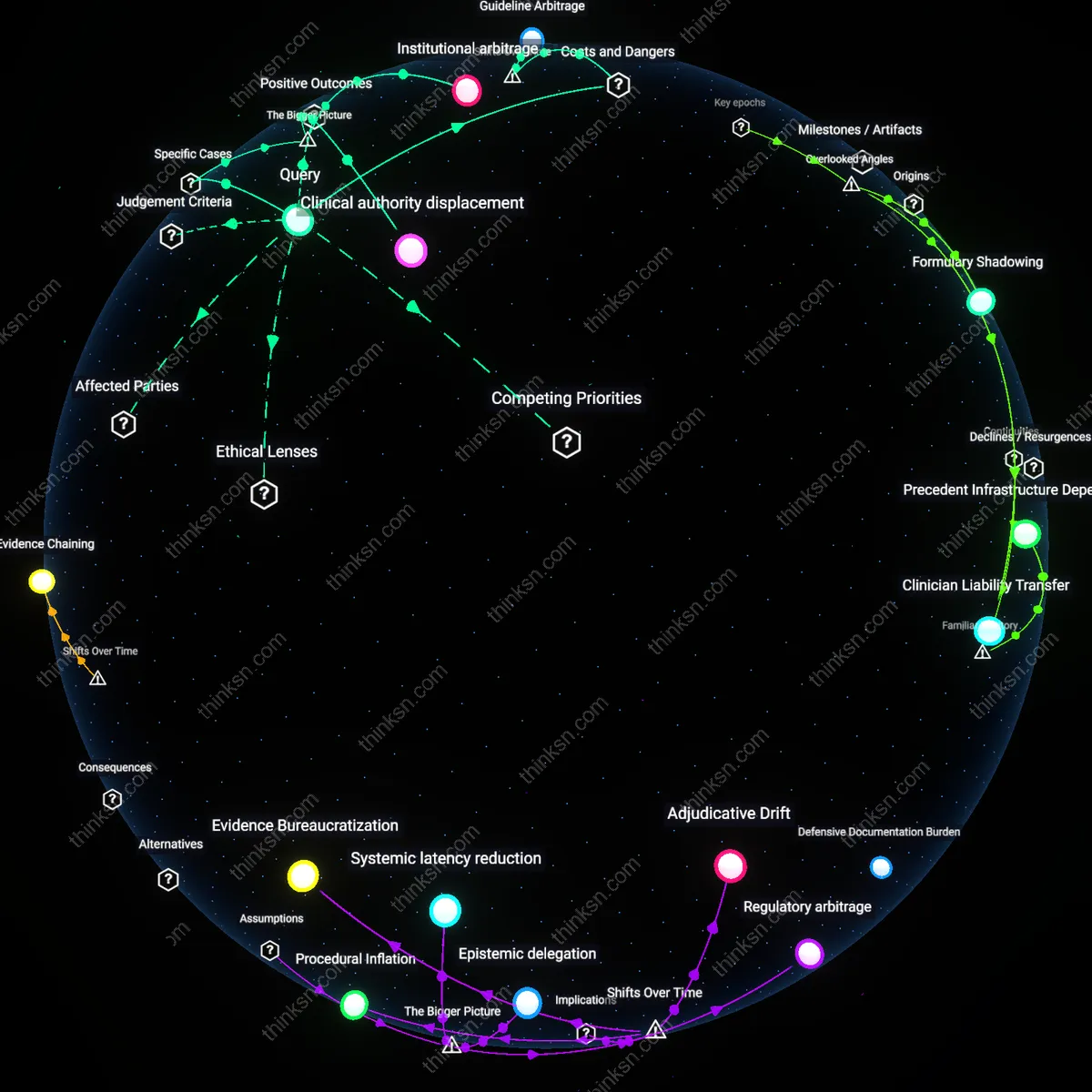
Analysis reveals 14 key thematic connections.
Key Findings
Reimbursement Asymmetry
When cholesterol checks are covered under preventive care mandates but dietary counseling requires patient cost-sharing, primary care providers face stronger financial incentives to order lab tests than to deliver time-intensive counseling. This divergence reflects how Medicare and private insurer billing codes systematically undervalue behavioral interventions compared to diagnostic procedures, even when both aim at cardiovascular risk reduction. The non-obvious consequence is that clinicians' workflow prioritization is not driven by clinical impact but by revenue sustainability, skewing preventive care toward measurable biomarkers over modifiable behaviors.
Clinical Time Allocation
Free cholesterol testing creates a systemic pull for providers to allocate limited visit time toward interpreting and discussing lab results rather than addressing root causes like diet, because insurance compensation structures do not reimburse the time required for effective lifestyle counseling. This shifts the clinical encounter toward technical management—such as statin prescriptions—over behavioral change support, particularly in safety-net clinics where provider panel sizes are high and time per patient is scarce. The underappreciated effect is that financial incentives reshape medical attention itself, making physiological data more clinically salient than social or behavioral context.
Prevention Commodification
Payers and health systems treat cholesterol screening as a discrete, billable event that satisfies quality metrics like those in HEDIS or MIPS, while dietary counseling resists standardization and thus escapes formal recognition in performance scoring. This creates a feedback loop where public reporting and value-based contracts reward the delivery of tests rather than the effortful, longitudinal work of behavior change, effectively commodifying prevention into measurable transactions. The critical but overlooked outcome is that systemic accountability mechanisms—intended to improve care—end up privileging easily quantified actions over complex, patient-centered interventions.
Time Compression Incentive
Physicians allocate limited visit time to services they can bill for, so when dietary counseling is unremunerated but cholesterol checks are automated and reimbursed, the former is crowded out by the latter during routine appointments. This mechanism is amplified in high-volume practices where provider productivity is tied to revenue generation, making brief, efficient testing a default despite its limited impact on patient behavior change. The underappreciated effect is that the metric of clinical efficiency — doing more billable things per hour — actively undermines the delivery of slower, relational forms of preventive care.
Prevention Theater
Health systems prioritize visible, quantifiable preventive metrics like cholesterol screening rates to meet public reporting standards and quality incentives, while unmeasured efforts like nutrition discussion remain invisible in performance evaluation. This leads to ritualized compliance with screening benchmarks that satisfy regulatory and payer requirements without addressing root causes of cardiovascular risk, such as diet. The deeper systemic issue is that accountability systems reward the appearance of prevention more than its substance, decoupling clinical performance metrics from health outcomes.
Care Fragmentation
Free cholesterol checks but charged dietary counseling systematically prioritize measurable biomarkers over behavioral intervention, causing primary care workflows to triage patients into siloed testing pathways rather than integrated prevention. Clinic throughput incentives and EHR-driven visit templates reward cholesterol screening as a billable, reportable event tied to value-based metrics, while dietary counseling—despite its long-term impact—falls outside reimbursable time thresholds unless comorbidities escalate, creating a structural bias toward episodic biomarker surveillance over sustained behavioral engagement. This dynamic institutionalizes a medical logic in which prevention is operationalized as detection and documentation, not transformation, privileging statistical risk reduction over lived health practice—making the fragmentation of care not a failure mode but a direct output of misaligned reimbursement architecture.
Audit-Driven Prioritization
In England’s National Health Service, the Quality and Outcomes Framework (QOF) incentivized general practices to meet cholesterol screening targets for patients with cardiovascular risk, tying up to 20% of practice income to documented lipid checks, while offering no points for dietary counseling delivery—resulting in screening rates exceeding 90% in 2015 while only 4% of eligible patients received structured nutrition advice, demonstrating that performance metrics selectively rewarding visibility of testing over process of education institutionalize a surveillance model of prevention. This dynamic reveals how audit regimes can unintentionally valorize documentation of biological markers over engagement with social determinants, even within universally funded care systems.
Pharmaceutical Substitution
After Brazil’s Unified Health System (SUS) mandated free lipid testing in 2013 while maintaining restrictions on access to registered dietitians in primary care units, clinicians in São Paulo municipal clinics increasingly prescribed simvastatin for borderline hypercholesterolemia even when patients had no prior cardiovascular events, effectively using medication as a workaround to structural gaps in nutritional support, showing that when non-pharmacological interventions are inaccessible, providers may escalate pharmacological responses not due to medical necessity but navigational rationality. This pattern exposes how treatment intensification can emerge not from disease severity but from the relative availability of billable interventions.
Billing code asymmetry
Healthcare providers prioritize cholesterol checks over dietary counseling because distinct billing codes for each service create a procedural inertia that favors reimbursable, discrete tests over longer, less codified consultations. The Current Procedural Terminology (CPT) system assigns specific, easily billable codes to lipid panels but groups dietary counseling under broader, inconsistently reimbursed evaluation and management codes, making the former administratively simpler and more profitable. This creates a hidden workflow bias in clinical scheduling and electronic health record design that systematically downgrades preventive counseling, even when patients face no out-of-pocket cost. The non-obvious insight is that pricing isn’t the sole driver—structural features of medical coding shape care delivery independently of patient cost.
Performance metric contagion
Preventive care delivery skews toward cholesterol screening because quality reporting programs like HEDIS track lipid testing rates as a benchmark but do not uniformly measure dietary counseling efficacy or delivery. Clinics under value-based contracts thus optimize care bundles around audited metrics, creating a feedback loop where unmeasured interventions—like nutrition counseling—are treated as peripheral despite clinical importance. This distorts provider attention not due to patient demand or cost, but because external performance regimes alter organizational priorities at the clinic-management level. The overlooked mechanism is that free services gain prominence not just through access, but through their entanglement with accountability infrastructure that silently prioritizes visibility over impact.
Consultation time fungibility
Dietary counseling loses out to cholesterol checks because the time required for effective counseling is functionally non-recoverable within standard primary care visit cycles, whereas blood draws fit seamlessly into existing throughput models. Physicians in safety-net clinics, for instance, face panel sizes exceeding 2,500 patients, making time allocation a zero-sum calculus where brief, protocolized tasks dominate—free or not. The unseen dependency is that ‘free’ only matters if the system has capacity to deliver, and time, unlike money, cannot be billed or outsourced easily under current staffing models. This reframes the issue from insurance design to operational bandwidth, exposing how labor constraints suppress preventive services no pricing reform can fix.
Billing-Driven Testing
Free cholesterol checks are systematically prioritized over charged dietary counseling because reimbursement under fee-for-service models flows only for billable tests, not preventive conversations. In U.S. primary care clinics, especially in private practices dependent on volume-based revenue, physicians are incentivized to order lab work that generates immediate payment, even if minimal clinical action follows. This creates a structural preference for measurable diagnostics over time-intensive behavioral interventions, despite equivalent or greater long-term health impact from the latter—revealing how payment mechanics, not medical logic, steer preventive care decisions.
Clinical Visibility Gap
Dietary risks remain medically invisible compared to cholesterol levels because only the latter is codified in standardized screening protocols tied to performance metrics like those used by Medicare and private insurers. In accountable care organizations and hospital systems reporting quality scores, high cholesterol screening rates directly affect bonuses and public ratings, whereas dietary counseling has no equivalent tracking code or accountability mechanism. This institutionalizes a bias where what gets measured—lipid panels—displaces what matters equally or more, silently elevating data points over dialogue in preventive routines.
Patient Action Misalignment
Patients interpret free cholesterol tests as the definitive preventive action, mistaking the check for the cure, because health messaging in retail clinics and pharmacy chains equates screening with protection. When Walmart Health or CVS MinuteClinic advertises free heart health screenings, they attract customers seeking reassurance via numbers, not nutrition planning—which requires sustained effort and lacks symbolic closure. This conflation of access with outcome reinforces a cultural script where medicalized gestures substitute for behavioral change, rendering dietary advice feel optional even when clinically urgent.