Does Hope for the Best Mask Uncertainty in End-of-Life Planning?
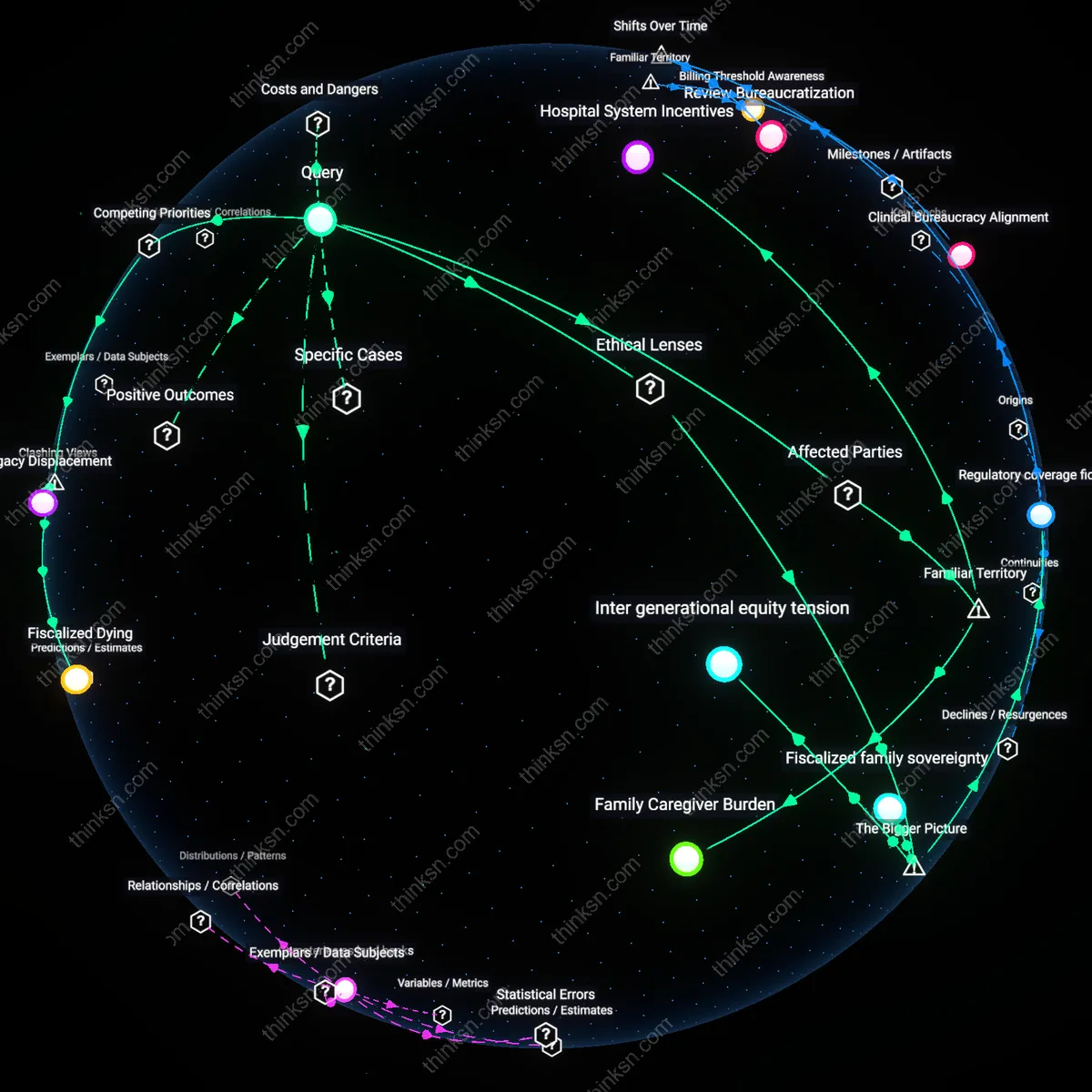
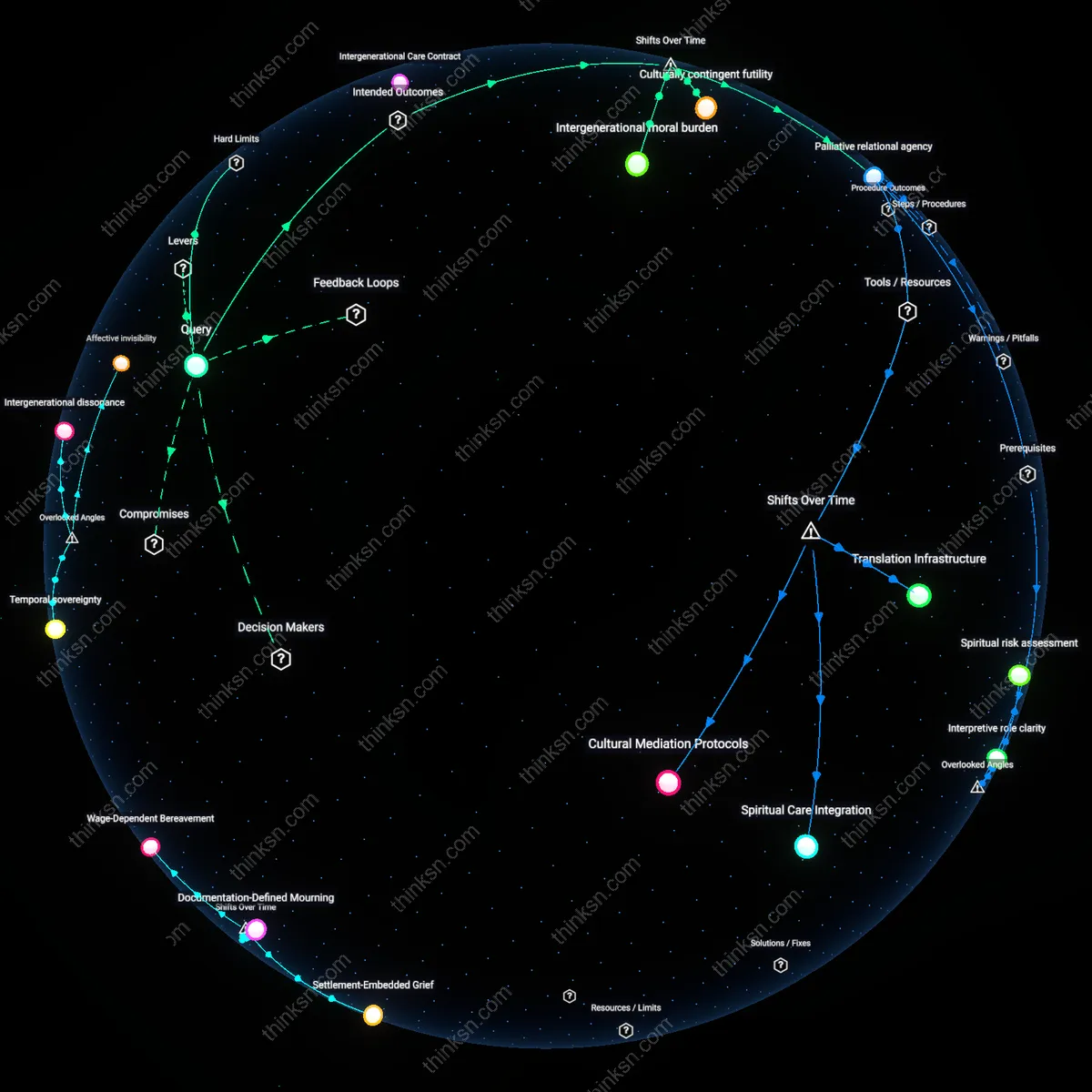
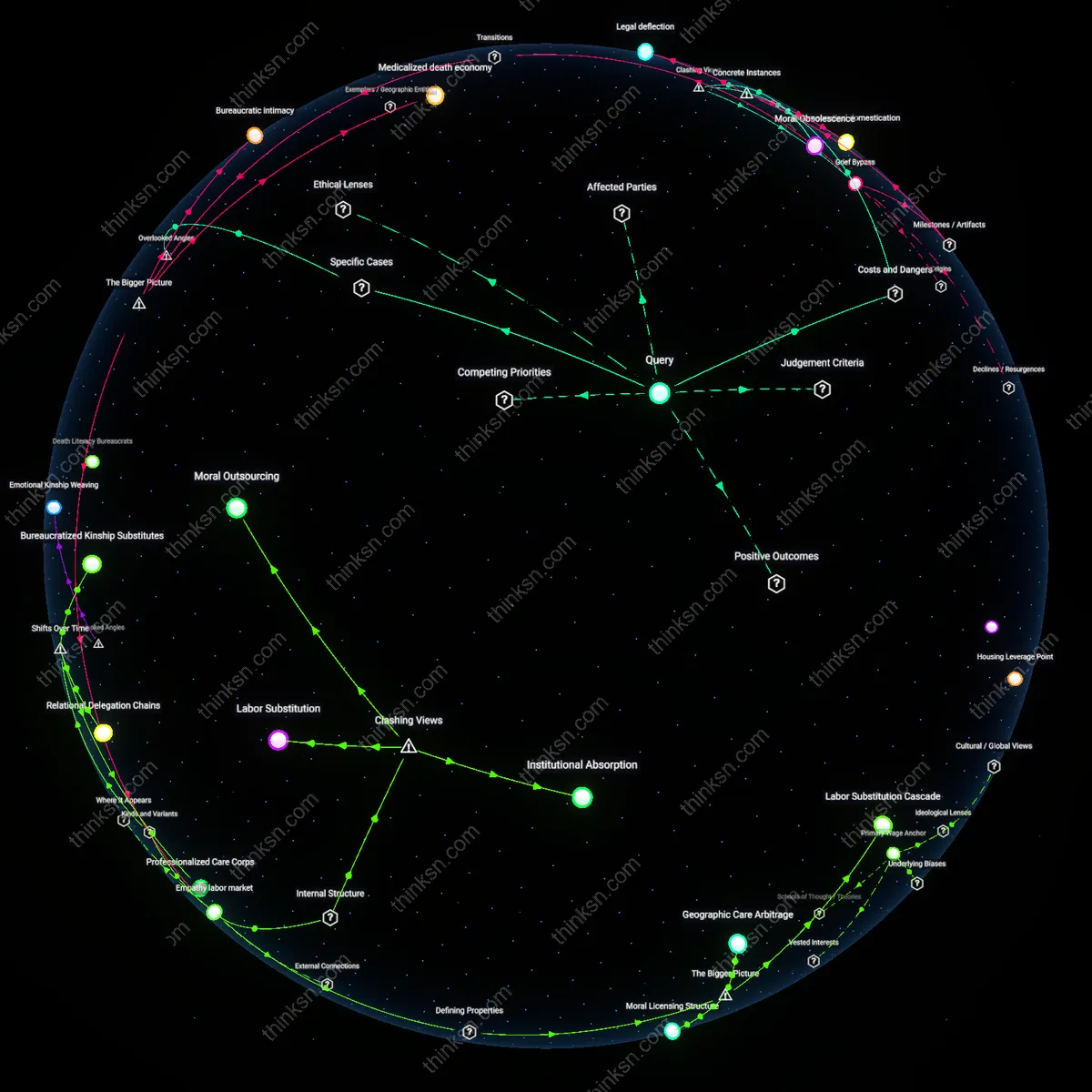
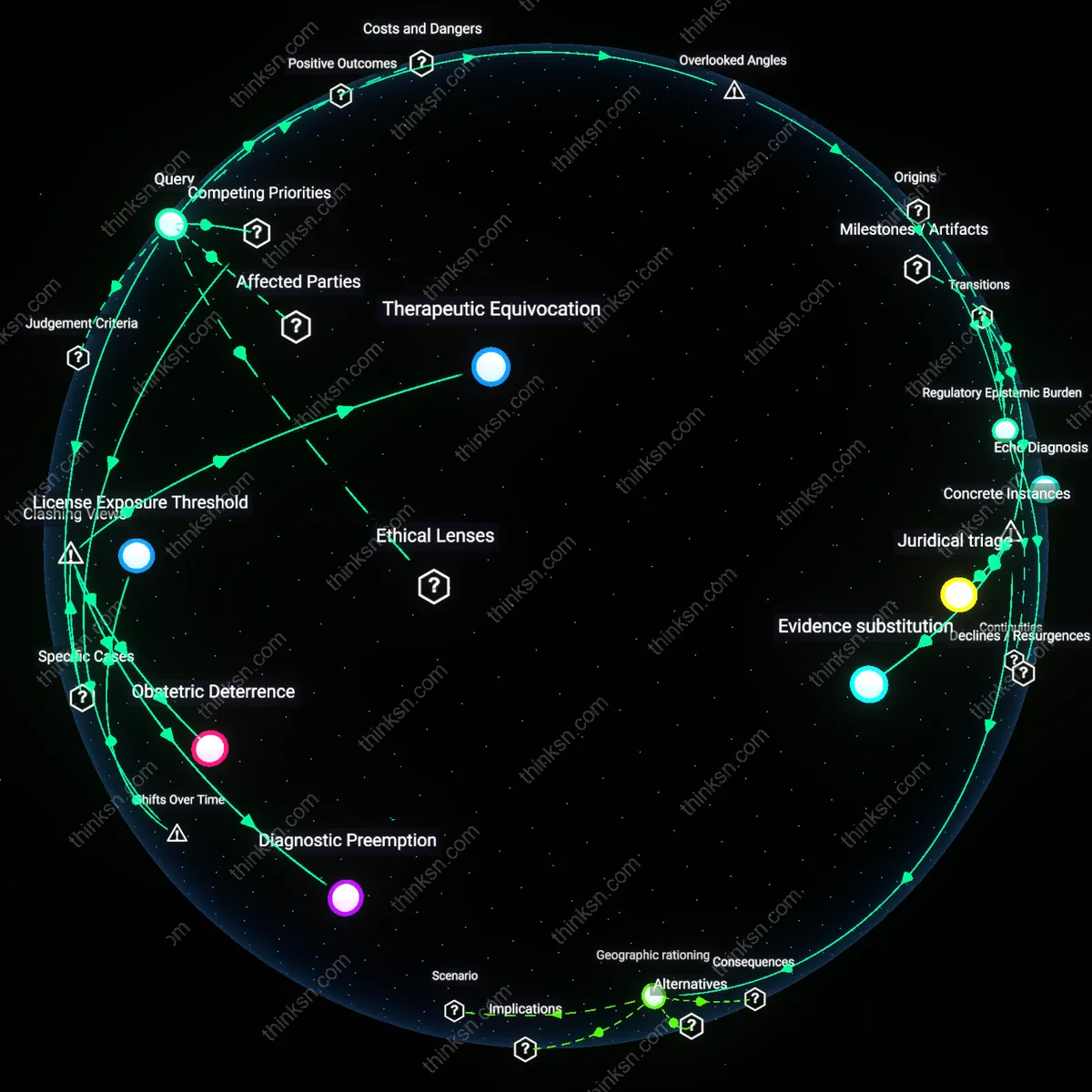
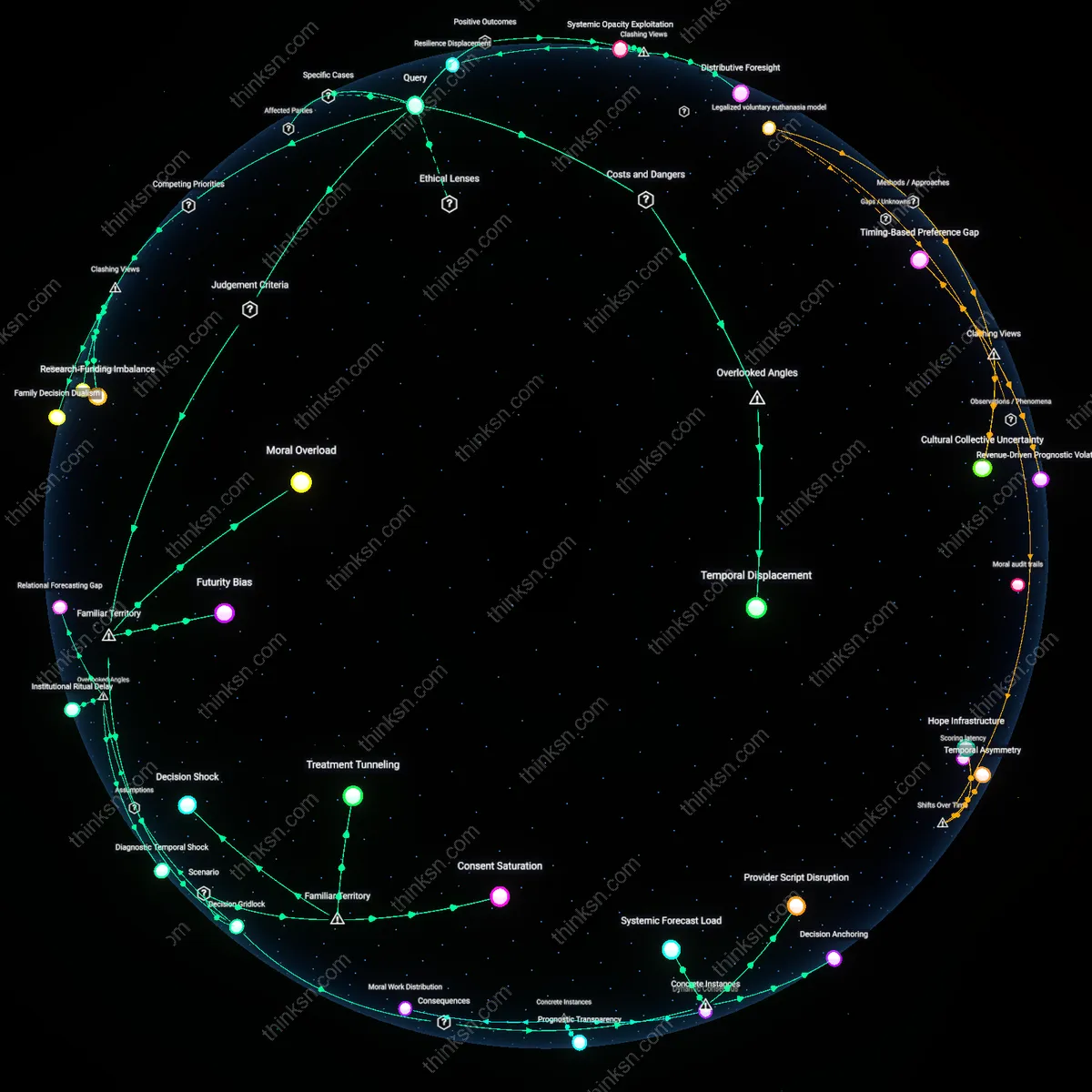
Analysis reveals 13 key thematic connections.
Key Findings
Utilitarian triage framing
The New York City Department of Health in March 2020 released ventilator triage guidelines that operationalised the adage 'plan for the worst but hope for the best' by converting the uncertainty of each patient’s prognosis into a scoring algorithm to prioritise ventilators for those most likely to survive. Hospital administrators, ICU physicians, and the patients’ families were bound by this numeric hierarchy, turning the qualitative ambiguity of end‑of‑life outcomes into a utilitarian calculus that eliminated individual values from the decision. The analytic significance lies in how the policy reframed a spectrum of uncertain outcomes as a binary allocation tool, thereby obscuring but also reducing complex uncertainty to a defensible protocol. What is non‑obvious is that the adage’s seemingly reassuring phrasing actually hid the moral complexity behind a convenient algorithm that displaces personal hope for the best with statistical survival probabilities.
Legalized voluntary euthanasia model
After the 1997 Oregon Death with Dignity Act, physicians used the adage to frame end‑of‑life decision making, presenting the inevitable decline as the worst case while positioning a painless death as the hoped‑for best, thereby embedding uncertainty within a clear legal framework. A 52‑year‑old man with pancreatic cancer became the first patient to legally obtain a lethal prescription under the Act, and the court‑dated guidance that followed outlined explicit criteria for suffering, prognosis, and consent. The resultant legal model made uncertainty explicit—timing and intensity of decline—while offering a deterministic pathway for choosing euthanasia, and it proved analytically significant in legitimising patient autonomy under regulated conditions. This demonstrates how the adage helped create a structured, yet potentially simplistic, legal scaffold that simultaneously clarified and constrained the spectrum of uncertainty in terminal care.
Palliative discharge metric
NICE’s 2015 guidelines for hospice discharge in UK nursing homes introduced a 72‑hour mortality estimate that applied the adage by treating the impending death of a patient as the worst case while aspiring to a best‑possible comfort‑focused transition. Geriatricians, hospice coordinators, and families were guided to assume a linear, time‑bound decline, which streamlined resource allocation but narrowed the conversation to a single numeric endpoint. The analytic significance is that the metric reduced the multidimensional uncertainty surrounding post‑discharge quality of life to a single threshold, thereby simplifying decision making at the cost of overlooking broader psychosocial variables. What is underappreciated is that this framing turned a deeply personal uncertainty into an institutionally defensible protocol, arguably obscuring other risks and values that might have been considered in a more open discussion of end‑of‑life options.
Moral Overload
The advice to 'plan for the worst but hope for the best' hinders end-of-life decision making by imposing a moral expectation that families must simultaneously prepare for catastrophic outcomes while sustaining optimism, placing emotional and ethical burdens on patients and caregivers in hospital settings. This duality amplifies guilt when hopes fail, especially in U.S. healthcare contexts where personal responsibility is emphasized, making systemic failures like insurance gaps or uneven palliative access feel like individual shortfalls. The non-obvious consequence is that the phrase naturalizes an unsustainable emotional labor as a virtue, masking how institutional deficits are internalized as personal moral tests.
Decision Gridlock
This advice impedes timely end-of-life planning by encouraging deferral through ambiguity, as individuals in countries like Canada or the U.K. delay completing advance directives or DNR orders while waiting to 'see how things go,' mistaking hope for strategy. The mechanism operates through primary care systems where open-ended reassurance replaces concrete contingency planning, allowing uncertainty to function as a default path rather than a problem to resolve. What’s overlooked is that the phrase legitimizes procedural inertia under the guise of resilience, turning systemic underfunding of geriatric and palliative infrastructure into an invisible enabler of indecision.
Futurity Bias
The maxim distorts end-of-life priorities by privileging hypothetical worst-case scenarios—such as prolonged coma or extreme interventions—over present autonomy, particularly in settings like nursing homes in Australia or Germany where risk-averse protocols dominate care planning. It elevates speculative suffering into policy-relevant risk categories, shaping clinical decisions toward defensive medicine rather than patient-centered values. The underappreciated effect is that it embeds a cultural preference for imagined futures into tangible outcomes, displacing lived experience with prophylactic pessimism that serves institutional risk management more than individual dignity.
Resilience Displacement
Planning for the worst while hoping for the best actively enhances end-of-life decision making by institutionalizing emotional resilience among family caregivers in high-stress hospital environments, particularly within California’s palliative care networks, where structured advance care planning protocols anchor expectations in worst-case scenarios while preserving space for optimistic dialogue—this dual framing reduces decisional regret and increases adherence to patient autonomy, revealing that the strategy’s true function is not to predict outcomes but to distribute psychological burden across a network of surrogates, a mechanism overlooked when the advice is judged solely for its epistemic clarity.
Systemic Opacity Exploitation
The counsel to plan for the worst but hope for the best undermines end-of-life decision making by enabling institutions like for-profit hospice chains in the U.S. South to exploit systemic uncertainties around prognosis and funding eligibility, using the veneer of preparedness to defer difficult conversations about care ceilings while billing Medicaid for prolonged, marginal treatments—this bait-and-switch transforms the advice into a risk management shield for providers rather than patients, exposing that its rhetorical flexibility often serves to legitimate opacity rather than mitigate it, particularly where profit incentives align with procedural compliance over clinical transparency.
Distributive Foresight
Far from obscuring uncertainty, the maxim 'plan for the worst but hope for the best' improves collective decision-making capacity in Indigenous community health settings—such as those governed by Navajo Nation’s Home Care Services—by decentralizing prognostic authority from clinicians to extended kin networks, where worst-case planning activates communal resource pooling while best-case hopes sustain cultural continuity, demonstrating that the advice functions not as a cognitive strategy for individuals but as a scaffold for intergenerational care coordination, a role invisible when analysis assumes decision making is confined to medicalized, individual-centric models.
Temporal Displacement
Advising patients to 'plan for the worst but hope for the best' actively delays concrete decision-making by deferring agency to a speculative future crisis, thereby increasing the likelihood of unwanted interventions in acute care settings. This delay functions through the psychological mechanism of anticipatory coping, where the perceived need to preserve hope inhibits timely engagement with palliative planning—especially among older adults in primary care pipelines in the U.S. Medicare system—leading to disproportionate ICU admissions during decompensation events. What is overlooked is not just emotional resistance but a structural misalignment between the temporality of bureaucratic planning (which assumes linear progression) and the lived experience of decline, where 'planning' becomes a ritual deferral rather than actionable foresight.
Research‑Funding Imbalance
The adage pushes policymakers to allocate a disproportionately large proportion of end‑of‑life budgets toward worst‑case preparedness, thereby eclipsing hope‑driven research. Government health committees, under the guise of risk mitigation, earmark a majority of the palliative care fund for staffing, equipment, and hospice coordination, while cutting the percentage available for drug trials targeting disease modification. This zero‑sum allocation masks the inherent uncertainty in novel therapies, rendering the policy stance opaque and skewing public expectations toward inevitability rather than possibility.
Family Decision Dualism
The adage forces families to choose a binary path—either embrace worst‑case acceptance or cling to hopeful treatment—trading the nuanced handling of uncertainty for a psychologically simplified lockstep. Counseling teams recount how patients who hold out for aggressive intervention defer advance directives, while those prepared for hospice surrender them prematurely, viewing the decision as fixed. Consequently, the emotional uncertainty surrounding disease progression is obscured, as families navigate a disjointed narrative that denies the spectrum of lived experience.
Protocol Rigidity Bias
In clinical settings, the adage engrains a default to rigid emergency protocols, converting uncertainty into a predetermined worst‑case script that limits adaptive care. Intensive care physicians often preset ventilator settings and code status orders premised on the assumption that deterioration is imminent, so any mid‑course change is suppressed in favor of procedural certainty. This protocol rigidity effectively eliminates genuine prognostic variability from decision dialogues, rendering uncertainty invisible and enforcing a zero‑sum trade‑off between preparedness and personalized treatment.