Is Remote Work with No Promotion Path a Rational Choice?
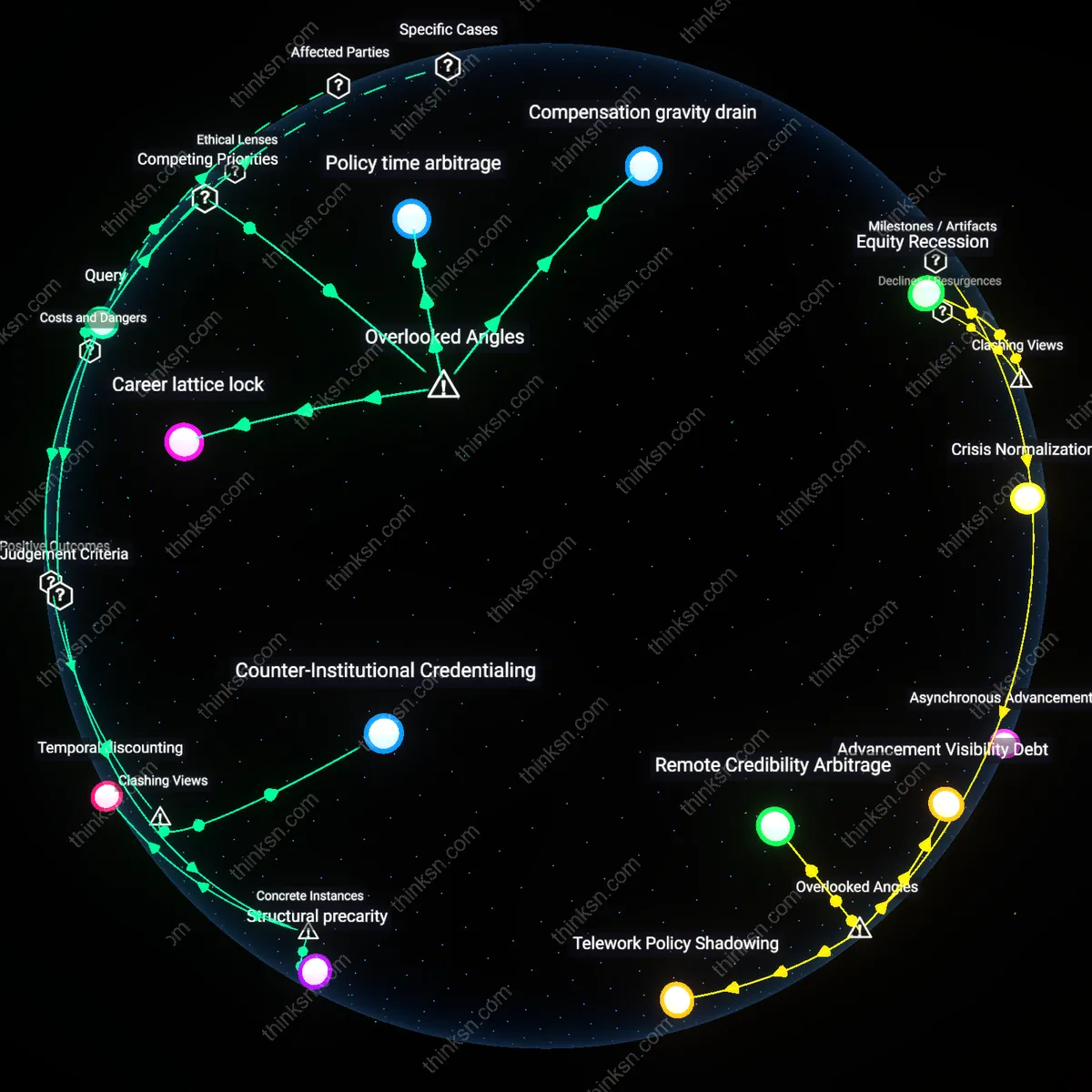
Analysis reveals 8 key thematic connections.
Key Findings
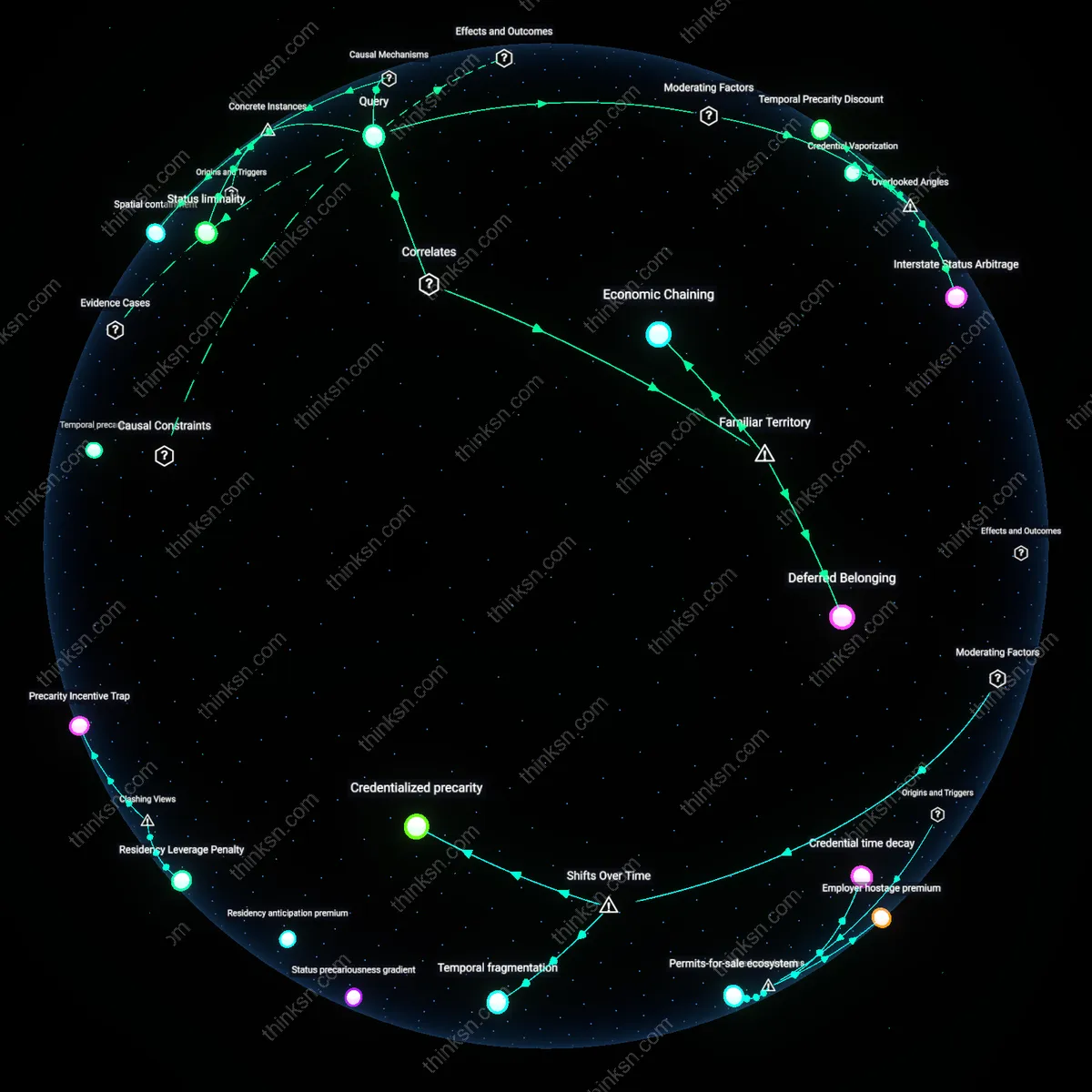
Structural precarity
It is irrational to accept a remote role without a promotion path because organizational power is concentrated in co-located hubs, as seen at Google between 2020–2023, where remote employees were systematically excluded from high-visibility project allocations made informally in Mountain View offices, revealing that proximity perpetuates career access through uncodified social capital networks rather than meritocratic evaluation.
Temporal discounting
It is rational to accept a remote role without a promotion path if personal autonomy outweighs hierarchical advancement, exemplified by Dropbox’s 2021 shift to 'Virtual First' policy, where employees retained flat structures but gained control over work design, demonstrating that workers will trade vertical growth for immediate agency when institutional trust in future equity is low and self-determination becomes the dominant utility metric.
Policy lag
It is irrational to assume future policy changes will correct promotion imbalances because institutional reform follows political alignment, not moral inevitability, as evidenced by the U.S. federal government’s delayed adoption of telework equity standards after the 2010 Telework Enhancement Act, where regulatory implementation was stalled for over a decade by civil service bargaining units protecting on-site seniority privileges, exposing that formal policy often lags behind operational change due to embedded jurisdictional resistance.
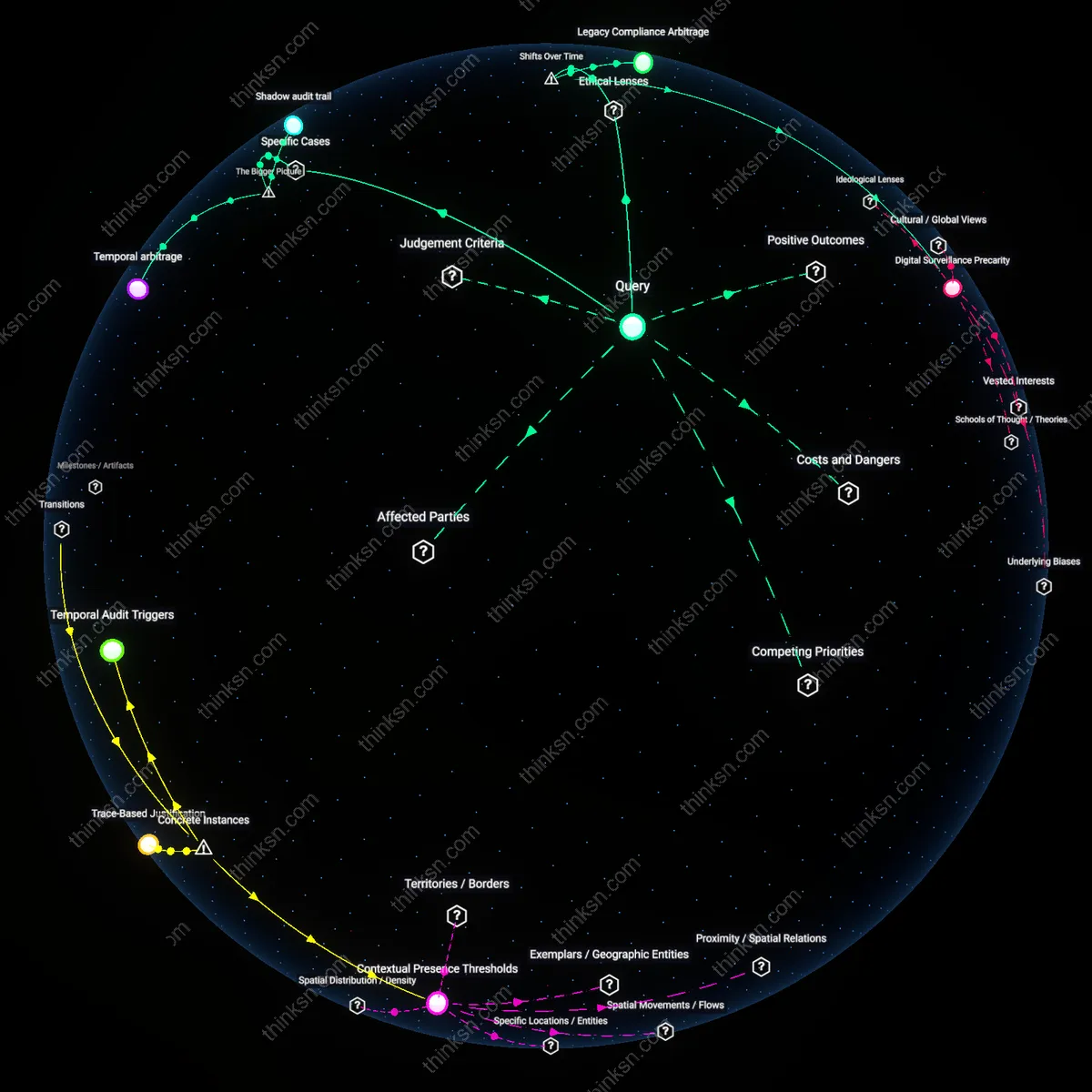
Strategic Temporal Arbitrage
Yes, it is rational to accept a remote role without a promotion path when framed as a deliberate time-bound investment in geographic and temporal autonomy, which workers at companies like Shopify or Doist exploit to accumulate compounding personal capital—skills, networks, health—while awaiting structural shifts; this approach treats organizational inertia not as a flaw but as a stable backdrop against which individuals can optimize for long-term optionality, challenging the dominant narrative that career progress must be linear and institutionally validated, and instead positions the worker as a sovereign actor in a portfolio career.
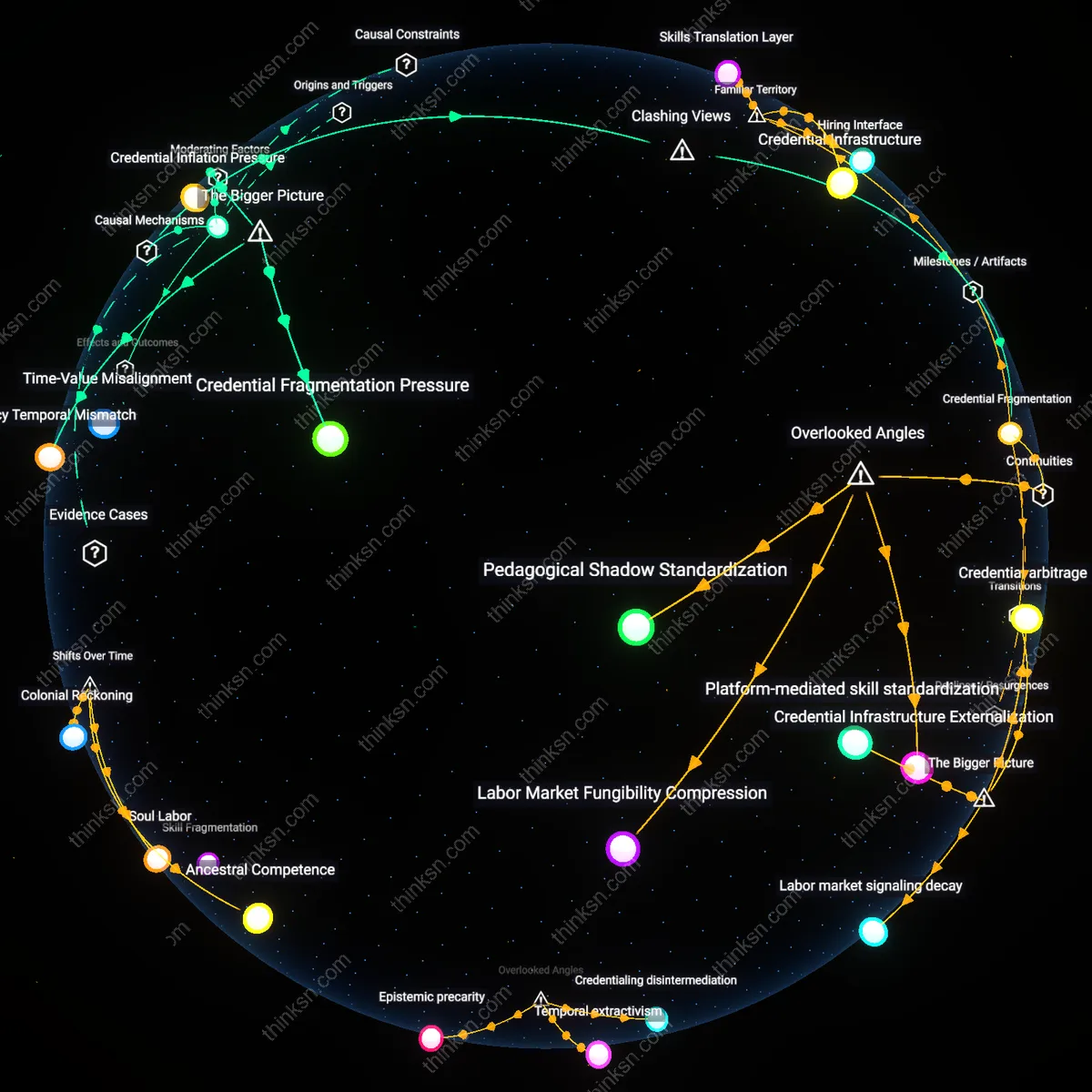
Counter-Institutional Credentialing
Yes, it is rational to accept a remote role without a promotion path because the constraints of static roles in decentralized organizations like Protocol Labs or Base incentivize direct workers to build external-facing reputations through public writing, open-source contributions, and community leadership, which generate transferable credibility that often outweighs internal titles in knowledge economies; this reversal of value-creation—where influence flows outward before it is recognized inward—exposes a growing misalignment between legacy HR systems and emergent professional power networks grounded in digital reputation rather than organizational hierarchy.
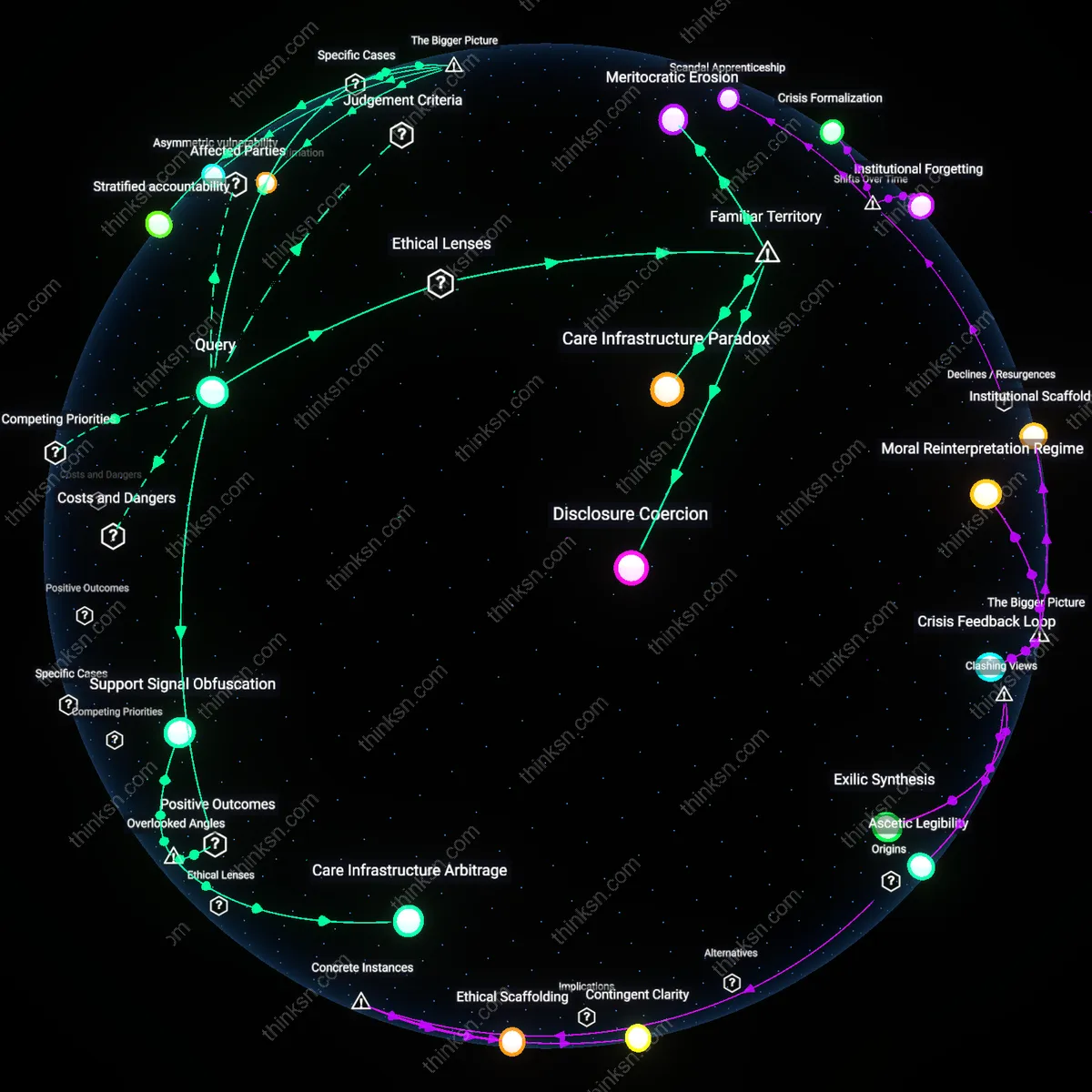
Career lattice lock
It is irrational to accept a remote role without a promotion path because remote employees are often excluded from informal sponsorship networks that steer high-visibility projects in hybrid headquarters hubs like Austin and Munich. These networks operate through spontaneous coordination among colocated managers, making remote workers dependent on deliberate inclusion—which most leaders fail to practice—thus trapping them in lateral career mobility despite equal performance. The overlooked dynamic is not isolation but asymmetric access to ad hoc decision circuits, which reframes immobility as a structural integration flaw rather than individual merit deficiency.
Policy time arbitrage
It is irrational to bet on future policy corrections because organizational inertia favors visible equity fixes over invisible equity debts, delaying structural reforms until attrition forces action. Remote workers’ stalled progression becomes a backgrounded cost absorbed by individuals, while leadership treats it as a low-urgency issue compared to real-time office reactivation metrics. This creates a temporal misalignment where employees bear immediate career penalties against deferred, uncertain gains—exposing how time itself becomes a contested resource in equity planning, which standard assessments ignore by assuming policy responsiveness is symmetric across time.
Compensation gravity drain
Accepting a remote role without advancement potential erodes long-term earnings because salary bands for non-promotable roles are rarely adjusted upward outside of rank progression, even when remote incumbents absorb expanded responsibilities. Without title-based leverage, workers lack negotiation gravity in compensation reviews, causing their pay to drift below market-competitive rates over time despite sustained output. The hidden mechanism is that promotion cycles function as institutionalized repricing events, and their absence turns static roles into economic sinks—an underrecognized financial corrosion that bypasses traditional job satisfaction metrics.