Is Broad Skill Diversification or Deep Expertise Better for Future Proofing?
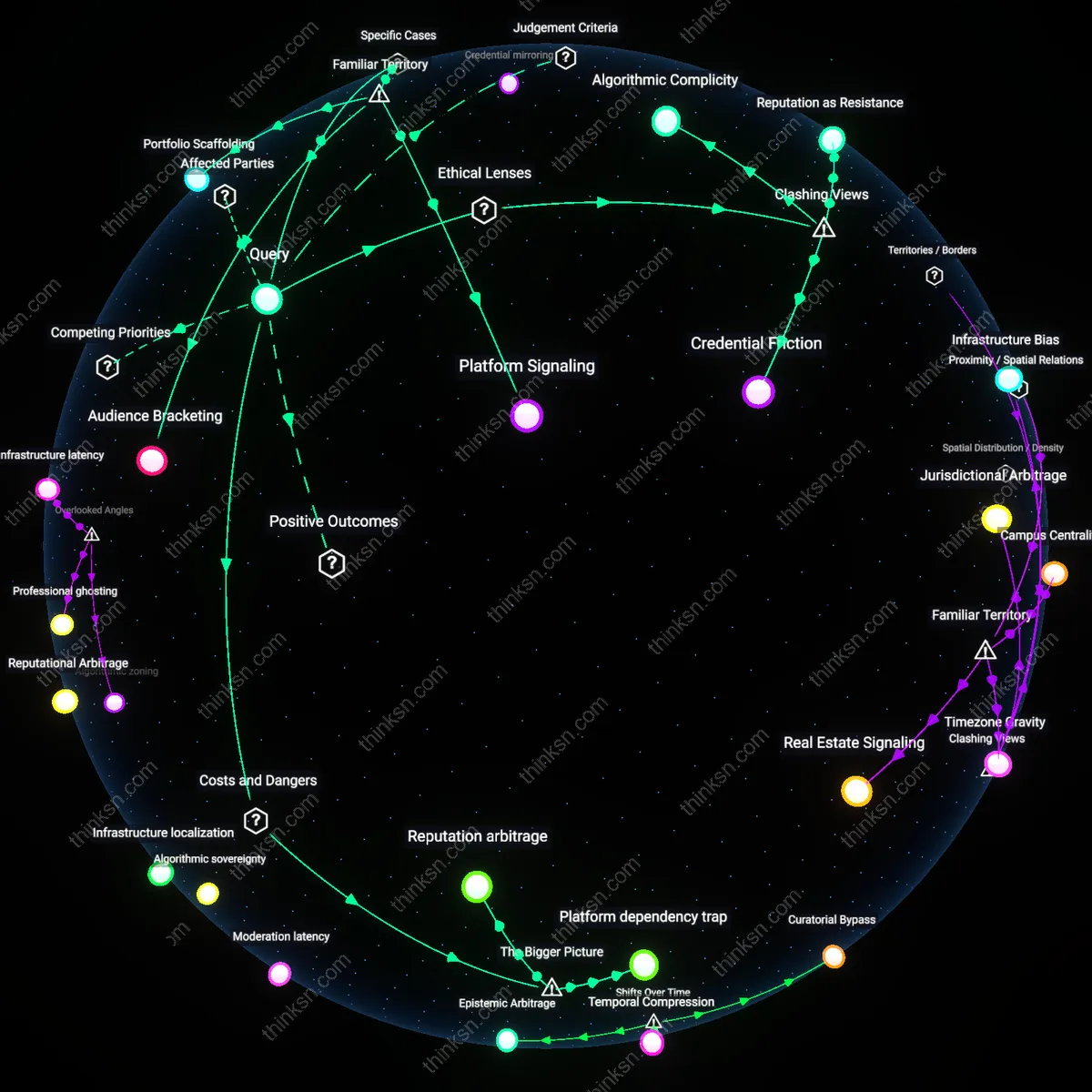
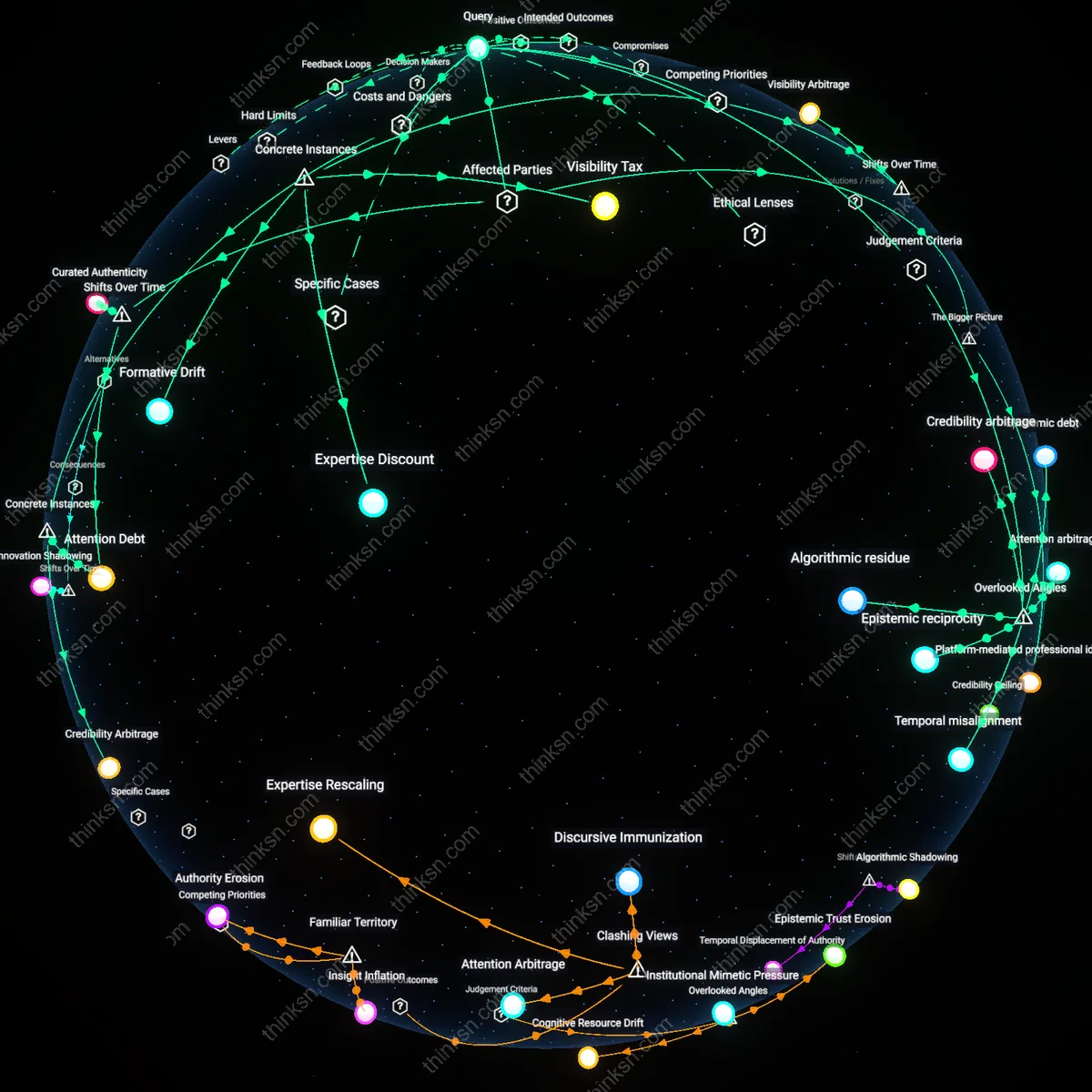
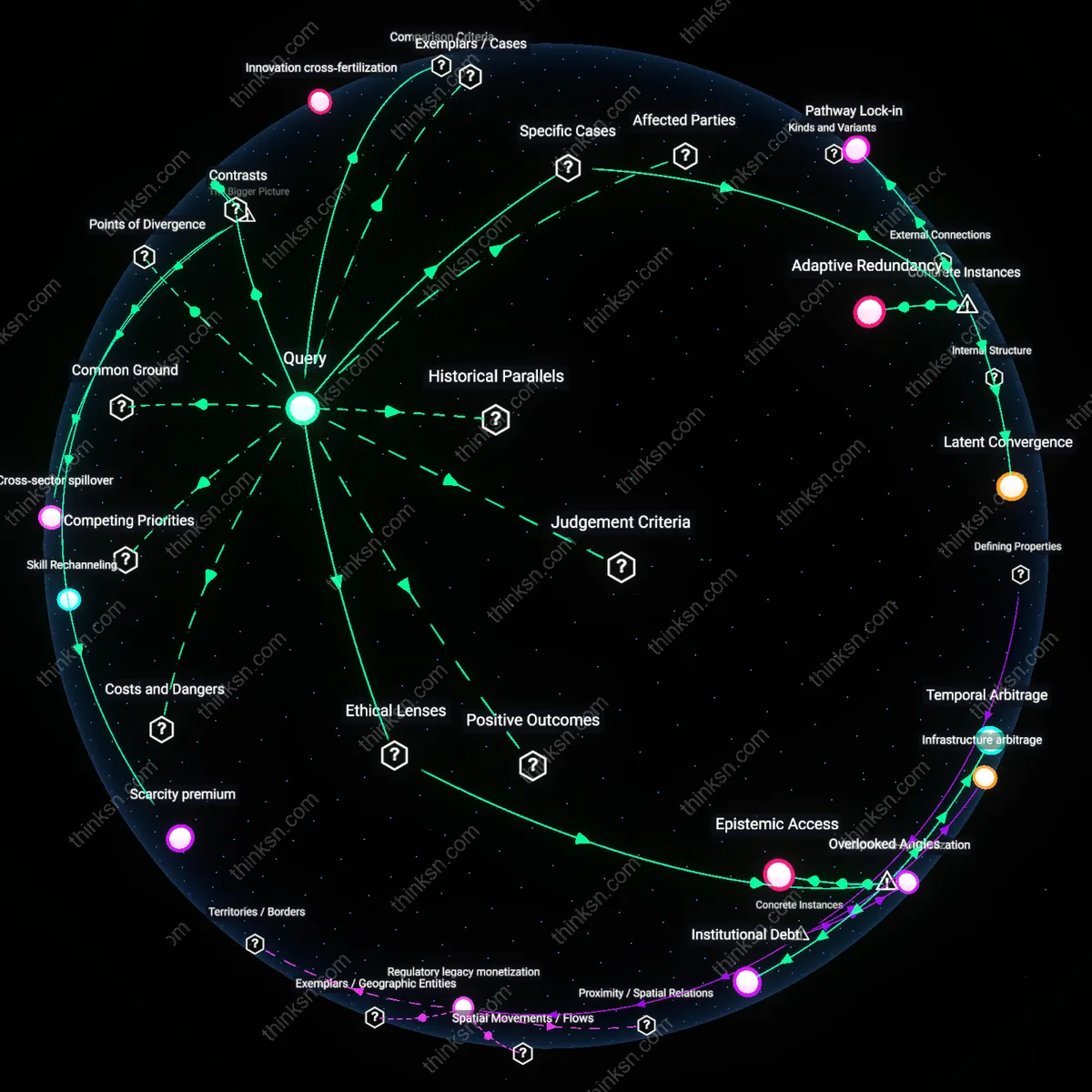
Analysis reveals 12 key thematic connections.
Key Findings
Portfolio diversification
A broad portfolio of side projects establishes a risk‑weighted opportunity pool that cushions a professional against the vanishing revenue streams of a shrinking industry, delivering higher aggregate expected returns than concentrating expertise in a niche that is steadily eroding. In gig‑based economies, freelance platforms enable many low‑barrier projects to run concurrently, so the probability of total income loss drops sharply. This dynamic reveals that a diversified skill set is not an indulgence but a defensive hedge orchestrated across independent labor markets, a nuance often overlooked when comparing breadth vs. depth.
Scarcity premium
When a niche within a contracting sector remains critical—such as compliance for legacy banking systems—the scarcity of qualified talent drives premium salaries that exceed the cumulative earnings of many side projects. Specialists become gatekeepers in a micro‑market where few entrants possess the required certification, turning deep expertise into a high‑margin commodity. Thus, the value of niche mastery is not merely its depth but its capacity to command a scarcity premium that side projects cannot replicate.
Cross‑sector spillover
Side projects that operate at the intersection of adjacent industries serve as laboratories for cross‑sector spillover, enabling the practitioner to spot and cultivate underserved demand; this can birth entirely new markets that absorb technological obsolescence of the shrinking industry. For example, a developer expanding from mobile app prototyping into IoT firmware can uncover security gaps in home automation, creating a revenue stream that did not exist in the original domain. The insight here is that breadth fosters serendipitous innovation, while deep niche work, isolated by its focus, often misses the riverbanks where new opportunities flow.
Income diversification
A broad portfolio of side projects is more valuable for job stability in a shrinking industry than deep niche expertise. Small‑business owners and freelancers who launch multiple micro‑ventures spread revenue across differing customer segments, so the collapse of one product does not wipe out income; in a declining niche, specialists funnel all effort into a single, contracting demand curve, making their livelihoods vulnerable to market contraction. The non‑obvious part is that even when the core market shrinks, diversified projects can tap emerging adjacent needs, thereby sustaining cash flow for the core operation.
Innovation cross‑fertilization
Cross‑disciplinary side projects accelerate breakthrough ideas more than deep niche focus does. Creators who juggle engineering, design, and marketing projects routinely encounter disparate problem spaces, forcing them to transfer techniques across domains—a cognitive hopping process that has historically birthed innovations such as the smartphones emerging from independent app developers; a specialist confined to a narrowing field lacks this cross‑fertile environment. The subtle advantage is that the accidental application of a UI pattern from a mobile app to a hardware prototype can create a new product category precisely when the original niche is in decline.
Brand résumé
A publicly demonstrable set of side projects gives candidates a versatile personal brand that recruiters prize over specialized credentials. Hiring managers in contracting industries scan portfolios on GitHub, Behance, or personal blogs, judging a candidate’s initiative, problem‑solving breadth, and ability to learn new tools; a certification in a fading specialty may carry little weight, whereas a track record of adaptive micro‑gigs signals future resilience. What people rarely recognize is that a dynamic portfolio serves as a real‑time résumé that updates as industry trends shift, providing evidence of continuous growth.
Temporal Arbitrage
Diversifying skills through multiple side projects generates greater long-term value by enabling individuals to exploit temporal arbitrage in labor markets, where skills cultivated across domains allow strategic repositioning ahead of systemic shifts in valuation. This advantage emerges not from breadth alone but from the capacity to anticipate and migrate toward emerging demand windows before institutional structures formalize training or credentialing, as seen in tech-adjacent independents who transitioned from analog design to AI-augmented workflows before universities established curricula. What is overlooked is that side projects function as early-warning sensors for market inflection, not just skill reservoirs—thus diversification becomes a form of epistemic leverage within an evolving economy. This reshapes the standard narrative that positions specialization as inherently more valuable under stability, revealing instead that instability rewards those with distributed footholds.
Institutional Debt
Deepening expertise in a declining niche accumulates institutional debt, a liability formed when specialized knowledge becomes embedded in rigid systems that resist adaptation due to sunk-cost dependencies, such as legacy infrastructure or regulatory capture. In fields like coal-based energy engineering or analog telecommunications, experts remain indispensable for maintenance but are structurally excluded from innovation cycles, locking them into roles with diminishing agency despite high technical mastery. The overlooked dynamic is that institutional debt doesn’t merely erode individual mobility—it actively penalizes foresight by rewarding compliance with outdated norms, thereby making deep expertise a form of tacit complicity in stagnation, particularly under legal doctrines like 'path dependency' in administrative law that reinforce continuity over transformation.
Epistemic Access
Side projects confer epistemic access—the ability to enter and influence knowledge communities that are otherwise closed to outsiders—by generating lived experience that bypasses formal gatekeeping mechanisms tied to disciplinary purity. For example, biohackers with hybrid backgrounds in biology, coding, and maker-culture side projects have influenced synthetic biology policy discussions in the EU despite lacking traditional academic appointments, leveraging interdisciplinary credibility to shape regulatory discourse. The non-obvious mechanism is that value arises not from the skills themselves but from their role as social passports, revealing that the standard dichotomy between depth and breadth misses how legitimacy in innovation ecosystems often depends on symbolic participation rather than technical precision.
Adaptive Redundancy
The Norwegian Government Pension Fund Global sustains long-term value by diversifying across geographies, sectors, and asset types while maintaining core expertise in sovereign wealth management, allowing it to absorb systemic shocks in specific industries like fossil fuels without eroding its foundational mandate; this mechanism reveals that distributed engagement across correlated but non-identical domains enables institutional persistence through transition, a dynamic often overlooked in favor of purity of focus.
Pathway Lock-in
Kodak’s continued investment in chemical film expertise, even as digital imaging emerged, demonstrates how deep specialization in a declining technical niche can generate diminishing returns when institutional incentives preserve outdated capabilities; the company’s failure to reconfigure its R&D priorities around digital capture—even after inventing the first digital camera—reveals how mastery in a narrowing domain can suppress transformative adaptation, particularly when identity and capital are tethered to legacy systems.
Latent Convergence
Linus Torvalds’ work on the Linux kernel began as a narrowly focused operating system project but gained enduring relevance because his deep mastery of low-level system architecture enabled unexpected integration into disparate domains—from smartphones to supercomputers—when broader technological shifts aligned; this illustrates how intense specialization in foundational technical layers can yield outsized downstream value when external conditions shift to amplify its applicability, a non-obvious dynamic where depth acts as a stealth form of optionality.