How to Protect Your Child’s Beliefs When School Curriculum Conflicts?
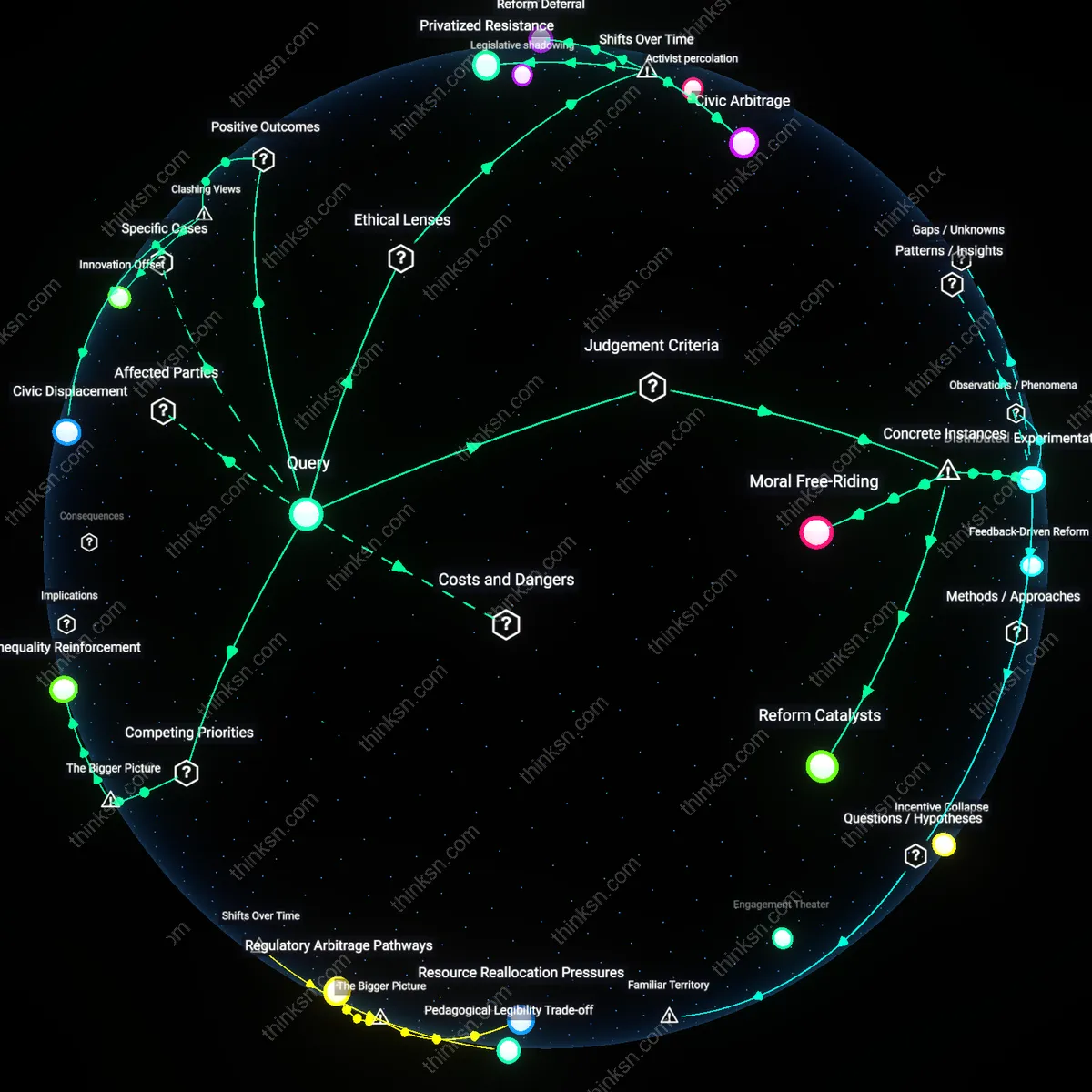
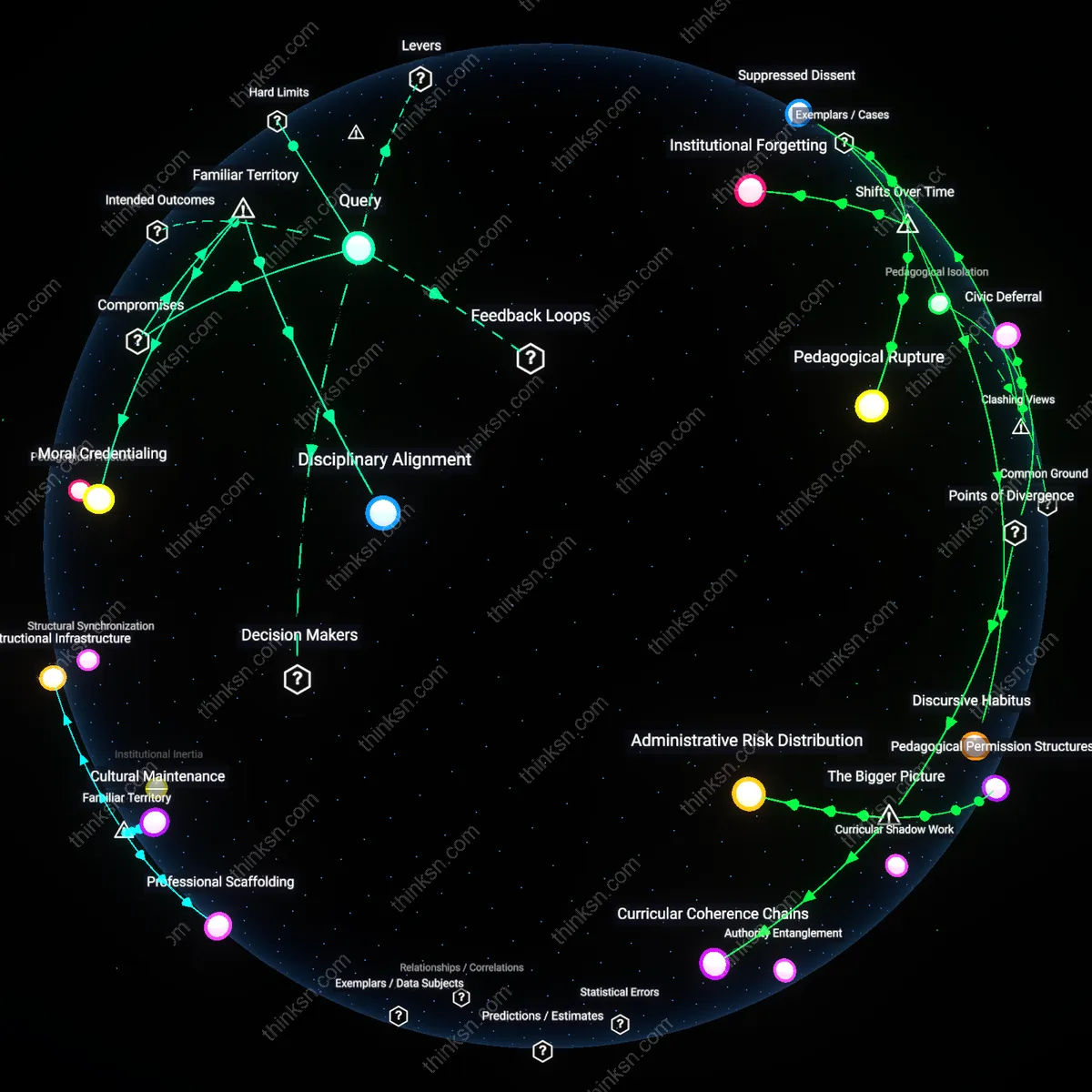
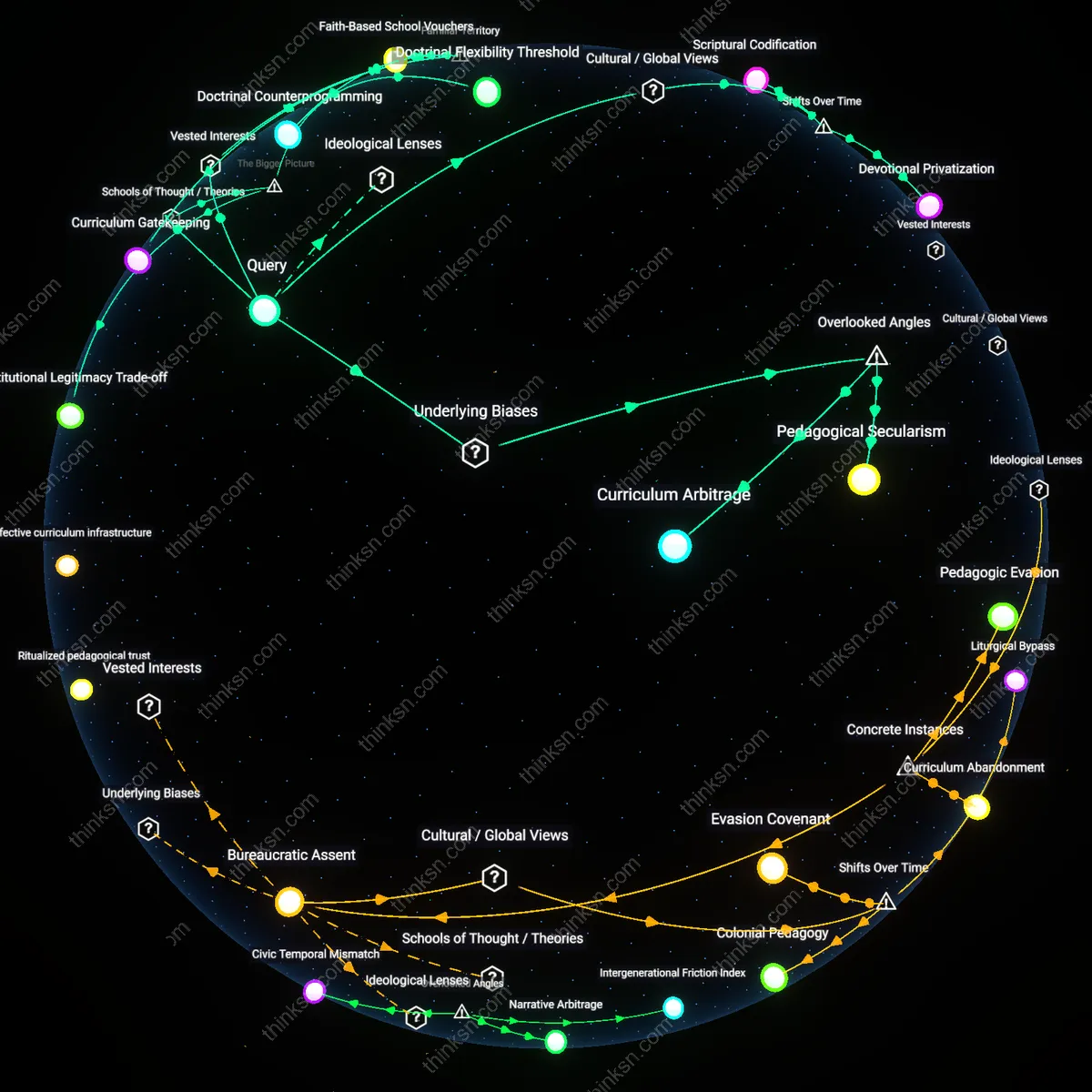
Analysis reveals 12 key thematic connections.
Key Findings
Curriculum Negotiation Space
Parents can preserve religious adherence without rejecting public education by negotiating supplementary at-home instruction that reframes curriculum content through doctrinal interpretation, which sustains community cohesion while accepting limited state-designed curricula. This mechanism operates through parental agential reinterpretation—where caregivers actively mediate classroom learning via faith-based commentary—enabling compliance with compulsory education laws while insulating core belief systems; it is enabled by decentralized household authority over moral pedagogy and grows in significance where state curricula increasingly secularize science and sexuality education, making local theological reconciliation a systemic pressure valve rather than an exception.
Doctrinal Flexibility Threshold
Religious tolerance in schools becomes sustainable when parents perceive the curriculum as violating only peripheral doctrines rather than foundational tenets, thereby activating a cognitive boundary that permits selective engagement. This threshold is managed by religious community leaders who classify which teachings are negotiable (e.g., historical interpretation) versus non-negotiable (e.g., creation accounts), creating a doctrinal triage system that reduces conflict escalation; the dynamic depends on centralized religious epistemologies that authorize such distinctions and is critical in pluralist democracies where religious groups must maintain identity without provoking state exclusion.
Institutional Legitimacy Trade-off
Parents grant schools curricular authority in exchange for demonstrated neutrality, withdrawing consent only when pedagogical practices are perceived as actively hostile rather than merely secular. This exchange hinges on institutional trust maintained through procedural fairness—such as opt-out provisions and inclusive policy consultations—mediated by school boards and parent advisory councils; the consequence is that religious tolerance is less a function of content neutrality than of participatory legitimacy, revealing that systemic stability in education depends more on perceived procedural inclusion than on ideological alignment.
Scriptural Codification
Parents in 19th-century British India navigated curriculum conflicts by appealing to colonial education boards for exemptions based on newly formalized religious texts, as orthodox interpretations of Hindu and Muslim teachings were systematized under colonial administration, which inadvertently created rigid doctrinal boundaries where flexible local practices once prevailed; this shift from oral, regionally diverse religious instruction to fixed scriptural standards enabled parents to claim religious exemptions but also locked beliefs into static forms that could now formally clash with secular schooling—a condition produced not by tradition but by colonial modernity’s standardizing impulse.
Pluralism Bureaucratization
In post-1960s Canada, parents managed curriculum conflicts through state-mediated accommodations under multicultural policy frameworks that emerged after the Royal Commission on Bilingualism and Biculturalism, where educational systems began institutionalizing religious tolerance as procedural consent rather than cultural negotiation, shifting parental agency from community-based resistance to individualized opt-out forms and inclusion protocols; this redefined religious tolerance not as lived coexistence but as administrative compliance, revealing how liberal pluralism transformed belief-based dissent into manageable data points within a managed diversity regime.
Devotional Privatization
In contemporary urban Japan, parents subtly reconcile school curriculum conflicts by relocating religious and ethical formation to after-hours contexts like household rituals or weekend temple schools, a shift accelerated after the 1947 U.S.-led educational reforms that severed State Shinto from public education and recast spiritual development as a private familial duty rather than civic formation, thereby producing a quiet, non-confrontational mode of resistance where religious continuity is preserved not through opposition but through withdrawal from public pedagogy into intimate, domestic spaces.
Pedagogical Secularism
Parents can preserve religious integrity while endorsing school autonomy by treating the classroom as a context-specific secular practice zone where curricular content is provisionally engaged without ontological commitment; this works through public schools’ functional design to depoliticize knowledge by bracketing truth claims into epistemic domains, a mechanism most visible in science education where students learn evolutionary theory without abandoning creationist beliefs. This dynamic is structurally enabled by educational systems that distinguish methodological naturalism from personal faith, a distinction rarely acknowledged in public debates that assume belief must either dominate or be displaced—yet it allows both coexistence and cognitive flexibility, revealing that secular education need not imply secularization of the self. The non-obvious insight is that religious tolerance in schools does not require ideological neutrality but thrives on functional compartmentalization, a reality obscured when conflicts are framed as zero-sum battles over truth.
Curriculum Arbitrage
Parents can navigate belief-curriculum conflicts by strategically deploying their child across multiple educational venues—such as supplementing public school biology with creationist summer camps or dual-enrolling in online faith-based academies—thereby exploiting jurisdictional gaps between state standards and religious oversight. This works through the fragmented governance of U.S. education, where local district mandates coexist with federally unregulated digital and para-educational spaces, enabling families to construct hybrid knowledge pathways that satisfy both academic requirements and doctrinal fidelity. Most analyses assume parents must choose between resistance and compliance, overlooking how mobility across institutional boundaries allows for belief maintenance without direct confrontation; this reveals a hidden market-like logic in education where parents 'arbitrage' curricular inconsistencies to minimize cognitive dissonance for their children. The underappreciated factor is not resistance but redistribution—of time, content, and authority across parallel systems.
Belief Scaffolding
Parents sustain religious continuity amid challenging curricula by anchoring their child’s identity in communal rituals and intergenerational storytelling that operate outside school hours, using practices like Shabbat dinners, Hajj narratives, or catechism circles to reinforce doctrinal belonging through affective repetition rather than propositional defense. This functions through the neuroscience of memory and emotion, where ritualized experiences create durable associative frameworks that can absorb, without rejecting, counter-narratives encountered in biology or history class. Standard discourse focuses on cognitive conflict, assuming belief is primarily intellectual assent, yet the resilience of religious identity often depends on somatic and social reinforcement that makes doctrinal challenges feel peripheral rather than central. This shifts the locus of tolerance from debate to embodiment, exposing how emotional infrastructure, not argumentative victory, maintains belief integrity under curricular pressure.
Curriculum Gatekeeping
Parents should assert control over curriculum access points to filter content conflicting with religious beliefs. School boards and parent committees are strategic sites where guardians leverage procedural rights—such as opting out of sex education or challenging textbook selections—to insert religiously aligned boundaries into public instruction. This mechanism operates through formal policy exceptions and localized education governance, revealing how seemingly neutral administrative procedures become conduits for moral filtering. The non-obvious insight is that curriculum disputes are less about pedagogy than about who holds operational access to the machinery of institutional approval.
Doctrinal Counterprogramming
Religious communities should deploy parallel instruction systems—like Sunday schools or faith-based tutoring—to reframe or offset school-taught concepts deemed incompatible with belief, such as evolution or secular ethics. These institutions function as counter-curricula, using ritual, storytelling, and communal reinforcement to maintain doctrinal coherence in the face of cognitive dissonance from public schooling. The dynamic reveals how religious socialization is increasingly outsourced to supplementary systems designed to anticipate and neutralize mainstream curriculum pressures. What’s underappreciated is that tolerance is not cultivated through classroom compromise but through disciplined, off-campus ideological repair.
Faith-Based School Vouchers
Governments should expand voucher programs to redirect public education funds toward religiously affiliated schools, enabling families to exit public systems whose curricula conflict with their beliefs. Advocacy groups and religious coalitions frame this as equitable access to educational choice, leveraging constitutional arguments about religious freedom to justify state-funded alternatives. This shift transfers curriculum authority from public oversight to faith-aligned institutions, embedding religious doctrine into taxpayer-supported education. The overlooked reality is that tolerance, in this logic, means institutionalizing belief segregation under the banner of parental rights.