Is Paying to Stay Worth It Under Rent Control?
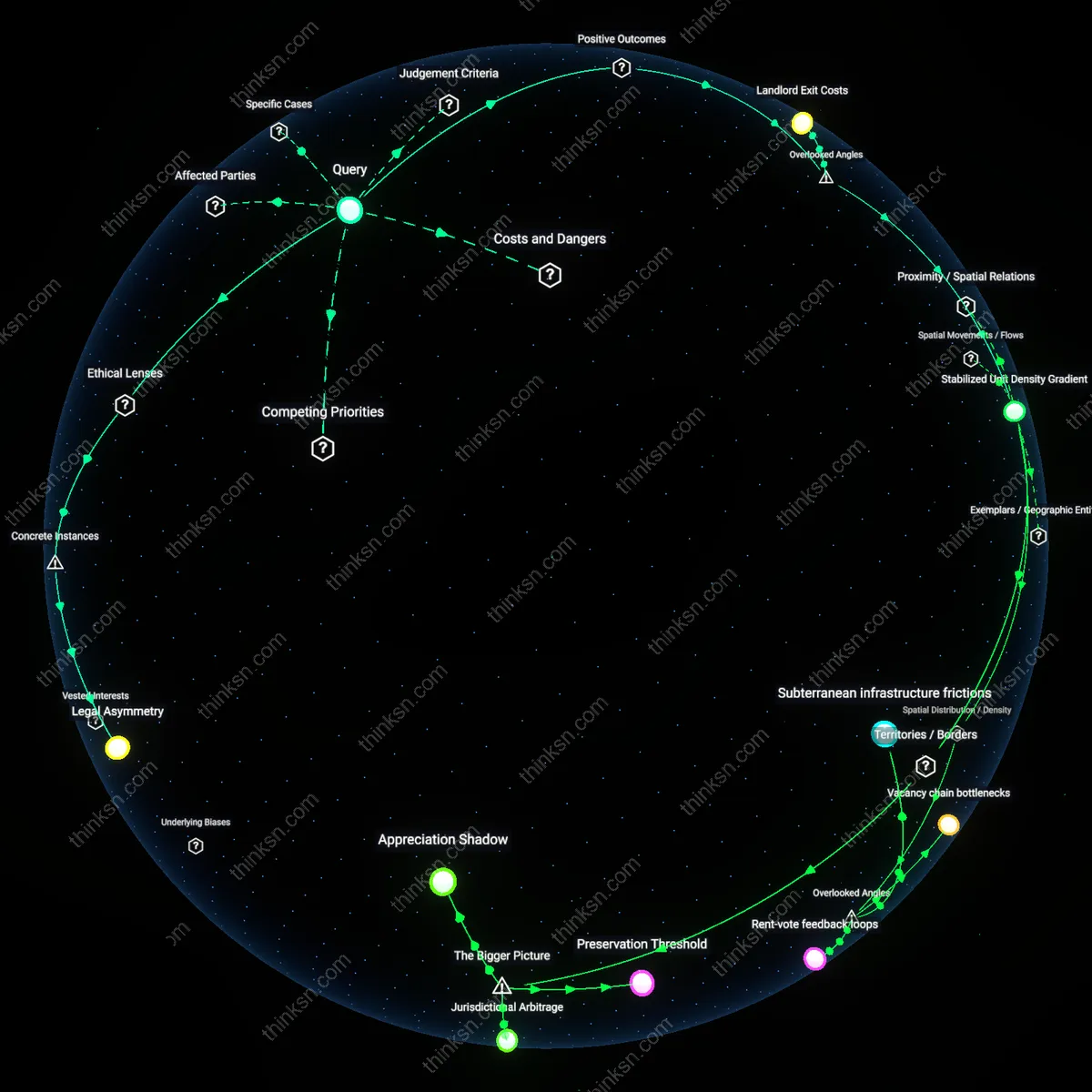
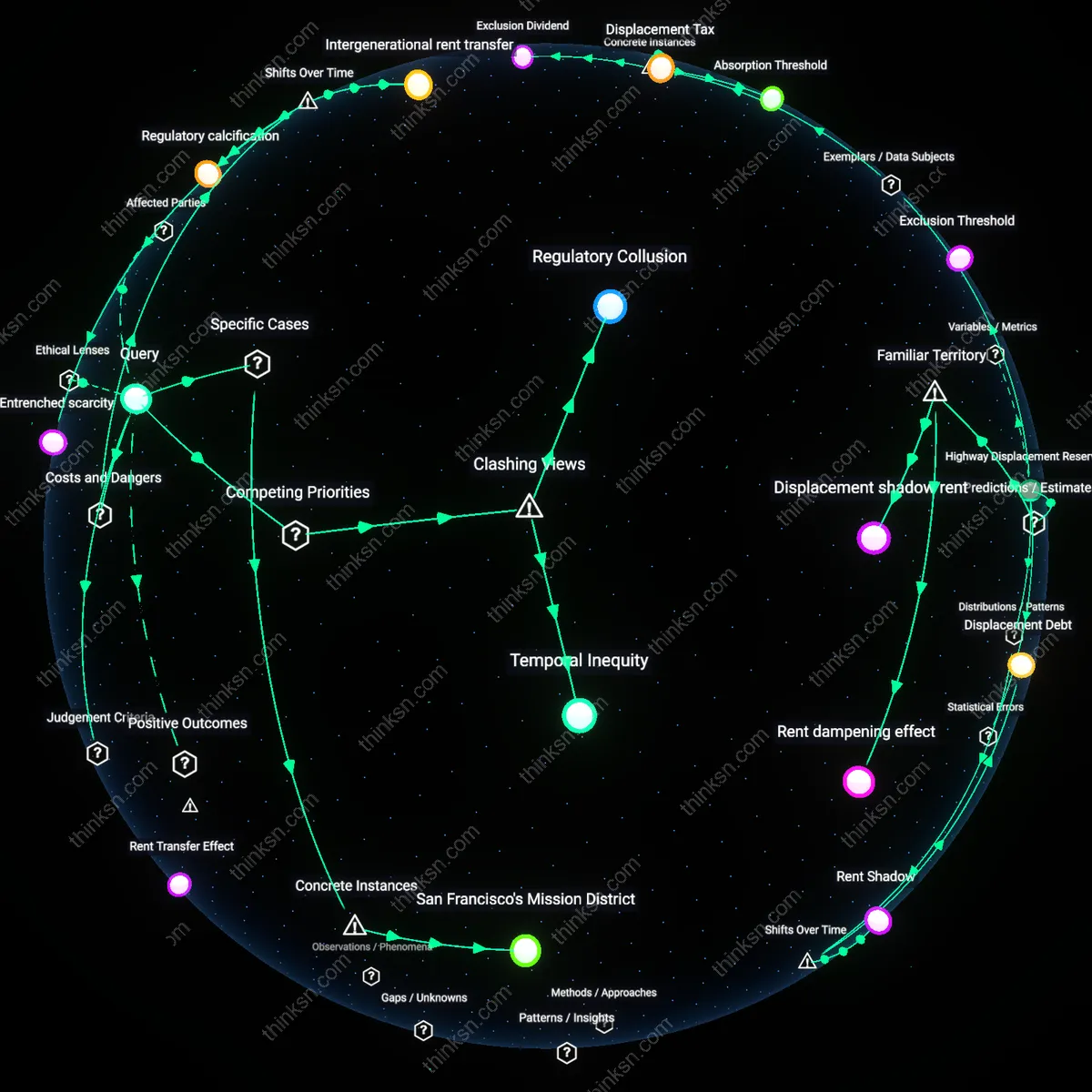
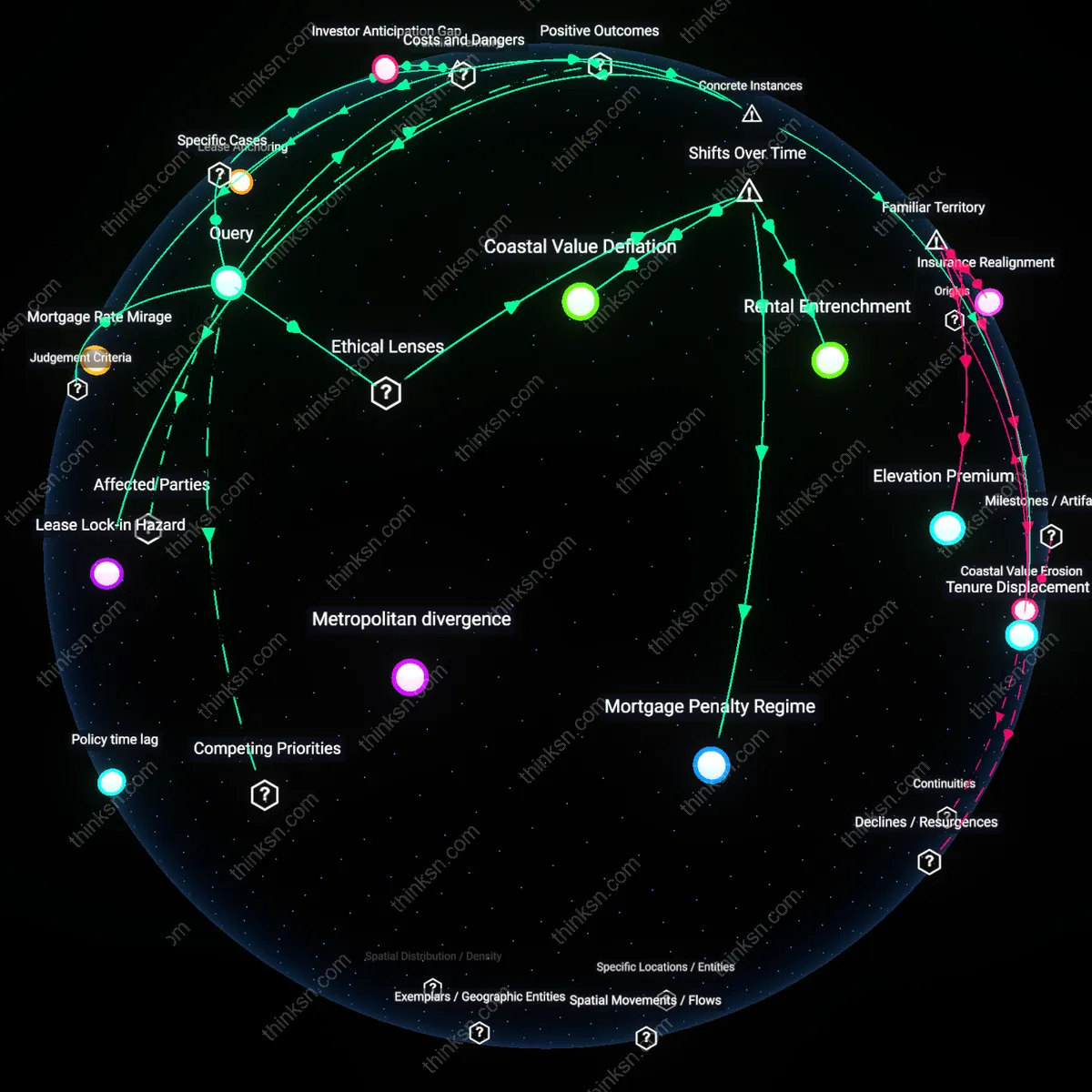
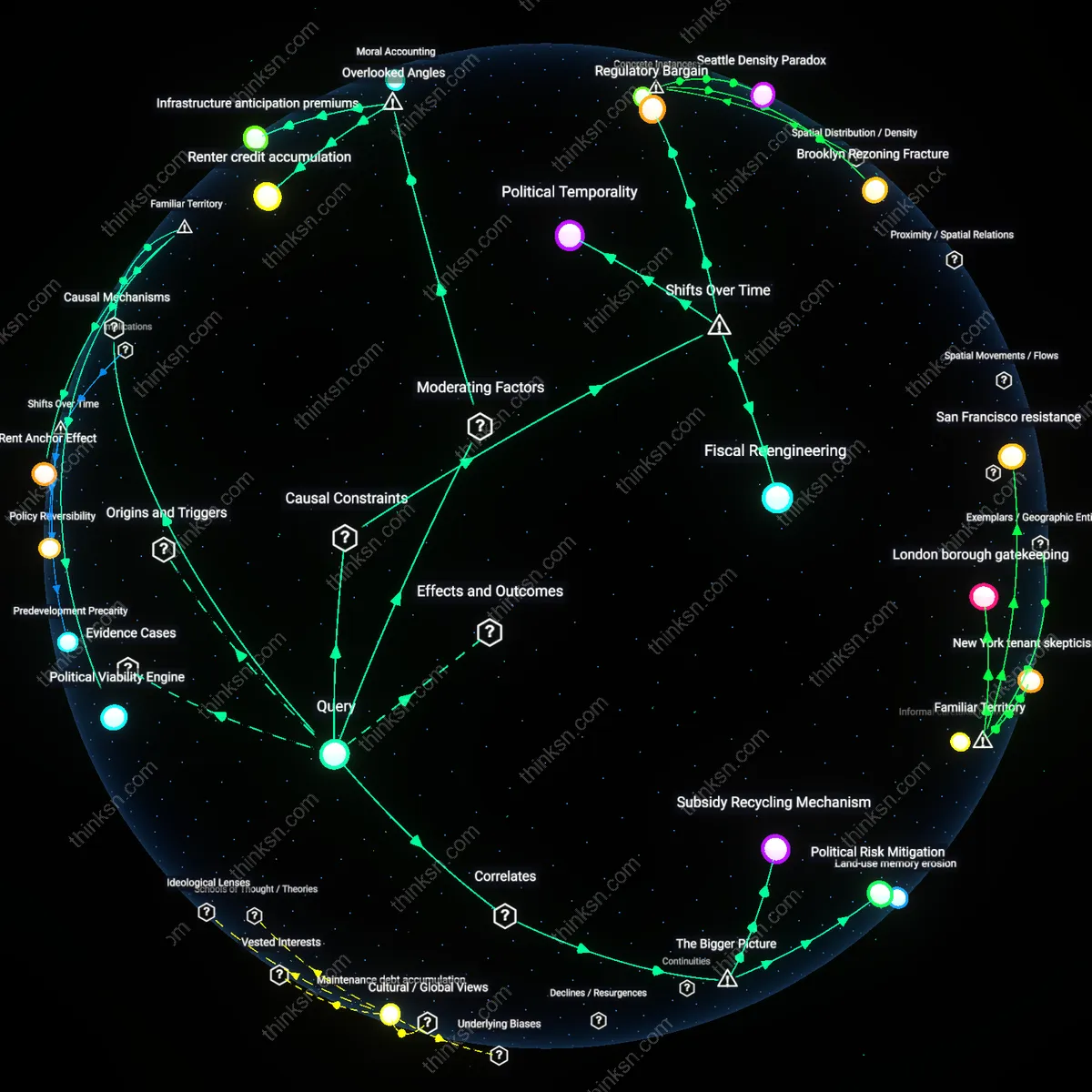
Analysis reveals 5 key thematic connections.
Key Findings
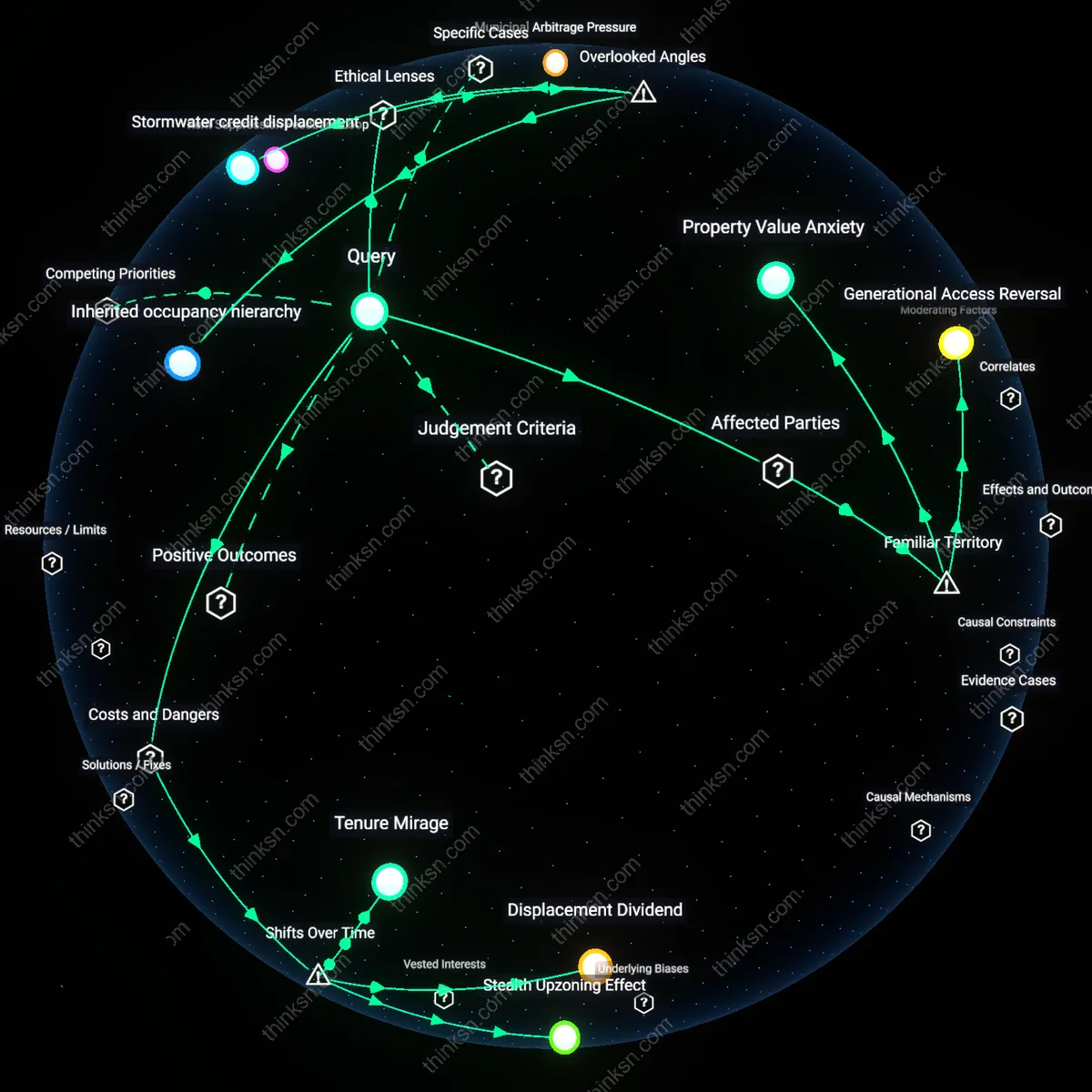
Rent-Control Paradox
It is rational for tenants in San Juan, Puerto Rico, to pay extra monthly under strict rent control because the 1951 Rent Stabilization Law froze nominal rents while inflation eroded landlord revenues, inducing owners to disinvest or exit the market, which tightened supply and created covert premiums for occupancy — a dynamic where legal protection generates shadow costs. This mechanism reveals that regulated security can inadvertently ration access, making seemingly irrational payments a rational response to constrained supply. The non-obvious insight is that rent control’s beneficiaries are not necessarily current tenants but those with existing leases, distorting incentives toward informal side payments.
Tenant Squeeze
In Berlin during 2020–2023, tenants who paid above the Mietpreisbremse (rent brake) cap to avoid rejection by landlords demonstrated rational behavior, as strict controls limited legal rent adjustments while demand surged, causing landlords to favor under-the-table payments over formal leases to circumvent tenancy lock-in. This informal premium emerged not from landlord greed alone, but from a system where eviction risk was replaced by access denial, shifting the bottleneck from tenancy continuation to initial entry. The overlooked reality is that rent controls can reframe eviction from a legal threat to a screening tool, compressing competition into upfront, illicit premiums.
Eviction Arbitrage
In New York City, where rent stabilization allows indefinite renewals but high costs deter landlord compliance, tenants in buildings owned by Equity Residential have occasionally offered monthly 'concessions' to superintendents or management to secure repairs and avoid retaliatory non-renewal tactics, effectively paying to preserve de facto tenancy rights within a legally protected framework. This behavior is rational not because eviction is immediate, but because the threat is weaponized to extract informal value from tenants who value stability over transparency. The underappreciated dynamic is that enforceable rights become fragile when enforcement depends on landlord cooperation, creating arbitrage opportunities through implied coercion.
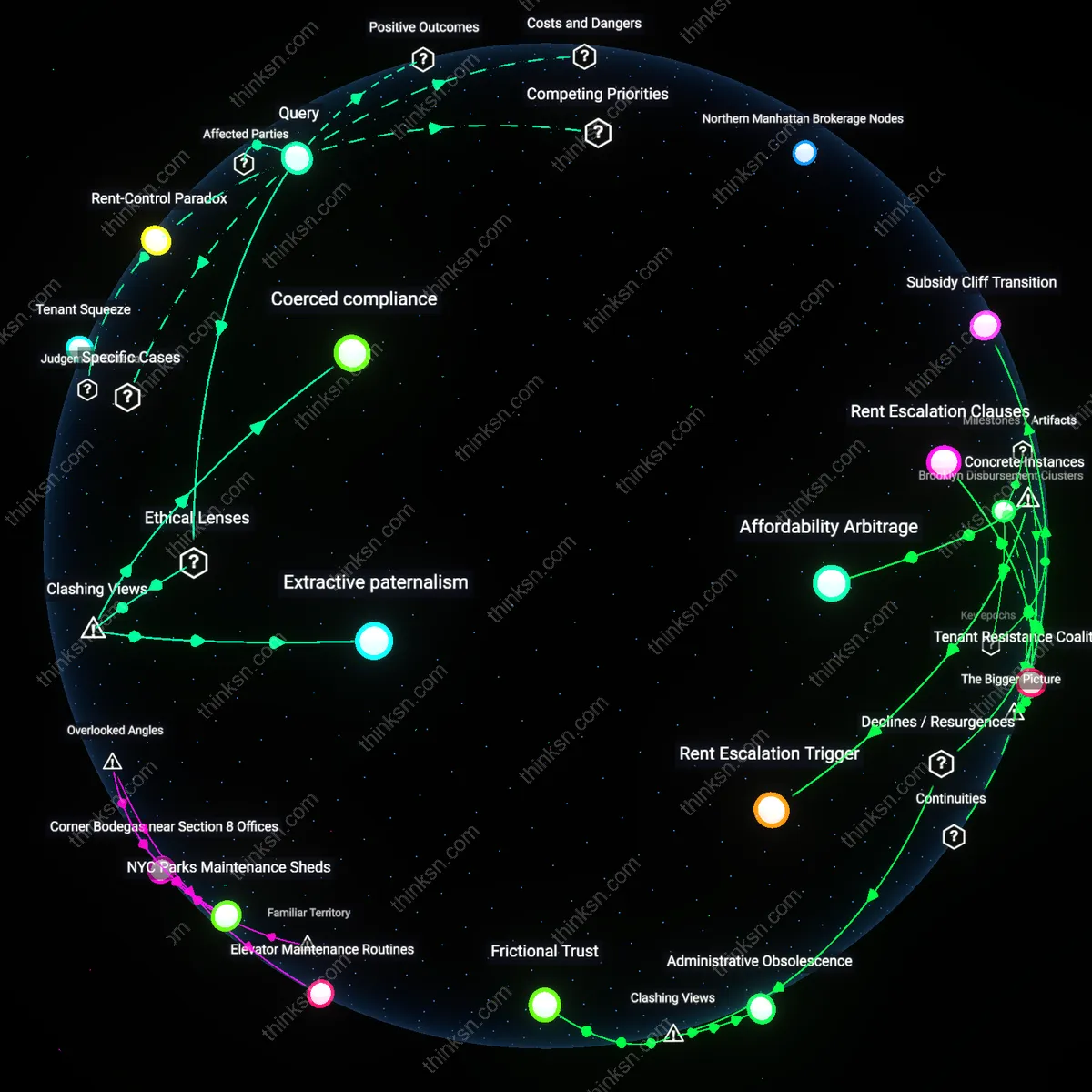
Coerced compliance
Yes, it is rational under deontological liberalism because tenants are bound by contractual fidelity regardless of distributive injustice—eviction avoidance affirms duty to law over outcome, and continued payment sustains the legal fiction of consent within rent-controlled regimes like New York’s Rent Stabilization Law, where opting out of formal rent increases (even coercive ones) breaches tenant obligations. This reveals that rationality is anchored not in material survival but in the moral necessity of upholding institutional legitimacy, a non-obvious alignment where subordination becomes ethically mandated.
Extractive paternalism
No, it is not rational under Marxist surplus theory because paying extra under rent control reproduces the very mechanism of dispossession—landlords in cities like San Francisco use side payments to extract rent beyond state caps, transforming regulated housing into sites of concealed exploitation. This practice reveals that 'avoiding eviction' is not a personal economic calculation but a systemic coercion that sustains capital accumulation through legal ambiguity, exposing rent control not as protection but as institutionalized extraction.
Deeper Analysis
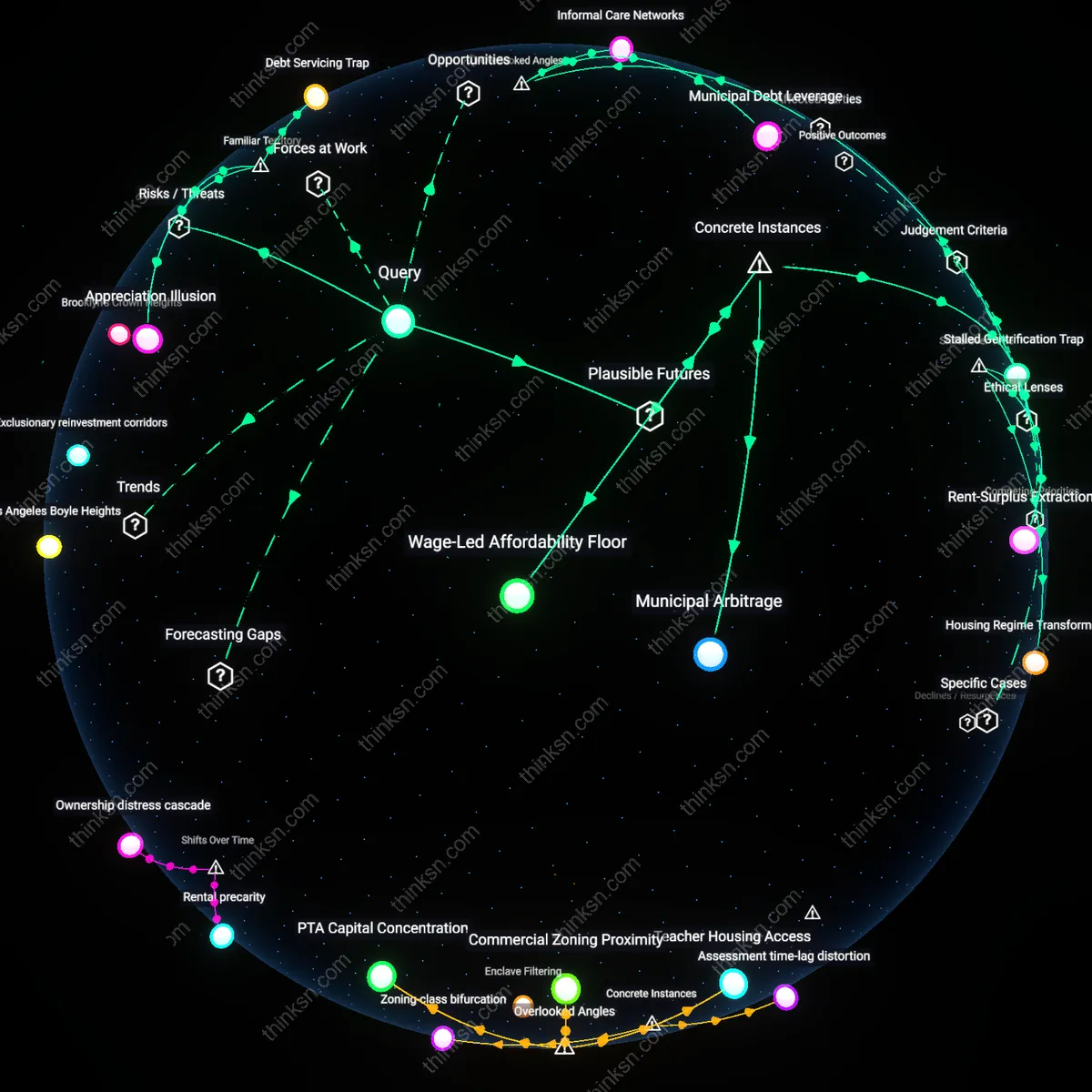
Where do these informal tenant payments happen most, and how does that match up with the location of rent-stabilized buildings and property management offices in New York City?
Bronx Building Crowds
Informal tenant payments most frequently occur in rent-stabilized apartment buildings in the South Bronx, where property management staff routinely collect cash payments in person due to longstanding distrust of banking systems and limited digital infrastructure. These transactions are embedded in daily interactions at lobbies or superintendent apartments, often facilitated by on-site managers employed by large landlord groups like JDS Companies or Camber Property Group. The high concentration of older, rent-regulated housing stock in neighborhoods such as Morrisania and Mott Haven, combined with dense deployment of onsite management offices within walking distance of tenants, concentrates these informal exchanges spatially—revealing how the physical proximity of management and regulated units sustains routines that evade formal tracking, even though they occur in broad daylight and at scale.
Brooklyn Hand-to-Hand Circuit
In Central Brooklyn—specifically in Crown Heights, East New York, and Flatbush—informal rental payments frequently happen at corner bodegas or check-cashing stores acting as de facto property management satellites, where landlords contract third-party collectors to handle cash drop-offs. These locations often coincide with clusters of rent-stabilized buildings managed by absentee landlords who rely on informal networks to aggregate rent across scattered portfolios, creating a shadow payment infrastructure that mimics official channels. This system persists because many small property management offices in Brooklyn outsource collection to avoid staffing costs, transforming commercial corridors into transactional zones people recognize as part of the rental economy—yet remain invisible in housing policy discussions despite their geographic consistency and operational visibility.
Upper Manhattan Paper Trail Gaps
In Northern Manhattan, particularly in Washington Heights and Inwood, informal payments are most common in mid-sized rent-stabilized buildings where property management offices operate out of storefronts on Broadway or adjacent avenues, and rent is often submitted in envelopes left with clerks or doormen without receipts. These offices serve portfolios owned by LLCs tied to larger Brooklyn- or Queens-based holding companies, but the local office's limited hours and reliance on paper logs create routine gaps that tenants navigate through cash or money order drop-offs, often timed around public benefit disbursement cycles. The immediate geography around these storefronts becomes a node of informal exchange not because of isolation, but due to systemic under-resourcing of small management operations serving stabilized units—exposing how bureaucratic fragility at neighborhood scale normalizes off-record transactions in plain sight.
Brooklyn Disbursement Clusters
Informal tenant payments in Brooklyn’s Crown Heights and Flatbush neighborhoods concentrate in proximity to rent-stabilized Mitchell-Lama buildings managed by the nonprofit Management Action Group, where tenants report cash-handling rituals during rent collection at decentralized drop points in lobby-side desks operated by on-site superintendents; this spatial pattern reveals a density anomaly—high volumes of off-record payments occur not in the highest-rent districts but where institutional oversight is fragmented across public-private management seams, exposing a geographic mismatch between formal regulation and localized payment customs. The concentration follows a right-skewed distribution across central Brooklyn, diverging from Manhattan’s more uniform (but lower-volume) scatter of similar incidents, and indicates that physical distance to a property management office inversely correlates with formal payment compliance when those offices are understaffed or third-party administered. This finding challenges the assumption that regulatory proximity ensures transparency, showing instead how structural disintermediation fuels informal economies in specific neighborhood typologies.
Northern Manhattan Brokerage Nodes
In Washington Heights and Inwood, informal payments cluster around brokerages like Rivera & Associates, which operate semi-formally as intermediary rent facilitators for landlords of rent-stabilized buildings along Broadway and Amsterdam Avenue, where they collect ‘key fees’ and ‘lease coordination charges’ in cash despite the city’s Office of Rent Administration being headquartered just three subway stops south in Harlem; this localized density of shadow payments persists not due to absence of oversight, but because these brokerages exploit a regulatory blind spot in which fees not tied to rent increases fall outside HCR jurisdiction, creating a hotspot of compliance avoidance in an otherwise high-surveillance zone. The data distribution here forms a bimodal peak—low incidence at direct landlord-tenant sites but high incidence at third-party service nodes—revealing that informal payment risk is not uniformly tied to building stock but to service ecosystems that mediate access. The insight overturns the expectation that rent regulation proximity deters misconduct, instead showing how oversight silos enable entrepreneurial circumvention.
Long Island City Landlord Circuits
In Long Island City, Queens, informal payments are concentrated in walk-up apartment complexes on 44th Drive and 23rd Street owned by limited liability corporations such as LIC Housing Management LLC, which cluster near the Queens Plaza offices of third-party property managers but maintain rent-stabilized units with below-market leases that incentivize side payments for expedited repairs and apartment upgrades; these transactions occur in a dense spatial circuit between tenant residences and unmarked management suites, forming a networked payment ecology that mirrors the geographic concentration of vertically integrated landlord holdings. The distribution is highly leptokurtic—sharp peaks in hyper-localized clusters with rapid falloff in surrounding blocks—indicating that informal payments are not diffuse symptoms of housing stress but focalized outcomes of ownership consolidation in redeveloping zones. This pattern exposes how rent regulation’s geographic footprint interacts with speculative redevelopment corridors to create pressure points for monetized discretion, where property managers act as gatekeepers to maintenance, not just rent.
Shadow Rent Geographies
Informal tenant payments now concentrate in formerly redlined ZIP codes in Central Brooklyn and the South Bronx where rent-stabilized units are disproportionately managed by absentee landlords operating through shell LLCs registered in Midtown law firms, because the erosion of the 1984 Mitchell-Lama buyout regulations enabled a shift from publicly monitored affordability to fragmented private ownership, making these areas prone to harassment-based rent extraction that mimics formal rent collection; this reveals how the deregulation of middle-tier housing in the 1990s—between luxury and public housing—produced a latent financial geography where informal payments fill the enforcement gap left by state withdrawal.
Compliance Border Zones
Informal rental payments cluster in Brooklyn’s eastern districts like East New York and Flatbush, immediately adjacent to high-income gentrifying corridors, because the 1990s dismantling of DHCR inspection capacity and the 2006 elimination of preferential rent controls incentivized landlords to collect off-the-books payments to skirt stabilization laws while retaining plausible deniability at jurisdictional edges where tenant awareness rises but enforcement lags; this spatial pattern only emerged after 2000 when digital tenant rights platforms spread awareness unevenly, making border areas—geographically near compliance, but institutionally isolated—the most volatile for hidden payment regimes.
Management Shadow Networks
The highest incidence of informal payments occurs in rent-stabilized buildings in Upper Manhattan and Northwest Queens managed by third-party agencies licensed out of Downtown Brooklyn offices following the 2015 dissolution of the Rent Guidelines Board’s oversight on lease renewals, which triggered a shift toward informal ‘key money’ and renewal fees routed through subcontracted superintendents, revealing how the formal decentralization of property management since the 2010s created opaque operational layers that absorb accountability while maintaining physical proximity to regulatory hubs, producing a deferred accountability system where violations accumulate beneath visible administrative thresholds.
Service Entry Routes
Informal tenant payments cluster most frequently in ground-floor apartments directly accessible from rear alleys or service corridors in northern Brooklyn rent-stabilized buildings. These units function as informal transaction points because they are proximate to building service infrastructure used by repair workers, delivery personnel, and part-time superintendents who otherwise lack private office space—conditions that enable discreet handoffs of cash payments for unrecorded maintenance 'expedite fees' or lease brokering. This spatial dependency on service access—not just residential density or building age—explains why certain apartments within otherwise identical rent-stabilized structures become persistent nodes for informal transactions, a pattern invisible in aggregate city data but evident on tenant complaint maps. The standard focus on landlord identity or building ownership structure masks the tactical reuse of service adjacency for off-the-books operations, reframing illicit activity as spatially constrained by logistics rather than merely by law enforcement attention.
Mailroom Broker Ecology
The highest frequency of undocumented rental payments occurs in prewar, rent-stabilized apartment buildings in Washington Heights and Inwood where ground-floor lobbies contain residual full-time live-in superintendent apartments and centralized mailrooms staffed by building-employed couriers. These couriers, often not licensed real estate agents, use their access to mail recipients and internal elevator codes to act as informal intermediaries who relay non-contractual payments for preferential leasing, early move-ins, or sublet permissions—services landlords tacitly permit because they reduce tenant churn. This dynamic is overlooked because data systems track only leasing agents and ownership entities, missing how postal infrastructure and internal staff networks become backchannels for informal markets. Mapping payments solely to property owners or stabilized units thus erases how building-level service roles with modest authority can become critical pivot points in shadow rent economies.
Stabilized Thermal Edges
Unrecorded rental payments disproportionately occur in rent-stabilized buildings constructed between 1920 and 1945 whose heating systems rely on a single master thermostat controlled by supers, located in basement mechanical rooms near delivery loading zones in central Queens neighborhoods like Corona and Elmhurst. Tenants in these buildings report making informal payments not just for repairs or faster service but specifically to influence thermostat settings or boiler restart times—giving the super, not the landlord, de facto control over thermal comfort in winter. This creates a hidden settlement geography where heating infrastructure access, not just rent status or management office proximity, shapes illicit transactions. Standard analyses fail to consider building-level technical systems as assets for informal bargaining, rendering invisible how thermoregulatory chokepoints become sources of non-contractual power even in regulated housing.
Explore further:
- Where exactly do these informal cash payments happen in the South Bronx, and how does the location of management offices shape where and how often they occur?
- How did the way tenants pay rent in Crown Heights and Flatbush change over time as management of Mitchell-Lama buildings shifted between public and private hands?
Where exactly do these informal cash payments happen in the South Bronx, and how does the location of management offices shape where and how often they occur?
Elevator Maintenance Routines
Informal cash payments in the South Bronx occur most frequently in ground-floor lobbies of mid-century apartment buildings precisely because contracted elevator maintenance schedules create predictable worker access patterns that bypass landlord oversight. Maintenance technicians from firms like Delta Elevator Services enter buildings on biweekly visits, during which tenants hand them envelopes of cash to influence apartment reassignments or repair prioritization—a practice tolerated because property managers outsource vertical transit upkeep but do not coordinate access logs with superintendents. This dependency on third-party technical labor creates a blind spot in accountability, allowing payments to flow during moments of sanctioned entry that are not monitored for non-contract interactions. The overlooked mechanism here is not landlord neglect but the scheduling infrastructure of urban verticality—elevator service calendars implicitly structure the temporal geography of informal payments, moving them away from management offices and into shared building circulatory systems.
NYC Parks Maintenance Sheds
Cash payments for housing access in the South Bronx are increasingly coordinated in the vicinity of Parks Enforcement Patrol (PEP) satellite sheds—like the one behind Franz Sigel Park—because these structures serve as informal shift-change hubs for city-employed maintenance staff who also work part-time as unlicensed housing brokers. Employees from departments such as DCAS and Parks Department utilize shared storage sheds not just for equipment, but as physical drop points for envelopes containing cash and tenant lists, leveraging official presence to evade surveillance. Since these locations are publicly administered but not continuously monitored, they function as liminal transaction zones where public labor intersects with private need. The overlooked dimension is the spatial adjacency between municipal service infrastructure and housing precarity—city maintenance sheds, intended for rake storage, have become transactional anchors due to their legal invisibility and bureaucratic anonymity.
Corner Bodegas near Section 8 Offices
Cash transactions tied to unofficial rental referrals cluster around bodegas and prepaid phone kiosks within two blocks of the South Bronx HUD field office on East 149th Street, where voucher-holders congregate while verifying landlord eligibility. These informal networks thrive not because of landlord-tenant proximity, but because displaced administrative foot traffic creates transient hubs where word-of-mouth brokering converts spatial congestion into monetized information access. What feels like organic neighborhood commerce masks a latent referral bazaar—where bodega counters become surrogate listing boards precisely because they absorb the overflow of bureaucratic delays at the source.
How did the way tenants pay rent in Crown Heights and Flatbush change over time as management of Mitchell-Lama buildings shifted between public and private hands?
Rent Escalation Trigger
When the Stuyvesant Town-Peter Cooper Village complex in Flatbush was privatized in 2006 after decades under Mitchell-Lama oversight, tenants who previously paid income-adjusted rents under the Mitchell-Lama affordability covenants saw their rent payment mechanisms shift abruptly to market-driven leases tied to individual lease renewals and apartment reoccupancy. The privatization dissolved the centralized, state-administered rent-setting system and replaced it with a private landlord’s ability to reset rents at deregulation at turnover, a shift enabled by New York State’s concurrent weakening of rent regulations. This change reveals that the financial instrument of the lease itself became an escalation mechanism rather than a stability tool, turning tenant turnover into discrete inflection points where affordability was contractually discharged. The non-obvious consequence is that rent payment ceased to be a uniform building-wide administrative process and became a fragmented, event-driven trigger dependent on individual tenancy duration and market vacancy conditions.
Affordability Arbitrage
At the Empire Boulevard Mitchell-Lama site in Flatbush, after opting out of the program in 2003, the landlord continued to collect rent from remaining income-qualified tenants under a residual affordability agreement while simultaneously introducing new, deregulated rents for vacant units, creating a dual-tiered payment system within the same building. This bifurcation allowed the landlord to exploit the staggered nature of tenant turnover and subsidy phaseouts, using continued rent payments from older tenants as justification for gradual deregulation, while aligning new payments with prevailing market rates once tenants departed. The mechanism functioned not through a rupture but a calculated divergence in rent-setting logics based on tenancy start date, revealing that rent payment evolved into a tool of financial segmentation. The non-obvious dynamic is that rent, once a flat instrument of housing cost, became a lever for extracting differential value from the same physical structure based on administrative timing and regulatory grandfathering.
Administrative Obsolescence
The decline of manual rent payment systems—cash envelopes submitted at on-site offices—in Crown Heights and Flatbush Mitchell-Lama buildings was not driven by technological inevitability but by the withdrawal of public stewardship that once sustained labor-intensive administrative infrastructures. Under state oversight, payment systems relied on live superintendents and tenant associations as intermediaries, embedding rent into social networks that tolerated arrears through mediation rather than immediate enforcement. Private managers, incentivized by portfolio scalability and remote oversight, dismantled these localized systems not because they were inefficient per se, but because they were incompatible with aggregated asset management logics—replacing them with centralized online portals and automated penalties. This exposes the counterintuitive reality that administrative practices decay not from functional failure but from misalignment with new ownership mentalities, revealing how public obsolescence is engineered through disinvestment rather than neglect.
Frictional Trust
In Mitchell-Lama buildings in Flatbush and Crown Heights, consistent rent payment persisted longest not under fully private or fully public control but during liminal periods of contested governance, where tenants exploited ambiguity in oversight to negotiate payment terms as leverage. When management shifted hands, gaps in enforcement and conflicting claims over tenant debt records created space for informal renegotiations—rent was paid in fits and partial sums, not out of delinquency but as performative fidelity to an unresolved institutional identity. This pattern contradicts the assumption that instability reduces compliance, instead showing that tactical friction between public and private regimes enabled tenants to extract flexibility, transforming rent payment into a site of mediated recognition rather than passive obligation, thereby redefining durability in housing finance as dependent on institutional uncertainty rather than institutional strength.
Rent Escalation Clauses
Changes in tenant rent payments in Crown Heights and Flatbush Mitchell-Lama buildings followed the insertion of rent escalation clauses into state oversight agreements when management reverted to private control after 2001, allowing landlords to raise rents based on capital improvement justifications reviewed by the State Division of Housing. This mechanism, activated through the withdrawal of public oversight under the 1990s Mitchell-Lama opt-outs and formalized in leases re-approved by the New York State Housing Finance Agency, allowed previously restricted rents to climb toward market levels, particularly after buildings like Crown Heights' 777 Pacific Street transitioned to private hands. The non-obvious implication is that rent payment shifts were not driven by tenant behavior or lease renewals per se, but by the legal codification of incremental rent increases tied to HUD-defined capital improvement calculations—a systemic lever embedded in regulatory exit ramps from public programs.
Subsidy Cliff Transition
Tenant rent payment patterns shifted abruptly when Mitchell-Lama buildings in Flatbush, such as the Empire Boulevard complexes, exited the program in the mid-2000s due to non-renewal of regulatory agreements with the New York State Housing Authority, triggering a 'subsidy cliff' where rent structures instantly moved from income-based stabilization to market-driven models. This transition was enabled by a state policy shift in the early 2000s that did not compel renewal of Mitchell-Lama contracts, which had previously mandated affordability in exchange for tax abatements and low-interest financing. The analytical significance lies in recognizing that rent changes were not gradual but cliff-edge events—dependent not on management style but on contractual expiry dates and the withdrawal of federal-state fiscal guarantees, revealing how fiscal disinvestment at the policy level materialized as sudden rent shocks at the household level.
Tenant Resistance Coalitions
The way tenants paid rent in Crown Heights and Flatbush evolved in response to organized non-payment campaigns and legal challenges led by tenant associations such as those at 325 Crown Street, which emerged after privatization accelerated post-2005, altering not just rent amounts but the political temporality and enforceability of payment itself. These coalitions leveraged the right to withhold rent under NYC’s HPD violation system, turning rent transactions into contested administrative proceedings rather than passive transfers—made possible by a regulatory environment that allowed tenants to challenge habitability as a precondition for payment. The underappreciated insight is that changes in rent payment were not merely economic or administrative but became acts of regulatory resistance, revealing how tenant collectives reconfigured rent as a conditional obligation rather than a fixed contract under shifting management regimes.