Is Criminalizing Online Abortion Pills Ethical for Public Health?
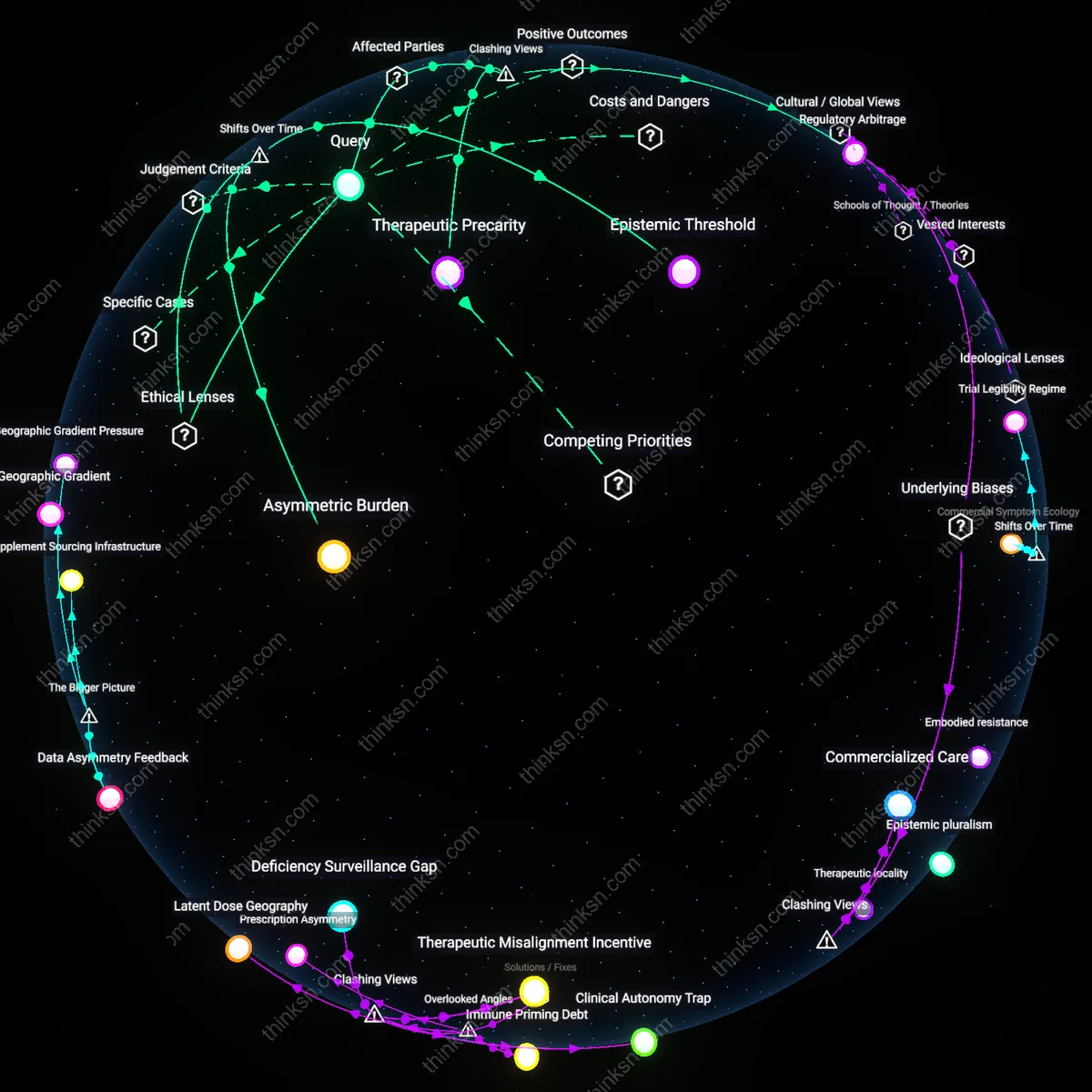
Analysis reveals 10 key thematic connections.
Key Findings
Autonomy sovereignty
The criminalization of self-managed medication abortion obtained online is ethically unjustifiable when evaluated through the lens of individual moral agency, as demonstrated by the continued use of telemedicine abortion services in Ireland prior to the 2018 repeal of the Eighth Amendment, where thousands accessed pills through online providers like Women on Web despite legal risk. This phenomenon revealed that individuals treat their reproductive decisions as domains of personal sovereignty, not public rule, and the state’s failure to provide accessible alternatives rendered criminalization a symbolic assertion of control rather than an effective health policy. The non-obvious insight is that legal prohibition did not eliminate the practice but instead externalized it beyond regulatory or supportive infrastructure, thereby increasing risk while undermining trust in public health authorities. What matters ethically is not merely compliance, but the recognition of decisional space where autonomy functions as a default regime.
Juridical medicalization
The state's criminalization of self-managed medication abortion becomes ethically illegitimate when it instrumentalizes medical standards to justify legal coercion, as seen in the prosecution of individuals in the U.S. state of Alabama under chemical endangerment laws originally designed to target drug use during pregnancy, such as in the 2015 case of Purvi Patel in Indiana, which set a precedent later adopted in Southern states. Here, forensic medicine is repurposed not to protect health but to extend criminal jurisdiction into private reproductive acts, transforming medical outcomes—like miscarriage or self-administration—into legal evidence. The underappreciated dynamic is that medicalization, typically a tool of care, becomes a vehicle for surveillance when detached from patient welfare and aligned with punitive governance—revealing a structural shift from health ethics to juridical control.
Regulatory Trust Loop
Criminalizing self-managed medication abortion erodes public trust in health institutions, which in turn diminishes compliance with essential public health measures beyond reproductive care. When states criminalize medical actions that align with clinical standards—such as the use of WHO-recommended regimens obtained online—health agencies like the CDC or local clinics lose credibility among marginalized populations who already face surveillance, including low-income women and communities of color. This breakdown in trust propagates into other domains, such as infectious disease reporting or vaccination uptake, because individuals begin to see health systems as enforcement arms rather than care providers. The non-obvious consequence is that criminalization doesn’t just restrict abortion access but destabilizes the broader legitimacy of public health governance, making population-level health interventions less effective over time.
Medical Knowledge Redistribution
The ability of individuals to obtain abortion medications online accelerates the decentralization of medical authority, enabling greater alignment between patient needs and timely care, particularly in regions like the U.S. South or Midwest where clinic access has collapsed post-Dobbs. Evidence indicates that self-managed abortion with mifepristone and misoprostol is safe and effective, and online telehealth models—such as those operating across state lines before legal crackdowns—demonstrate that regulated non-clinical pathways can scale safely. This shift allows medical knowledge and tools to bypass institutionally bottlenecked systems, creating parallel channels that reduce delays and improve outcomes for time-sensitive health interventions. The underappreciated dynamic is that criminalization attempts to freeze a top-down care model that is already failing geographically and demographically, while suppressing emergent, adaptive systems that respond to real-world access deficits.
Enforcement Distortion
Criminalizing online medication abortion redirects law enforcement and judicial resources toward low-risk, health-driven behaviors, distorting priorities in the justice system and amplifying punitive overreach in personal medical decision-making. In states like Texas or Idaho, where abortion criminalization laws impose felony charges, prosecutors gain expanded discretion to target not only providers but also individuals who self-manage, despite no evidence of widespread harm or misuse. This creates a feedback loop where legal systems become more entangled in intimate health choices, incentivizing surveillance of digital activity, postal deliveries, or medical records, and thereby increasing systemic friction in both healthcare and civil liberties. The overlooked systemic effect is that such enforcement doesn’t enhance safety but instead prioritizes symbolic legal deterrence over functional public health outcomes, weakening both justice and health infrastructure simultaneously.
Regulatory Sovereignty
Yes, because states assert control over medical safety to prevent unregulated pharmaceutical distribution, involving agencies like the FDA and state health departments that enforce drug approval processes to maintain standardized care. This mechanism operates through legal frameworks such as the Federal Food, Drug, and Cosmetic Act and state criminal codes, which treat unauthorized drug access as a breach of public health order, not merely individual choice. The non-obvious insight is that public trust in medicine's safety—something people take for granted—depends on visible enforcement of supply chain boundaries, even when those boundaries restrict personal agency.
Bodily Jurisdiction
No, because criminalizing self-managed abortion seizes control of personal medical decisions in a way that mirrors historical state overreach into private life, particularly affecting women and marginalized communities who already face surveillance in reproductive health. This dynamic functions through policing and prosecution systems that activate when medical autonomy crosses into legally prohibited methods, regardless of medical safety. The counterintuitive reality is that public discourse often frames abortion as a moral issue, obscuring how law enforcement’s expansion into intimate bodily acts undermines the very privacy people assume they have in healthcare.
Therapeutic Inequality
No, because prohibitions disproportionately impact low-income and rural individuals who rely on online access due to geographic and economic barriers to clinic-based care, turning medication access into a privilege enforced by law rather than a medical option. This operates through the uneven distribution of reproductive healthcare infrastructure—such as the concentration of clinics in urban centers and abortion bans in southern and midwestern states—which makes online procurement a de facto necessity for many. What’s underappreciated is that public health rhetoric used to justify criminalization often masks the state's failure to provide equitable care, framing marginalization as illegality.
Diagnostic gatekeeping
It is ethically unjustifiable for a state to criminalize self-managed medication abortion because such laws indirectly reinforce diagnostic gatekeeping, a system where medical legitimacy is contingent on physician-conducted verification of pregnancy status and gestational limits. In U.S. states like Texas and Oklahoma, digital platforms like HeyDoctor have been permitted to prescribe medication abortion under telehealth frameworks only when integrated with ultrasound confirmation and identity verification—yet identical medications obtained via unregulated vendors are treated as contraband when self-managed without clinical validation. The overlooked mechanism here is not access to drugs per se, but the state’s investment in preserving clinical diagnostics as the sole source of reproductive truth, making the criminalization less about risk mitigation than about maintaining a monopoly on determining biological facts. This shifts the ethical weight from safety outcomes to epistemic control—the state criminalizes not the act of self-abortion, but the assertion of non-clinical bodily knowledge.
Medical gray infrastructure
Criminalizing self-managed medication abortion obtained online is ethically indefensible because it targets users of a medical gray infrastructure—an informal but functionally coherent network of offshore pharmacies, encrypted couriers, and digital harm-reduction collectives—that already operates with greater reach and reliability than formal health systems in marginalized regions. In rural areas of Nigeria and the Philippines, where state clinics lack abortion supplies and trained providers, networks like Women on Web and local tele-midwives coordinate pill delivery and post-abortion care through encrypted messaging, creating de facto medical systems that bypass state incapacity. The ethical failure lies in punishing individuals who compensate for state abandonment, revealing that criminalization ignores the reality that gray infrastructures often fulfill public health roles the state refuses or fails to provide. Most debates assume a binary between regulated medicine and dangerous anarchy, but this overlooks how criminal law attacks systems that have empirically reduced maternal mortality in the absence of legal alternatives.