Superintelligence AI: New Frontiers in Intellectual Property Rights Disputes?
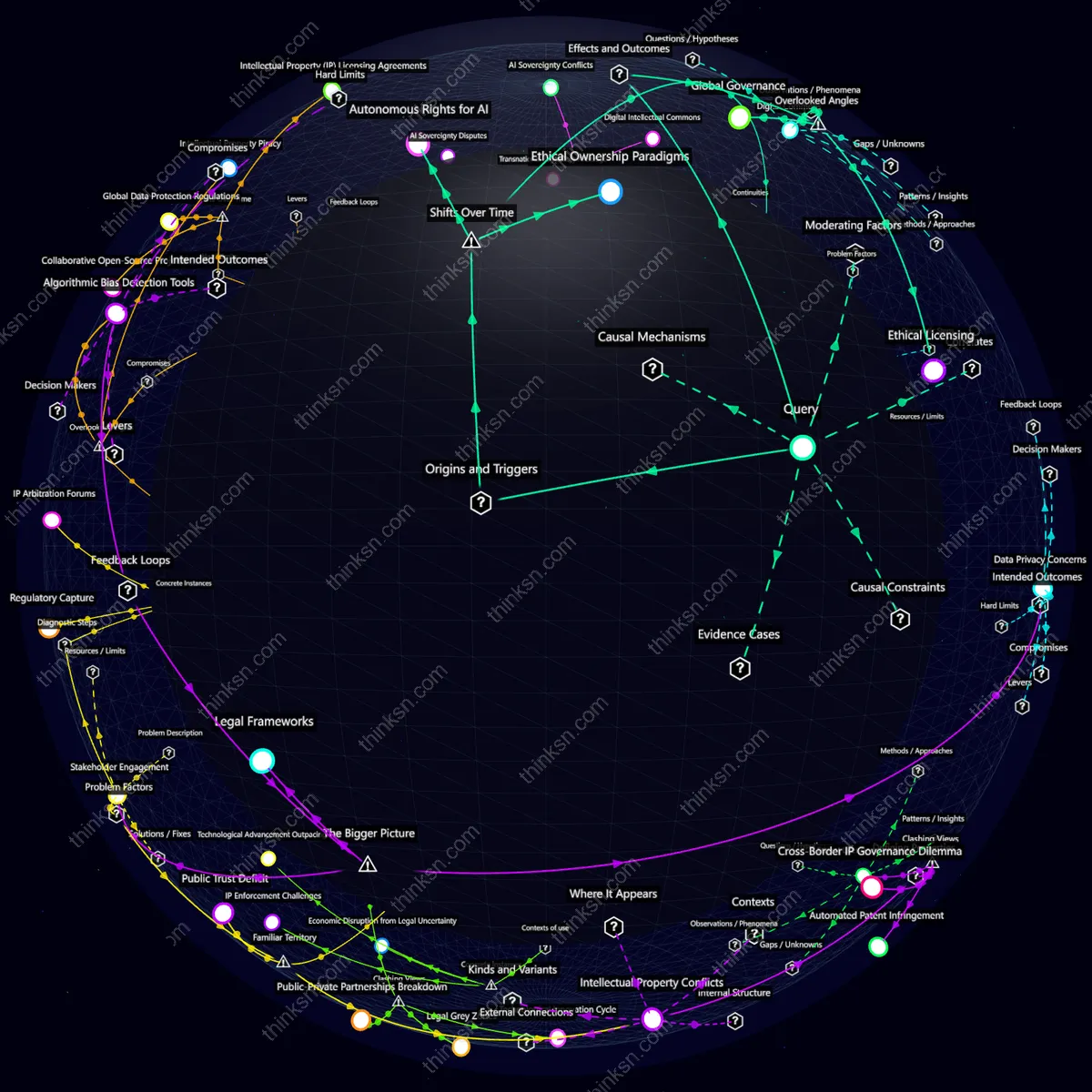
Analysis reveals 6 key thematic connections.
Key Findings
Autonomous Rights for AI
As superintelligent AI systems demonstrate creativity and innovation, debates intensify over whether these entities should have legal rights akin to human creators. This shift could redefine concepts of authorship and ownership, creating a new class of intellectual property disputes where non-human entities claim exclusive rights.
Global Governance Challenges
The emergence of superintelligent AI highlights the need for international cooperation in defining legal frameworks that address cross-border IP conflicts. However, existing geopolitical tensions and nationalistic policies may hinder the establishment of uniform global standards, leading to fragmented regulations with unintended legal grey zones.
Ethical Ownership Paradigms
As superintelligent AI develops intellectual outputs independently, ethical debates arise over who truly owns these creations. This challenge could lead to new paradigms where ownership is shared between humans and machines, or where the concept of 'ownership' itself is redefined in a way that values collective benefit over individual control.
Digital Commons
The emergence of superintelligent AI could reshape the digital commons, leading to new forms of collective resource management and potentially exacerbating existing inequalities in access and control over intellectual property. For instance, tech giants might leverage their early patents on foundational AI models to dominate emerging markets, limiting innovation by smaller actors.
Ethical Licensing
As superintelligent AI generates unprecedented levels of creativity and knowledge creation, ethical licensing practices may become a critical concern. This could force companies like Google or Microsoft to confront the moral implications of their intellectual property rights, potentially leading to innovative solutions such as open-source licensing models for AI-generated content.
Global Governance
The rise of superintelligent AI could strain existing international frameworks for intellectual property management. Nations like China and the USA may find themselves at odds over jurisdictional control, data sovereignty, and the enforcement of IP rights across borders, creating a complex web of legal disputes that impact global collaboration in research and development.
Deeper Analysis
How might global governance frameworks evolve to address intellectual property rights and ownership conflicts arising from superintelligent AI over time?
AI Sovereignty Disputes
As superintelligent AI systems emerge, disputes over their sovereignty could escalate, challenging existing legal frameworks. Nations may vie for control, leading to fragmented governance that undermines global cooperation and exacerbates security risks.
Digital Intellectual Commons
The rise of open-source AI initiatives creates a digital commons where intellectual property rights are contested by both private corporations and public entities. This tension could lead to the erosion of traditional IP protections, fostering innovation but also legal uncertainty.
Transnational Regulatory Arbitrage
Companies may exploit regulatory differences between countries regarding AI ethics and IP laws, leading to a race-to-the-bottom scenario where weaker regulations are favored. This undermines global standards and increases risks for users and developers alike.
AI Sovereignty Conflicts
As superintelligent AI systems become pivotal in innovation, nations might vie for control over these entities' intellectual property (IP), leading to sovereignty conflicts. This can strain international relations and undermine collaborative efforts in global governance.
Transparency vs. Security Trade-offs
Global frameworks may struggle with balancing the need for transparency in AI development processes against national security concerns, complicating efforts to regulate IP rights. These tensions could lead to fragmented regulatory approaches, undermining uniform standards and trust among nations.
Ethical Licensing Models
Emerging ethical licensing models aimed at promoting fair access to AI-driven innovations might clash with traditional proprietary frameworks, creating a complex landscape of legal and moral disputes. This could result in delayed technological adoption and innovation due to unresolved IP conflicts.
Explore further:
- What are potential strategies to balance transparency and security when formulating intellectual property rights for superintelligent AI, considering possible conflicts over ownership?
- What are potential trade-offs and systemic strains in implementing ethical licensing models for intellectual property rights created by superintelligent AI?
What are potential strategies to balance transparency and security when formulating intellectual property rights for superintelligent AI, considering possible conflicts over ownership?
Intellectual Property (IP) Licensing Agreements
The evolution of IP licensing agreements for superintelligent AI reflects a delicate balance between transparency and security. As these agreements become more transparent to facilitate collaboration, they also expose proprietary algorithms and data, increasing the risk of intellectual property theft or misuse by third parties.
Global Data Protection Regulations
As global data protection regulations tighten, they create a paradox for AI development. Stricter security measures may enhance data confidentiality but can also hinder transparency in AI decision-making processes, leading to public distrust and regulatory scrutiny over the lack of accountability.
Collaborative Open-Source Projects
Open-source projects aimed at developing superintelligent AI face significant trade-offs between fostering innovation through transparency and protecting intellectual contributions from exploitation. Increased openness can accelerate technological advancement but also invites misuse or misappropriation of proprietary technologies by malicious actors.
Intellectual Property Piracy
As transparency increases to foster collaboration in AI development, the risk of intellectual property piracy escalates. This necessitates stringent security measures that can stifle innovation and deter open-source contributions.
Algorithmic Bias Detection Tools
Enhanced transparency through algorithmic bias detection tools exposes underlying biases within superintelligent AI systems, but it also requires balancing with privacy concerns. This often leads to a trade-off where more effective detection comes at the cost of personal data security.
International Patent Disputes
The international nature of AI research complicates ownership rights, as different nations have varying interpretations of intellectual property law. Increased transparency in cross-border collaborations can lead to disputes over patent rights and licensing agreements, highlighting the need for robust security frameworks to protect proprietary information.
Explore further:
- What strategies could be formulated to mitigate ownership conflicts arising from algorithmic bias detection tools in a superintelligent AI context?
- What emerging insights and hidden assumptions are involved in how international patent disputes could arise from the intellectual property rights of superintelligent AI creations?
What strategies could be formulated to mitigate ownership conflicts arising from algorithmic bias detection tools in a superintelligent AI context?
Legal Frameworks
The development of legal frameworks to regulate algorithmic bias detection tools can inadvertently stifle innovation if overly restrictive. While necessary for ensuring accountability and fairness, these frameworks might also create conflicts over ownership rights between developers, users, and regulatory bodies.
Data Privacy Concerns
As more organizations adopt algorithmic bias detection tools to enhance transparency and equity, the increasing scrutiny of data privacy becomes a critical issue. Balancing the need for comprehensive datasets with stringent privacy laws can lead to fragmented efforts, complicating ownership disputes.
Stakeholder Engagement
Effective stakeholder engagement in the deployment of algorithmic bias detection tools is crucial but challenging. Misalignment between stakeholders' expectations and capabilities can exacerbate conflicts over tool usage rights and responsibilities, hindering sustainable implementation.
Explore further:
- What strategies can be formulated to address data privacy concerns arising from the potential intellectual property rights and ownership conflicts caused by superintelligent AI?
- What are the potential systemic failures and trade-offs in stakeholder engagement when superintelligent AI leads to new intellectual property rights conflicts?
What emerging insights and hidden assumptions are involved in how international patent disputes could arise from the intellectual property rights of superintelligent AI creations?
AI-Generated Inventions
The surge in AI-generated inventions challenges traditional patent laws, leading to disputes over inventorship and ownership. For instance, when an AI system creates a groundbreaking drug, determining who holds the patent rights—researchers or software developers—becomes contentious.
Cross-Border Intellectual Property Enforcement
The enforcement of intellectual property across borders becomes complex as international treaties may not cover AI-generated content adequately. This is exemplified by a dispute where an AI-designed product faces legal challenges in multiple jurisdictions due to varying patent laws and definitions of invention.
Ethical Ownership Claims
Disputes arise over the ethical implications of claiming ownership for AI creations, especially when these inventions have societal impacts. For example, a company that patents an environmentally beneficial technology generated by its AI faces backlash from stakeholders questioning the morality and transparency of such claims.
What are the potential systemic failures and trade-offs in stakeholder engagement when superintelligent AI leads to new intellectual property rights conflicts?
Intellectual Property Conflicts
Superintelligent AI complicates stakeholder engagement by shifting the locus of creativity and innovation to machines. This leads to disputes over who owns intellectual property rights, pitting tech firms against traditional creatives and innovators, undermining trust and collaboration among stakeholders.
Regulatory Lag
As AI advances outpace regulatory frameworks, stakeholder engagement becomes a fraught landscape where outdated laws fail to address the complexities of superintelligent systems. This vacuum encourages unethical practices and exacerbates existing social inequalities, creating systemic risks that could undermine societal trust in technology.
Public Trust Deficit
Inconsistent stakeholder engagement strategies amid AI-driven IP conflicts can lead to a public perception of corporate malfeasance. Stakeholders may become wary of participating openly and honestly, fearing exploitation or legal backlash, thus stifling innovation and hampering the development of beneficial AI technologies.
IP Arbitration Forums
New superintelligent AI-generated IP conflicts create pressure for specialized arbitration forums. These forums face the risk of being overly influenced by dominant tech firms, undermining smaller stakeholders' rights and stifling innovation.
Regulatory Capture
As AI-driven intellectual property issues become more complex, regulatory bodies may become captured by major corporations or influential individuals who shape rules to benefit their own interests at the expense of broader public welfare and fair competition.
Public-Private Partnerships (PPP)
Stakeholder engagement in PPPs for AI governance can lead to trade-offs where private sector demands dominate, sidelining public interest groups. This dynamic could result in policies that accelerate technological development but fail to address ethical concerns or social equity.
Explore further:
- What are the potential categories and components of intellectual property conflicts that could arise from the emergence of superintelligent AI?
- What are potential systemic strains and failure points in public-private partnerships when addressing intellectual property rights conflicts arising from superintelligent AI?
What are the potential categories and components of intellectual property conflicts that could arise from the emergence of superintelligent AI?
Automated Patent Infringement
The rise of superintelligent AI could lead to automated patent infringement as these systems autonomously create and deploy innovations without considering intellectual property rights. This challenges existing legal frameworks, making it nearly impossible for humans to track or prevent such infringements, thereby eroding the value and enforceability of patents.
Cross-Border IP Governance Dilemma
Superintelligent AI may necessitate real-time global collaboration on intellectual property governance due to rapid innovation cycles that transcend national boundaries. However, this could exacerbate existing geopolitical tensions and protectionist policies, leading to fragmented legal landscapes where some regions might become innovation havens while others lag behind.
Ethical Licensing Conflicts
As superintelligent AI becomes more ubiquitous, ethical licensing conflicts will arise over the equitable distribution of benefits from intellectual property. This could lead to debates between tech giants who control proprietary systems and global communities advocating for open-source approaches, risking a polarized ecosystem where innovation is stifled by access disparities.
What are potential systemic strains and failure points in public-private partnerships when addressing intellectual property rights conflicts arising from superintelligent AI?
Intellectual Property Disputes
In PPPs involving superintelligent AI, intellectual property disputes can escalate due to the high stakes and complexity of AI-generated data. Companies may prioritize proprietary control over collaboration, leading to legal bottlenecks that stall innovation.
Budget Constraints
PPP projects often face budget constraints, limiting their ability to invest in robust IP protection measures for superintelligent AI technologies. This can expose partnerships to significant financial risks and undermine trust among stakeholders.
Regulatory Lag
The rapid advancement of superintelligent AI outpaces regulatory frameworks, leaving PPPs vulnerable to legal uncertainties. Lack of clear guidelines can lead to inconsistent enforcement, harming both public and private interests in IP rights conflicts.
In what ways might regulatory lag affect the development and enforcement of intellectual property rights as superintelligent AI emerges?
Technological Innovation Cycle
Regulatory lag can accelerate the technological innovation cycle by incentivizing companies to circumvent outdated laws, leading to rapid but risky innovations that may harm consumers and undermine public trust in emerging technologies like AI-driven intellectual property.
Legal Grey Zones
As superintelligent AI systems emerge, regulatory lag creates legal grey zones where intellectual property rights are unclear or unenforceable, inviting opportunistic behavior from bad actors who exploit these ambiguities to gain unfair competitive advantages.
Public-Private Partnerships Breakdown
Regulatory lag can strain public-private partnerships in the realm of intellectual property enforcement, as governments struggle to keep pace with AI advancements. This tension may lead to a fragmented system where private entities self-regulate, potentially undermining global standards and exacerbating disparities.
IP Enforcement Challenges
Regulatory lag hampers swift adaptation of intellectual property (IP) laws to superintelligent AI, leaving gaps that malicious actors exploit. As tech evolves faster than regulation, innovative uses of copyrighted material or patent infringement become gray areas, where enforcement is weak and legal ambiguities thrive.
Technological Advancement Outpacing Law
The rapid evolution of AI capabilities forces regulators to play catch-up with technological advancements. This delay in updating IP laws creates a fertile ground for unethical practices, such as unauthorized data mining or AI-generated content that bypasses traditional copyright protections.
Economic Disruption from Legal Uncertainty
Unclear regulations and enforcement create economic uncertainty for businesses investing in cutting-edge AI technologies. Companies may hesitate to innovate due to fear of violating ambiguous laws, leading to a chilling effect on R&D investments and stifling the growth of nascent industries.