Could Smart Homes Increase Reliance on Proprietary Software and Data Risks?
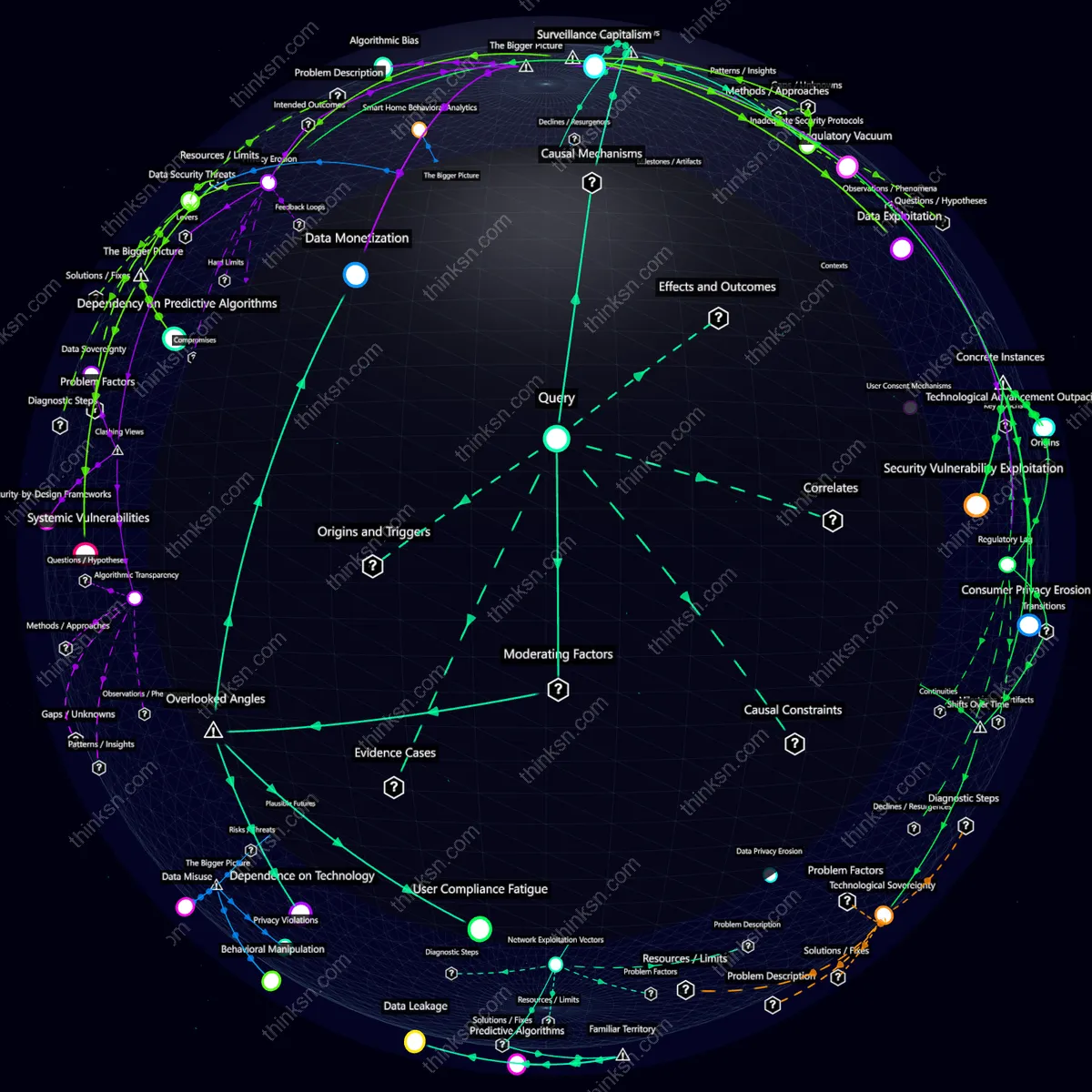
Analysis reveals 6 key thematic connections.
Key Findings
Data Privacy Concerns
As smart home devices proliferate, the risk of data breaches and privacy invasions escalates. Companies like Amazon and Google collect vast amounts of user data to improve their services, but this often leads to unintended consequences such as unauthorized access by hackers or misuse by advertisers.
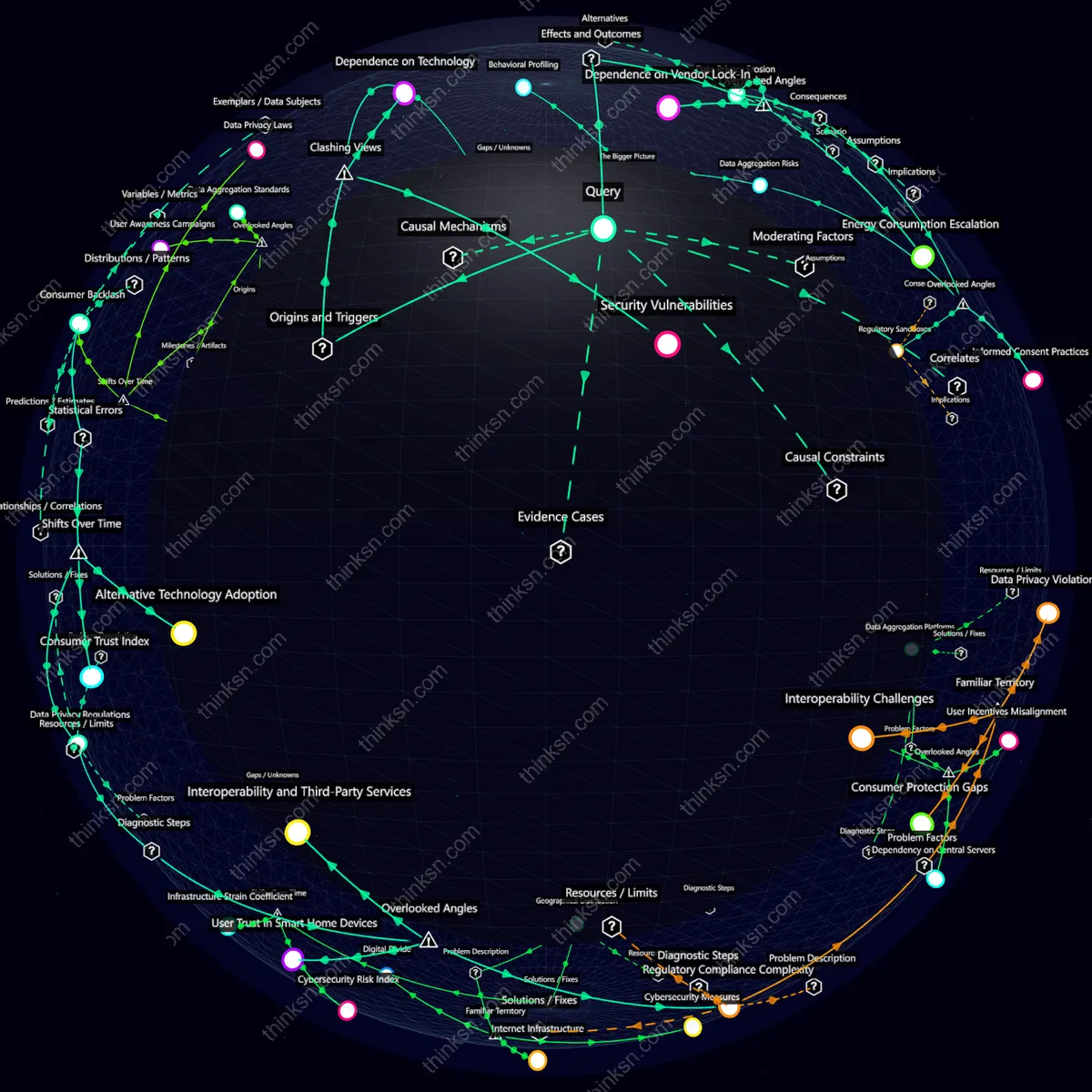
Dependence on Technology
Increasing reliance on smart home devices can create a fragile dependency where users face significant disruptions if these technologies fail. For instance, elderly individuals who rely heavily on automated systems for daily living may find themselves in dangerous situations during power outages or system malfunctions.
Security Vulnerabilities
Smart home devices can become entry points for broader cyberattacks, as seen with incidents like Mirai botnet attacks exploiting IoT vulnerabilities. These risks extend beyond personal data to include potential threats to national security if critical infrastructure is compromised through interconnected smart homes.
Data Privacy Erosion
As smart home devices proliferate, users unwittingly expose intimate aspects of their lives through routine interactions. This leads to a gradual desensitization towards privacy risks, allowing tech companies to exploit detailed personal data for targeted advertising and behavioral tracking.
Energy Consumption Escalation
Smart home devices often operate continuously, even when not in use, leading to significant increases in residential energy consumption. This exacerbates carbon footprints and strains utility grids, potentially leading to power shortages or blackouts during peak demand periods.
Dependence on Vendor Lock-In
Users become increasingly reliant on specific smart home ecosystems for convenience, security, and integration features, creating a barrier against switching vendors. This lock-in fosters monopolistic market practices, limiting consumer choice and stifling innovation.
Deeper Analysis
What are some emerging data privacy concerns that arise from the increasing use of smart home devices and how do they impact user trust?
Invasive Monitoring
Smart home devices increasingly track user behaviors in minute detail, raising concerns about invasive monitoring. As data collection expands from basic smart thermostats to advanced sensors like cameras and microphones, the risk of privacy violations escalates. This continuous surveillance can erode trust as users become wary of potential misuse or unauthorized access.
Data Aggregation Risks
The integration of multiple smart home devices creates a complex ecosystem where data from different sources is aggregated, potentially revealing sensitive user patterns and preferences. This aggregation poses significant risks, such as the exposure of personal habits to third-party service providers or hackers who exploit vulnerabilities in interconnected systems.
Behavioral Profiling
Smart home devices contribute to detailed behavioral profiling by collecting vast amounts of data on daily routines and preferences. This profiling can be used for targeted advertising, but it also raises ethical concerns about consent and user autonomy. Companies may leverage this information beyond marketing, influencing users’ choices in subtle ways that are difficult to detect or resist.
What hypothetical scenarios can be formulated to mitigate data privacy erosion due to the increasing use of smart home devices?
Informed Consent Practices
As smart home devices proliferate, reliance on standardized click-through consent forms undermines genuine user awareness and control over data usage. This leads to a false sense of security among consumers who may not fully understand the extent or implications of data collection by these devices.
Regulatory Sandboxes
Experimental regulatory frameworks designed for innovation can inadvertently foster environments where privacy protections are relaxed too much, allowing tech companies to develop and market smart home technologies with minimal oversight on user data handling practices.
Data Aggregation Risks
The cumulative effect of multiple interconnected devices collecting granular personal data creates a fragmented regulatory landscape that complicates enforcement. This scenario allows for significant privacy erosion, as each device's data collection is seen in isolation rather than part of an integrated surveillance network.
How has invasive monitoring by smart home devices evolved over time and what trends are likely to continue in the future?
Data Privacy Laws
As invasive monitoring by smart home devices proliferated, lawmakers scrambled to catch up with privacy regulations. These laws often lag behind technological advancements, creating a delicate balance where consumer data is protected yet device manufacturers face stringent compliance hurdles that stifle innovation.
Consumer Backlash
With increasing awareness of invasive monitoring practices, consumers began boycotting products from companies known for egregious privacy violations. This shift in public sentiment has forced tech giants to reevaluate their approach, leading to a race towards more transparent and user-centric data handling policies.
Smart Home Ecosystem Integration
As smart home devices became interconnected through sophisticated ecosystems, the risk of cross-device invasive monitoring intensified. This integration not only amplifies the potential for data exploitation but also underscores the dependency on a few dominant players who control vast amounts of personal information.
Data Aggregation Standards
The rise of standardized data aggregation protocols for smart home devices has streamlined the collection and sharing of personal information. However, this convenience comes at the cost of increased vulnerability to centralized data breaches, as a single weak point can expose vast amounts of sensitive user data.
User Awareness Campaigns
Efforts by privacy advocates and tech companies to raise awareness about invasive monitoring in smart homes have led to a surge in consumer demand for transparent and secure devices. Yet, these campaigns often rely on complex technical details that can be hard for the average user to grasp fully, leaving many still unaware of potential risks.
Explore further:
- What are the measurable impacts on consumer behavior and market trends if there is a significant consumer backlash against smart home devices due to privacy concerns?
- What are the evolving risks and challenges to privacy and security in the smart home ecosystem as it integrates more devices over time?
What are the measurable impacts on consumer behavior and market trends if there is a significant consumer backlash against smart home devices due to privacy concerns?
Data Privacy Regulations
In response to consumer backlash against smart home devices due to privacy concerns, governments are likely to impose stricter data privacy regulations. This shift not only impacts the tech industry but also forces companies to invest heavily in compliance measures, potentially stifling innovation and increasing product costs.
Alternative Technology Adoption
Smart device manufacturers may see a surge in demand for alternative technologies that prioritize user privacy, such as open-source smart home systems or devices with built-in encryption. This shift could fragment the market and create new opportunities for niche players while challenging established giants.
Consumer Trust Index
A significant consumer backlash would likely lead to a measurable decline in the Consumer Trust Index specific to tech companies, especially those offering smart home devices. This erosion of trust can have long-lasting effects on brand loyalty and market penetration, making it difficult for companies to regain customer confidence.
What are the evolving risks and challenges to privacy and security in the smart home ecosystem as it integrates more devices over time?
Data Aggregation Platforms
As smart home devices proliferate, data aggregation platforms centralize user information, creating a single point of failure for privacy breaches. This consolidation of personal data increases the risk of large-scale security incidents that can expose sensitive details from multiple households.
IoT Device Security Patches
Frequent updates to IoT device security patches often lag behind the rapid integration of new smart home gadgets, leaving a window open for cyberattacks. This creates a fragile dependency on timely and effective patch management by manufacturers, highlighting the challenge in maintaining secure ecosystems.
User Behavior Adaptation
The evolving complexity of interconnected devices requires users to adapt their behavior, often leading to fatigue or oversimplification of security practices. This can inadvertently expose vulnerabilities that sophisticated attackers exploit, illustrating a critical dependency on user awareness and education in maintaining smart home privacy.
What are the potential breaches in data privacy regulations due to the increasing use of smart home devices and how do they affect systemic strain?
User Trust in Smart Home Devices
As users become more reliant on smart home devices for daily tasks, the potential for data privacy breaches can erode trust significantly. When a breach occurs, users may not only lose personal information but also feel violated by the pervasive monitoring and data collection practices of these devices, leading to a broader societal skepticism towards technology companies.
Regulatory Compliance Complexity
The increasing sophistication and interconnectedness of smart home devices introduce unprecedented challenges for regulatory compliance. Each new device or feature can create loopholes in existing regulations due to the rapid pace of innovation, leading to a fragmented legal landscape that complicates enforcement and leaves consumers vulnerable.
Interoperability and Third-Party Services
As smart home devices become more interconnected with third-party services for enhanced functionality, there is an increased risk of data privacy breaches through the supply chain. This interdependence can create fragile dependencies where a breach in one part of the ecosystem can have cascading effects on user data security across multiple platforms.
What are the potential failure points and measurable systemic strains when data aggregation platforms centralize information from multiple smart home devices?
Privacy Erosion
Data aggregation platforms centralizing information from smart home devices can lead to privacy erosion as users may not fully grasp the extent of data sharing. This can result in unexpected breaches, where seemingly innocuous data like appliance usage patterns or room occupancy can be recombined into sensitive personal insights.
Dependency on Central Servers
The reliance on central servers for aggregating and processing smart home device data introduces single points of failure. A server outage not only disrupts service but also exposes vulnerabilities in the form of potential data loss or unauthorized access, highlighting the fragility of centralized systems.
User Incentives Misalignment
Users may opt into data aggregation for convenience without understanding long-term risks. This misalignment creates a scenario where users face privacy and security trade-offs while benefiting from improved home automation efficiency, complicating the balance between user experience and systemic risk.
What are the potential failures and systemic strains in regulatory compliance complexity as smart home devices become more prevalent, and how do these impact consumer protection and privacy?
Data Privacy Violations
As smart home devices proliferate, regulatory compliance complexity increases the risk of data privacy violations. This is exacerbated by inadequate oversight and fragmented international regulations, leading to consumer trust erosion and potential legal repercussions for companies failing to secure sensitive user information.
Consumer Protection Gaps
The rapid evolution of smart home technology outpaces regulatory frameworks, creating significant gaps in consumer protection. This leaves users vulnerable to privacy breaches and security risks, as manufacturers rush to market without robust compliance measures, highlighting the need for adaptive regulations that keep pace with technological advancements.
Interoperability Challenges
Increasing regulatory complexity due to varied compliance requirements across jurisdictions creates interoperability challenges for smart home devices. This fragmentation hinders innovation and user experience, as developers struggle to meet diverse legal standards, potentially stifling market growth and technological integration.
What are the key components and categories involved in privacy erosion risks within smart home devices, and how are they geographically distributed?
Data Aggregation
In smart homes, data aggregation from various devices creates a detailed profile of residents' habits and behaviors. This real-time collection can reveal sensitive information such as medical conditions or financial status, increasing the risk of privacy breaches when companies with inadequate security controls manage this data.
Geographical Distribution
Privacy erosion risks vary by region due to differing legal frameworks and technological adoption rates. In Europe, stricter GDPR regulations limit how tech companies can handle personal data from smart home devices compared to the more lenient approach in North America, making privacy risks unevenly distributed across continents.
User Awareness
Low user awareness about the extent of data collection by smart home devices creates a fragile dependency on manufacturers for privacy protection. As users often click through terms without reading them, they unknowingly consent to extensive surveillance and risk exposure to targeted advertising or identity theft.
How do regional differences in smart home device usage patterns impact the geographical distribution of cybersecurity risks and infrastructure strain?
Digital Divide
The digital divide exacerbates regional differences in smart home device usage patterns, leading to uneven geographical distribution of cybersecurity risks. Wealthier urban areas with higher adoption rates face greater exposure to sophisticated cyber threats, while rural and underprivileged regions lag behind in both technology access and security measures.
Internet Infrastructure
Regional disparities in internet infrastructure strain the geographical distribution of smart home device usage, causing significant variability in service quality and reliability. Urban areas with robust broadband networks experience smoother adoption and performance, whereas remote regions suffer from slow connection speeds, frequent outages, and limited coverage, hindering effective use and maintenance of smart devices.
Cybersecurity Measures
The geographical distribution of cybersecurity measures varies widely based on regional differences in awareness, resources, and regulations. Well-equipped metropolitan areas implement advanced security protocols to protect against sophisticated cyber attacks, while less affluent regions often lack the necessary funding for adequate protection, making them more vulnerable to exploitation by malicious actors.
Cybersecurity Risk Index
Regional differences in smart home device usage patterns lead to a higher Cybersecurity Risk Index in densely populated urban areas with high internet connectivity, as these regions become attractive targets for cyberattacks due to the concentration of devices and data. This creates a fragile dependency on robust cybersecurity measures, where even minor lapses can result in widespread vulnerabilities.
Infrastructure Strain Coefficient
The Infrastructure Strain Coefficient varies significantly across different geographical regions based on the usage patterns of smart home devices. In areas with older or less resilient infrastructures, a sudden surge in device adoption can exacerbate existing weaknesses and lead to systemic failures during peak demand periods or cyberattacks, highlighting the need for tailored infrastructure upgrades and stress testing.