AI Manipulates Emotions for Ads on Social Media
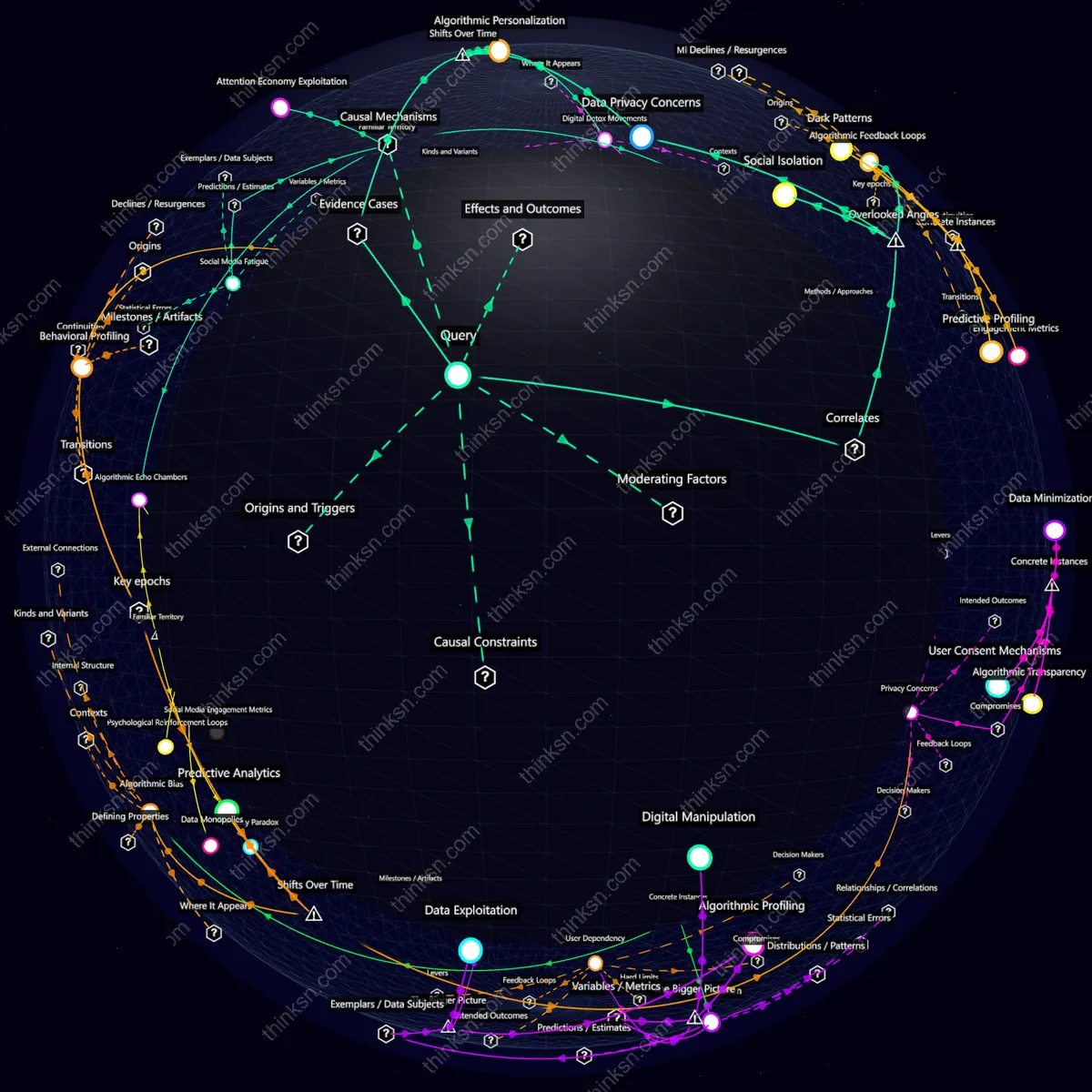
Analysis reveals 5 key thematic connections.
Key Findings
Algorithmic Bias
Social media platforms employing AI for emotion detection risk exacerbating algorithmic bias by over-relying on flawed emotional indicators, leading users into a cycle of targeted ads that misrepresent their actual needs and desires.
Privacy Concerns
The pervasive use of AI to monitor user emotions can erode privacy, as platforms gather intimate data without clear consent or transparency, leaving individuals vulnerable to psychological manipulation through subtle nudges in ad placement.
Ethical Boundaries
By leveraging emotional intelligence for targeted ads, social media companies navigate a slippery slope where ethical boundaries blur, potentially exploiting user vulnerabilities and undermining the integrity of public discourse and individual autonomy.
Privacy Erosion
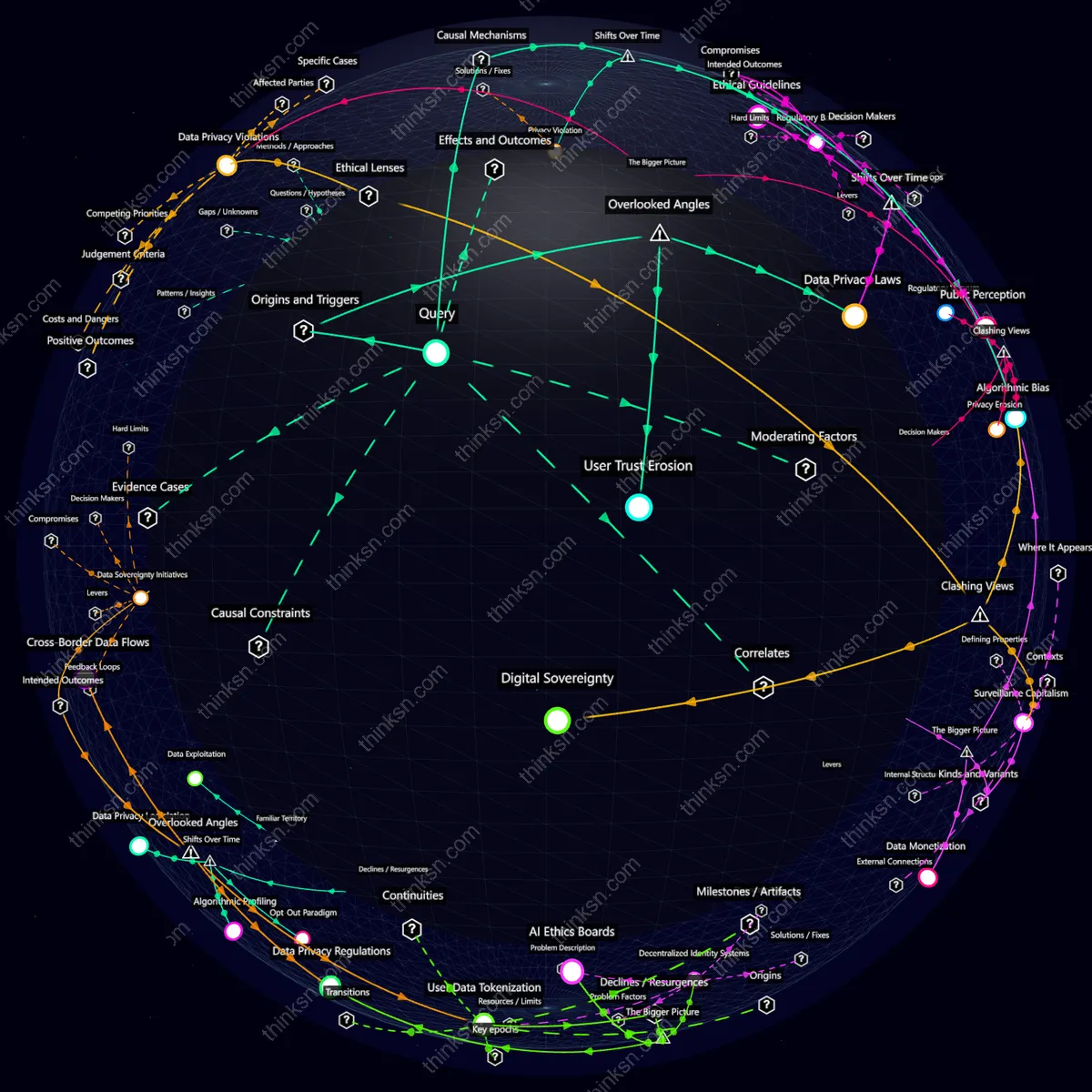
The extensive data collection required for AI systems to detect and manipulate emotions leads to significant erosion of user privacy. As platforms monitor every interaction, users become increasingly aware that their personal information is being used against them for commercial gain, fostering a climate of mistrust and paranoia.
Digital Dependency
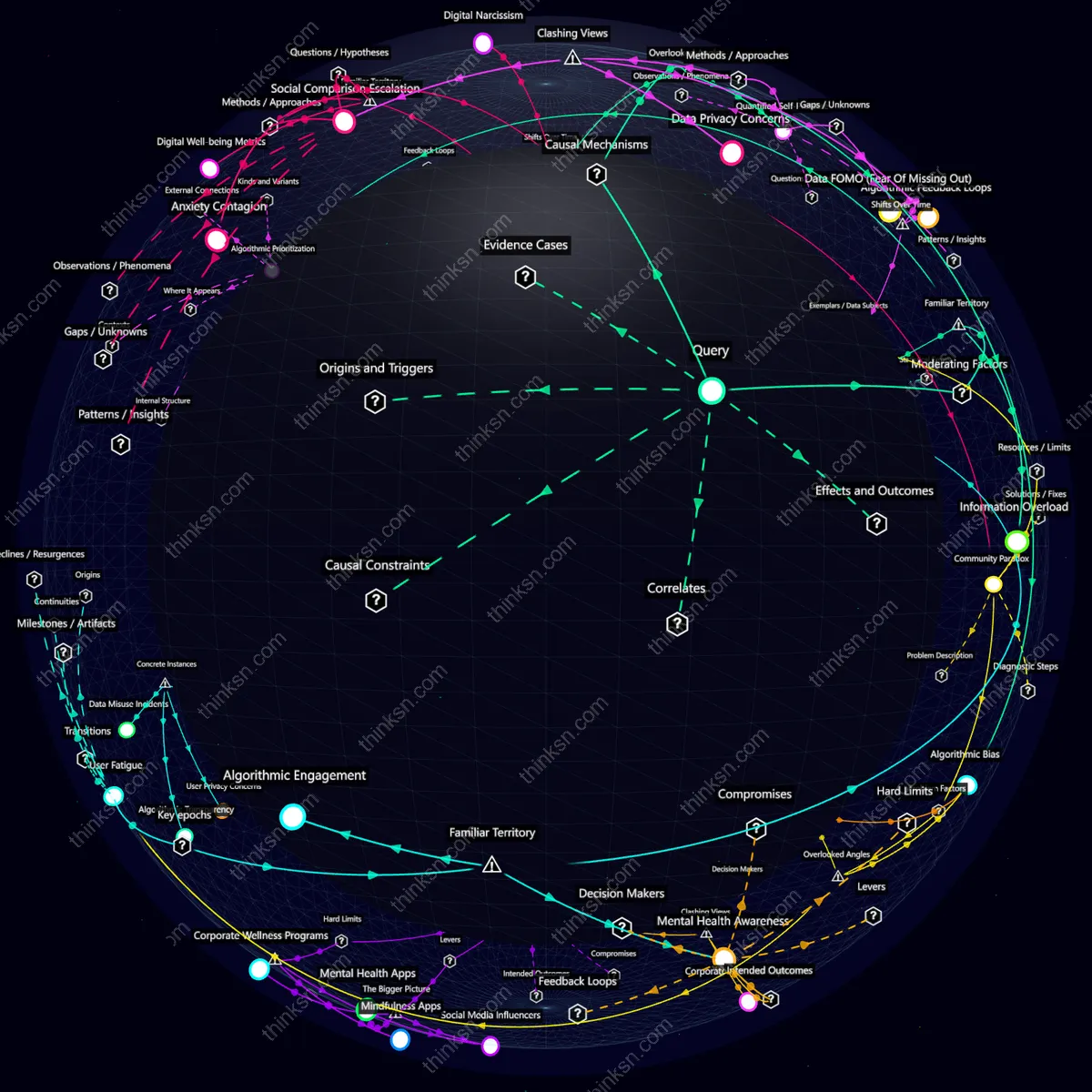
Users' growing reliance on social media for emotional validation creates a fragile dependency on these platforms. AI-driven algorithms exploit this dependency to keep users engaged with emotionally manipulative content, which can lead to mental health issues such as anxiety and depression when the platform is inaccessible.
Deeper Analysis
What are potential strategic interventions to prevent privacy erosion when social media platforms use AI for emotional manipulation in targeted advertising?
Surveillance Capitalism
As social media platforms leverage AI for emotional manipulation in targeted advertising, surveillance capitalism thrives by monetizing personal data. This leads users to become unaware of the extent to which their privacy is being eroded, often trading short-term convenience for long-term exposure.
Algorithmic Bias
The use of AI-driven algorithms in social media can exacerbate existing biases and inequalities by reinforcing echo chambers. This not only distorts user perceptions but also undermines democratic processes, as users are less exposed to diverse viewpoints and more likely to be manipulated into polarized stances.
Regulatory Lag
As technology advances at a rapid pace, regulatory frameworks struggle to keep up with the evolving risks of AI in social media. This delay allows for continued erosion of privacy without adequate safeguards or oversight mechanisms, leaving individuals vulnerable and exposed to exploitation.
How has the evolution of digital dependency influenced the effectiveness of AI-driven emotional manipulation in social media advertising over time?
Social Media Algorithms
As social media algorithms evolve to exploit digital dependency for engagement, they increasingly prioritize content that triggers emotional responses, making users more susceptible to AI-driven manipulation. This shift leads to echo chambers and filter bubbles, intensifying polarized views and undermining democratic discourse.
Data Privacy Laws
The introduction of data privacy laws like GDPR has forced companies to be more transparent about user data usage but paradoxically, tighter regulations have spurred tech firms to innovate in AI-driven emotional manipulation by leveraging less obvious personalization techniques, creating a cat-and-mouse game between regulation and technology.
Smartphone Usage
The proliferation of smartphones has led to unprecedented levels of digital dependency, enabling advertisers to deploy AI algorithms that track user behavior in real-time. This constant surveillance fuels targeted emotional manipulation, which can be addictive and harmful, particularly among younger demographics who lack digital literacy.
Explore further:
- What strategic interventions can be formulated to ensure data privacy laws are effective in mitigating psychological manipulation by social media platforms using AI for targeted ads?
- How has the evolution of smartphone usage influenced the effectiveness of AI-driven emotional manipulation for targeted ads over time?
What strategic interventions can be formulated to ensure data privacy laws are effective in mitigating psychological manipulation by social media platforms using AI for targeted ads?
Surveillance Capitalism
Data Privacy Laws aim to curb the exploitative practices of surveillance capitalism but often struggle against the relentless data-harvesting activities of tech giants. As platforms become more adept at circumventing regulations, laws may inadvertently drive companies towards even stealthier methods of collecting and exploiting user data for targeted advertising.
Algorithmic Transparency
Ensuring algorithmic transparency can be a double-edged sword; while it aims to make AI decision-making processes more understandable and accountable, it also risks exposing sensitive data architectures to malicious actors. This balancing act requires continuous regulatory updates to adapt to emerging technologies without stifling innovation.
Consumer Awareness
Increasing consumer awareness through data privacy laws can empower users but may also backfire if the complexity of privacy settings and terms of service overwhelms users, leading them to opt out completely or remain uninformed. This paradox highlights the need for simpler, more accessible information frameworks alongside robust legal protections.
How has the evolution of smartphone usage influenced the effectiveness of AI-driven emotional manipulation for targeted ads over time?
Personalized Ads
As smartphone usage surged, personalized ads leveraged AI-driven analytics to manipulate user emotions, leading to increased consumer spending but also fostering dependency on targeted content that can distort personal values and privacy.
Social Media Engagement
The rise of smartphones enabled social media platforms to track user behavior in real-time, refining algorithms to exploit emotional triggers. This heightened engagement comes at the cost of mental health issues such as anxiety and depression due to constant comparison and validation-seeking.
Behavioral Data Mining
Smartphone usage has made it easier for tech giants to mine behavioral data, using AI to predict and influence user actions. This powerful tool can drive economic growth but also creates ethical dilemmas around consent and the misuse of personal information.
Explore further:
- What strategies can social media platforms implement to minimize psychological manipulation through personalized ads that use AI for emotional detection?
- What strategies can be formulated to mitigate psychological manipulation through social media engagement when AI is used for targeted advertising based on user emotions?
What strategies can social media platforms implement to minimize psychological manipulation through personalized ads that use AI for emotional detection?
Algorithmic Transparency
Increasing algorithmic transparency can reduce psychological manipulation by revealing how AI models detect and exploit emotional vulnerabilities. However, this also risks undermining the competitive advantage of opaque algorithms that social media platforms rely on for targeted advertising.
User Data Privacy Laws
Stricter user data privacy laws can limit the amount and type of personal information available to AI systems for creating personalized ads. This could force platforms to adopt less invasive but potentially less effective methods, impacting ad revenue and platform profitability.
Ethical Advertising Standards
Implementing ethical advertising standards that prohibit certain psychological tactics in personalized ads can protect user well-being but may also stifle innovation and creativity in digital marketing. Platforms must navigate balancing ethical practices with commercial interests.
What strategies can be formulated to mitigate psychological manipulation through social media engagement when AI is used for targeted advertising based on user emotions?
Emotionally Intelligent Bots
AI-driven emotionally intelligent bots can exploit users' psychological vulnerabilities by mimicking human empathy and trust. For instance, during the 2016 US election, bot networks used emotional manipulation to sway public opinion, highlighting risks when users engage with seemingly supportive but manipulative AI.
Microtargeting Campaigns
Political campaigns leverage microtargeting by analyzing user data to deliver tailored ads that resonate emotionally and politically. A real-world example is the Cambridge Analytica scandal, where detailed voter profiles were used for targeted advertising in the UK and US elections, illustrating how personal information can be weaponized against individuals.
User Data Exploitation
Social media platforms often exploit user data to optimize ad relevance through AI algorithms. This can lead to echo chambers that reinforce biases, as seen in the proliferation of conspiracy theories on Reddit and other platforms where personalized content amplifies extreme views.
Explore further:
- What is the architectural structure and geographic distribution of emotionally intelligent bots used by social media platforms to detect user emotions for targeted advertising?
- How has the evolution of microtargeting campaigns using AI for emotional manipulation in social media impacted psychological manipulation over time?
What is the architectural structure and geographic distribution of emotionally intelligent bots used by social media platforms to detect user emotions for targeted advertising?
Data Privacy Concerns
The deployment of emotionally intelligent bots by social media platforms for emotion detection and targeted advertising significantly amplifies data privacy concerns. Users' emotional states become quantifiable metrics, increasing the risk of psychological manipulation and unauthorized access to deeply personal information.
Algorithmic Bias
Emotionally intelligent bots often rely on biased training datasets, leading to algorithmic bias that disproportionately affects marginalized communities. This can result in targeted advertising reinforcing social inequalities or excluding certain groups from beneficial marketing opportunities based on flawed emotional profiling.
User Engagement Strategies
The use of emotionally intelligent bots transforms user engagement strategies into sophisticated psychological operations. Platforms may exploit users' vulnerabilities, leading to increased screen time and addictive behaviors that are detrimental to mental health while maximizing advertising revenue.
User Privacy Violations
Emotionally intelligent bots can inadvertently expose user privacy by over-interpreting emotional cues in social media posts, leading platforms to collect and analyze vast amounts of personal data without clear consent. This has heightened public concern about surveillance capitalism and the ethical use of AI.
Digital Detox Movements
As the prevalence of emotionally intelligent bots grows, so does public awareness of their psychological impact, spurring grassroots campaigns advocating for 'digital detox' periods to reduce screen time and mitigate emotional manipulation by social media algorithms. This highlights a growing need for regulatory frameworks around AI ethics.
Explore further:
- What are the emerging concerns regarding data privacy when social media platforms use AI to detect and manipulate user emotions for targeted advertising, and how might these practices impact psychological manipulation from a subjective viewpoint?
- What are potential strategic interventions that social media platforms can implement to mitigate psychological manipulation through AI-driven user engagement strategies for targeted advertising?
What are potential strategic interventions that social media platforms can implement to mitigate psychological manipulation through AI-driven user engagement strategies for targeted advertising?
Algorithmic Transparency
Increased algorithmic transparency requires social media platforms to reveal how AI-driven engagement strategies are constructed and applied. While this can empower users by demystifying manipulation tactics, it also exposes these systems to adversaries who may exploit them for malicious purposes.
Content Moderation Policies
Strict content moderation policies aimed at reducing psychological manipulation through user engagement can lead to over-censorship, stifling legitimate discourse and expression. Balancing between protection from harmful content and freedom of speech remains a delicate challenge for platforms.
User Privacy Settings
Enhanced privacy settings give users more control over their data but also introduce complexities in usage and adherence, potentially leading to information asymmetry where only tech-savvy individuals benefit fully from these protections.
Algorithmic Bias
Social media platforms' reliance on algorithmic bias for targeted advertising can skew user perceptions and behaviors by reinforcing existing beliefs. For instance, Facebook's Cambridge Analytica scandal exposed how AI-driven engagement strategies exploited psychological profiles to manipulate voters without their knowledge.
Dark Patterns
Platforms like Instagram use dark patterns—subtle design manipulations that trick users into clicking on ads or engaging more. While these boost user interaction metrics, they can lead to addictive behaviors and negative mental health outcomes, highlighting a trade-off between engagement and user well-being.
Data Privacy Concerns
Implementing AI-driven user engagement strategies often necessitates collecting extensive personal data, raising significant privacy issues. Apple's strict privacy measures exemplify the tension between maximizing ad revenue through deep profiling versus protecting user trust and privacy.
Explore further:
- What are the potential failures and pressure points in social media platforms' algorithms that lack transparency when using AI to detect and manipulate user emotions for targeted ads, and how can these impact psychological manipulation?
- How has algorithmic bias in AI-driven emotional detection by social media platforms evolved over time and what are its implications for psychological manipulation through targeted advertising?
How has algorithmic bias in AI-driven emotional detection by social media platforms evolved over time and what are its implications for psychological manipulation through targeted advertising?
Targeted Advertising
Algorithmic bias in AI-driven emotional detection enables social media platforms to tailor advertisements that exploit users' vulnerabilities and amplify divisive sentiments, leading to psychological manipulation and polarized communities. This practice undermines mental health by fostering echo chambers and reducing exposure to diverse viewpoints.
User Data Privacy
The collection and analysis of user data for emotional detection algorithms raise significant privacy concerns as users are unaware of how their emotions are being mined and used for commercial gain. This surveillance capitalism can erode trust in digital platforms, prompting regulatory scrutiny but also fostering a culture of paranoia among users.
Ethical AI Development
As the impact of algorithmic bias becomes clearer, tech companies face increasing pressure to develop more ethical and transparent AI systems. This shift challenges traditional business models that rely on opaque algorithms for maximizing engagement and profit, necessitating a reevaluation of corporate responsibility in the age of digital influence.
Surveillance Capitalism
The rise of surveillance capitalism has exacerbated algorithmic bias in AI-driven emotional detection by exploiting psychological vulnerabilities at scale. Platforms track and analyze users' emotions to deliver highly personalized ads, reinforcing harmful stereotypes and amplifying societal divisions.
Digital Divide
Algorithmic bias interacts with the digital divide, disproportionately affecting marginalized communities who are more likely to encounter biased algorithms in emotional detection systems. This perpetuates inequality by limiting access to fair opportunities and exacerbating social disparities.
Regulatory Lag
The rapid evolution of AI technologies has outpaced regulatory frameworks, creating a vacuum where algorithmic bias thrives unchecked. As platforms refine their emotional detection algorithms, the lack of oversight enables unscrupulous practices that manipulate users for profit.