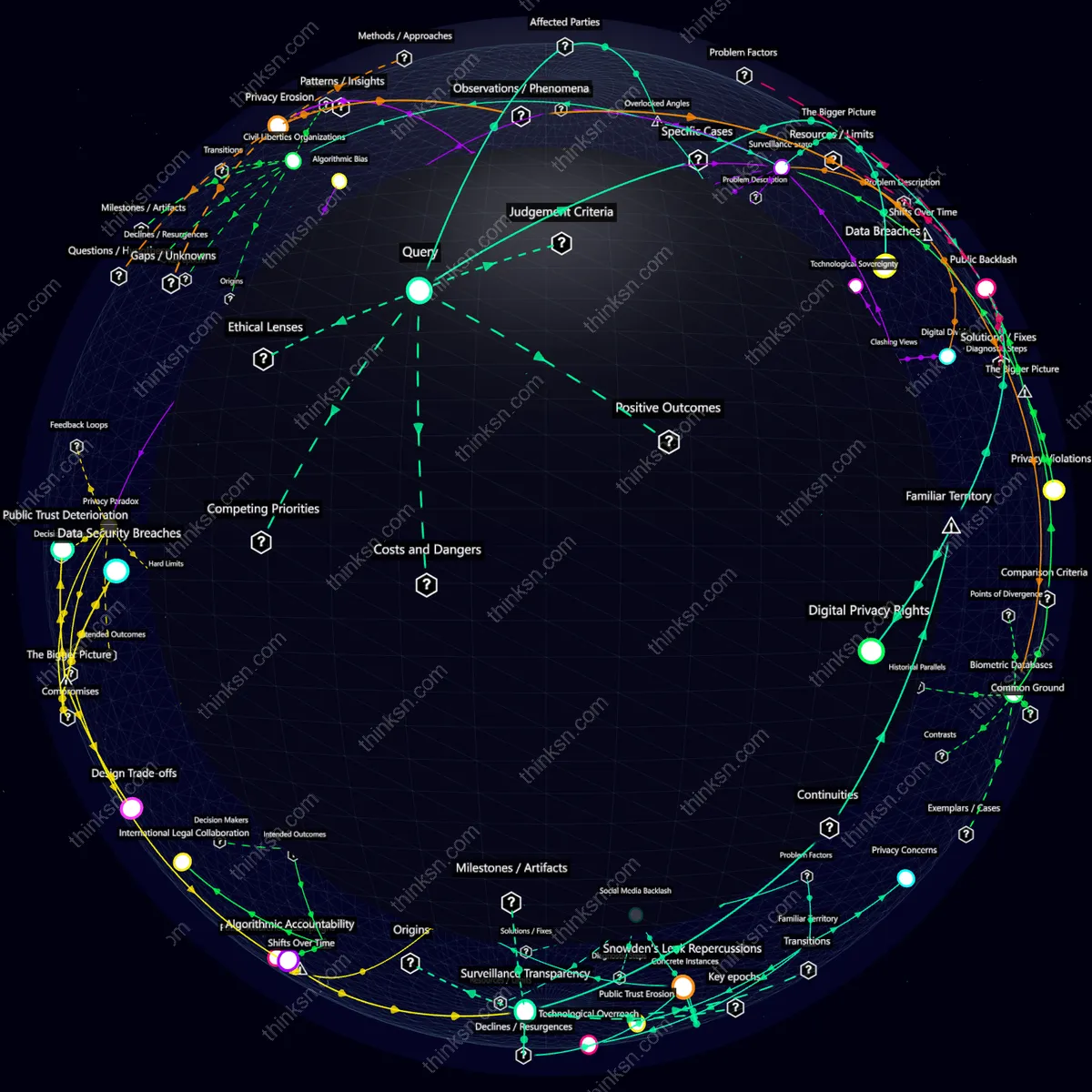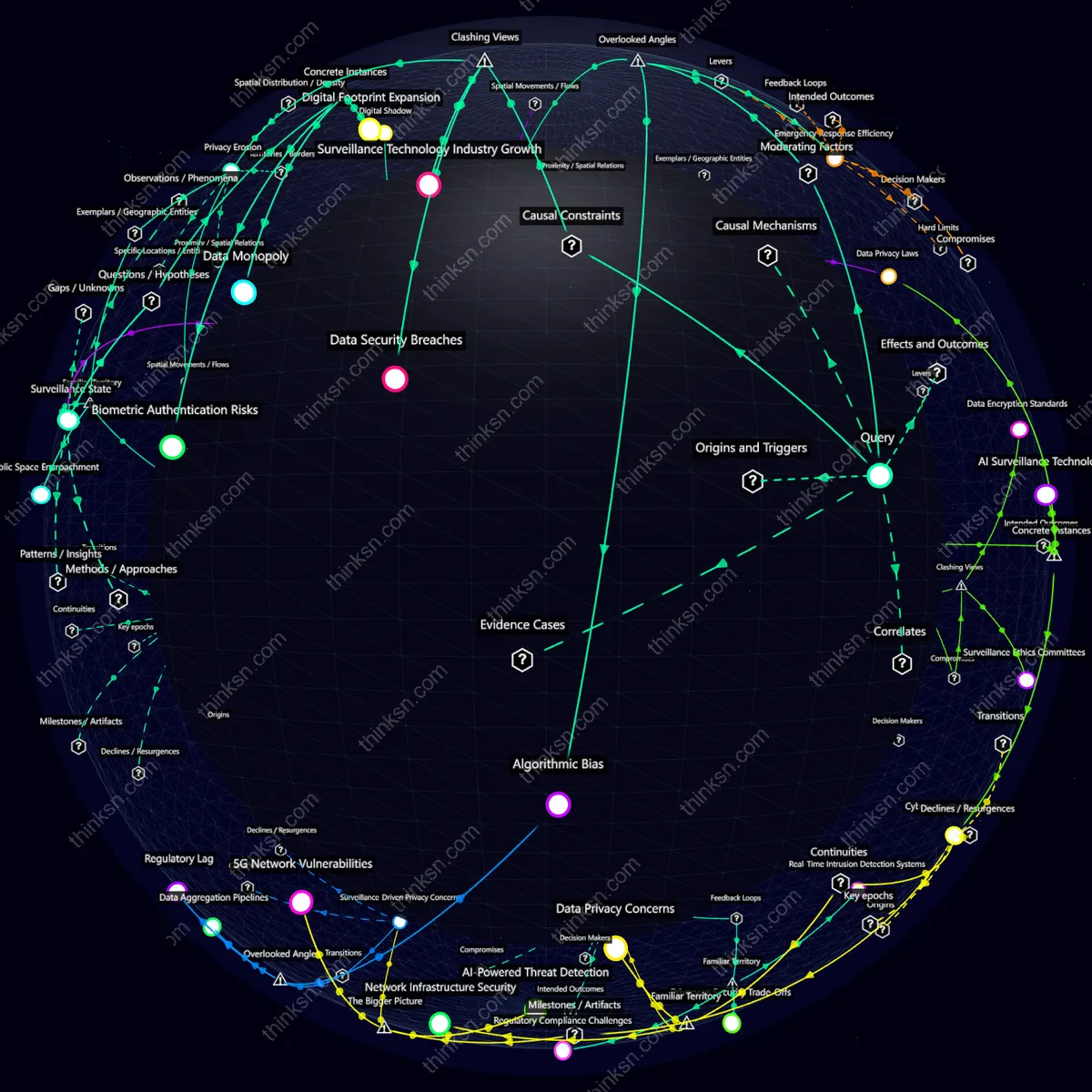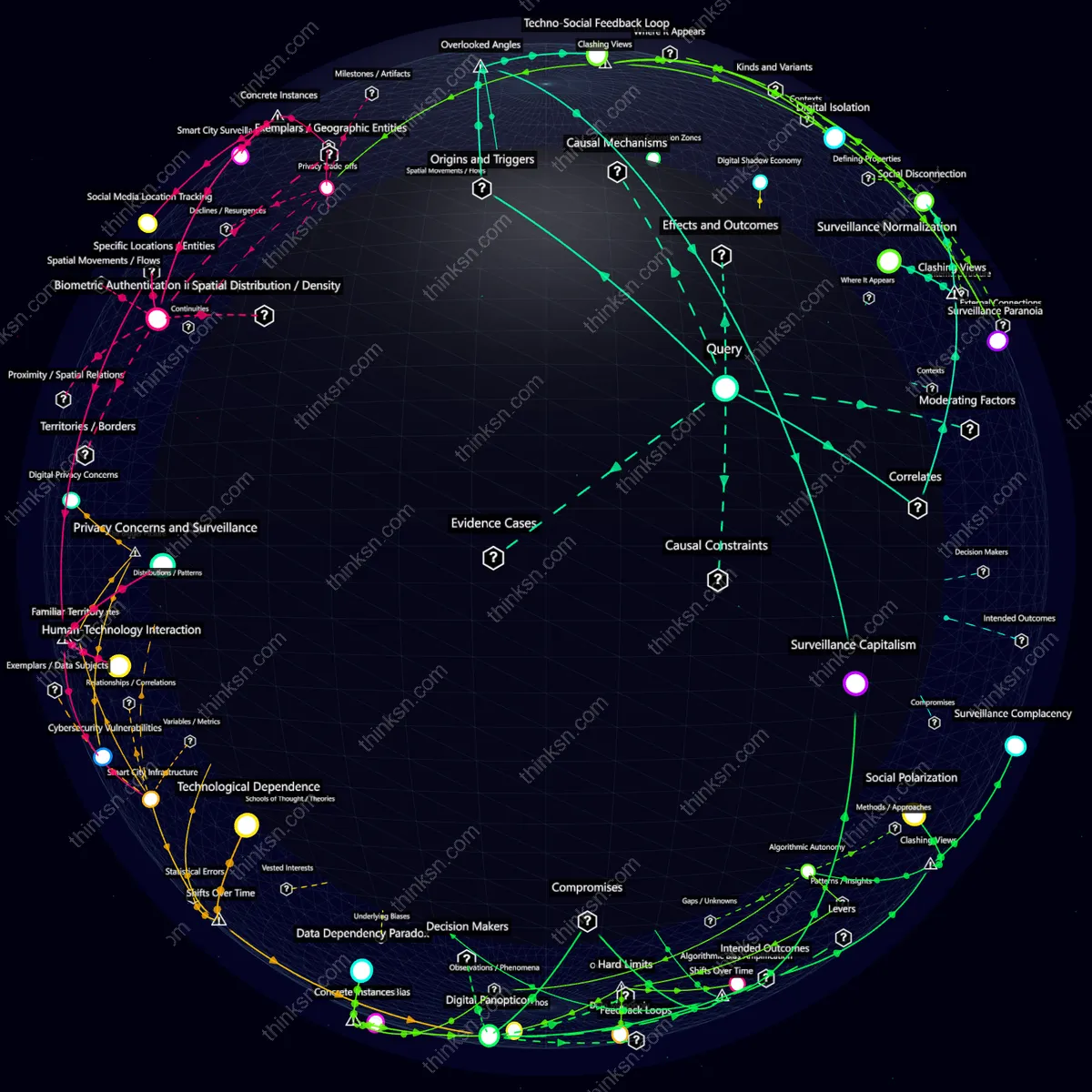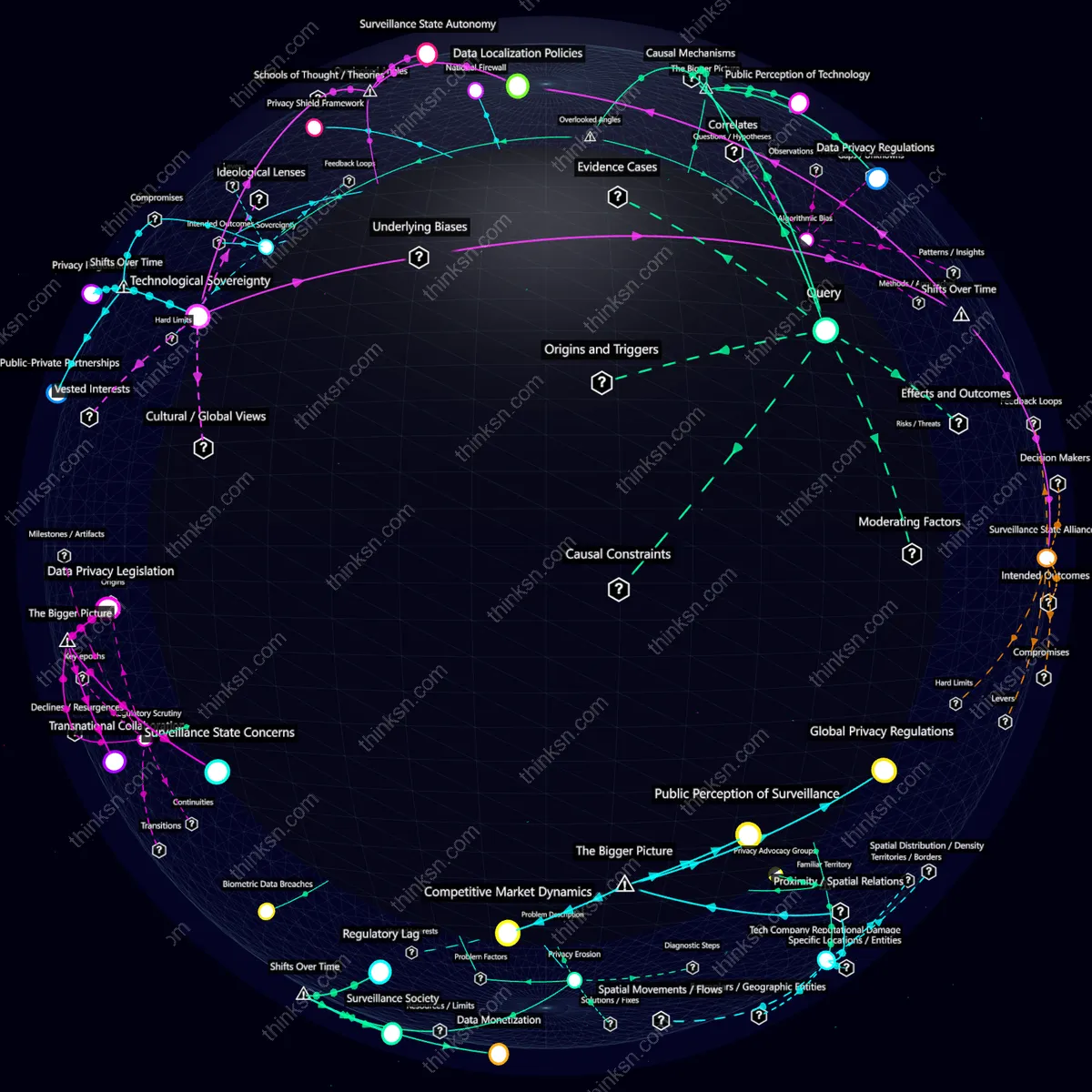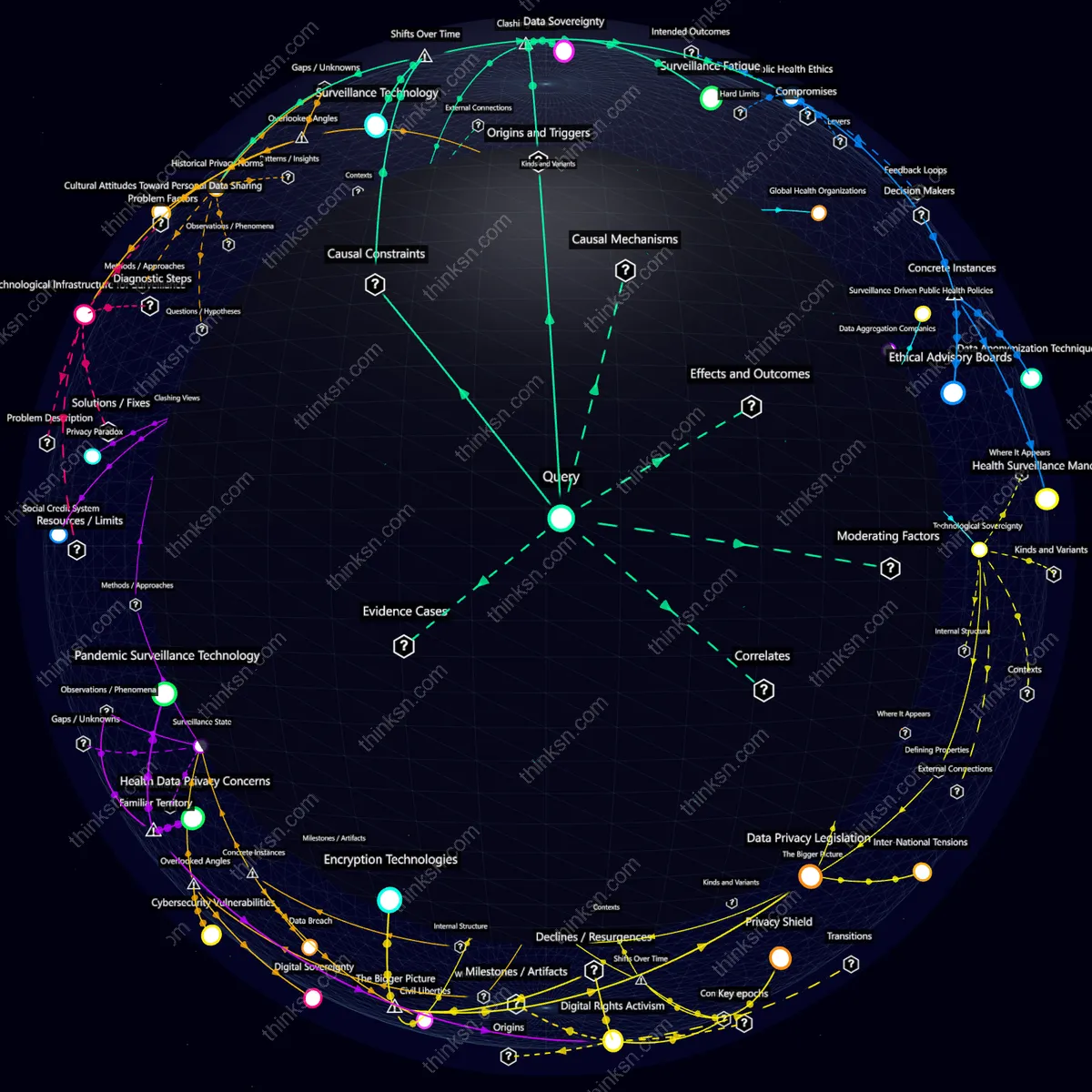
The Hidden Cost of Surveillance: Government Mandates on Health Monitoring
Analysis reveals 6 key thematic connections.
Key Findings
Digital Panopticon
The concept of a 'digital panopticon' emerges as mandatory surveillance for health monitoring creates an environment where individuals feel constantly observed, altering behaviors and fostering self-censorship. This shift towards a digital authoritarianism raises questions about the balance between public safety and individual freedom.
Data Sovereignty
As data collection becomes more pervasive, the issue of data sovereignty arises, challenging traditional notions of privacy and autonomy. Governments and tech firms vie for control over vast troves of personal health information, creating a complex web of legal, ethical, and political implications that extend beyond initial public health concerns.
Surveillance Fatigue
Over time, the continuous monitoring can lead to 'surveillance fatigue', where individuals become desensitized or indifferent to privacy violations. This phenomenon weakens societal resistance against further encroachments on personal liberties and underscores the fragile nature of consent in an era of digital omnipresence.
Surveillance Technology
As universal surveillance is mandated for health monitoring, the rapid evolution of surveillance technology introduces new vulnerabilities. While it enhances pandemic response capabilities, it also amplifies the risk of data breaches and misuse by authoritarian regimes or criminal entities.
Public Health Ethics
The shift towards widespread surveillance raises profound ethical dilemmas within public health ethics. Balancing the need for stringent monitoring against individual rights leads to contentious debates about consent, transparency, and accountability in governance practices.
Historical Privacy Norms
Mandating universal surveillance challenges deeply ingrained historical norms regarding privacy. This tension highlights how societal values evolve, revealing the fragile equilibrium between technological advancement and traditional notions of personal freedom and autonomy.
Deeper Analysis
What are potential strategies and policies for balancing public health ethics with privacy concerns in a system that mandates universal surveillance during pandemics?
Data Anonymization Techniques
Governments implementing data anonymization techniques during pandemics face the challenge of balancing public health surveillance with privacy. For instance, Singapore's TraceTogether app uses encrypted tokens to minimize personal data exposure while tracking infections, yet this approach still risks re-identification through auxiliary datasets.
Health Surveillance Mandates
The imposition of health surveillance mandates during pandemics can lead to significant public resistance and compliance issues. In South Korea, strict contact tracing policies initially reduced infection rates but also faced backlash over privacy concerns, illustrating the delicate balance between effective epidemic control and individual rights.
Ethical Advisory Boards
Establishing ethical advisory boards is crucial for guiding policy decisions in public health crises. During the Ebola outbreak, Liberia's Public Health Institute formed an ethics committee to oversee surveillance measures, highlighting how such bodies can mediate between urgent public health needs and privacy protections.
In what ways have historical privacy norms in different societies influenced public acceptance and resistance to universal surveillance during pandemics, and what emerging insights can we gain from these patterns?
Cultural Attitudes Toward Personal Data Sharing
Historical privacy norms shape cultural attitudes toward personal data sharing in times of crisis. Societies with established traditions of individual autonomy and data protection often resist mass surveillance, even during pandemics, citing long-standing values of personal freedom and confidentiality. This resistance can delay public health responses but also highlights the tension between societal safety and individual rights.
Legal Frameworks for Data Protection
The evolution of legal frameworks for data protection reflects historical privacy norms, influencing how societies accept or reject surveillance measures during pandemics. Countries with robust pre-existing data protection laws face significant political challenges when attempting to implement emergency surveillance programs, as these measures often conflict with established legal protections and public expectations.
Technological Infrastructure for Surveillance
Historical privacy norms impact the development of technological infrastructure that enables or hinders mass surveillance. In societies where privacy is highly valued, there may be a lack of technical infrastructure capable of rapid deployment during crises, creating vulnerabilities when sudden public health emergencies demand swift action. This gap between societal values and available technology complicates emergency responses.
Explore further:
- What are the key components and categories within legal frameworks for data protection that address the implications of implementing universal surveillance during a pandemic?
- What are the measurable systemic strains and potential failures in technological infrastructure for surveillance when mandating universal monitoring during a pandemic, and how do these affect privacy and societal aspects?
What are the key components and categories within legal frameworks for data protection that address the implications of implementing universal surveillance during a pandemic?
Surveillance-Driven Public Health Policies
The integration of surveillance-driven public health policies under the guise of pandemic response can lead to an erosion of privacy rights, as legal frameworks are pressured to accommodate real-time data collection and analysis. This shift necessitates a delicate balance between individual freedoms and collective security, highlighting the risk of overreach by governments.
Data Localization Mandates
The implementation of data localization mandates in response to universal surveillance during a pandemic can paradoxically increase cybersecurity risks due to fragmented data storage. While aimed at protecting domestic interests, these measures may unintentionally isolate economies and complicate international cooperation on public health initiatives.
Technological Sovereignty
The push for technological sovereignty in the context of pandemic surveillance can lead to conflicting legal interpretations across nations, complicating global data protection standards. This divergence underscores a fragile dependency where countries may prioritize short-term gains over long-term cooperation and data integrity.
Surveillance State
The implementation of a surveillance state during a pandemic drastically alters legal frameworks for data protection by prioritizing public health over individual privacy rights. This shift can lead to long-term erosion of civil liberties as the initial emergency measures become normalized, posing significant risks to democratic governance.
Data Aggregation Companies
Data aggregation companies play a crucial role in implementing surveillance frameworks during pandemics by collecting and analyzing vast amounts of personal data. This creates complex legal challenges around consent, data minimization, and accountability, as these entities often operate at the intersection of public health needs and commercial interests.
Global Health Organizations
Global health organizations' involvement in shaping surveillance policies during pandemics underscores a delicate balance between international cooperation and local sovereignty. These organizations can push for standardized data protection measures that may conflict with national laws, leading to geopolitical tensions over control of health data.
Explore further:
- What are the emerging perspectives on how data localization mandates might interact with universal surveillance during a pandemic, and what hidden assumptions could this reveal about privacy and societal norms?
- What is the impact of technological sovereignty on the balance between universal surveillance for pandemic health monitoring and individual privacy in a society?
What are the emerging perspectives on how data localization mandates might interact with universal surveillance during a pandemic, and what hidden assumptions could this reveal about privacy and societal norms?
Surveillance State Control
Data localization mandates can empower surveillance states to exert greater control over citizens during a pandemic by centralizing data collection and analysis, potentially undermining digital privacy rights as governments justify enhanced monitoring for public health reasons.
Cross-Border Data Flow Restrictions
Restrictions on cross-border data flows mandated during pandemics can disrupt global supply chains and economic activities, disproportionately affecting small businesses and less technologically advanced countries that rely heavily on international digital services.
Global Privacy Norms Erosion
Emerging perspectives suggest that stringent data localization policies could lead to a gradual erosion of globally recognized privacy norms as nations prioritize national security over individual rights, creating a fragmented regulatory landscape with significant implications for human rights and digital freedoms.
What is the impact of technological sovereignty on the balance between universal surveillance for pandemic health monitoring and individual privacy in a society?
Digital Autonomy
Technological Sovereignty fosters digital autonomy by empowering nations to control their technological ecosystems. This can lead to enhanced privacy protections, but also isolates societies from global health data sharing during pandemics, risking misinformation and delayed responses.
Surveillance State
As countries assert Technological Sovereignty, the line between public safety measures and pervasive surveillance blurs. Governments may exploit advanced digital infrastructure for pandemic monitoring, yet risk sliding into a Surveillance State where individual privacy is severely compromised under the guise of health security.
Inter-National Tensions
The pursuit of Technological Sovereignty can lead to inter-national tensions as nations vie for control over critical technologies. This competition may hinder global cooperation in addressing pandemics, exacerbating distrust and undermining collective efforts to balance health monitoring with privacy.
Explore further:
- What is the impact of mandating universal surveillance for pandemic health monitoring on digital autonomy and how are these components structurally related?
- What are the emerging insights and diverse viewpoints on how a surveillance state, implemented for pandemic health monitoring, impacts societal privacy and other aspects?
What are the emerging insights and diverse viewpoints on how a surveillance state, implemented for pandemic health monitoring, impacts societal privacy and other aspects?
Digital Rights Activism
As surveillance measures tighten under health monitoring mandates, digital rights activists face increasing challenges. Their efforts to protect privacy often clash with government policies, leading to a surge in encrypted communication tools and the rise of underground networks that shield dissenters from state scrutiny.
Health Data Privacy Concerns
The implementation of surveillance technologies for health monitoring exacerbates fears about data breaches and misuse. Public trust erodes as incidents like unauthorized access to personal medical records highlight systemic vulnerabilities, prompting calls for stricter regulations but also resistance from tech companies wary of operational constraints.
Pandemic Surveillance Technology
The rapid deployment of pandemic surveillance technology reveals a fragile balance between public health needs and individual privacy rights. As governments and tech firms race to develop solutions, the reliance on these technologies underscores their potential for long-term expansion beyond immediate health concerns, raising questions about democratic oversight and transparency.
Digital Panopticon
The implementation of a digital panopticon for pandemic health monitoring shifts societal norms towards an always-on surveillance state. This reframes human behavior to prioritize safety measures over privacy, creating a fragile dependency on constant data collection and analysis by tech companies and governments. The risk lies in the erosion of civil liberties as trust in these systems wanes.
Privacy Paradox
The privacy paradox emerges where individuals accept increased surveillance for health reasons but simultaneously demand greater control over their personal data. This dissonance highlights a trade-off between public safety and individual rights, complicating the role of tech firms in managing data privacy. Unintended consequences include a fragmented digital ecosystem as users seek alternative platforms with better privacy protections.
Social Credit System
Expanding surveillance for health monitoring opens pathways to more invasive social credit systems where personal behavior, including adherence to health protocols, impacts one's societal standing. This reframes systemic dynamics by intertwining public health policies with punitive measures against non-compliance, raising concerns about the misuse of data and the potential for authoritarian control.
Explore further:
- How has digital rights activism evolved in response to government mandates for universal surveillance during pandemics, and what mechanisms have been used to protect privacy and societal aspects over time?
- What is the structure and composition of a digital panopticon in the context of universal surveillance for pandemic health monitoring?
How has digital rights activism evolved in response to government mandates for universal surveillance during pandemics, and what mechanisms have been used to protect privacy and societal aspects over time?
Surveillance Capitalism
As governments mandate universal surveillance during pandemics to track the spread of diseases, digital rights activists find themselves in a complex battle against both state and corporate entities. Surveillance capitalism exploits personal data collected under these mandates for commercial gain, creating a paradox where privacy advocates must navigate not just legal but also economic threats.
Privacy Shield
The EU's Privacy Shield framework has faced scrutiny from digital rights activists who see it as inadequate protection against government and corporate surveillance. When the U.S. and EU failed to renew this agreement, activists celebrated a temporary victory but quickly realized that without robust international data protection laws, individuals' privacy remains at risk.
Encryption Backdoors
Proposals for encryption backdoors in digital communication platforms by governments aiming to enhance surveillance capabilities have faced fierce opposition from digital rights activists. While intended to fight crime and terrorism, such measures undermine cybersecurity and expose individuals to broader privacy infringements, illustrating the delicate balance between security and individual freedoms.
Data Privacy Legislation
The push for robust data privacy legislation gains traction as digital rights activism responds to government surveillance mandates during pandemics. However, this movement faces significant setbacks when powerful tech companies lobby against stringent regulations, creating a delicate balance between protecting individual privacy and enabling necessary public health measures.
Encryption Technologies
Activists leverage advanced encryption technologies as a countermeasure to universal surveillance mandates during pandemics. This not only protects personal data but also aids in organizing covertly against oppressive policies, highlighting the delicate dance between technological innovation and governmental oversight.
Explore further:
- How has surveillance capitalism evolved over time in response to the implementation of universal surveillance for pandemic health monitoring, and what are its implications on privacy and society?
- What are the potential impacts on societal privacy and security if encryption backdoors are implemented alongside universal surveillance for pandemic monitoring?
What are the potential impacts on societal privacy and security if encryption backdoors are implemented alongside universal surveillance for pandemic monitoring?
Surveillance State
The implementation of encryption backdoors alongside pandemic monitoring can exacerbate the power dynamics between citizens and the state. Surveillance states may leverage these tools to monitor not just health data but also private communications, creating a chilling effect on free speech and political dissent.
Data Breach
Encryption backdoors create new vulnerabilities that could be exploited by malicious actors or even insiders with access. A significant data breach exposing sensitive personal information can devastate individuals' privacy and trust in digital security measures, highlighting the precarious balance between security and convenience.
Civil Liberties
Legislation mandating encryption backdoors often faces fierce opposition from civil liberties advocates who argue that such measures undermine fundamental rights to privacy. This tension can lead to prolonged legal battles and public debates, impacting society's perception of technological oversight and government overreach.
Digital Sovereignty
Encryption backdoors may lead to a fragmented global internet landscape where countries like Russia or Iran enforce strict national standards for data security, undermining digital sovereignty. This could isolate nations technologically and economically while fostering cyber espionage and information warfare between states.
Cybersecurity Vulnerabilities
While encryption backdoors are intended to enhance pandemic monitoring capabilities, they also introduce significant cybersecurity risks by creating new entry points for malicious actors. For example, a breach in the UK's National Health Service systems could expose sensitive health data of millions, exacerbating public distrust and undermining the efficacy of digital health initiatives.