The Surveillance Era: How 5G Networks Are Revolutionizing Real-Time Monitoring
Analysis reveals 6 key thematic connections.
Key Findings
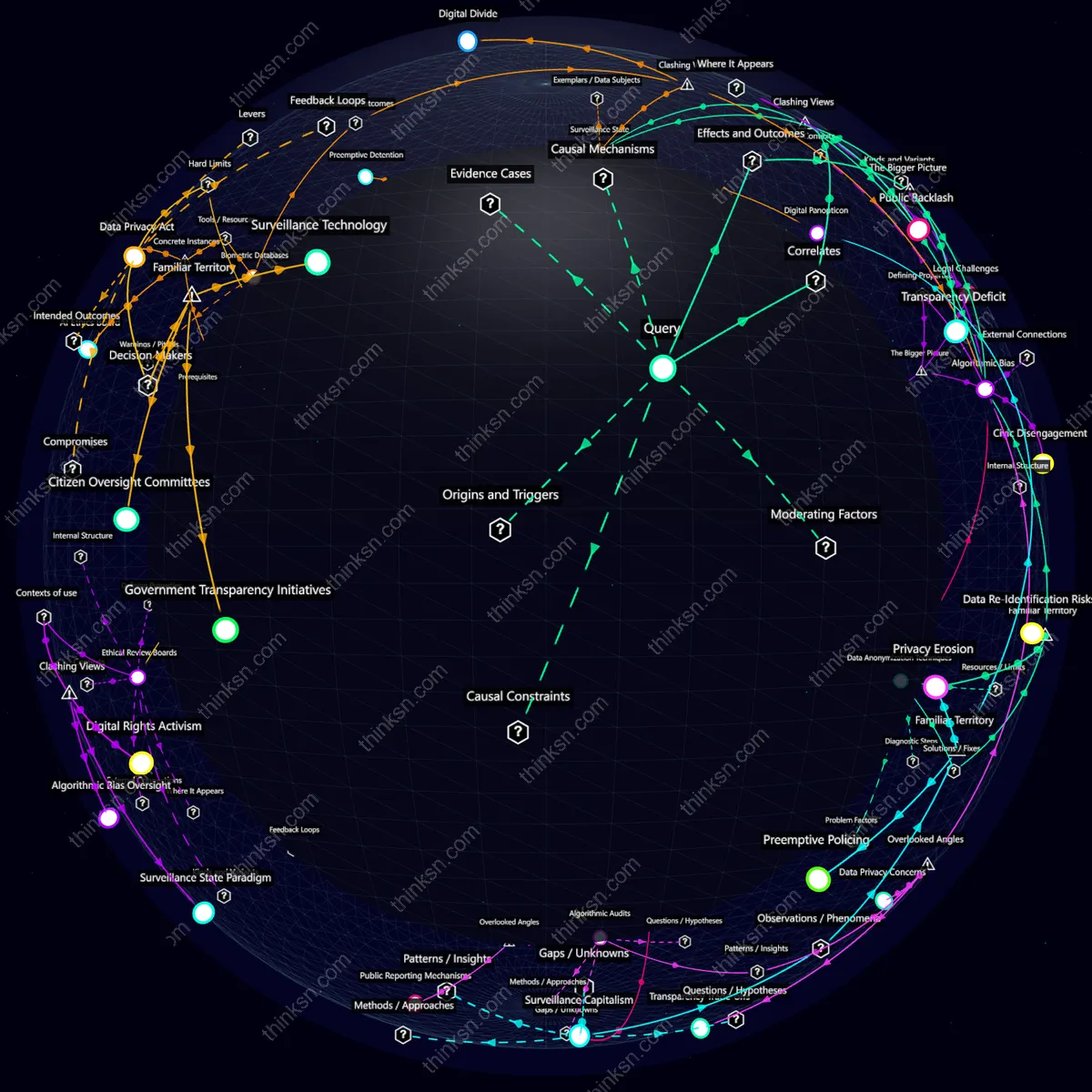
Digital Divide
The implementation of real-time surveillance using 5G networks exacerbates the digital divide. While affluent neighborhoods might benefit from enhanced security and convenience, marginalized communities often lack access to advanced technology and privacy protections, leading to increased social inequality and potential discrimination.
Algorithmic Bias
Real-time surveillance systems powered by 5G can perpetuate algorithmic bias. Surveillance algorithms trained on biased datasets may disproportionately target certain demographics for scrutiny or punishment, undermining public trust in technology and the fairness of judicial processes.
Emergency Response Efficiency
While real-time surveillance with 5G networks enhances emergency response efficiency by providing instant situational awareness to first responders, it also introduces new challenges such as the ethical use of data and ensuring that privacy rights are not compromised during crisis management.
Privacy Erosion
Real-time surveillance using 5G networks can lead to a pervasive culture of constant monitoring, causing individuals to self-censor and alter their behavior in ways that erode personal freedoms. This shift can disproportionately affect marginalized communities, who may face increased scrutiny and risk of discrimination based on the data collected.
Data Security Breaches
The implementation of real-time surveillance systems introduces significant vulnerabilities to data security. As more sensitive information is transmitted through 5G networks, the likelihood of breaches increases, potentially exposing personal data and undermining trust in technological infrastructure. Such breaches could lead to severe consequences for individuals and organizations alike.
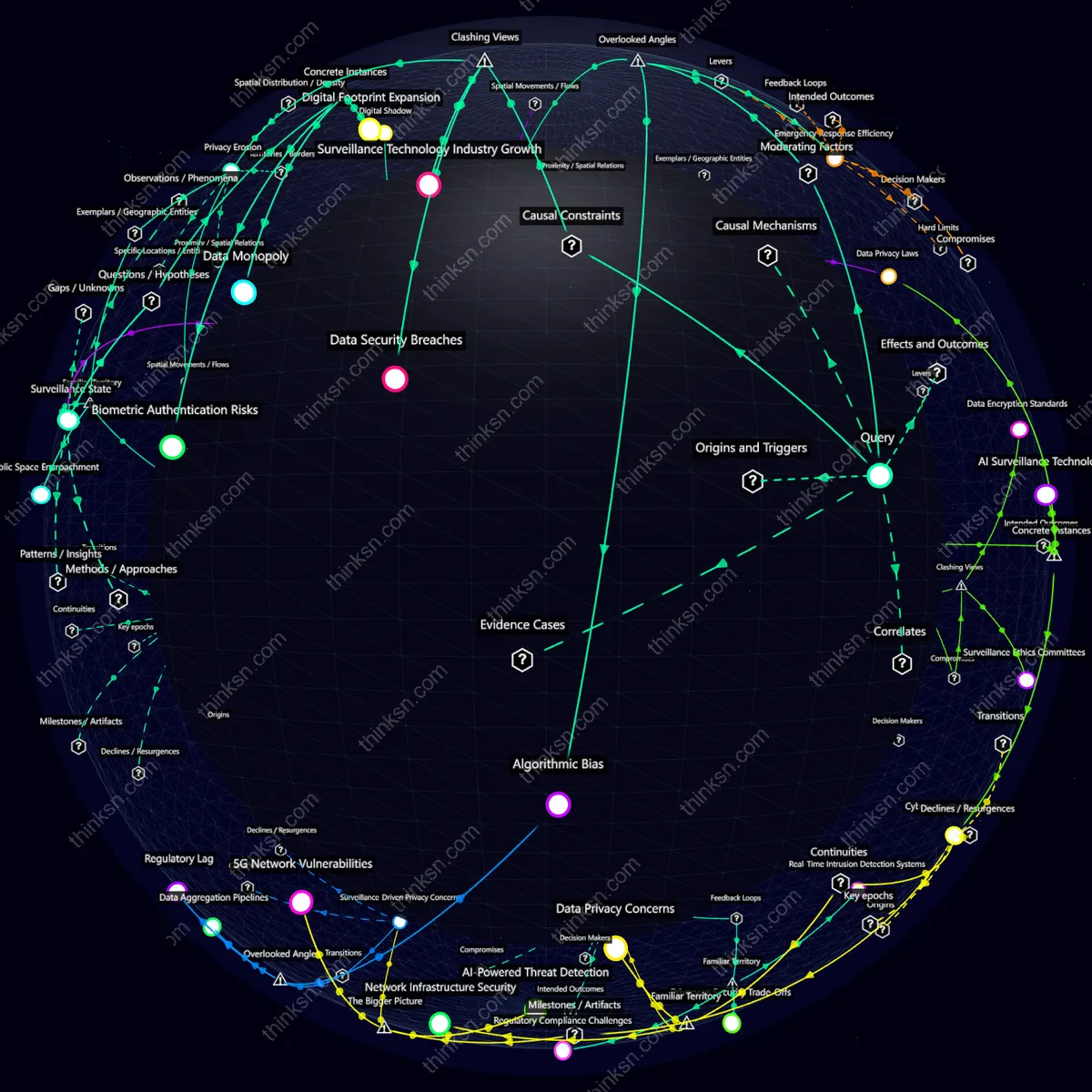
Surveillance Technology Industry Growth
The expansion of real-time surveillance powered by 5G technology can spur substantial growth within the surveillance industry, creating a powerful lobby that influences policy-making towards more permissive regulation. This could result in further entrenchment of surveillance technologies without adequate safeguards for privacy and civil liberties.
Deeper Analysis
What is the spatial distribution and impact of privacy erosion due to real-time surveillance implemented through 5G networks in society?
Digital Shadow
As real-time surveillance through 5G networks proliferates, individuals accumulate vast digital shadows that track their every movement and interaction. This constant monitoring reshapes public behavior, leading to self-censorship as people fear repercussions for expressing dissenting opinions or engaging in activities deemed controversial.
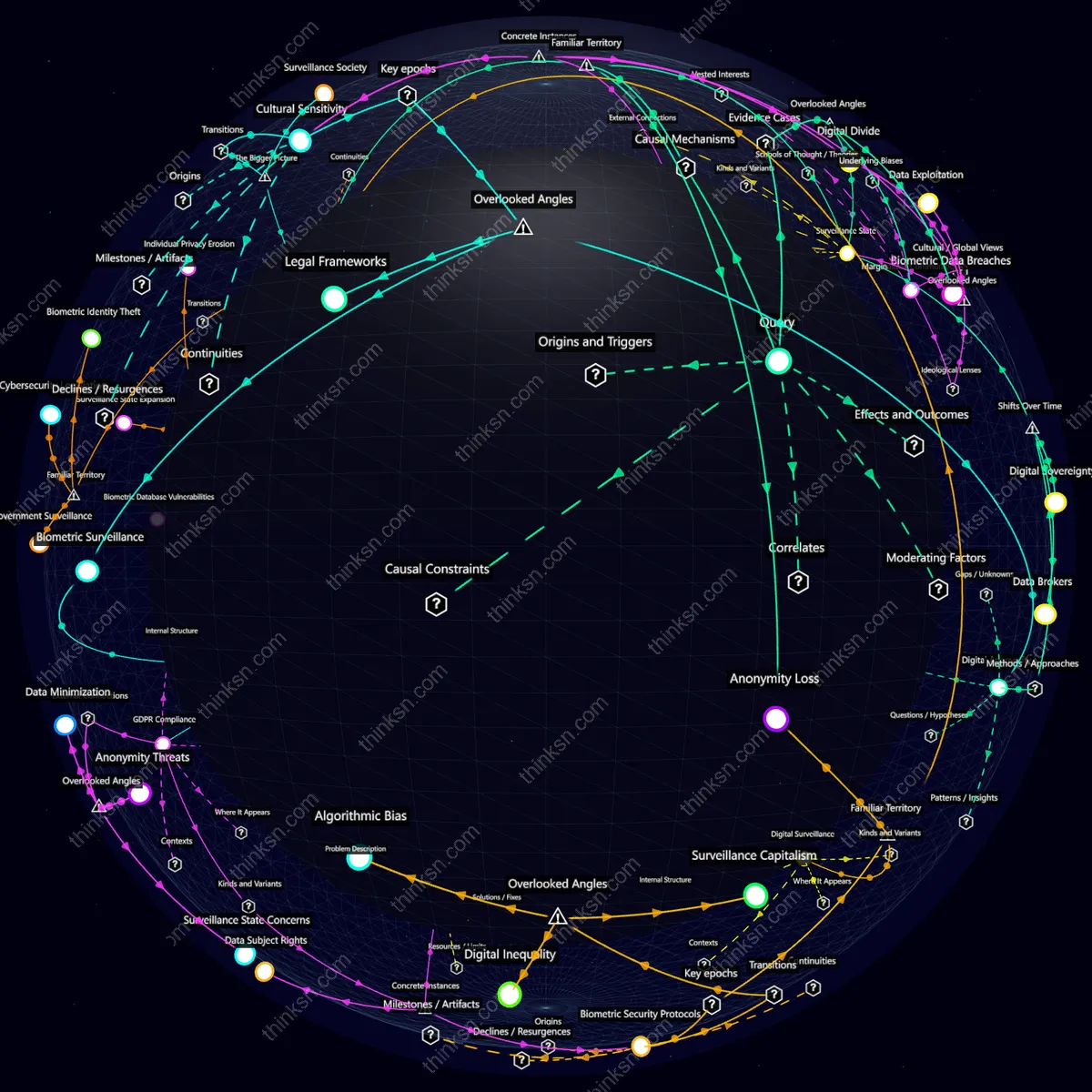
Surveillance Capitalism
The expansion of 5G surveillance networks fuels the growth of surveillance capitalism, where tech giants and governments exploit personal data for profit and control. This ecosystem creates a fragile dependency on these entities, eroding individual autonomy as more aspects of life become quantifiable and commodified.
Global Data Chains
The implementation of 5G surveillance triggers intricate global data chains that connect disparate regions through digital infrastructure. These supply chains are vulnerable to geopolitical conflicts, leading to sudden disruptions in privacy protections as data flows shift unpredictably between countries with varying regulatory standards.
Surveillance State
The proliferation of real-time surveillance through 5G networks exacerbates the formation of a Surveillance State, where individuals are under constant observation by government agencies. This results in heightened paranoia and self-censorship among citizens, undermining democratic values and free speech.
Data Monopolies
Tech giants leveraging 5G networks to collect vast amounts of personal data create significant data monopolies, enabling them to exert unprecedented control over user behavior. This leads to a fragile dependency where individuals' privacy is compromised for the sake of convenience and connectivity.
Public Space Encroachment
The implementation of 5G-powered surveillance in public spaces transforms these areas into zones monitored by both state and corporate entities, eroding personal freedoms. This encroachment disproportionately affects marginalized communities who are often under greater scrutiny, leading to social stratification and mistrust.
Explore further:
What are the potential impacts of data monopolies on society and privacy when implementing real-time surveillance through 5G networks?
Surveillance State
Data monopolies can facilitate the creation of a surveillance state where governments leverage private companies' data to monitor citizens in real-time via 5G networks, raising concerns about privacy erosion and potential misuse of power.
Digital Divide
The concentration of control over 5G infrastructure by a few large tech firms can exacerbate the digital divide, as marginalized communities may lack access to advanced surveillance technologies, leading to unequal oversight and heightened social stratification.
Privacy Violations
Real-time data collection enabled by 5G networks under data monopolies poses significant risks of privacy violations. Companies can track individuals' movements and behaviors with unprecedented detail, undermining personal autonomy and trust in digital services.
Surveillance Capitalism
Data monopolies under surveillance capitalism enable tech giants to extract vast amounts of personal data in exchange for 'free' services, creating a system where individuals are the product. This not only erodes privacy but also distorts human behavior towards constant engagement with digital platforms, fostering a state of perpetual self-monitoring.
Algorithmic Transparency
Lack of algorithmic transparency in data monopolies can lead to opaque decision-making processes that reinforce systemic biases and discrimination. Without clear oversight, algorithms used in real-time surveillance may perpetuate harmful stereotypes and restrict the freedoms of individuals without their informed consent.
Explore further:
- What are the emerging concerns about privacy and civil liberties as real-time surveillance becomes more prevalent in a Surveillance State enabled by 5G technology?
- What is the spatial distribution and impact on the digital divide when implementing real-time surveillance using 5G networks in different regions?
What are the emerging concerns about privacy and civil liberties as real-time surveillance becomes more prevalent in a Surveillance State enabled by 5G technology?
Digital Footprint Expansion
As 5G technology facilitates real-time surveillance, the digital footprint of individuals expands exponentially. This relentless data collection can lead to a chilling effect where people self-censor their online and offline activities due to fear of retribution or social backlash, undermining freedom of expression.
Data Monopoly
Surveillance states often create monopolies over vast datasets through partnerships with tech giants. This concentration of data power can be exploited for political ends, such as targeting opposition groups or manipulating public opinion via sophisticated disinformation campaigns.
Biometric Authentication Risks
The integration of biometric technologies in surveillance systems under 5G networks poses significant risks. Unauthorized access to these databases could lead to identity theft and blackmail, as seen in the breach of Aadhaar data in India, highlighting vulnerabilities that compromise personal security.
What is the spatial distribution and impact on the digital divide when implementing real-time surveillance using 5G networks in different regions?
5G Infrastructure
The deployment of 5G infrastructure amplifies the digital divide by prioritizing urban areas with high population density, leaving rural and underserved communities further behind. This exacerbates existing inequalities as real-time surveillance systems become more dependent on advanced connectivity.
Surveillance Technology
The integration of cutting-edge surveillance technology in 5G networks raises privacy concerns for populations already marginalized by the digital divide, potentially leading to over-surveillance and further alienation from mainstream technological advancements. This creates a paradox where enhanced security measures disproportionately affect those least equipped to defend their rights.
Data Privacy Laws
In regions with lax data privacy laws, the implementation of real-time surveillance through 5G networks can lead to significant erosion of individual freedoms and trust in technology. This not only widens the digital divide but also undermines social cohesion by fostering an environment where distrust in institutions becomes pervasive.
Explore further:
What strategies can be formulated to mitigate privacy risks while implementing real-time surveillance systems that leverage 5G infrastructure?
Data Encryption Standards
As surveillance systems leverage the speed and capacity of 5G Infrastructure, the implementation of robust data encryption standards becomes paramount. However, this often requires significant investment in advanced cryptographic solutions, which can be prohibitively expensive for smaller organizations or developing regions, potentially leaving them vulnerable to privacy breaches.
Surveillance Ethics Committees
The establishment of Surveillance Ethics Committees is crucial as 5G enables real-time monitoring. These committees ensure that surveillance technologies adhere to ethical guidelines and respect individual rights. However, the power dynamics within these committees can be fraught with conflict, particularly when stakeholders from government, tech firms, and civil society have competing interests.
Privacy-by-Design Frameworks
Adopting Privacy-by-Design (PbD) frameworks in 5G infrastructure projects is essential for mitigating privacy risks. PbD mandates that privacy be an integral part of system design rather than an afterthought, yet this approach can lead to delays and increased costs due to the need for iterative testing and compliance verification.
Data Privacy Laws
Stricter data privacy laws in the EU such as GDPR force companies to rethink their surveillance practices on 5G networks, leading to complex compliance issues and potential legal penalties for non-compliance.
AI Surveillance Technology
The deployment of AI-driven facial recognition systems using 5G infrastructure can significantly reduce response times in real-time surveillance but also raises severe privacy concerns due to the risk of misuse by authoritarian regimes or cybercriminals.
Cybersecurity Protocols
Implementing robust cybersecurity protocols becomes crucial as hackers exploit vulnerabilities in 5G networks, leading to potential breaches that compromise both personal data and national security. This necessitates constant updates and vigilant monitoring by network operators.
Explore further:
- What are the measurable impacts on privacy when implementing a Privacy-by-Design Framework in real-time surveillance systems using 5G networks, and how do these frameworks stress-test under systemic strain?
- How have cybersecurity protocols evolved in response to the implementation of real-time surveillance using 5G networks over time?
How have cybersecurity protocols evolved in response to the implementation of real-time surveillance using 5G networks over time?
Data Privacy Concerns
The rise of real-time surveillance via 5G networks has intensified cybersecurity protocols to protect data privacy. However, this shift exposes users to new risks as more personal information is transmitted in real-time, potentially leading to increased monitoring and data breaches by malicious actors or even legitimate entities under the guise of security.
Zero-Day Exploits
As cybersecurity protocols evolve to counter 5G surveillance capabilities, attackers are developing more sophisticated zero-day exploits. These attacks can bypass newly implemented security measures before organizations have a chance to update their systems, creating a fragile dependency on rapid response cycles and continuous protocol adaptation.
Network Infrastructure Security
The deployment of 5G networks has necessitated stringent cybersecurity protocols for network infrastructure. While this enhances overall system resilience, it also places significant responsibility on telecommunications companies to maintain security, leading to potential conflicts between regulatory compliance and operational efficiency.
5G Network Vulnerabilities
As 5G networks expanded, their unique vulnerabilities introduced new challenges for cybersecurity protocols. The need to process vast amounts of data in real-time exposed weaknesses in existing security measures, such as inadequate encryption standards and insufficient threat detection capabilities, leading to increased risks of surveillance breaches.
Surveillance-Driven Privacy Concerns
The implementation of real-time surveillance using 5G networks intensified privacy concerns, pushing governments and regulatory bodies to adopt stricter cybersecurity protocols. This pressure created a delicate balance between national security interests and individual rights, often resulting in fragmented regulations that complicate compliance for tech companies.
AI-Powered Threat Detection
The rapid evolution of cyber threats necessitated the integration of AI technologies into cybersecurity protocols to analyze complex data patterns. However, this dependency on advanced algorithms also introduced new challenges, including potential biases in threat detection and ethical dilemmas regarding autonomous decision-making in security systems.
Explore further:
- What strategies can be formulated to mitigate the risk of zero-day exploits in real-time surveillance systems that use 5G networks, and how might these interventions impact societal privacy?
- How has the implementation of real-time surveillance using 5G networks evolved over time and what mechanisms contribute to increasing surveillance-driven privacy concerns?
What strategies can be formulated to mitigate the risk of zero-day exploits in real-time surveillance systems that use 5G networks, and how might these interventions impact societal privacy?
Real-Time Intrusion Detection Systems
Advanced intrusion detection systems offer hope for mitigating zero-day exploits in real-time surveillance systems by detecting anomalies before they cause damage. However, such systems rely heavily on continuous updates and expert monitoring to stay effective against rapidly evolving threats, creating a dependency that can be easily overwhelmed if not properly maintained.
Privacy vs Security Trade-Offs
The deployment of real-time surveillance systems using 5G networks intensifies the debate over privacy versus security. While these technologies enhance national and digital security, they also increase the risk of infringing on personal freedoms due to potential misuse or unintended consequences of zero-day exploits, highlighting a delicate balance between protection and intrusion.
Regulatory Compliance Challenges
As real-time surveillance systems become more prevalent, regulatory bodies struggle to keep pace with rapid technological advancements. The absence of robust regulations tailored specifically for 5G networks leaves gaps in oversight that can be exploited by malicious actors, exacerbating the risk and consequences associated with zero-day exploits.
How has the implementation of real-time surveillance using 5G networks evolved over time and what mechanisms contribute to increasing surveillance-driven privacy concerns?
Data Aggregation Pipelines
The expansion of data aggregation pipelines in surveillance systems introduces complex dependencies on data integrity and processing speed. As real-time monitoring becomes more prevalent, the risk of privacy breaches increases due to the sheer volume and velocity of data collected, creating a fragile balance between operational efficiency and personal security.
Algorithmic Bias
The reliance on algorithmic decision-making in surveillance networks can exacerbate existing social inequalities. As 5G enables faster data processing, biased algorithms may perpetuate discrimination against marginalized groups without transparent oversight or accountability mechanisms, thereby undermining societal trust and justice.
Regulatory Lag
The rapid evolution of surveillance technologies has outpaced regulatory frameworks, creating a significant gap in legal protections for privacy. This lag allows for continuous technological advancement with insufficient safeguards, exposing individuals to unprecedented levels of data exploitation by both state and private entities.