How Mindfulness Apps Enhance Corporate Wellness and Employee Productivity
Analysis reveals 6 key thematic connections.
Key Findings
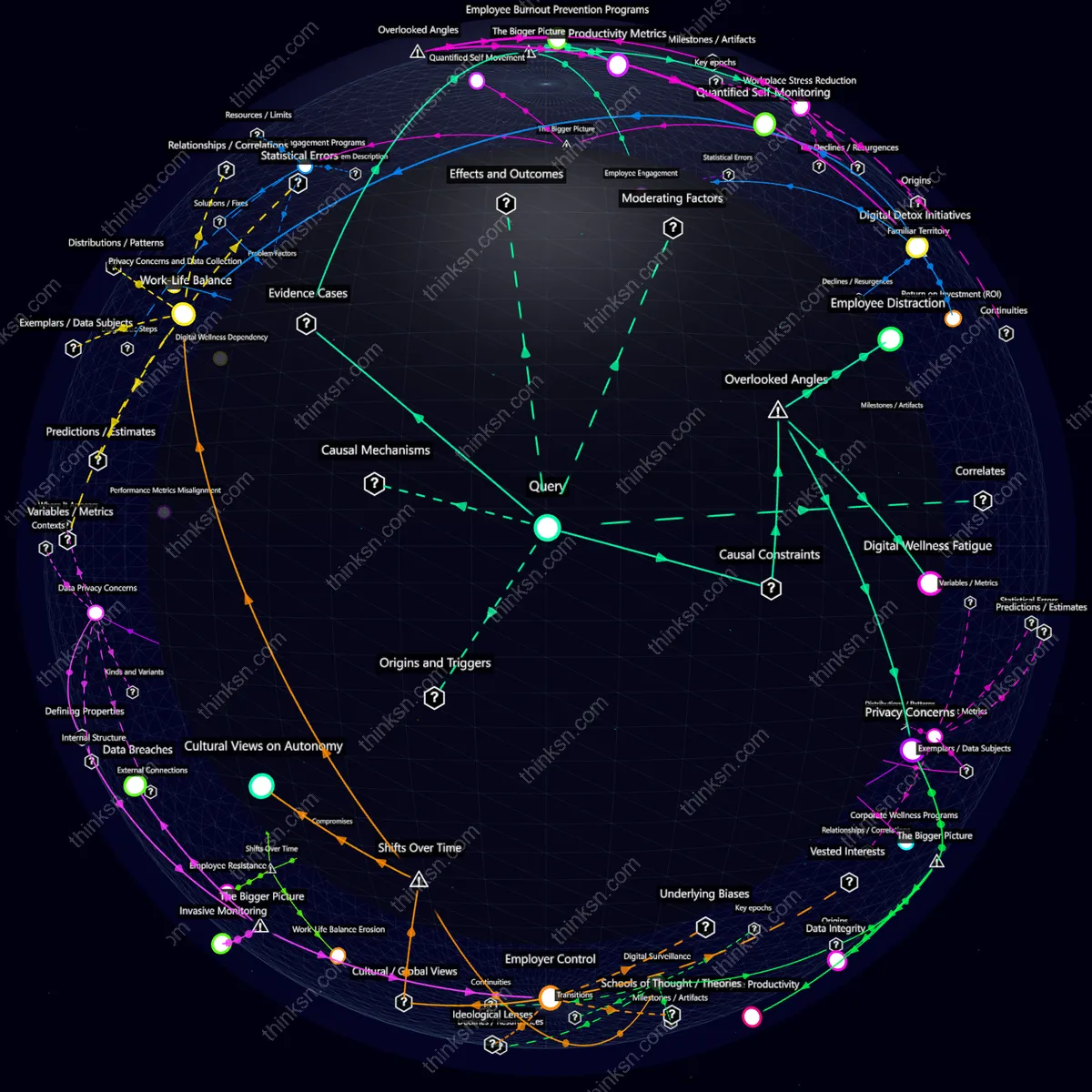
Employee Distraction
Integrating mindfulness apps into corporate wellness programs can lead to increased employee distraction as users navigate the complexities of technology and app notifications, potentially undermining productivity in critical moments.
Digital Wellness Fatigue
The continuous monitoring and feedback from mindfulness apps may result in digital wellness fatigue among employees, leading them to disengage or bypass program components, thereby diminishing intended benefits and productivity improvements.
Privacy Concerns
Corporate adoption of mindfulness apps raises privacy concerns as these tools collect personal data, which could deter employees from fully engaging with the programs, impacting both their wellness outcomes and overall workplace satisfaction.
Employee Engagement
Integrating mindfulness apps into corporate wellness programs can dramatically increase employee engagement by fostering a culture of self-care and mental health awareness. However, this shift may also inadvertently highlight existing disparities in access to technology or comfort with digital platforms, exacerbating social divides within the workforce.
Workplace Stress Reduction
Mindfulness apps can significantly reduce workplace stress by providing employees with tools to manage their mental health effectively. Yet, this reduction might lead to a false sense of security, where employers and management downplay the importance of systemic changes needed to address structural sources of stress in the workplace.
Productivity Metrics
Companies like Google have seen improvements in productivity metrics after introducing mindfulness programs. However, tying these programs too closely to performance evaluations could create pressure and anxiety for employees who feel they must maintain a constant state of mental well-being to meet workplace expectations.
Deeper Analysis
How has the integration of mindfulness apps in corporate wellness programs evolved over time as a mechanism for reducing workplace stress and enhancing productivity?
Employee Engagement Programs
As companies integrate mindfulness apps into wellness programs, the shift towards prioritizing mental health leads to a broader adoption of employee engagement initiatives. However, this can sometimes result in superficial efforts that fail to address underlying systemic issues such as workload imbalance and burnout culture.
Quantified Self Movement
The rise of mindfulness apps coincides with the quantified self movement, where employees track their mental health metrics closely. While this promotes awareness and personal responsibility, it can also lead to a competitive environment where individuals feel pressured to constantly improve their wellness scores.
Corporate Wellness Metrics
As companies measure success through productivity and absenteeism rates, the adoption of mindfulness apps becomes tied to these metrics. This creates incentives for employees to engage in such programs but also raises concerns about privacy and data misuse when personal health information is collected by employers.
Employee Burnout Prevention Programs
The shift towards integrating mindfulness apps in corporate wellness programs has coincided with an increased focus on preventing employee burnout. However, this initiative often overlooks the root causes of stress stemming from workload and organizational culture, leading to a superficial approach that may not address fundamental issues.
Quantified Self-Monitoring
The adoption of mindfulness apps for workplace stress reduction has led companies to embrace quantified self-monitoring as a means to track employee mental health metrics. This trend raises privacy concerns and the risk of creating an environment where employees feel surveilled, potentially exacerbating rather than alleviating stress.
Digital Detox Initiatives
In response to the pervasive use of technology for mindfulness apps in the workplace, some companies have introduced digital detox initiatives. These programs aim to reduce screen time and promote mental well-being but face challenges due to employees' dependence on devices for work-related tasks.
Explore further:
- What are the measurable impacts on employee engagement and productivity when corporate wellness programs include mindfulness apps, and what potential trade-offs or systemic failures might arise from this integration?
- How has the integration of mindfulness apps into corporate wellness programs influenced corporate wellness metrics over time, and what mechanisms are driving these changes?
What are the measurable impacts on employee engagement and productivity when corporate wellness programs include mindfulness apps, and what potential trade-offs or systemic failures might arise from this integration?
Mindfulness App Integration
The integration of mindfulness apps into corporate wellness programs can shift employee focus from task completion to personal well-being metrics, potentially creating a culture where productivity is secondary to personal health scores. This could alienate employees who prioritize work achievements over self-care.
Digital Wellness Dependency
Relying on digital tools for wellness can foster a dependency on technology that undermines genuine human connection and traditional social support networks within the workplace, leading to isolated worker experiences and diminished face-to-face interaction in team settings.
Privacy Concerns and Data Collection
Corporate use of mindfulness apps raises significant privacy concerns as these tools often collect sensitive data on mental health. Employees may feel surveilled or uncomfortable sharing personal information, leading to reduced app usage despite the company's intentions for promoting well-being.
How has the integration of mindfulness apps into corporate wellness programs influenced corporate wellness metrics over time, and what mechanisms are driving these changes?
Employee Engagement
The integration of mindfulness apps into corporate wellness programs has intensified focus on employee engagement metrics. However, over-reliance on these digital tools can lead to a superficial understanding of engagement, where active app usage is equated with genuine emotional and psychological commitment, potentially masking deeper issues in workplace culture.
Work-Life Balance
Mindfulness apps have been hailed for improving work-life balance metrics by promoting mental health practices. Yet, the pressure to constantly engage with these tools can paradoxically blur boundaries between personal and professional life, leading some employees to feel obligated to maintain an 'always on' presence even outside of work hours.
Return on Investment (ROI)
The adoption of mindfulness apps in corporate wellness initiatives has sparked debates around the ROI for these programs. While initial enthusiasm and anecdotal success stories abound, organizations face challenges quantifying long-term benefits due to varying individual responses and difficulties attributing improvements to specific app features rather than broader workplace changes.
What are the components and categories involved in integrating mindfulness apps into corporate wellness programs, and how do they relate to employee productivity?
Digital Detachment
As employees increasingly rely on mindfulness apps to manage stress and mental health, they might paradoxically become more detached from the digital environments necessary for work productivity. This detachment can lead to a decline in technological proficiency and responsiveness, undermining corporate objectives that require constant engagement with digital tools.
Privacy Erosion
The integration of mindfulness apps into wellness programs often requires employees to share personal data such as mental health status and usage patterns. This can erode trust within the organization if there are no clear safeguards or transparency about how this data is used, potentially leading to resistance from employees who value their privacy.
Performance Metrics Misalignment
While mindfulness apps aim to improve focus and productivity, the metrics they track (such as minutes spent in meditation) may not directly correlate with business outcomes. This misalignment can create a disconnect between employee well-being initiatives and corporate performance goals, leading to confusion about the true impact of these wellness programs.
Employee Engagement Metrics
Integrating mindfulness apps into corporate wellness programs can lead to a shift in focus from traditional productivity metrics to more nuanced engagement scores. However, this transition may be met with resistance as managers and employees alike struggle to quantify the tangible benefits of mental well-being over immediate task completion.
Data Privacy Concerns
The collection of personal data through mindfulness apps raises significant privacy concerns for employees. Companies must navigate a delicate balance between leveraging user data to improve wellness programs and respecting individual boundaries, potentially leading to legal challenges if not managed properly.
Work-Life Balance Policies
Mindfulness app integration often prompts companies to reevaluate their work-life balance policies, pushing for more flexible working hours or remote work options. This can lead to improved employee satisfaction and productivity but may also strain managerial oversight and team cohesion.
Explore further:
- What are the measurable impacts on employee engagement metrics when mindfulness apps are integrated into corporate wellness programs, and how do these changes correlate with increases or decreases in productivity under stressful conditions?
- What are the data privacy concerns associated with integrating mindfulness apps into corporate wellness programs and how do they relate to employee productivity?
What are the measurable impacts on employee engagement metrics when mindfulness apps are integrated into corporate wellness programs, and how do these changes correlate with increases or decreases in productivity under stressful conditions?
Mindfulness App Integration
When companies integrate mindfulness apps into their wellness programs, they can observe a shift in employee engagement metrics. While initial adoption often correlates with improved focus and stress reduction, prolonged use may reveal diminishing returns if the app becomes a compliance task rather than an authentic practice.
Productivity Under Stress
In stressful work environments, mindfulness apps can initially boost productivity by enhancing mental clarity and resilience. However, this effect is fragile; if employees feel overwhelmed or undervalued despite using the app, they might disengage, leading to a paradoxical drop in both engagement metrics and actual productivity.
Corporate Wellness Programs
Corporate wellness programs that include mindfulness apps often report higher employee satisfaction and lower turnover rates. Yet, if these programs are seen as superficial or disconnected from broader workplace issues like workload management and job security, employees may view them cynically, undermining the intended positive impacts on engagement.
What are the data privacy concerns associated with integrating mindfulness apps into corporate wellness programs and how do they relate to employee productivity?
Invasive Monitoring
The integration of mindfulness apps into corporate wellness programs can lead to invasive monitoring of employees' mental health and personal habits. Companies may use data collected by these apps to track productivity and stress levels, potentially leading to a chilling effect on employee behavior as they fear their privacy will be violated.
Data Breaches
Mindfulness apps often store sensitive information about employees' mental health and daily routines. The risk of data breaches becomes a critical concern when such personal data is centralized within corporate systems, exposing employees to potential identity theft or discrimination based on their mental health status.
Employer Control
The use of mindfulness apps in wellness programs can subtly shift the balance of power towards employers, as they gain insights into employees' personal lives and behaviors. This can lead to a surveillance culture where workers feel constantly monitored, undermining trust and autonomy, which could negatively impact productivity through increased stress and dissatisfaction.
What is the relationship between productivity under stress and the integration of mindfulness apps in corporate wellness programs?
Burnout Syndrome
The integration of mindfulness apps in corporate wellness programs under the guise of enhancing productivity under stress can paradoxically exacerbate burnout syndrome among overworked employees. When companies push these apps as a mandatory tool, workers might feel compelled to constantly track their mental health and productivity levels, adding another layer of pressure that leads to increased stress and eventual burnout.
Telecommuting Fatigue
Mindfulness apps aimed at boosting productivity under stress often fail to address the unique challenges faced by remote workers who experience telecommuting fatigue. This condition, marked by a blurring of work-life boundaries and social isolation, can be intensified if employees feel pressured to use these apps constantly while working from home.
Corporate Wellness Metrics
The adoption of mindfulness apps in corporate wellness programs has led to the creation of new metrics for measuring employee productivity under stress. However, focusing too narrowly on such quantitative measures can lead to a neglect of qualitative aspects of well-being, pushing employees towards a superficial engagement with mental health practices simply to meet targets.
In what ways might employer control over mindfulness app usage in corporate wellness programs impact perceived employee autonomy and, consequently, productivity?
Digital Surveillance
Employer control over mindfulness app usage can blur the lines between workplace wellness and digital surveillance. As companies track employees' mental health data, concerns about privacy and autonomy rise, potentially leading to resistance or disengagement among employees who feel their personal space is being invaded.
Work-Life Balance
Incorporating mindfulness apps into corporate wellness programs under employer control may paradoxically undermine work-life balance. While intended to reduce stress and enhance productivity, the implicit pressure to constantly monitor one's mental state can create a new form of workplace stress, making it difficult for employees to truly disconnect from work.
Cultural Views on Autonomy
Employer control over mindfulness app usage starkly contrasts with cultural views on autonomy in various regions. In collectivist cultures like East Asia, where harmony and group cohesion are prioritized, such programs may be more readily accepted due to a lower emphasis on individual privacy compared to Western cultures emphasizing personal freedom.
What strategies can be formulated to mitigate telecommuting fatigue when integrating mindfulness apps into corporate wellness programs to enhance employee productivity?
Digital Detachment
The constant stream of notifications from mindfulness apps aimed at reducing telecommuting fatigue can paradoxically lead to digital detachment as employees feel overwhelmed and disconnected, undermining the very productivity these tools aim to enhance.
Work-Life Balance Erosion
Mindfulness apps designed to integrate into corporate wellness programs may inadvertently blur the lines between work and personal time, leading to a gradual erosion of work-life balance as employees feel pressured to remain connected and productive at all hours.
Employee Resistance
The imposition of mindfulness apps in an effort to combat telecommuting fatigue can trigger resistance from employees who view these tools as yet another form of corporate surveillance, leading to a decline in app usage and effectiveness despite initial enthusiasm.
What is the historical trajectory and impact of digital surveillance concerns as mindfulness apps are integrated into corporate wellness programs, and how might this affect employee productivity over time?
Privacy Concerns
As digital surveillance becomes more pervasive in corporate wellness programs, privacy concerns escalate due to the invasive nature of data collection. Employees may feel compelled to monitor their health closely but are wary about sharing personal information, leading to a delicate balance between transparency and trust that can easily tip towards suspicion or resistance.
Data Integrity
The integration of mindfulness apps into corporate wellness programs raises critical questions about data integrity. Employers rely on accurate health data to make informed decisions, but the potential for biased self-reporting or app inaccuracies threatens this foundation. This can lead to misaligned workplace policies and ineffective health interventions that fail to address employees' actual needs.
Employee Productivity
While digital surveillance aims to enhance employee productivity through better mental health monitoring, it may inadvertently create a culture of constant evaluation and stress. Employees might feel pressured to constantly optimize their wellness metrics, leading to burnout rather than improved performance. This highlights the fragile dependency on technology for behavioral change and underscores the need for balanced approaches that prioritize well-being over surveillance.