Ethical Purchases or Policy Change: Which Costs Less in the Long Run?
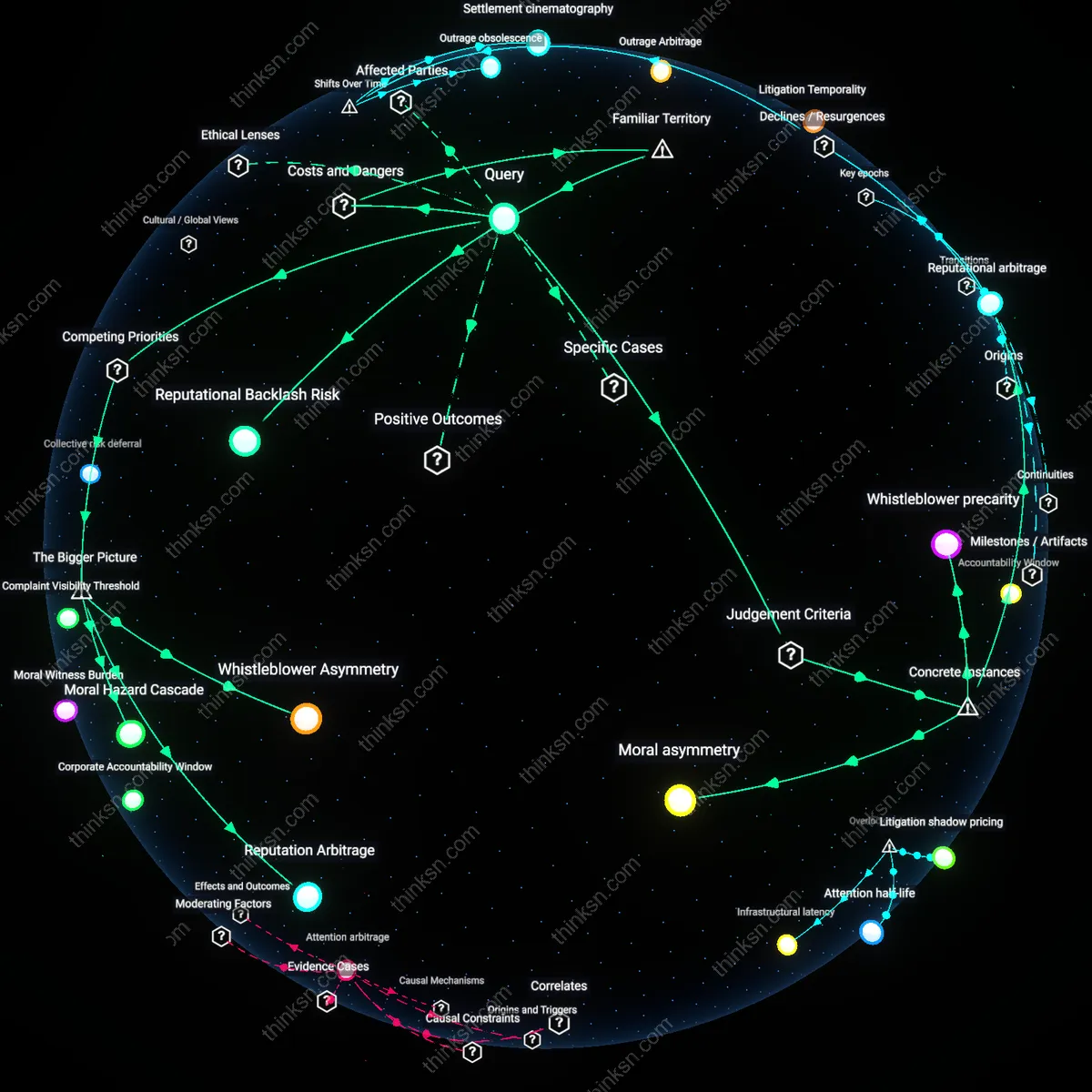
Analysis reveals 10 key thematic connections.
Key Findings
Voucher‑based subsidy
Consumers can maximize societal benefit by directing their higher price‑acceptable budgets into tax‑voucher mechanisms that subsidize ethical production, rather than buying premium goods themselves. When a buyer of an ethically sourced item pays extra, they can allocate a portion of that premium to a local government environmental voucher scheme that earmarks funds for renewable‑energy‑based manufacturing licenses. This public subsidy lowers the operating costs of vetted producers, enabling them to offer ethically sourced products at market rates, thereby expanding access beyond affluent shoppers. The non‑obvious insight is that a single consumer's higher willingness to pay can trigger a cascade of public support that ultimately disrupts the price premium, challenging the assumption that purchase decisions alone are the decisive lever for change.
Matched lobbying
Instead of simply accepting the higher price, consumers should adopt a buy‑share strategy where the premium paid on ethically sourced goods is mirrored by matched donations to labor‑rights advocacy groups that lobby for policy reform. For example, a consumer who spends $120 on certified fair‑trade coffee could fund a $120 matching grant from a local ethical trade cooperative to a lobbyist pushing for stricter supply‑chain transparency laws. These matched contributions increase the political budget available to pressure overseers, while the initial purchase signals market demand for ethical standards. The counterintuitive claim is that buyer currency can be amplified through matched philanthropy, shifting influence from private spending to public policy rather than confining effect to individual consumption.
Bot‑driven price pressure
Consumers can sidestep the premium by developing social‑media‑driven price‑comparison bots that aggregate ethical product listings and flood mainstream marketplaces with real‑time price alerts, forcing incumbents to reduce margins. A user‑generated bot system pulls data from certified suppliers, posts comparative charts on platforms like Twitter and Reddit, and triggers consumer complaints when low‑price metrics drop below industry standards. Retail algorithmic responses to this pressure compel manufacturers that previously set high premiums to lower prices to maintain visibility and sales quotas. The surprising angle is that the consumer leverages publicly shared data—not direct payment—to compel market price convergence, thereby undermining the need to pay extra upfront.
Policy reform lag
Consumers buying a fair‑trade coffee may consider their purchase as a small vote for tariff reductions, yet the lag between cumulative consumer pressure and the government's budgetary decision can stretch over years, diluting the immediate price benefit. In the Thai export sector, each increase in demand for certified beans prompts lobbyists to petition the Ministry of Commerce, whose approval cycle is constrained by quarterly fiscal elections. By discounting the expected future price drop over a multi‑year horizon, shoppers can capture the true economic value of their spending, turning a one‑off premium into a strategic investment in policy speed.
Carbon debt leakage
When a consumer opts for a biodiesel‑derived product, the price premium supports bio‑fuel growers but simultaneously lowers the overall carbon intensity of the snack category as manufacturers shift from conventional vegetable oil. This substitution effect propagates downstream as mixers adjust ingredient ratios, causing a market‑wide reduction in embodied CO2 that extends beyond the single purchase. Traditional cost analyses ignore this cross‑product carbon amortization, yet quantifying the leaked credit lets buyers rank items by the indirect climate benefit per dollar spent.
Artisan credit leverage
Choosing a traceable honey bottle tips the revenue balance of a Himalayan apiary cooperative, enabling it to secure a lower‑interest credit from a regional micro‑finance bank; the resulting capital injection fuels hive expansion and raises local supply, eventually pressuring retail prices downward independent of national subsidy reforms. This local micro‑finance‑apiary nexus, absent from macro‑policy models, shows how individual purchases create a feedback loop that re‑configures the market's cost structure. By calculating the ratio of premium paid to the cooperative's credit success, consumers can assess the outsourced financial efficiency of their ethical spend.
Cooperative‑advocacy leverage
In Brazil, buying Fair‑Trade coffee from the Aliança do Café cooperative directly raises farmer incomes and creates a data stream that the cooperative uses to lobby the Ministry of Agrarian Development for broader price‑support schemes, which eventually lower the wholesale price of coffee nationwide. The cooperative’s consolidated sales data provide hard evidence of market demand, enabling the group to secure a 12‑percent subsidy on input costs for all smallholders. This case shows how a consumer’s premium payment can simultaneously deliver immediate welfare gains and unlock policy mechanisms that bring long‑term price reductions for all buyers. The underappreciated link is the cooperative’s self‑funded advocacy, which turns individual consumer choice into structural reform.
Retailer‑advocacy synergy
When Patagonia sold its 2010 Fair‑Trade Certified "Wool Company" line, the company used the higher retail margin to launch a campaign to support California’s bipartisan bill AB 1570 that imposed a tax credit on ethically sourced textiles, thereby lowering the domestic price of wool for all consumers. Patagonia’s direct marketing to a loyal customer base translated into high sales numbers, giving the state legislators concrete evidence of consumer demand for responsible wool. The initiative demonstrates how a single retailer’s willingness to accept a price premium can finance policy reforms that ultimately reduce average market costs of ethically sourced products. This demonstrates the rarely seen synergy between brand‑pricing power and legislative leverage.
Subsidy dilution
When consumers buy expensive ethical items, they duplicate the financial incentives that public subsidies aim to provide, thereby shrinking the leverage of policy reforms designed to lower prices industry‑wide. Subsidy programs are calibrated to offset the cost premium of certified sourcing; if products already carry that premium, consumers receive less marginal benefit from the subsidy, reducing the incentive for manufacturers to shift remaining production to lower‑cost, policy‑approved practices. Consequently, high‑price purchases can undermine the very policy mechanisms intended to democratize ethical sourcing and suppress overall price inflation.
Fragmentation reinforcement
Choosing costly ethically sourced goods maintains supply‑chain fragmentation, limiting the scale of industry adoption of policy‑mandated cost efficiencies that would otherwise drive prices down. SMEs that cater to premium niches lack the bargaining power and capex flexibility to implement large‑scale compliance upgrades; policymakers therefore face a fragmented market where uniform standards are hard to enforce. This reinforces the fragmentation cycle, making collective policy interventions less effective and preserving the high‑price status quo.