Global Pandemic Disrupts Environmental Tech Supply Chains, Halting Critical Projects Worldwide
Analysis reveals 5 key thematic connections.
Key Findings
Supply Chain Disruptions
Global pandemics force companies to reroute supply chains, often leading to delays in the delivery of essential environmental technologies. This shift can create a ripple effect, where initial disruptions cause secondary shortages and bottlenecks that exacerbate project timelines for renewable energy installations.
Economic Recession
As pandemics trigger economic recessions, governments may cut funding for green initiatives, delaying critical environmental projects. This creates a paradox where the urgency to combat climate change increases while financial constraints limit immediate action, potentially harming long-term sustainability efforts.
Workforce Mobility Restrictions
Travel bans and quarantine measures restrict movement of skilled workers needed for on-site installations of essential environmental technologies. This not only delays projects but also disrupts knowledge transfer and collaboration among international teams, undermining project quality and efficiency.
Project Delays
Critical projects aimed at mitigating climate change face delays due to pandemic-induced labor shortages and logistical challenges. These delays not only increase costs but also amplify the urgency of implementing such technologies, creating a paradox where time is both an ally and adversary.
Economic Downturns
Pandemics often trigger economic downturns that reduce government and private sector investment in essential environmental projects. This financial strain can lead to the scaling back of ambitious sustainability initiatives, undermining global efforts to combat climate change at a critical juncture.
Deeper Analysis
What strategies can be formulated to mitigate project delays in essential environmental technology supply chains during global pandemics?
Supply Chain Resilience
Enhancing supply chain resilience through diversified sourcing can mitigate project delays caused by global pandemics. However, this strategy often increases costs and complexity, creating a trade-off where financial constraints may limit the extent of diversification.
Remote Collaboration Tools
The adoption of remote collaboration tools has become critical for maintaining productivity during pandemic-induced lockdowns but introduces new challenges such as communication delays and reduced innovation due to decreased face-to-face interaction, potentially leading to longer project timelines despite initial gains in operational flexibility.
Regulatory Compliance
Stringent regulatory compliance measures are necessary for environmental technology projects, yet they can introduce bottlenecks that exacerbate delays during crises. Policymakers and businesses must navigate the delicate balance between ensuring safety and maintaining project timelines to avoid significant financial losses.
Explore further:
- What are the critical pressure points in supply chain resilience for essential environmental technologies during global pandemics, and how can these be quantified to prevent delays in critical projects?
- How do changes in regulatory compliance requirements due to global pandemics impact the supply chains of essential environmental technologies and delay critical projects over time?
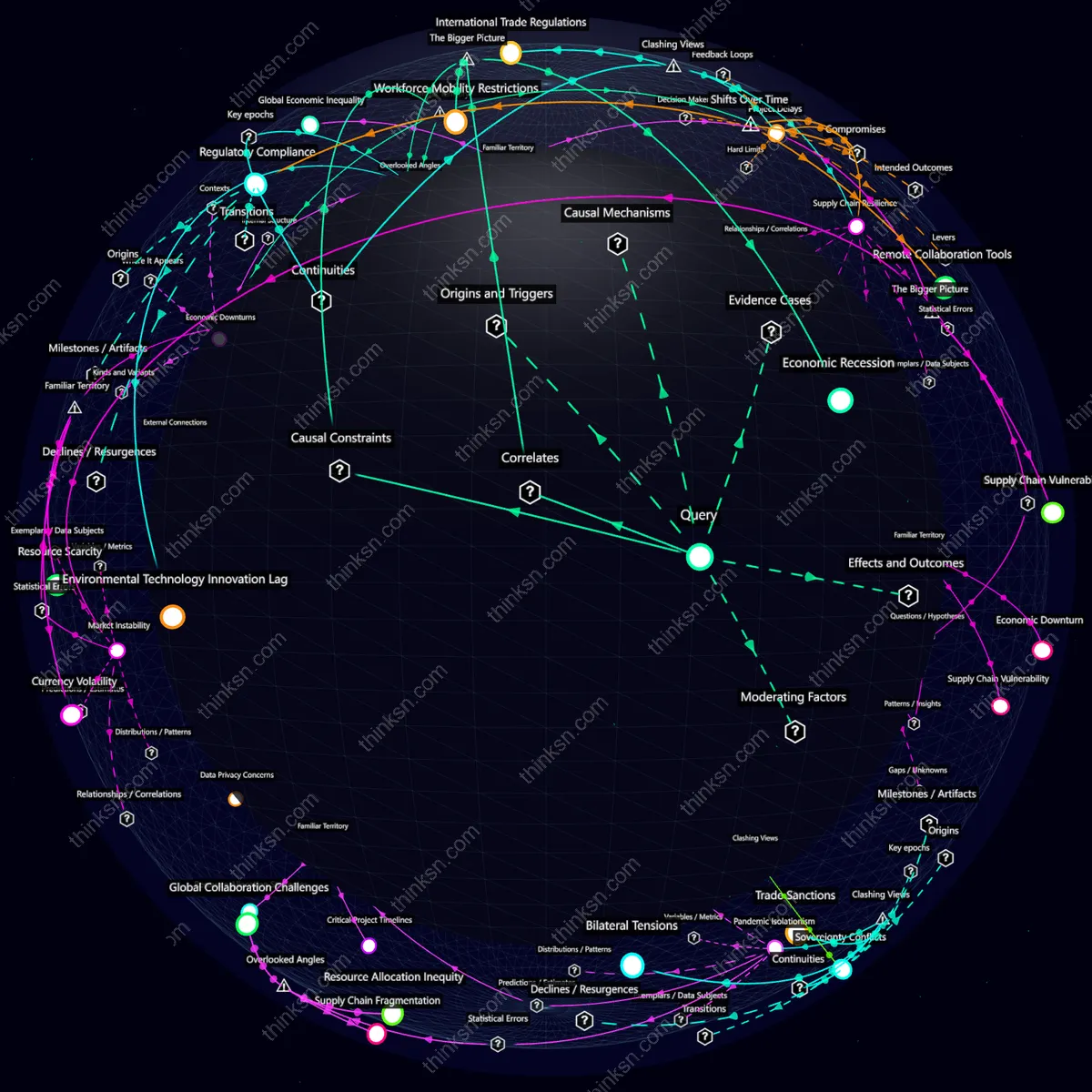
What is the static mapping of components, categories, relationships, and spatial distribution illustrating how economic downturns caused by global pandemics affect supply chains for essential environmental technologies and delay critical projects on a global scale?
Supply Chain Disruptions
Economic downturns caused by global pandemics exacerbate supply chain disruptions for essential environmental technologies, leading to shortages of critical components and materials. This not only delays project timelines but also increases costs and uncertainty for companies relying on these technologies, ultimately stifling innovation and progress in sustainability efforts.
Project Delays
Critical projects that aim to mitigate environmental impacts are often delayed due to economic downturns triggered by pandemics. These delays can lead to missed opportunities for addressing urgent issues such as climate change, water scarcity, and air pollution, thereby increasing the risk of severe ecological consequences in the long term.
Global Economic Inequality
Economic downturns disproportionately affect developing nations more severely than developed ones due to weaker financial systems and less resilient economies. This exacerbates global economic inequality, making it harder for poorer countries to invest in essential environmental technologies and infrastructure necessary for sustainable development.
How do changes in regulatory compliance requirements due to global pandemics impact the supply chains of essential environmental technologies and delay critical projects over time?
Global Pandemic Mitigation Strategies
As governments rush to implement pandemic mitigation strategies, regulatory compliance requirements often become more stringent and unpredictable. This volatility forces companies in essential environmental technologies to constantly adapt their supply chains, leading to costly delays and increased operational risks.
International Trade Disruptions
The interplay between global pandemics and international trade regulations can lead to sudden blockades or sanctions on critical supplies. This disrupts the flow of essential environmental technologies, causing a ripple effect that delays projects due to shortages in key components and raw materials.
Environmental Technology Innovation Lag
While regulatory compliance pressures companies to innovate for more resilient supply chains, pandemics can paradoxically stifle innovation by shifting focus towards immediate survival rather than long-term sustainability. This lag in technological advancement leaves environmental projects vulnerable to prolonged delays and inefficiencies.
Supply Chain Resilience
Global pandemics force environmental tech companies to reassess their reliance on single-source suppliers, often leading to a fragmented supply chain that increases costs and delays project timelines. For instance, the shift from China-centric sourcing to diversified global partners has created unexpected bottlenecks in material availability.
Project Delays
Rapidly changing regulatory landscapes due to pandemics can cause significant delays in critical environmental projects by requiring additional compliance assessments and certifications. For example, the European Union's sudden tightening of emission standards for renewable energy installations has forced many companies to halt or significantly slow down their deployment plans.
International Trade Regulations
New trade restrictions introduced during a pandemic can lead to unpredictable fluctuations in material costs and availability, complicating efforts to maintain consistent project timelines. The U.S.'s implementation of strict export controls on rare earth metals during the COVID-19 crisis has disrupted the supply chains of many global tech companies.
Explore further:
- What are the static components and categories of global pandemic mitigation strategies that impact the supply chains of essential environmental technologies and critical projects globally?
- What are the emerging insights and hidden assumptions about how international trade disruptions caused by global pandemics impact the supply chains of essential environmental technologies and delay critical projects on a global scale?
What are the emerging insights and hidden assumptions about how international trade disruptions caused by global pandemics impact the supply chains of essential environmental technologies and delay critical projects on a global scale?
Supply Chain Vulnerabilities
Global pandemics exacerbate supply chain vulnerabilities by disrupting critical manufacturing hubs in Asia, causing shortages of essential environmental technology components. This forces companies to reassess their reliance on single-source suppliers, highlighting the fragility of globalized production networks and pushing them towards diversification strategies that are costly but necessary.
Project Delays
Critical environmental projects face significant delays as international trade disruptions lead to shortages in key materials and parts. These delays not only increase project costs due to extended labor times and storage expenses but also result in missed deadlines for regulatory compliance, potentially jeopardizing the viability of projects that were already under tight timelines.
Market Instability
International trade disruptions caused by pandemics create market instability as demand fluctuates unpredictably. Manufacturers struggle to forecast material availability and prices, leading to hoarding behaviors and speculative trading practices that further strain supply chains. This dynamic instability highlights the need for more robust financial instruments and risk management strategies in the environmental technology sector.
Supply Chain Vulnerability
Global pandemics exacerbate the inherent fragility of supply chains for essential environmental technologies, leading to shortages and delays. Manufacturers often rely on single-source suppliers in affected regions, creating a domino effect that stalls critical projects worldwide.
Economic Downturn
Trade disruptions caused by pandemics can lead to significant economic downturns, impacting the financial viability of environmental technology firms. This not only delays essential projects but also leads to reduced investment in green technologies due to tighter corporate budgets and risk aversion.
Global Cooperation
The need for global cooperation is heightened during trade disruptions caused by pandemics, yet the reality often falls short as nations prioritize their own interests. This fragmented response can further delay critical environmental projects that require international collaboration to succeed.
Explore further:
- What are the quantitative measures of market instability caused by global pandemics and how do they affect the supply chains of essential environmental technologies, leading to delays in critical projects on a global scale?
- What are the emerging insights and hidden assumptions about the role of global cooperation in mitigating disruptions to essential environmental technology supply chains during pandemics?
What are the quantitative measures of market instability caused by global pandemics and how do they affect the supply chains of essential environmental technologies, leading to delays in critical projects on a global scale?
Supply Chain Disruptions
Global pandemics exacerbate market instability by causing unpredictable supply chain disruptions in essential environmental technologies. Companies struggle to maintain production schedules, leading to delays and increased costs for critical projects like renewable energy installations. This fragility highlights the need for diversified sourcing strategies but also introduces new risks such as quality control issues when switching suppliers.
Currency Volatility
Market instability often manifests in currency volatility, affecting international trade of environmental technologies. For instance, fluctuations in exchange rates can make imports and exports more expensive, impacting profitability for companies engaged in global supply chains. This risk is particularly acute during pandemics when liquidity constraints compound the problem, forcing firms to hoard cash rather than invest in innovation or expansion.
Resource Scarcity
Pandemic-induced market instability can lead to resource scarcity for raw materials essential to environmental technologies. For example, disruptions in mining operations can limit the supply of rare earth metals crucial for solar panels and wind turbines. This scarcity not only inflates prices but also creates bottlenecks that delay project timelines, ultimately threatening global efforts to combat climate change through technological innovation.
What are the emerging insights and hidden assumptions about the role of global cooperation in mitigating disruptions to essential environmental technology supply chains during pandemics?
Sovereignty Conflicts
Increased global cooperation during pandemics exacerbates sovereignty conflicts as nations prioritize their own environmental technology supplies. This leads to fragmented supply chains, undermining the efficiency and resilience of global systems.
Informal Networks
While formal international bodies struggle with bureaucratic delays, informal networks emerge as crucial actors in maintaining essential technology flows during crises, highlighting hidden dependencies on non-state entities and the risks associated with their instability or lack of transparency.
Digital Dependency
Rapid digitalization to support global cooperation reveals a paradoxical increase in dependency on vulnerable digital infrastructure. This exposes critical supply chains to new forms of cyber threats, amplifying systemic risk and undermining trust.
Explore further:
- How do sovereignty conflicts impact the global supply chains of essential environmental technologies and delay critical projects over time, particularly during global pandemics?
- What are the critical digital dependencies in essential environmental technology supply chains, and how do global pandemics exacerbate their vulnerabilities leading to measurable systemic strain on project delays?
How do sovereignty conflicts impact the global supply chains of essential environmental technologies and delay critical projects over time, particularly during global pandemics?
Trade Sanctions
Trade sanctions imposed during sovereignty conflicts can severely disrupt the supply chains of essential environmental technologies. For instance, when a major producer is sanctioned, it forces multinational companies to seek alternative suppliers with higher costs and uncertain reliability, delaying critical projects such as renewable energy installations.
Bilateral Tensions
Heightened bilateral tensions during sovereignty conflicts can lead to increased tariffs on environmental technologies. This not only raises the cost of essential imports but also diverts resources from R&D and production into political lobbying, potentially stifling innovation and slowing down global efforts to combat climate change.
Pandemic Isolationism
During pandemics, sovereignty conflicts can exacerbate isolationist tendencies among nations, leading to the prioritization of domestic supply chains over international cooperation. This shift towards self-sufficiency can create bottlenecks and shortages in critical materials essential for environmental technologies, thereby delaying global projects that require cross-border collaboration.
What are the critical digital dependencies in essential environmental technology supply chains, and how do global pandemics exacerbate their vulnerabilities leading to measurable systemic strain on project delays?
Supply Chain Disruptions
Global pandemics intensify the fragility of digital dependencies in environmental technology supply chains by amplifying logistical bottlenecks. As reliance on just-in-time inventory systems increases, sudden disruptions like factory closures or shipping delays can rapidly cascade into systemic project delays and cost overruns.
Remote Work Vulnerabilities
The shift to remote work during pandemics exposes vulnerabilities in digital infrastructure, such as cybersecurity risks and bandwidth limitations. Environmental tech companies often depend on complex software ecosystems that require stable internet connections for real-time data exchange; disruptions here can lead to severe operational inefficiencies.
Data Privacy Concerns
With increased reliance on cloud services and digital platforms, environmental technology firms face heightened risks of data breaches. The pandemic has accelerated the adoption of remote monitoring and management tools, creating new avenues for cyber attacks that can compromise sensitive information and disrupt critical operations.
What are the measurable impacts of pandemic isolationism on global supply chains for essential environmental technologies and how does it stress-test critical project timelines and resource allocation strategies?
Supply Chain Fragmentation
Pandemic isolationism exacerbates supply chain fragmentation by pushing nations towards self-reliance and local sourcing. This shift can lead to inefficiencies, higher costs, and reduced flexibility in global supply chains for essential environmental technologies.
Resource Allocation Inequity
Critical project timelines are stressed due to uneven resource allocation exacerbated by pandemic isolationism, leading to overinvestment in certain sectors while others suffer from neglect. This disparity can create bottlenecks and weaken the resilience of essential environmental technology projects.
Global Collaboration Challenges
The reluctance to engage in international collaboration during periods of isolationism complicates the development and deployment of global environmental technologies, slowing progress and increasing vulnerabilities in critical infrastructure projects.
Supply Chain Disruptions
Pandemic isolationism exacerbates supply chain disruptions by imposing stringent travel restrictions and lockdowns, delaying critical shipments of essential environmental technologies. This not only hinders the timely delivery of solar panels and wind turbines but also strains inventory levels for manufacturing components.
Resource Allocation Strategies
Isolationist policies force companies to overhaul their resource allocation strategies in response to volatile market conditions, prioritizing local production over international sourcing. This shift can lead to shortages in specialized materials and skills, undermining the efficiency of global supply chains for environmental technologies.
Critical Project Timelines
Pandemic isolationism places immense pressure on critical project timelines for essential environmental technology projects. Delays in component deliveries and workforce mobility can cause cascading delays, making it challenging to meet tight deadlines and comply with regulatory requirements.