Economic Impact of Trade Cutoffs on Emerging Markets by Developed Nations
Analysis reveals 6 key thematic connections.
Key Findings
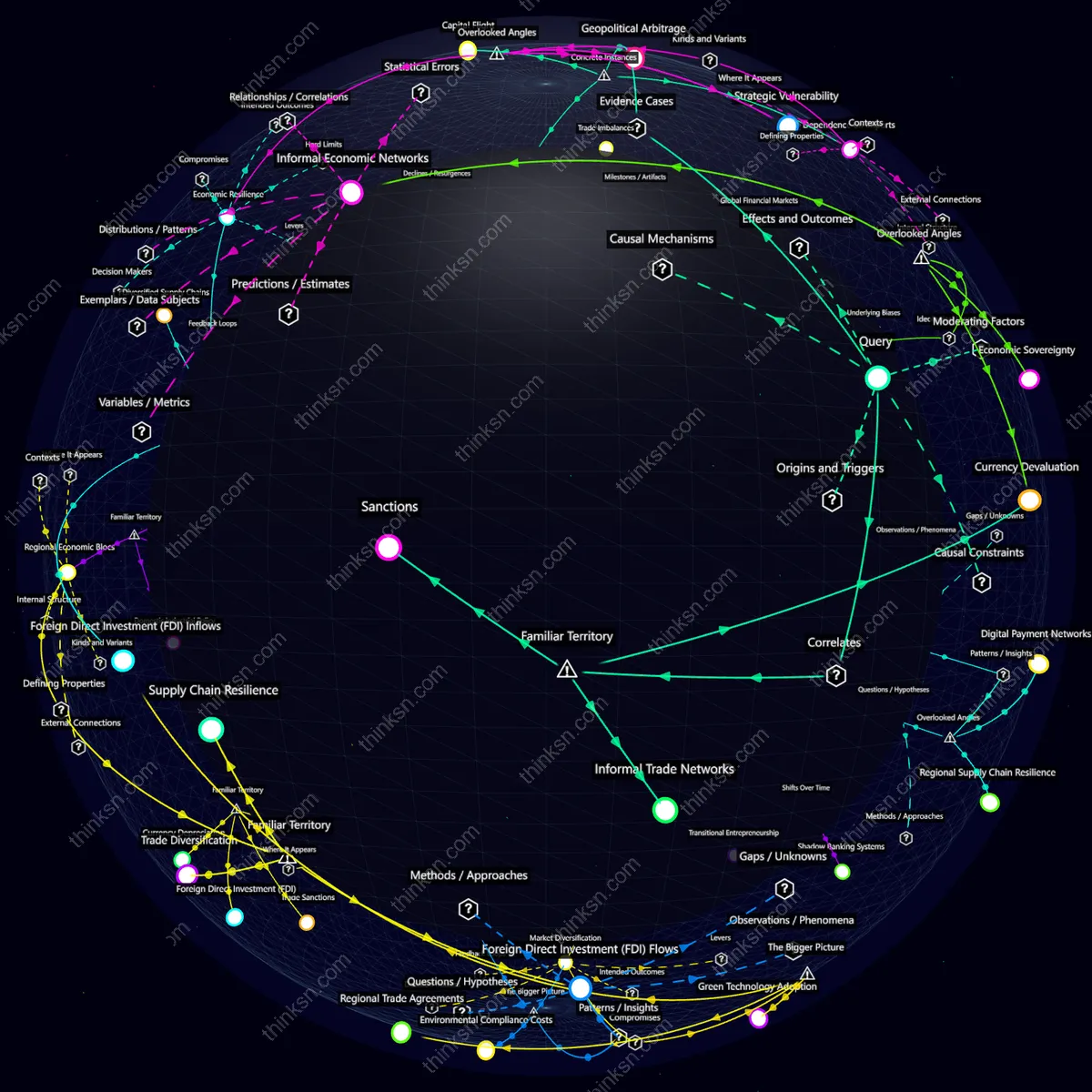
Sanctions
As trade relations between developed nations and emerging markets deteriorate due to political conflicts or environmental issues, sanctions often accompany such actions. This leads to a heightened sense of economic isolation for the affected emerging markets, potentially stifling domestic industries that rely on international supply chains and export demand.
Currency Devaluation
When major developed nations cut off trade ties with emerging economies, these smaller countries often experience rapid currency devaluation due to reduced foreign investment and loss of export revenue. This can lead to a vicious cycle where the weaker currency further increases inflation rates, making imports more expensive and exacerbating economic instability.
Informal Trade Networks
In response to disrupted formal trade channels, emerging markets may turn towards informal trade networks as an alternative. These networks can provide immediate relief but often lack transparency and regulation, leading to issues such as increased corruption, quality control problems, and the financing of illicit activities.
Sovereign Debt Crisis
Trade disruptions due to political conflicts can trigger a sovereign debt crisis in emerging markets. For example, when Venezuela faced international sanctions and trade embargoes from major economies like the US, its ability to access foreign credit dried up, exacerbating economic instability.
Dependence on Imports
Emerging markets heavily dependent on imports for critical goods face severe supply chain disruptions when developed nations cut ties. India's pharmaceutical industry relied significantly on Chinese suppliers before the 2020 trade tensions, leading to shortages and increased costs of raw materials.
Capital Flight
Sudden cessation of trade relations can cause panic among foreign investors in emerging markets, triggering capital flight. In 1982, Mexico's inability to finance its debt due to a combination of reduced oil prices and strained relations with the US led to significant outflows of foreign capital.
Deeper Analysis
How might a sovereign debt crisis in developed nations affect emerging markets' economic growth through changes in trade relations due to political conflicts or environmental issues over time?
Global Financial Markets
Sovereign debt crises in developed nations can trigger global financial market instability, causing emerging markets to suffer from reduced foreign direct investment and volatile capital flows. This often forces emerging economies to adopt stricter fiscal policies at a time when economic growth is already constrained.
Trade Imbalances
Developed countries grappling with sovereign debt crises may reduce imports, leading to trade imbalances that disproportionately affect emerging markets reliant on exports to these nations. This can exacerbate domestic inflation and unemployment in emerging economies due to decreased demand for their goods.
Political Conflicts
Sovereign debt crises can intensify political conflicts between developed nations and emerging markets, leading to protectionist policies that disrupt trade relations. These conflicts strain diplomatic ties and hinder international cooperation on issues like climate change or economic development, further impeding growth in emerging economies.
How does dependence on imports affect emerging markets' economic growth when major developed nations cease trade relations due to political conflicts or environmental issues?
Strategic Vulnerability
Emerging markets heavily reliant on imports face strategic vulnerability when major trading partners cease relations due to political conflicts. This can exacerbate existing economic fragilities, leading to supply chain disruptions and heightened inflationary pressures, which in turn undermine domestic industries' competitiveness and long-term growth prospects.
Economic Resilience
The concept of economic resilience becomes a critical variable for emerging markets when they are dependent on imports. As trade relations with developed nations deteriorate, the ability to adapt and innovate domestically is crucial but often underdeveloped, highlighting a precarious balance between short-term reliance on external supplies and long-term self-sufficiency.
Geopolitical Arbitrage
Emerging markets may seek new trade partnerships to mitigate dependence on imports during geopolitical conflicts. However, this strategic maneuvering can lead to economic dependencies with less stable or more conflict-prone partners, introducing additional layers of risk and complexity in the global market.
What are the hidden economic implications for emerging markets when major developed nations cut trade ties due to political conflicts, from diverse global perspectives?
Economic Sovereignty
When major developed nations cut trade ties due to political conflicts, emerging markets face a critical reevaluation of their economic sovereignty. This shift forces these nations to diversify export destinations and strengthen local industries, often leading to increased domestic regulation that can stifle innovation and entrepreneurship.
Currency Devaluation
Emerging market currencies may experience rapid devaluation in the wake of political conflicts among developed economies. This triggers a chain reaction where foreign investors withdraw funds, exacerbating local financial instability while also creating opportunities for speculative trading and further economic volatility.
Informal Economic Networks
The rise of informal economic networks becomes both a survival mechanism and an economic risk for emerging markets hit by trade disruptions. These networks can help bypass sanctions but often operate in legal grey areas, increasing corruption and undermining efforts to build robust formal market structures.
What strategies can emerging markets implement to enhance their economic resilience in the face of disrupted trade relations due to political conflicts or environmental issues?
Diversified Supply Chains
Emerging markets aiming to enhance economic resilience through diversified supply chains must navigate the tension between cost efficiency and stability. While diversification can protect against sudden trade disruptions, it also complicates logistics and increases operational costs. A nuanced approach is needed to balance these competing interests without compromising long-term sustainability.
Foreign Direct Investment (FDI) Inflows
Emerging markets reliant on FDI inflows risk economic instability if political conflicts or environmental issues deter foreign investors. While FDI can boost local industries and infrastructure, the sudden withdrawal of investment due to geopolitical tensions could lead to significant job losses and exacerbate economic downturns.
Trade Agreements and Alliances
Forming trade agreements and alliances is crucial for emerging markets to bolster their economic resilience against political conflicts or environmental disruptions. However, over-reliance on a single trade bloc may expose these economies to similar risks if the partner nations are also affected by global crises, undermining the intended stability.
What strategies can emerging markets employ to mitigate economic growth impacts if major developed nations cease trade relations due to political conflicts or environmental issues, by forming new alliances and revising trade agreements?
Strategic Economic Partnerships
Emerging markets forming strategic economic partnerships with smaller yet innovative countries can accelerate their technological leapfrogging. However, this strategy may lead to over-reliance on specific sectors or technologies, creating a fragile dependency that could be destabilized by global tech shifts.
Domestic Industrial Policy Reforms
Reforming domestic industrial policies to prioritize local production and reduce import dependencies can strengthen national resilience. Yet, this approach might stifle international innovation exchanges and limit the economic benefits of comparative advantages in global trade.
Regional Trade Blocs
Joining regional trade blocs with neighboring countries can offer immediate market access but may also entangle emerging markets in complex interdependencies, making them susceptible to broader geopolitical tensions within these blocs.
Diversification of Export Markets
Emerging markets diversifying their export markets can reduce dependency on major developed nations. However, this strategy requires significant investment in new infrastructure and logistics, which may not yield immediate returns. Moreover, it risks alienating existing trade partners and could lead to retaliatory protectionist measures.
Regional Economic Blocs
Forming regional economic blocs allows emerging markets to pool resources and negotiate as a single entity with developed nations, enhancing bargaining power. Yet, this can create internal frictions over differing policy priorities among member states, potentially weakening the bloc's effectiveness.
Domestic Industrial Policy
Implementing robust domestic industrial policies helps emerging markets develop local industries capable of competing globally. However, such measures can stifle innovation and attract criticism for undermining free trade principles, possibly leading to international disputes.
Explore further:
- In what ways could strategic economic partnerships among emerging markets evolve to mitigate the impacts of severed trade relations with major developed nations due to political conflicts or environmental issues?
- How do regional economic blocs affect emerging markets' economic growth when major developed nations cease trade relations due to political conflicts or environmental issues?
In what ways could strategic economic partnerships among emerging markets evolve to mitigate the impacts of severed trade relations with major developed nations due to political conflicts or environmental issues?
Regional Supply Chain Resilience
The deepening of regional supply chains among emerging markets can dramatically shift global trade dynamics. However, this resilience may be fragile and dependent on stable political relations within the region, risking sudden disruptions if internal conflicts arise or key nations withdraw.
Informal Economic Zones
Emerging from informal economic zones, such as shadow markets and unregulated trade routes, these areas can rapidly expand to fill gaps left by severed major trade relations. Yet, they often lack legal protections, leading to increased risks of corruption, smuggling, and market volatility.
Digital Payment Networks
The rapid adoption of digital payment systems among emerging economies can create new avenues for economic cooperation, bypassing traditional banking infrastructures. However, this innovation also exposes these networks to cyber threats and the fragility of technological dependencies that could be easily disrupted.
How do regional economic blocs affect emerging markets' economic growth when major developed nations cease trade relations due to political conflicts or environmental issues?
Trade Diversification
Emerging markets within regional economic blocs often experience a surge in trade diversification as they shift focus from major developed nations to intra-bloc trade when political conflicts or environmental issues disrupt traditional export routes. However, this rapid adjustment can lead to over-reliance on a smaller set of trading partners, increasing vulnerability to internal market fluctuations and policy changes.
Foreign Direct Investment (FDI) Flows
Regional economic blocs may attract significant FDI as multinational corporations seek stable investment environments amidst global trade tensions. Yet, this influx can also lead to an uneven distribution of wealth within the bloc, with more economically powerful member states garnering a disproportionate share of investments and benefits.
Supply Chain Resilience
In response to geopolitical disruptions, regional economic blocs enhance supply chain resilience through localized production and sourcing. While this strengthens short-term stability, it can also expose the bloc to new risks such as technological stagnation due to reduced competition with global innovators.
What strategies can emerging markets employ to mitigate economic growth impacts from major developed nations ceasing trade due to political conflicts or environmental issues, particularly by leveraging informal economic zones?
Shadow Banking Systems
The rise of shadow banking systems within informal economic zones amplifies systemic risks by enabling unregulated financial activities. As emerging markets seek to bypass traditional trade restrictions, reliance on these opaque networks can lead to severe liquidity crises and financial instability.
Transitional Entrepreneurship
Informal economic zones foster transitional entrepreneurship among small-scale traders who navigate between formal and informal economies. While this flexibility allows for rapid adaptation in volatile trade environments, it also creates a precarious ecosystem where entrepreneurs are vulnerable to sudden policy changes or crackdowns.
How might Foreign Direct Investment (FDI) Flows be affected in emerging markets if major developed nations cut off trade relations due to political conflicts or environmental issues, and what are the potential implications for economic growth?
Political Risk
A cut-off of trade relations by major developed nations due to political conflicts can dramatically increase the perception of political risk in emerging markets, deterring potential FDI flows. This heightened risk not only discourages direct investment but also leads to a flight of capital from these regions, exacerbating economic instability and undermining development efforts.
Environmental Compliance Costs
If developed nations halt trade due to environmental concerns, emerging markets may face significant pressures to adopt stringent regulations and compliance measures. This sudden shift increases operational costs for businesses, potentially making investment less attractive and reducing FDI flows. Moreover, companies may redirect their investments towards more environmentally compliant regions or technologies, further limiting growth opportunities in affected markets.
Market Diversification
The loss of trade relations with developed nations can prompt emerging markets to diversify their economic partnerships and attract FDI from alternative sources such as other developing countries or regional blocs. However, this diversification effort might be slow and challenging due to existing bilateral ties and market preferences, leading to a temporary decline in FDI flows until new relationships are established.
Explore further:
- How do changes in political risk affect the economic growth of emerging markets when major developed nations cut trade relations due to conflicts or environmental issues?
- What strategies can emerging markets employ to diversify their economies in response to major developed nations ceasing trade relations due to political conflicts or environmental issues?
How do changes in political risk affect the economic growth of emerging markets when major developed nations cut trade relations due to conflicts or environmental issues?
Trade Sanctions
When major developed nations impose trade sanctions on emerging markets due to political conflicts or environmental issues, the economic growth of these markets is severely curtailed. This leads to a domino effect where reduced exports and foreign investment exacerbate local financial instability, often pushing vulnerable economies into deeper recessions.
Foreign Direct Investment (FDI)
A decline in political stability due to international conflicts can trigger a significant drop in FDI for emerging markets. This reduction not only limits capital inflows but also hampers technological transfer and managerial expertise, further weakening their economic resilience and growth prospects.
Currency Depreciation
Political instability and deteriorating trade relations can lead to rapid currency depreciation in emerging economies. As investors withdraw funds amid heightened uncertainty, the local currency weakens significantly against major currencies like the US dollar, making imports more expensive and domestic industries less competitive on the global stage.
What strategies can emerging markets employ to diversify their economies in response to major developed nations ceasing trade relations due to political conflicts or environmental issues?
Foreign Direct Investment (FDI) Inflows
Emerging markets seeking diversification through FDI inflows risk over-reliance on foreign capital, which can lead to loss of sovereignty and decision-making power. This dependency can be exacerbated during economic downturns when investors pull out, leaving the market vulnerable.
Green Technology Adoption
Adopting green technology as part of diversification efforts can position emerging markets ahead in sustainability but may require significant upfront investment and technical skill development. This poses a trade-off with immediate economic growth needs, where prioritizing green tech might delay short-term employment and industrial output.
Regional Trade Agreements
Forming regional trade agreements can provide an alternative market for emerging economies but also risks creating new dependencies on neighboring markets that may not be economically stable or politically aligned in the long term, complicating diversification efforts.