Is Buying Now Risky for Single Pros in Sun Belt Boom Towns?
Analysis reveals 7 key thematic connections.
Key Findings
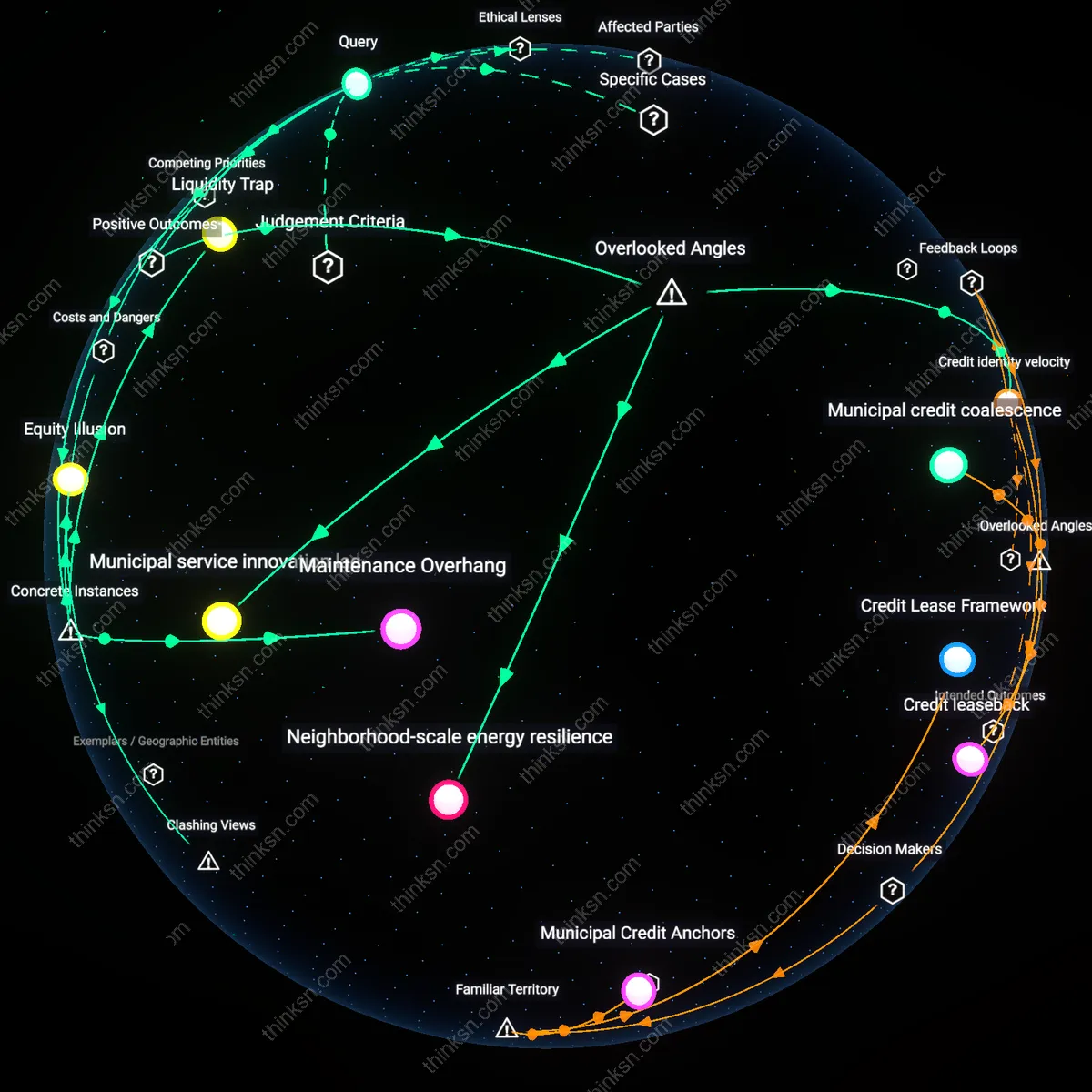
Neighborhood-scale energy resilience
A single professional in a Sun Belt boom town should buy a house now because individual homeownership can anchor localized microgrid adoption, where rooftop solar and residential battery systems collectively buffer grid instability during extreme heat events. In cities like Austin or Phoenix, where population growth outpaces utility infrastructure upgrades, aggregated residential storage can autonomously stabilize voltage during peak demand, reducing blackouts and increasing community-wide reliability—an effect that disproportionately benefits early adopters who shape neighborhood-level energy topologies. This dimension is overlooked because mainstream housing analyses treat energy as a fixed utility cost rather than a spatially embedded, owner-driven resilience asset that appreciates in value during climate stress.
Municipal service innovation lag
Purchasing a home now leverages a temporary misalignment between rapid population inflows and the slower rollout of public service capacity, allowing individual buyers to capture outsized influence in shaping new schools, transit routes, and safety protocols before they become bureaucratically rigid. In emerging suburbs of places like Raleigh or Henderson, Nevada, municipal planning cycles lag five to seven years behind demographic shifts, giving early homeowners disproportionate sway in community design through neighborhood associations and public hearings—power that diminishes once institutions formalize. This dynamic is typically ignored in housing ROI calculations, which focus on price trends rather than political capital accrued through timing.
Credit identity velocity
Buying a house immediately accelerates the accumulation of formal financial identity in a high-mobility labor market, where credit history density becomes a strategic advantage for professionals likely to pursue rapid job changes or entrepreneurial ventures. In Sun Belt metros like Nashville or Irving, Texas, where gig economy participation and remote work are rising, a mortgage account establishes a stable, geolocated credit anchor that enhances loan approval odds and lowers rates for future unsecured financing—advantages invisible in equity models but critical for career agility. This effect is rarely considered because housing advice assumes static residency and separates housing decisions from professional credit strategy.
Rentier Displacement
No, because the act of buying now—especially with investor-heavy market dynamics in cities like Phoenix or Charlotte—enmeshes the individual in a system of rentier displacement that erodes long-term neighborhood stability. When middle-income professionals purchase homes amid institutional investor competition, they inadvertently validate and accelerate block-by-block financialization, pricing out service workers and increasing civic fragility. The underappreciated cost is that owner-occupiers become both victims and vectors of speculative spirals, where rising maintenance costs and insurance loads destabilize community cohesion before equity fully matures—undermining the very livability the buyer sought to secure.
Equity Illusion
A single professional in Austin should not buy a house now because rapidly appreciating markets during tech-driven booms, like Austin’s post-2020 influx of Tesla and Oracle relocations, convert speculative price growth into perceived equity that collapses when interest rates adjust—evident in the 18% drop in median home resale value from Q2 2022 to Q1 2023, despite strong demand—where the pursuit of long-term asset security undermines financial prudence through exposure to monetary policy shocks, revealing that nominal ownership can simulate wealth without durable value transfer.
Liquidity Trap
A single professional in Phoenix should avoid homeownership at current peaks because neighborhoods like those in Maricopa County, where 42% of 2021–2022 buyers were out-of-state investors, demonstrate that high sales velocity masks shallow market depth, turning individual homes into illiquid assets when buyer pools contract—as occurred in the 2007–2009 crash when foreclosure sales froze for 220+ days on average—so the pursuit of residential stability sacrifices exit flexibility when systemic demand evaporates, privileging mobility in uncertain labor markets over rootedness.
Maintenance Overhang
A single professional in Nashville should delay homeownership because newly constructed, amenity-rich developments in areas like The Nations—where HOA fees rose 37% between 2020 and 2023 to cover deferred builder repairs—show that initial price incentives conceal long-term liability accumulation, where the pursuit of modern convenience trades off against unforeseen ownership costs, exposing solitary buyers to disproportionate maintenance burdens without communal risk-sharing, a dynamic unseen in rental equivalency models.