Do SEL Programs Truly Support Students or Control Behavior?
Analysis reveals 8 key thematic connections.
Key Findings
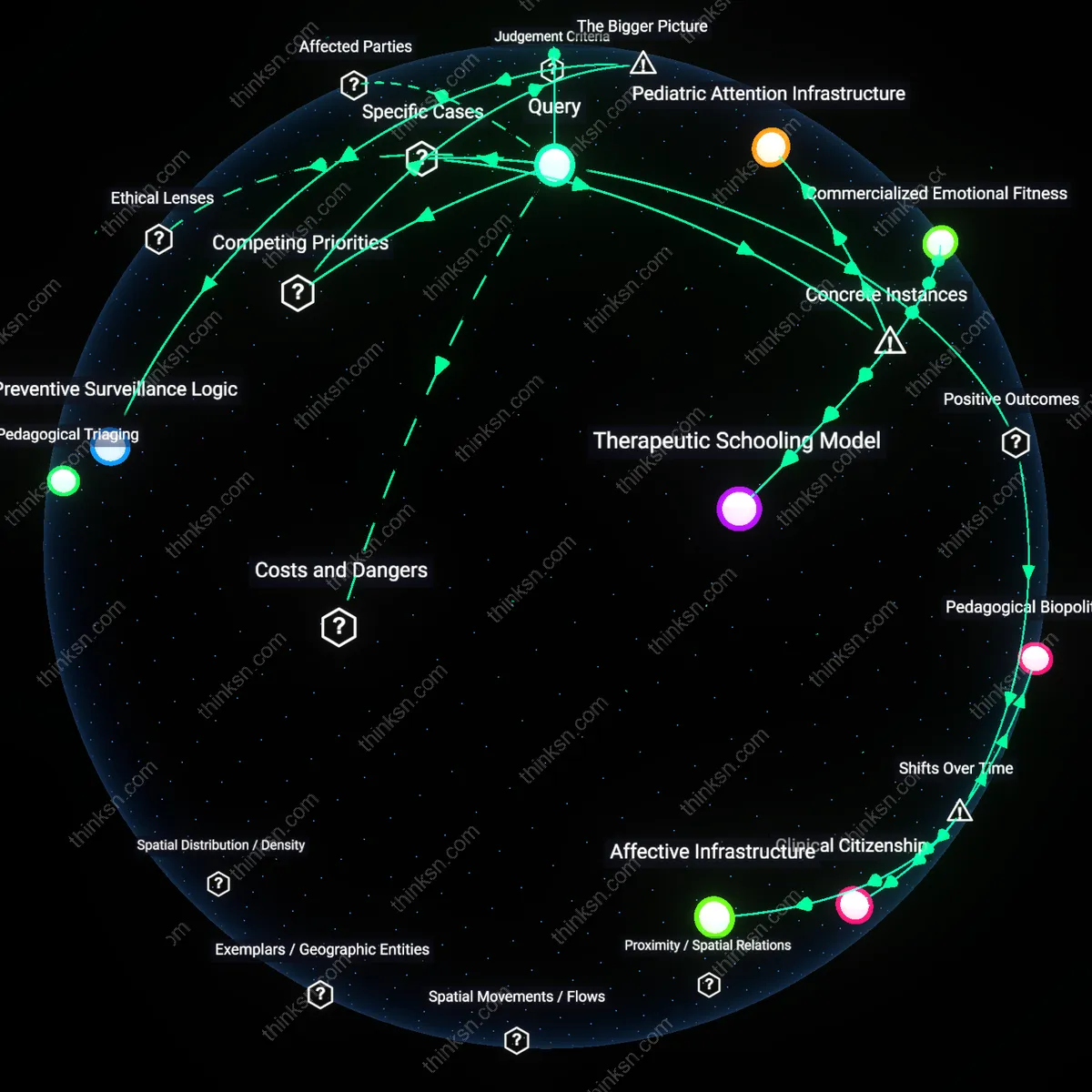
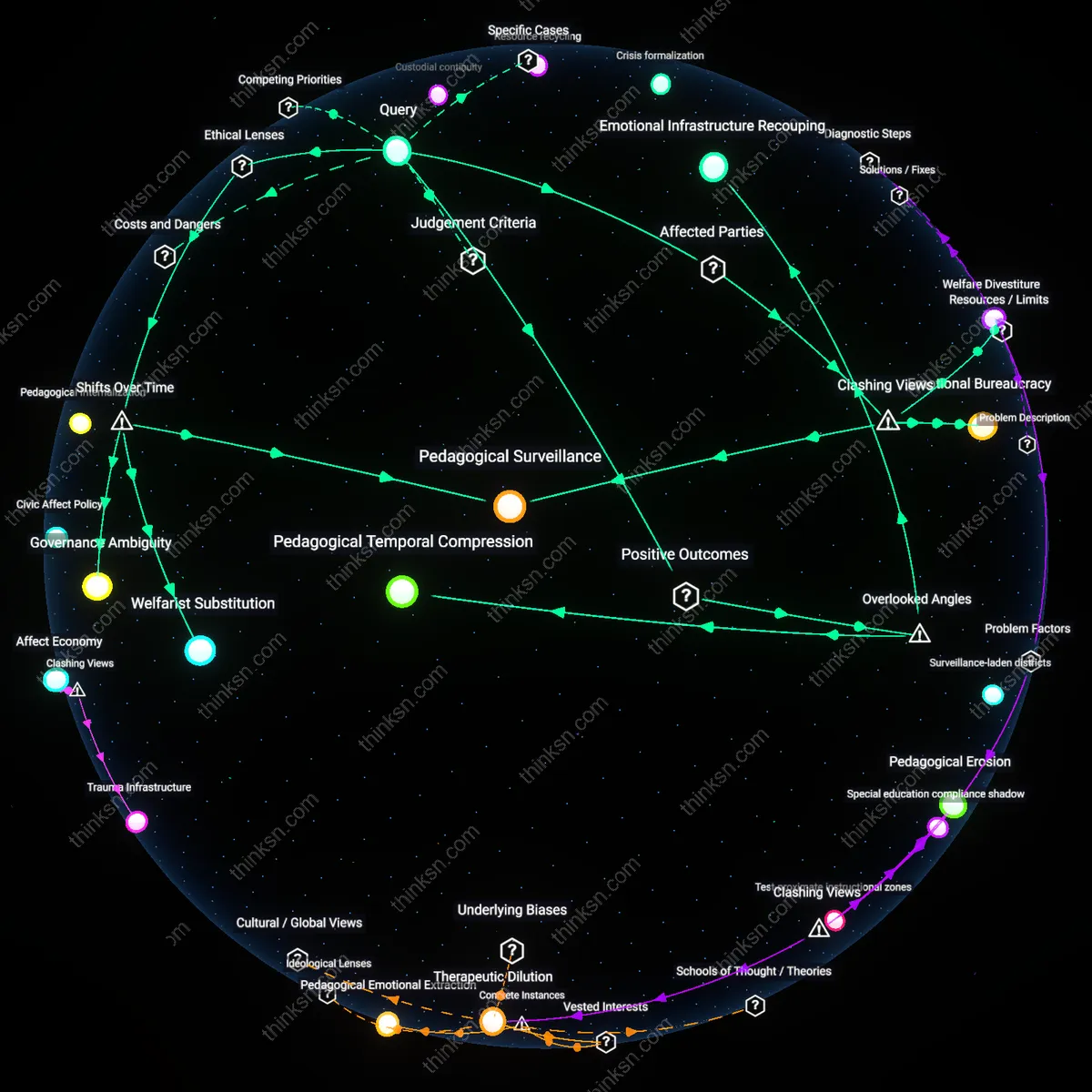
Pedagogical Surveillance
Social-emotional learning programs primarily function as behavioral control by institutionalizing emotional self-monitoring among students, particularly targeting low-income Black and Brown youth in urban public schools where compliance is emphasized over emotional exploration; these programs are implemented by teachers trained to identify 'at-risk' behaviors, operating through district-mandated curricula like Second Step, thus embedding monitoring into daily classroom routines and reframing emotional expression as a risk to be managed rather than a personal experience—this reveals that the core innovation of SEL is not empathy-building but the routinization of affective surveillance, contradicting the humanitarian narrative that dominates education policy discourse.
Welfare Divestiture
SEL programs primarily support student wellbeing by compensating for the absence of mental health infrastructure in underfunded public school systems, especially in rural and deindustrialized regions where licensed therapists are inaccessible, placing the burden of emotional care on teachers without clinical training; this allows state and federal governments to claim action on youth mental health while avoiding investment in standalone mental health services, thereby transforming schools into surrogate clinics—this exposes a hidden mechanism of welfare state retrenchment, where emotional support is individualized and depoliticized rather than treated as a collective responsibility.
Emotional Bureaucracy
SEL functions neither as pure care nor control but as an administrative tool for charter networks and education management organizations to standardize student affect across campuses, enabling scalable behavioral data collection tied to performance metrics used in school accreditation and funding formulas; operators in CMOs like KIPP or Success Academy use SEL assessments to generate 'character scores' that influence teacher evaluations and resource allocation, thus formalizing emotional conduct into audit trails—this reframes SEL not as pedagogy but as organizational rationalization, revealing that emotional outcomes are increasingly governed by bureaucratic efficiency rather than developmental need.
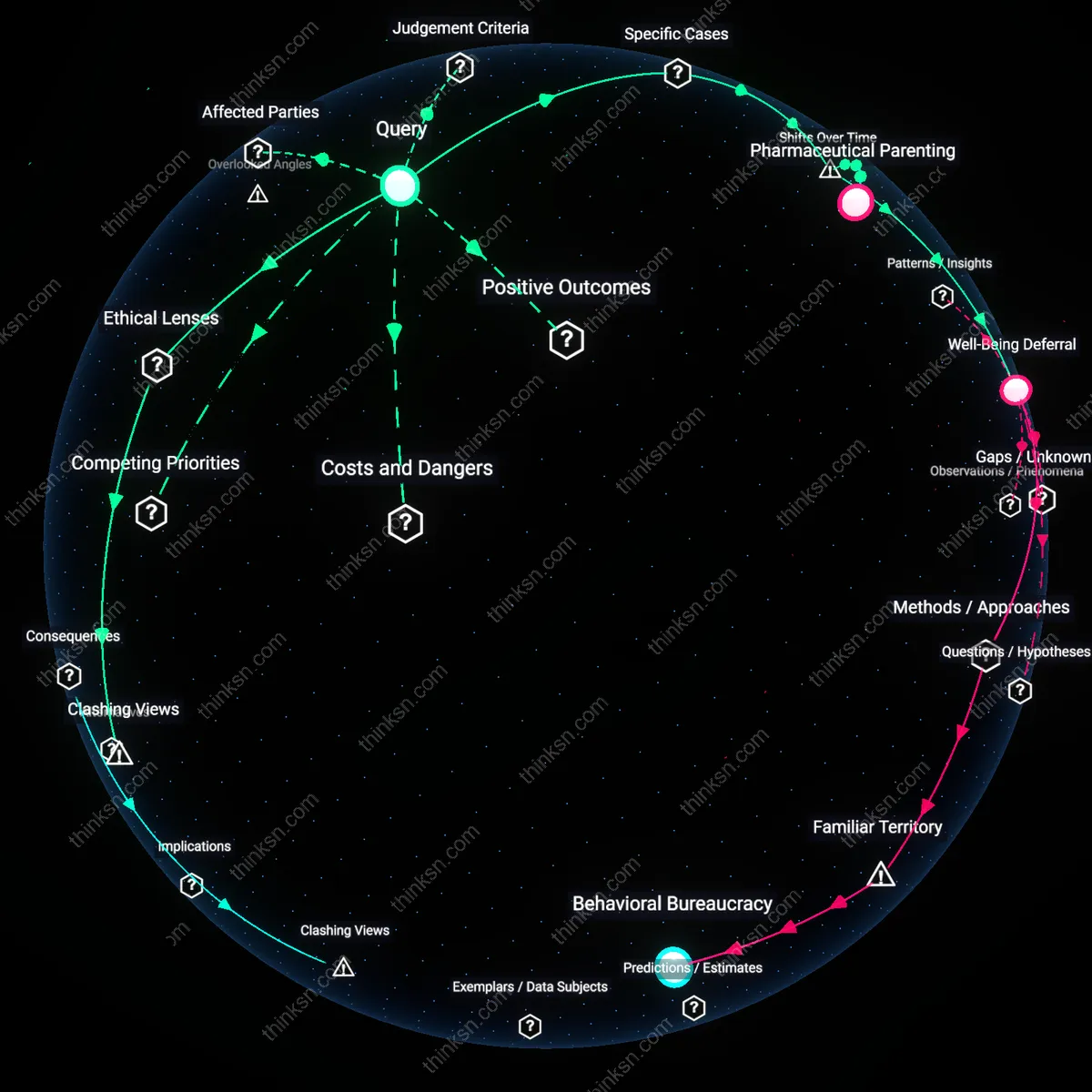
Pedagogical Temporal Compression
Social-emotional learning programs primarily support student wellbeing by condensing long-term developmental processes into classroom-scale timelines, enabling teachers to externalize emotional maturation through structured routines like morning check-ins and conflict-resolution journals. This temporal compression is rarely recognized as a pedagogical mechanism because it operates beneath curriculum standards, yet it fundamentally alters how schools manage developmental lags—not through remediation but by resequencing emotional growth into synchronized cohort experiences. What’s overlooked is that this timing intervention reduces behavioral heterogeneity not by controlling students, but by compressing diverse emotional trajectories into a shared institutional clock, thereby enhancing inclusion while minimizing disruption.
Emotional Infrastructure Recouping
Social-emotional learning programs function as behavioral control by repurposing student emotional expression into measurable data streams that feed school accountability systems, such as climate surveys and discipline logs used in district funding evaluations. The non-obvious mechanism here is not discipline per se, but the infrastructural recouping of personal affect into bureaucratic outputs—where a student’s self-reported anxiety becomes a metric for school performance improvement plans. This transforms SEL from a support into an embedded surveillance scaffold, invisible in policy debates because it aligns with evidence-based reform, yet systematically prioritizes institutional reporting needs over individual emotional privacy.
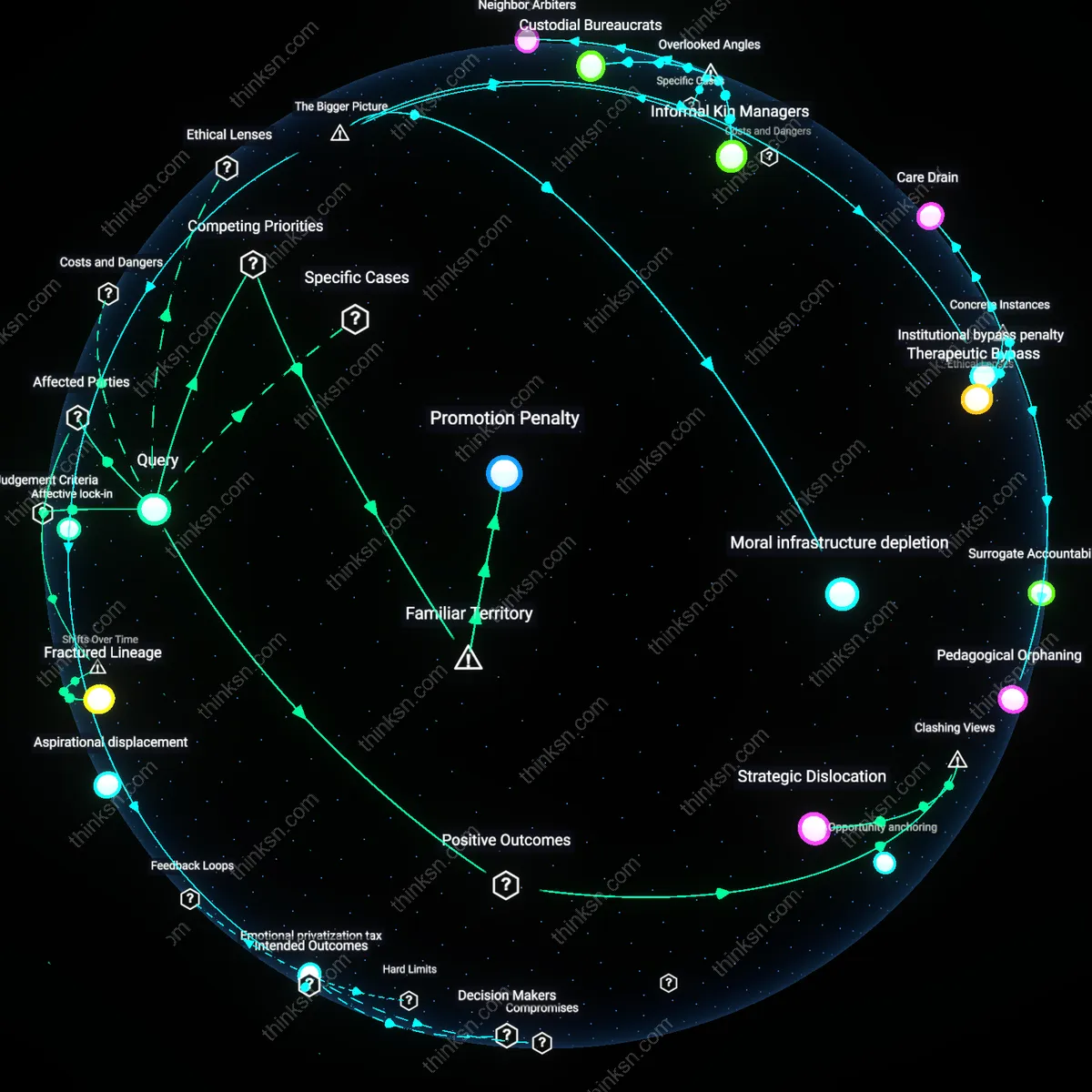
Affective Labor Redistribution
SEL programs primarily support wellbeing by redistributing unpaid affective labor from marginalized caregivers—especially Black and brown mothers—to trained teachers and counselors within school ecosystems, making emotional regulation a publicly funded service rather than a privatized burden. This shift is rarely acknowledged because affective labor is culturally rendered invisible, yet it materially alters family-school power dynamics by legitimizing schools as sites of emotional repair rather than just academic instruction. The consequence is a quiet transformation of public education into a compensatory socioemotional welfare function, particularly in under-resourced communities where schools become de facto mental health mediators.
Welfarist Substitution
Social-emotional learning programs primarily support student wellbeing, but this role emerged pivotally after the deinstitutionalization of mental health care in the 1970s–80s, when public schools absorbed therapeutic functions once managed by state psychiatric systems. Grounded in a Rawlsian commitment to distributive justice, SEL evolved as a compensatory apparatus within under-resourced districts, particularly in post-industrial U.S. cities like Detroit or Camden, where funding cuts left schools as the only stable provider of psychosocial services. The shift from industrial-era discipline to contemporary emotional scaffolding reveals that SEL, despite its administrative framing, operates as an ethical improvisation on the ground—its non-obvious function being not control but containment of structural abandonment.
Governance Ambiguity
Social-emotional learning programs became a site of contested governance after the 2010s, when parental rights movements and conservative legal networks recast SEL as ideological overreach, thereby reframing emotional pedagogy as a threat to familial autonomy under a Lockean property framework. This backlash, codified in legislation like Florida’s ‘Stop WOKE Act’, marks a reversal from earlier bipartisan consensus on SEL, exposing how its expansion under Obama-era education policy assumed a post-political consensus on emotional norms that never existed. The resulting regulatory retreat—where districts now dilute SEL content to avoid scrutiny—reveals that the tension between wellbeing and control is less about intent than about jurisdiction; the non-obvious insight is that SEL’s ambiguity functions as a political safety valve, absorbing conflict that might otherwise target deeper inequities.