Do Parent Coaching Services Help or Harm Single Parents?
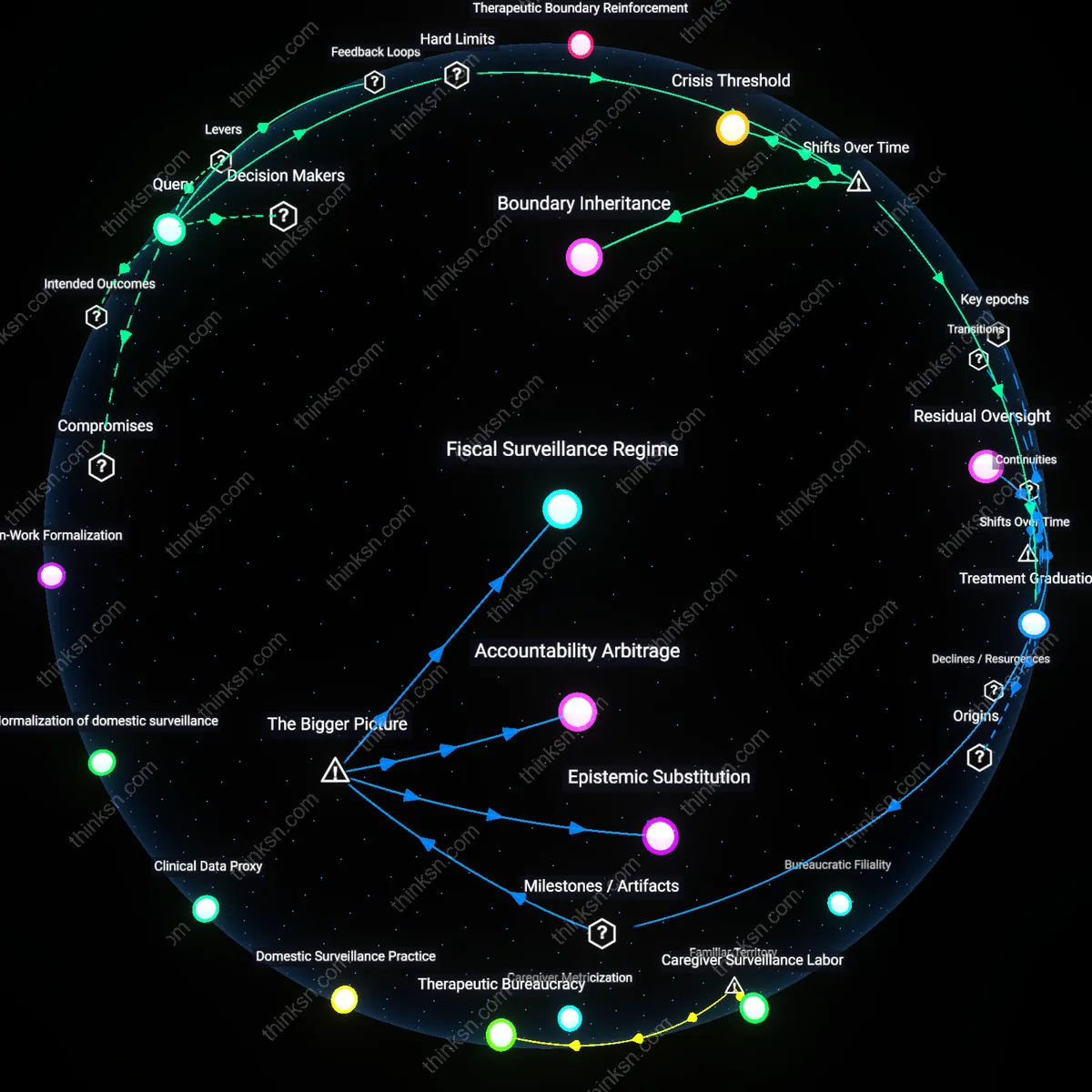
Analysis reveals 6 key thematic connections.
Key Findings
Coaching Industry
The parent coaching industry benefits most from the growing popularity of discipline-focused services in single-parent households, as it captures fee-based demand amplified by social stigma and time scarcity. These services monetize anxiety around disciplinary shortcomings through one-on-one consultations, workshop enrollments, and subscription content, primarily delivered via digital platforms and community referrals in urban and suburban service economies. What is underappreciated in this dynamic—despite widespread familiarity with 'parenting experts' and 'behavior coaches'—is how the normalization of paid discipline support shifts public perception from structural inequities to individual skill deficits, enabling market expansion even without proven efficacy.
Single Mothers
Single mothers are the most socially visible beneficiaries of parent coaching services for discipline, despite limited evidence of effectiveness, because they bear disproportionate cultural scrutiny over child behavior and household order. Public discourse routinely associates single motherhood with disciplinary instability, making these women more likely to seek legitimizing tools in high-pressure environments like schools, family courts, and social services. The non-obvious consequence is that these women gain narrative agency—not necessarily behavioral results—by demonstrating 'effort' through service enrollment, thus conforming to, yet strategically navigating, a system that punishes visible struggle.
State Adjuncts
Child welfare systems and court-adjacent institutions benefit most as passive recipients of normalized coaching referrals, which serve as low-cost risk mitigation tools instead of direct state intervention. Judges, school counselors, and social workers increasingly treat enrollment in discipline coaching as evidence of parental compliance, especially in marginalized single-parent homes under surveillance. Though these actors rarely fund the services directly, their endorsement embeds coaching into informal accountability pipelines, replacing structural support with performative engagement—an outcome that feels familiar in child-serving systems, yet masks how privatized solutions absorb public accountability.
Market Expansion Entitlement
Private coaching firms benefit most by securing new market niches in underserved family structures, as seen in the rapid scaling of ParentLogic Inc. in Detroit after 2018, where city budget cuts to public parenting support created a vacuum filled by fee-based discipline coaching programs that targeted single mothers through social media ads. These firms capitalize on structural neglect while framing access as consumer choice, thereby converting public welfare shortfalls into profitable private solutions. The non-obvious mechanism is not demand from parents but supply-side opportunism enabled by austerity, which redefines equity gaps as entrepreneurial opportunities.
Institutional Risk Deflection
Child welfare systems benefit most by outsourcing behavioral surveillance to coaches, as occurred in King County, Washington’s pilot program (2020–2023), where Family Support Coaches were embedded in low-income single-parent homes to monitor compliance with discipline guidelines and report concerns to social services. This shifts the burden of state oversight onto non-clinical actors while creating plausible deniability for intervention thresholds, reducing formal caseloads without addressing root causes. The underappreciated dynamic is the substitution of therapeutic presence for regulatory monitoring, normalizing preventive intrusion under the guise of empowerment.
Normative Gatekeeping Authority
Certification bodies like the International Consortium for Parent Coaching benefit most by standardizing practices despite minimal outcome data, exemplified by their successful lobbying in Texas (2021) to recognize parent coaching credentials as eligible for Medicaid-adjacent family service funding. By positioning themselves as arbiters of legitimate parenting knowledge, they consolidate influence over what counts as effective discipline, privileging credentialized expertise over community-based or cultural practices. The overlooked outcome is the quiet displacement of informal kinship knowledge systems by professionally bounded norms that mirror class-specific values.