How Unequal Inheritances Split Sibling Bonds?
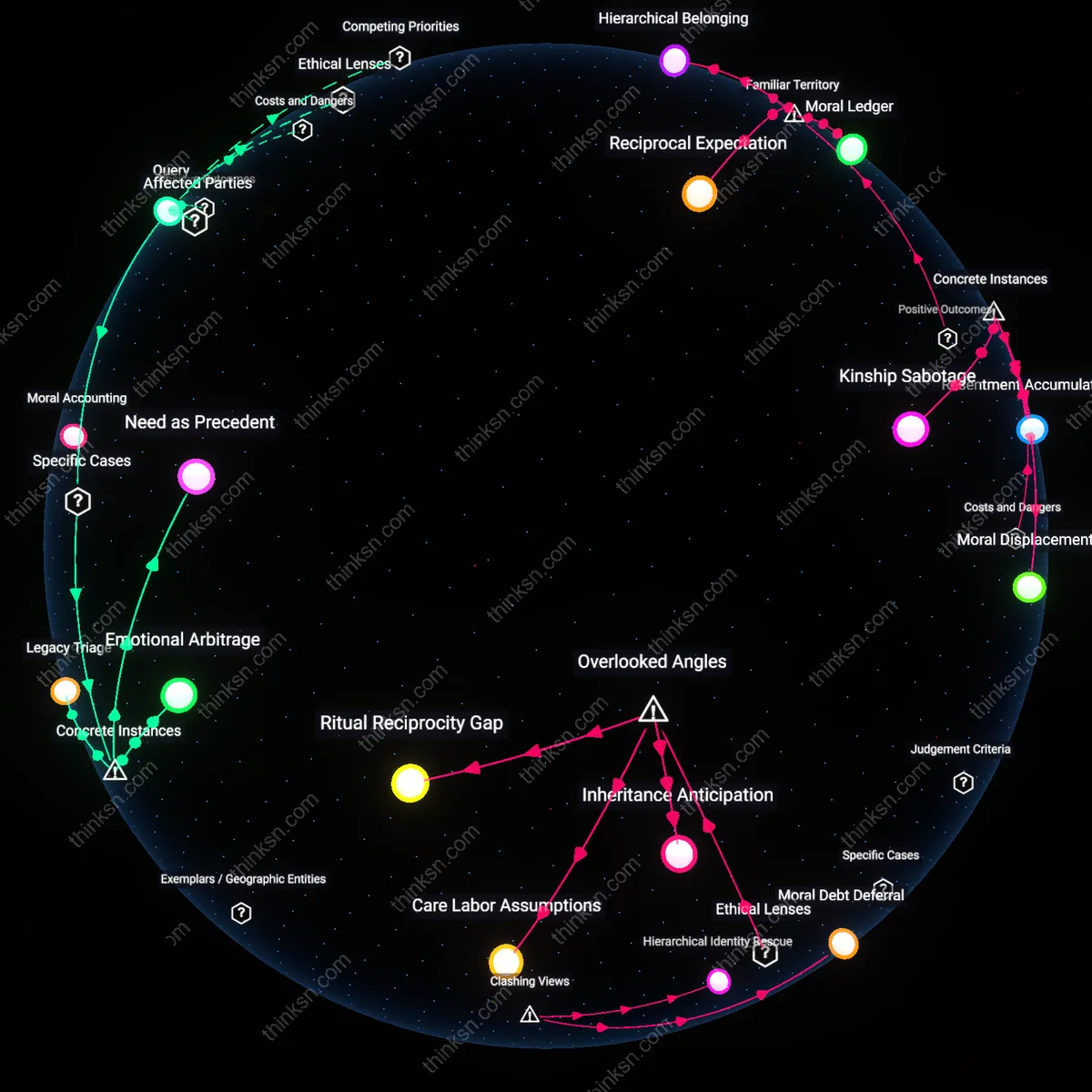
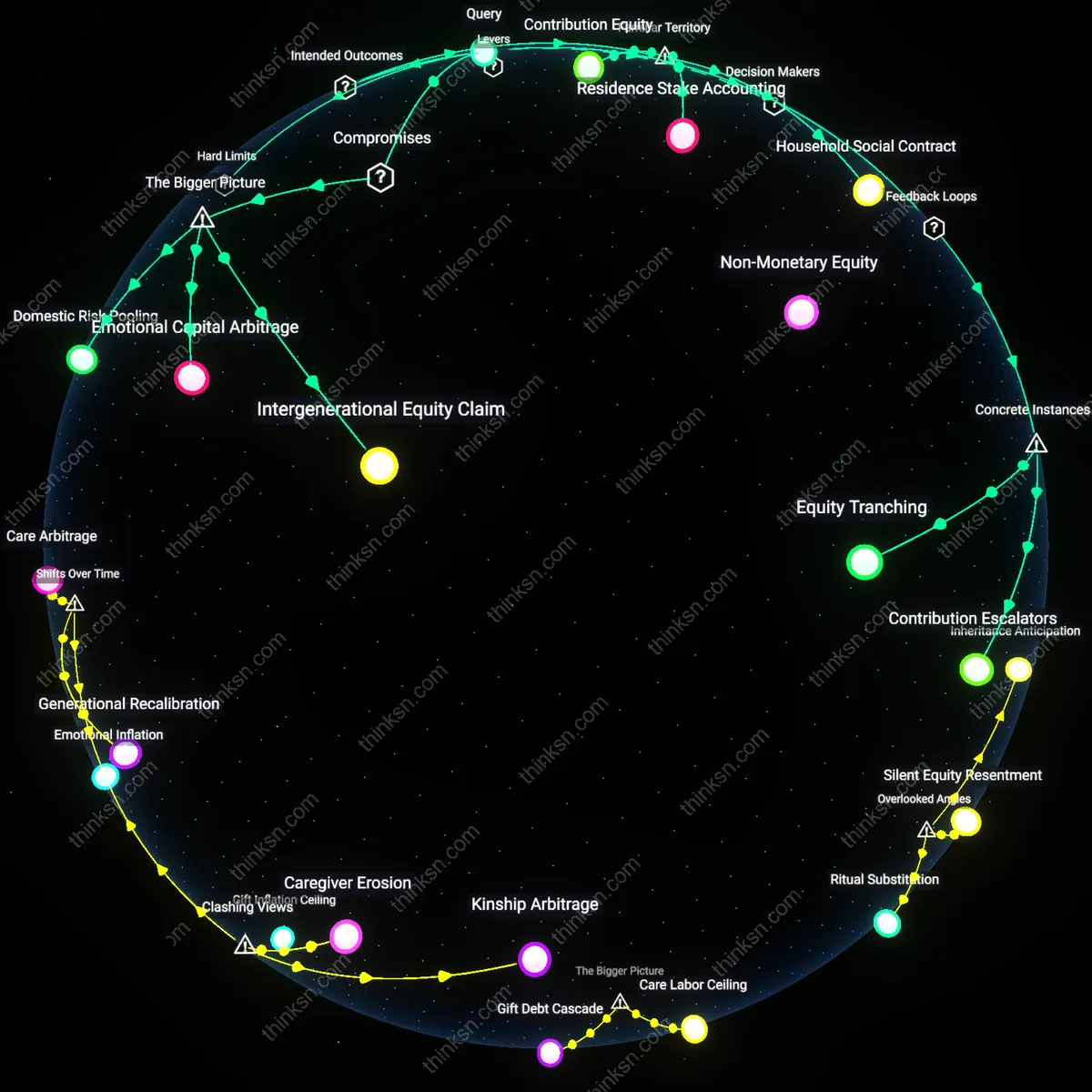
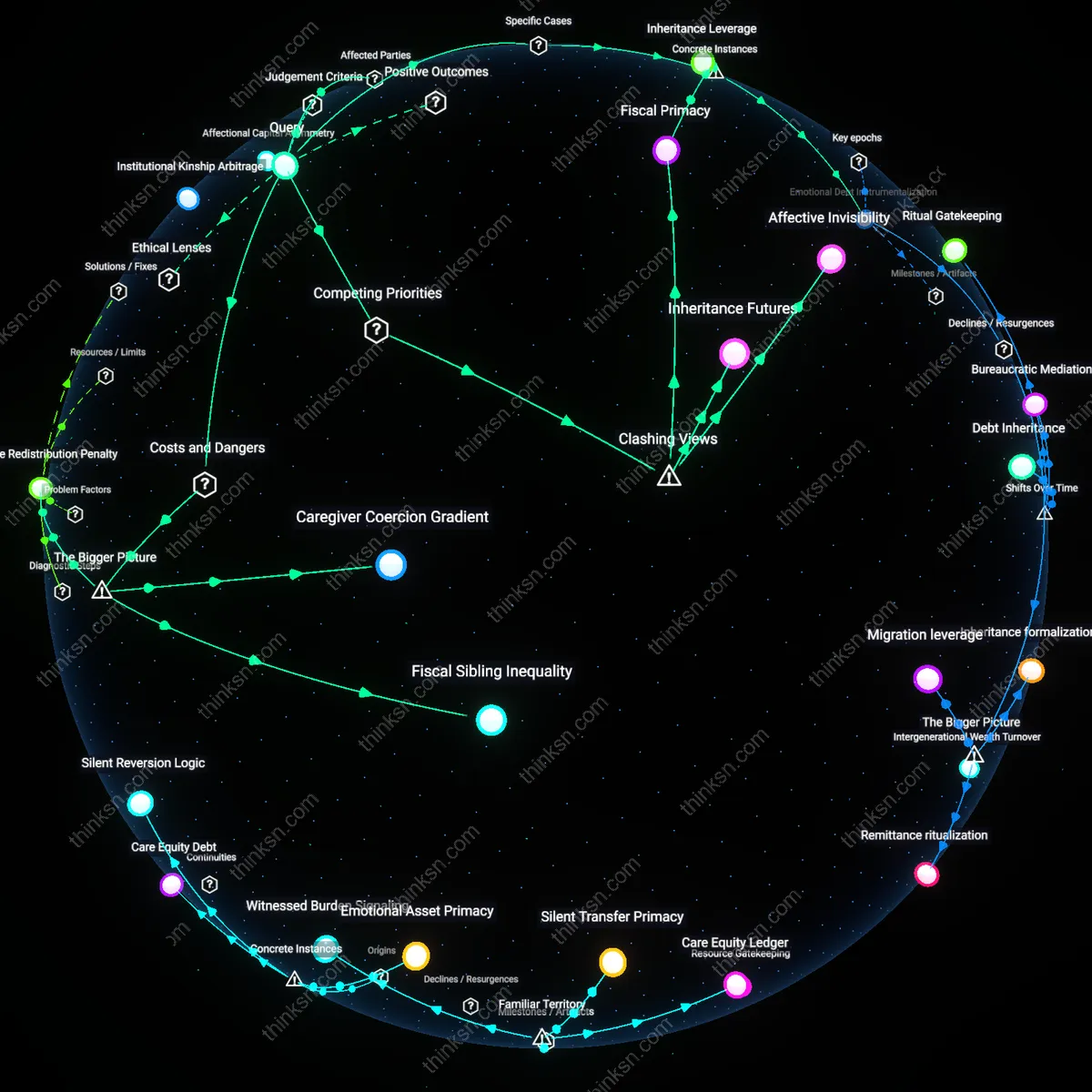
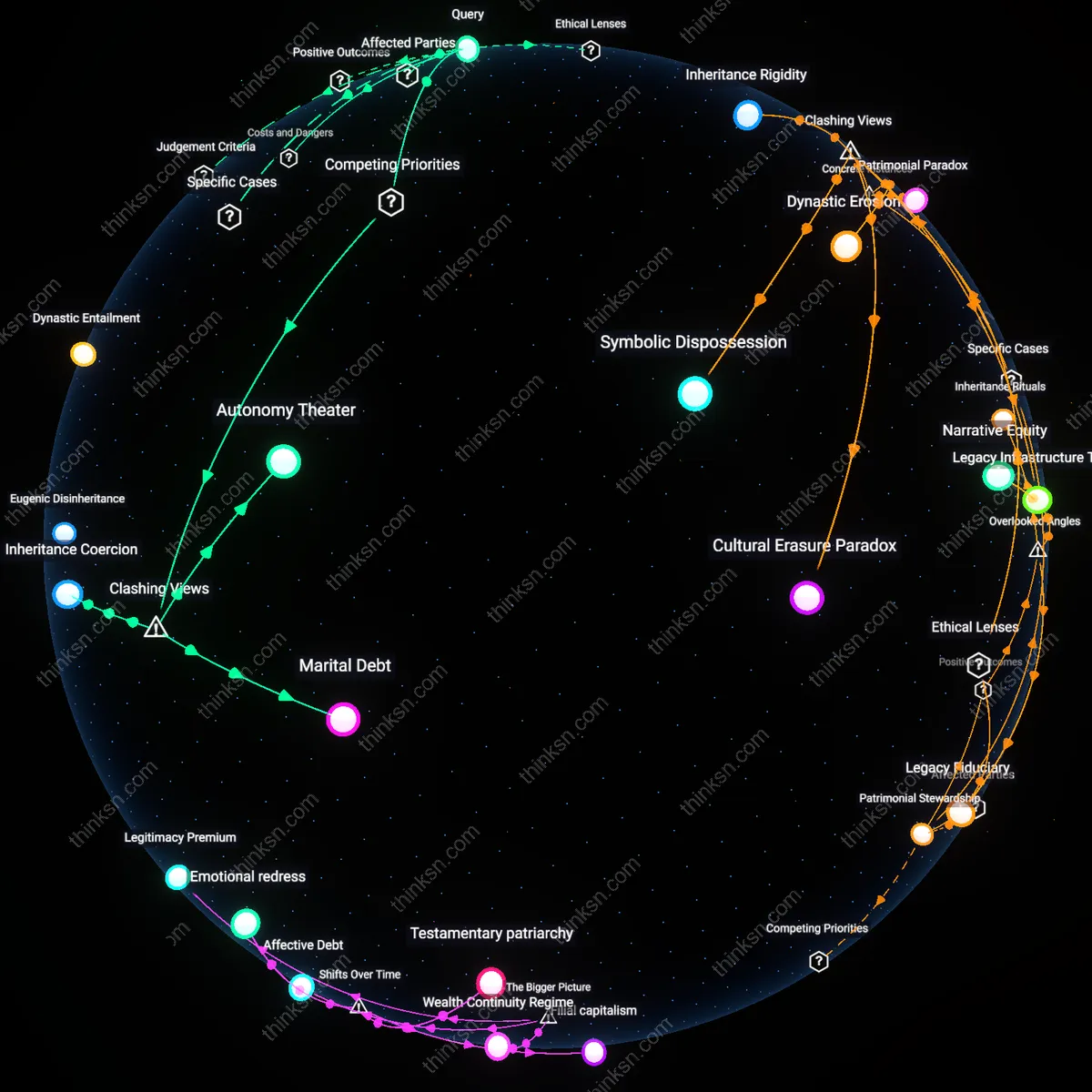
Analysis reveals 6 key thematic connections.
Key Findings
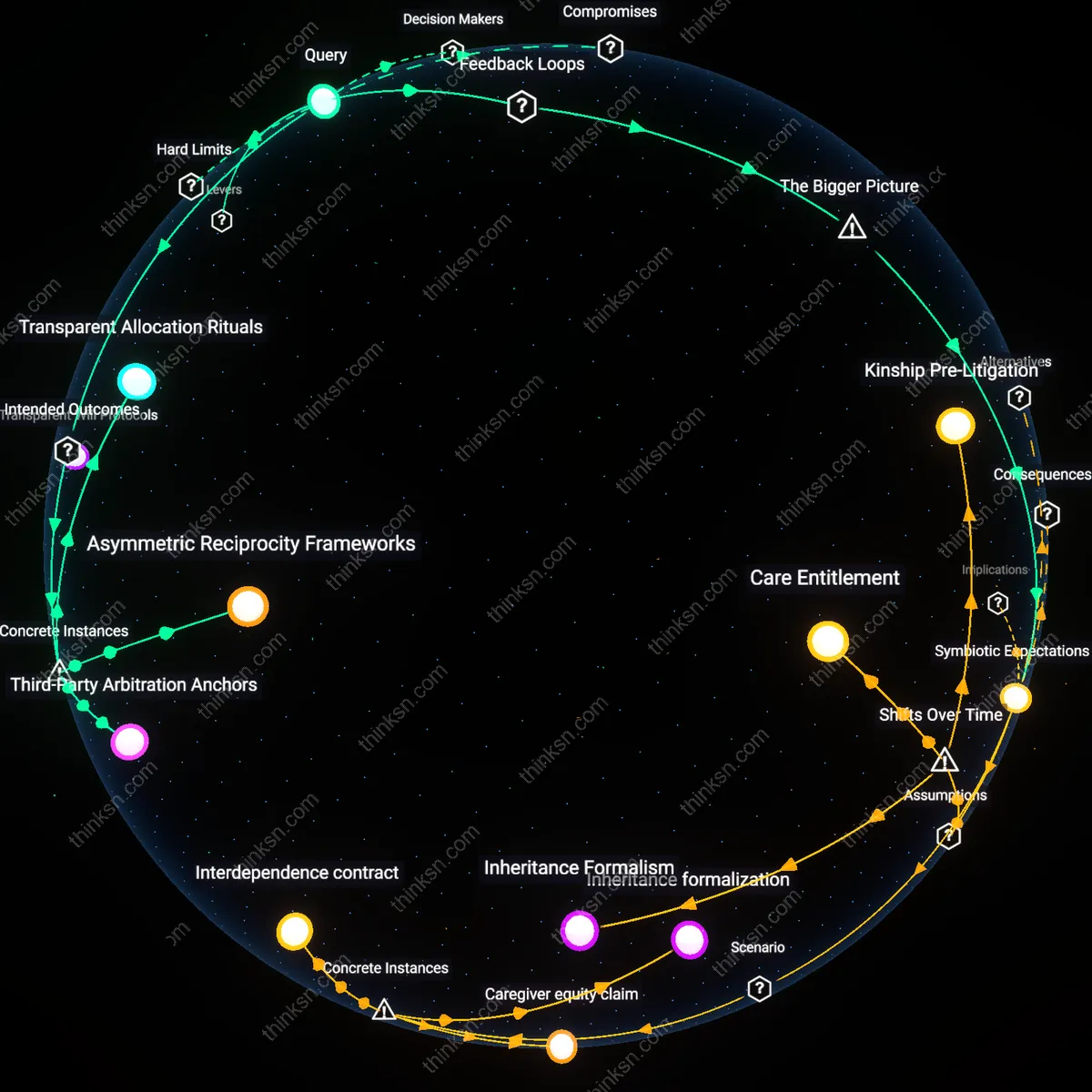
Transparent Will Protocols
Conduct all inheritance planning in joint family meetings with a notary present to codify decisions as they are made. This forces preferential allocations to be justified in real time, exposing favoritism as a public record rather than a hidden transaction, and shifts the domain of dispute from private emotional injury to documented legal reasoning—what most people recognize as the 'will' but rarely imagine as a collaborative, witnessed process. The non-obvious insight is that the will’s authority stems not from its content but from its ritualized transparency, transforming it from a posthumous trigger of conflict into a platform for preemptive accountability.
Gift Equalization Ledgers
Institutionalize a family-wide accounting system that tracks all material benefits—college tuition, down payments, gifts—given to each child during the parents’ lifetime. Because parental favoritism often manifests through unequal lifetime transfers masked as spontaneity, this ledger converts seemingly benign acts into measurable disparities, activating the same fairness calculus people associate with splitting an inheritance 'down the middle.' The underappreciated mechanism is that fairness is judged cumulatively, not solely by the final will, and the ledger makes visible what most families retrospectively misattribute as sudden bias rather than compounded advantage.
Symbiotic Expectations
Aligning inheritance to long-term inter-sibling obligations—such as shared care for aging parents or joint stewardship of family property—creates a feedback structure where unequal transfers are offset by reciprocal duties, converting potential resentment into interdependence. When siblings understand that disparities in cash or assets are matched by asymmetrical responsibilities codified in advance (e.g., the favored heir inherits the house but assumes 70% of care costs), the system rebalances through obligation rather than monetary equality. The key dynamic is that such arrangements succeed not through emotional fairness but through enforceable reciprocity, revealing that resentment often stems not from inequality itself but from its unilateral anchoring in parental will without mutual obligation—uncoupling it from broader kinship economies.
Transparent Allocation Rituals
Publicly structured inheritance distributions, such as those formalized in the 1906 will of Andrew Carnegie, prevent resentment by institutionalizing equitable justification—Carnegie itemized bequests to family versus philanthropy in widely reported trusts, making favoritism impossible through preemptive transparency. This mechanism works not by eliminating preference but by subordinating it to a public standard of moral accountability, converting private bias into a defendable social act. What is non-obvious is that fairness here does not stem from equal shares but from the procedural legitimacy of how asymmetry is justified and witnessed.
Asymmetric Reciprocity Frameworks
In postwar rural Japan, families managed unequal land inheritance by assigning larger plots to younger sons who assumed care for aging parents, thus linking disproportionate shares to explicit long-term obligations—a practice documented in the 1950s ethnography of the Nishijima family in Kumamoto. This system maintained relational balance not through parity but through differentiated duties that offset material imbalance, revealing that perceived fairness can emerge when inequality is tied to measurable, reciprocal contributions. Crucially, the absence of resentment stemmed not from equal outcomes but from the clarity and mutual acceptance of conditional exchange.
Third-Party Arbitration Anchors
The 2003 settlement of the Bronfman family dispute, mediated by former Canadian Supreme Court Justice Claire L'Heureux-Dubé, established binding external oversight in allocating assets across favoritism-tainted expectations, transforming subjective grievances into adjudicated decisions. By removing allocation authority from parental discretion and vesting it in a respected neutral, the process replaced emotional asymmetry with procedural equity, demonstrating that perceived fairness can be outsourced when intrafamilial trust is compromised. The underappreciated insight is that neutrality gains legitimacy not from perfect equality but from perceived independence in judgment.